

Summary
Learning how to prepare for night shifts as a midwife is an essential operational strategy when entering the gruelling 24/7 rotation within the Australian healthcare network. The radical transition from a diurnal to a nocturnal lifestyle poses a significant physiological and social challenge, regardless of whether you are an experienced practitioner transitioning to permanent night duty or a recent graduate navigating your first clinical rotation. In 2026, mastering professional occupational shift-work fatigue mitigation is paramount not only for preserving maternal-foetal patient safety but also for securing your long-term clinical viability and mental wellness.
Human biology natively favours waking hours under daylight, meaning that overriding this natural system requires a calculated framework leveraging targeted nutritional pharmacology, disciplined sleep hygiene, and advanced circadian rhythm stabilisation. Under the fluorescent lights of the maternity unit, this guide delivers a practical, evidence-based roadmap utilising the latest ergonomic sleep technologies to help you thrive through every nocturnal shift.
The “Pre-Night” Strategy: The Afternoon Anchor Nap
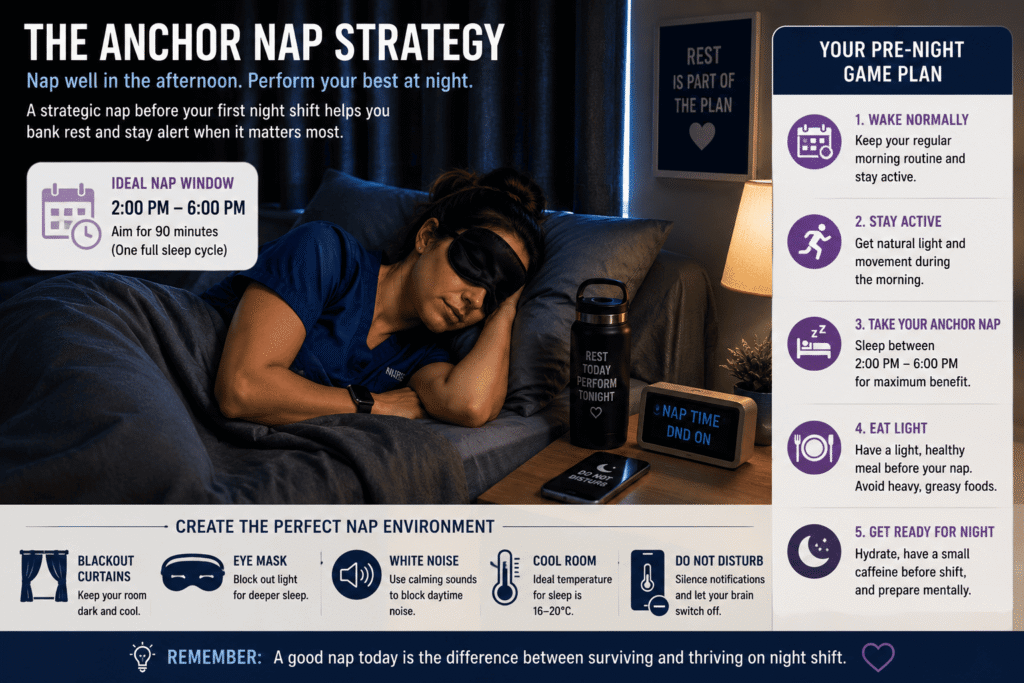
In actuality, your first night shift starts the day before you start. To get through the next twelve hours, the objective is to “bank” as much sleep as you can. The most effective tactic used by Australian nurses is the “Anchor Nap.” Try to get up at your regular time on the day of your first night shift, be active during the morning, and then take a long, focused nap in the afternoon, preferably between 14:00 and 18:00.
The time between your final regular sleep and your first “Day Sleep” following the shift is shortened by this nap. Use blackout curtains, a high-quality eye mask, and maybe some white noise to simulate nightfall in order to make this sleep effective. The objective is to get at least 90 minutes of restorative sleep (one complete sleep cycle), not merely to “doze” on the couch, so that when you get to the 21:00 handover, your brain will be operating at maximum capacity.
Strategic Caffeine and the “2 AM Slump”
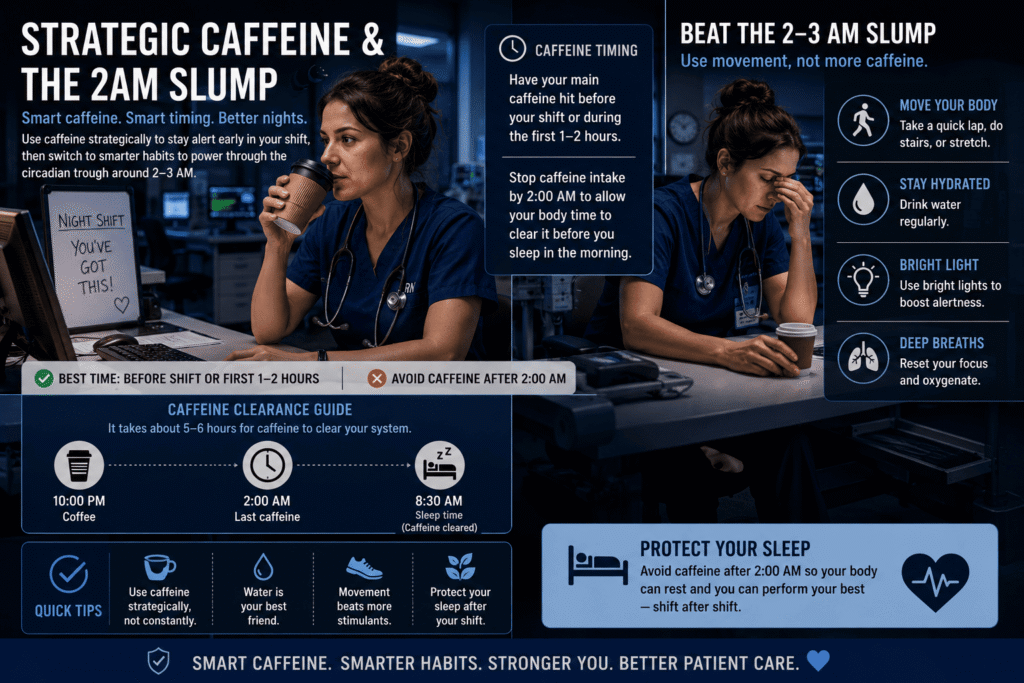
Although caffeine is an effective tool, most nurses utilize it improperly. You’ll probably have trouble falling asleep when you come home at 8:30 if you have a double-shot latte at midnight and another at 3:00. The best-practice recommendation for 2026 is “Strategic Caffeine Loading.” During the first two hours of work or just before your shift, take your biggest caffeine hit.
When most people reach the “Circadian Trough” at 02:00 or 03:00, you should switch to water or herbal tea. By the time your head touches the pillow, the caffeine has had time to leave your body, which takes five to six hours. Try exercising instead of using stimulants to overcome the 3:00 slump. Do some gentle stretching, a brisk run around the ward, or a set of stairs. Without the “Caffeine Crash” that disrupts your daytime sleep, this raises your body’s core temperature and gives you a natural rise in alertness.
Nutrition: Eating for Energy, Not for Comfort
Your brain begs for high-sugar, high-carb “Comfort Foods” when you’re exhausted and working at 4:00. A common term for this is “Hospital Toast Syndrome.” But eating large meals in the middle of the night might induce metabolic problems and “Shift Work Bloat” because your digestive system is essentially in “Sleep Mode.”
“Grazing on Protein” is the gold standard for night shift nutrition in 2026. Bring tiny, high-protein snacks like nuts, Greek yogurt, boiled eggs, or a chicken salad instead of a big “lunch” around 2:00. Steer clear of “Heavy Carbohydrates” (such as huge sandwiches or pasta) as they can cause a massive insulin rise followed by a crash that induces sleep. The key to preserving cognitive function throughout difficult clinical tasks in the early morning hours is to maintain steady blood sugar levels.
The Morning “Darkness Protocol”
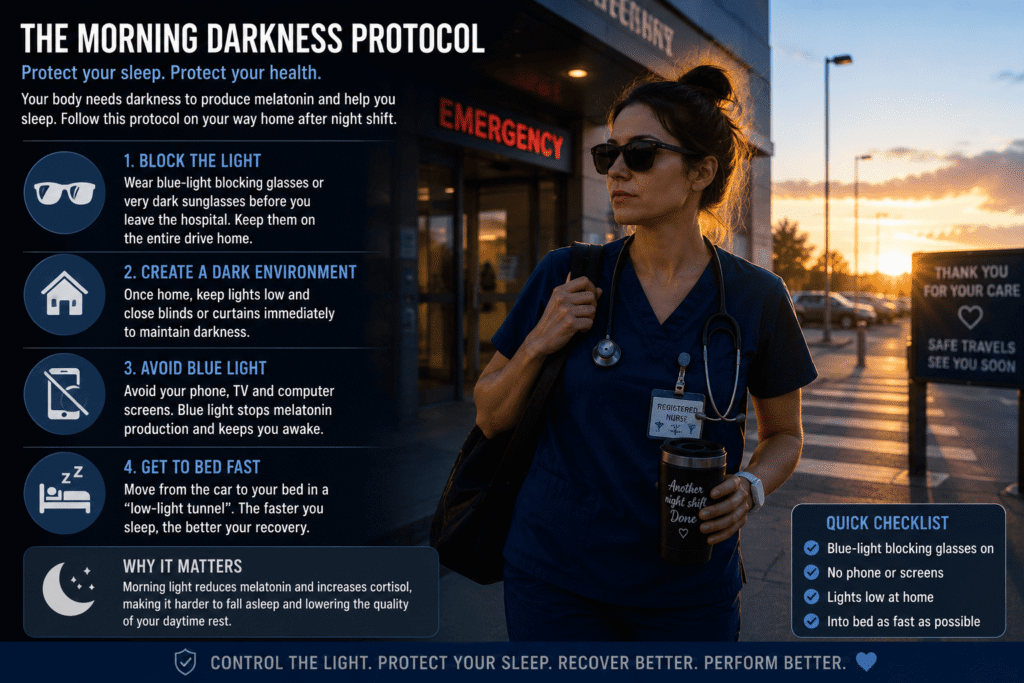
The riskiest element of working a night shift is the trip home. In addition to driving while exhausted, the morning sunshine striking your retinas instructs your brain to begin releasing cortisol, the wake-up hormone, and cease making melatonin, the sleep hormone. You have to “Trick” your brain into believing it is still nighttime if you want to fall asleep quickly.
Before you leave the hospital, get a pair of high-quality Blue-Light Blocking glasses or extremely dark sunglasses. Wear them all the way home. Keep the lights down once you’re inside. The “Blue Light” from displays is a potent stimulant that will keep you up for hours, so avoid checking your phone or browsing social media. Moving from the ward to your bed in a “Low-Light Tunnel” will help you maintain high melatonin levels.
Managing Your Social and Domestic Life
The most difficult aspect of working nights is not the task itself, but rather the sense of “Social Isolation.” You are either working or sleeping while everyone else is at the park or eating dinner. You must master boundary setting if you want to make it through the first year of rotating rosters.
Clearly explain your “Sleep Window” to loved ones. Put a sign for delivery drivers on your front door and switch your phone to “Do Not Disturb” mode. Organizing your social life around your recuperation is also crucial. Give yourself a “Buffer Day” to get your schedule back to normal instead of scheduling a brunch for the morning following your final night shift. We stress that “Recovery is an Active Task” in 2026, if you don’t schedule it, it won’t happen, and burnout will follow.
People Also Ask (FAQ)
Q: Is it better to stay up all day after my last night shift?
The “Big Flip” approach is this. The quickest approach to reset your body clock for the weekend, according to most nurses, is to take a quick “Power Nap” (90 minutes) right after the final shift and then stay awake until 20:00 or 21:00.
Q: Should I take Melatonin supplements for day sleep?
Melatonin is a common sleep aid used by Australian nurses. But it’s not just a herbal drink; it’s a hormone. To make sure it’s suitable for you and to figure out the right dosage, you should talk about this with your doctor.
Q: How do I stay safe driving home after a 12-hour night shift?
Stop right away if you experience “Micro-Sleeps” or are having trouble staying in your lane. Use public transportation or ride-sharing services, or take a 20-minute snooze in your car in the hospital parking lot. The price of an Uber is not worth your life.
Q: Does working nights affect my long-term health?
Long-term shift employment has been associated with an increased risk of metabolic diseases and cardiovascular problems. For this reason, we place a strong emphasis on “Preventative Health”; for career night shift workers, routine GP checkups, a high-protein diet, and frequent exercise are essential.
Disclaimer: “I researched this information on the internet; please use it as a guide and also reach out to a professional for assistance and advice.This information is not medical advice, so seek your medical professional’s assistance.”