

Summary
Deciding how to become a midwife is far more than a basic career choice; it is a profound commitment to mastering the obstetric care continuum and advocating for women through their most transformative life milestones. The educational and professional trajectory within Australia is highly regulated, grounded in maternal-foetal health economics, and globally revered for its rigorous clinical standards. The pathway to achieving status as an Endorsed Midwife in 2026 demands a strategic roadmap rooted in ANMAC-accredited tertiary education and a commitment to woman-centred care, whether you are a secondary student entering your first degree or an experienced Registered Nurse pursuing a postgraduate clinical specialisation.
Today’s midwives operate under independent clinical practice models, managing everything from intricate intrapartum interventions to advanced diagnostics and pharmacological prescribing authorisation. The modern healthcare landscape has evolved; if you are ready to trade traditional employment for the fast-paced, high-yield, and emotionally fulfilling world of the birth suite, this comprehensive guide will detail every milestone of the academic, AHPRA registration, and workforce integration process.
Step 1: Choose Your Educational Pathway
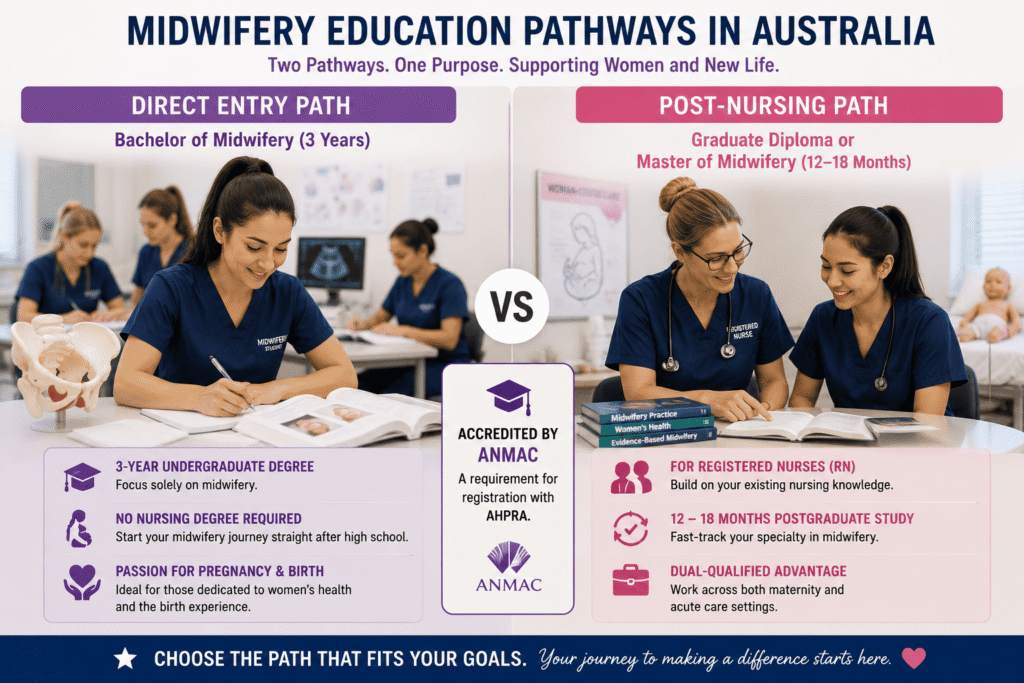
In 2026, there are two primary ways to enter the midwifery profession in Australia. The right choice depends on whether you already hold a nursing degree.
- The Direct Entry Path (Bachelor of Midwifery): This is a 3-year undergraduate degree designed specifically for those who want to focus solely on midwifery. You do not need to be a nurse first. This path is ideal if your heart is set specifically on pregnancy and childbirth.
- The Post-Nursing Path (Graduate Diploma or Master of Midwifery): If you are already a Registered Nurse (RN), you can complete a postgraduate course (usually 12–18 months). This “Dual-Qualified” status is highly valued, especially in regional hospitals where you may need to work across both the Emergency Department and the Maternity Ward.
When selecting a university, ensure the course is accredited by the Australian Nursing and Midwifery Accreditation Council (ANMAC). This is a legal requirement for your future registration with AHPRA.
Step 2: Complete Your Clinical “Continuity of Care” Requirements
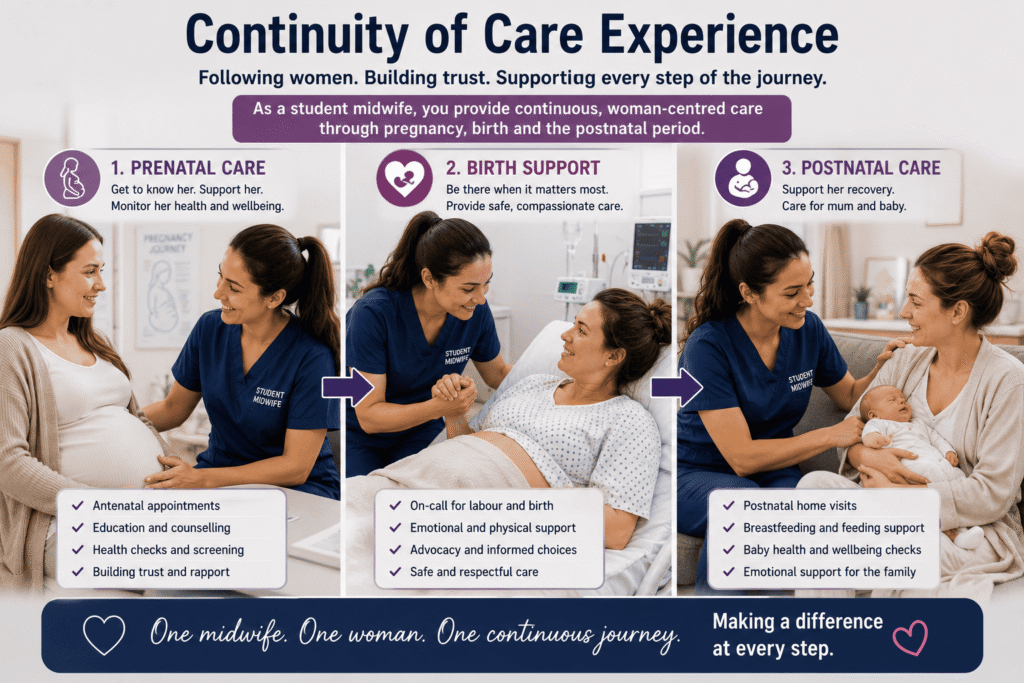
Midwifery education in Australia is unique because of the Continuity of Care (CoC) requirement. As a student, you aren’t just practicing in a hospital; you are required to “follow” a specific number of women (usually 10 to 20) throughout their entire pregnancy journey.
This involves attending their prenatal appointments, being “on-call” for their labor and birth, and visiting them at home during the postnatal period. This requirement can be challenging to manage alongside your studies, but it is the most vital part of your training. it teaches you the “Art of Midwifery”—how to build trust and provide holistic support over time rather than just performing tasks in a clinical setting.
Step 3: Register with AHPRA and the NMBA
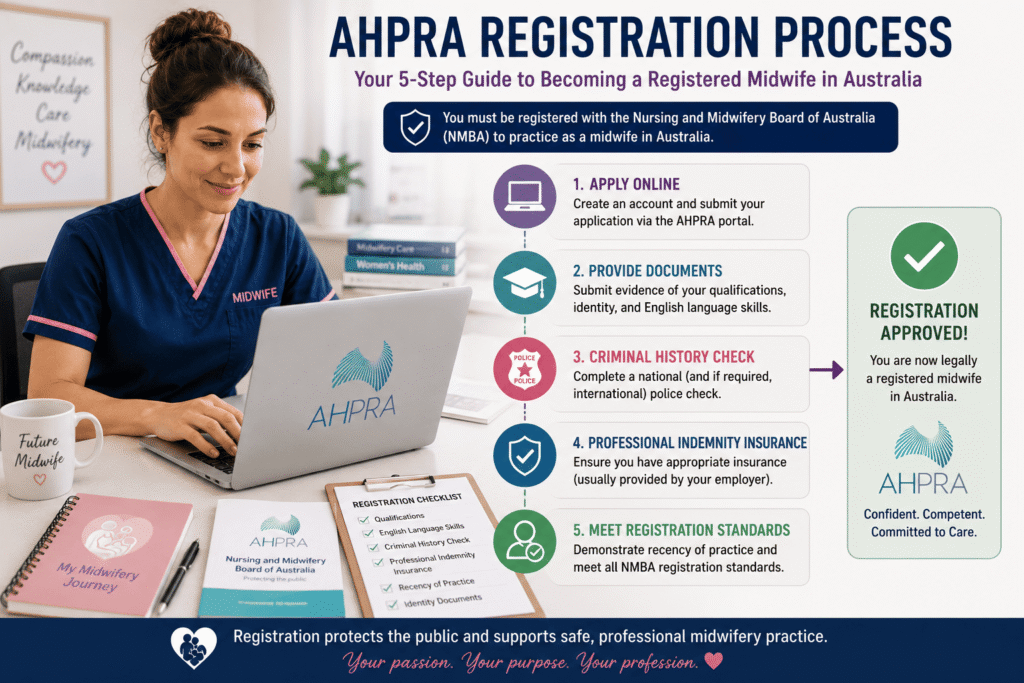
Once you have completed your degree, you cannot practice until you are registered with the National Registration and Accreditation Scheme. You must apply to the Nursing and Midwifery Board of Australia (NMBA) through the AHPRA portal.
To be successful, you must meet several “Registration Standards,” including:
- English Language Skills: Providing evidence of your English proficiency.
- Criminal History: Passing a national (and sometimes international) police check.
- Professional Indemnity Insurance: Ensuring you are covered by a policy (usually provided by your employer, but you must confirm this).
- Recency of Practice: Proving you have completed your clinical hours recently.
Step 4: Secure a Graduate Midwifery Program
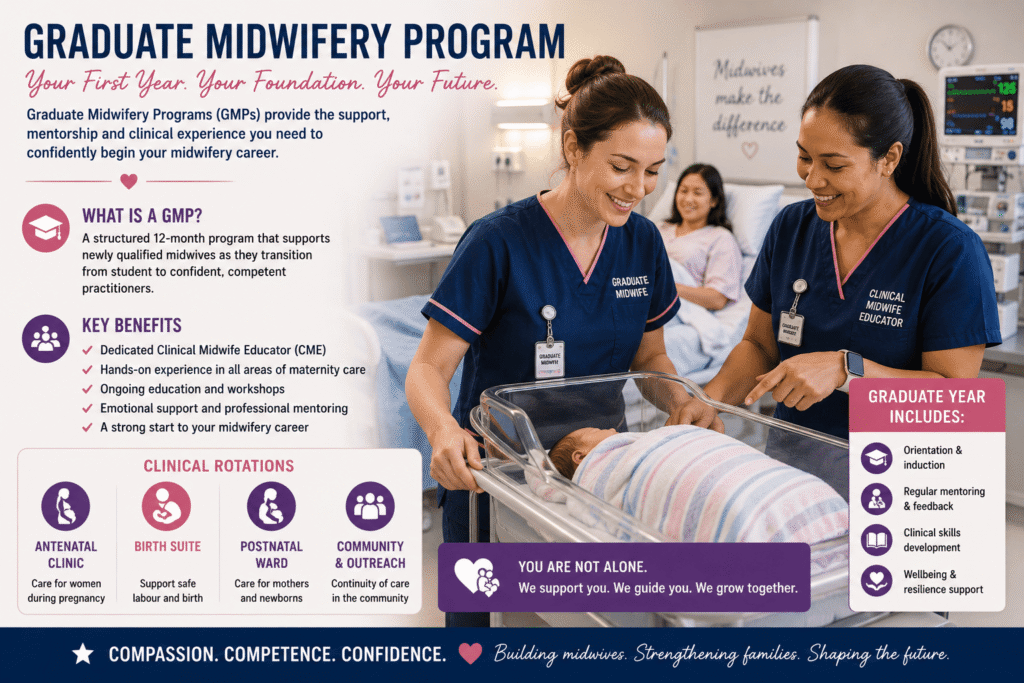
Your first year as a qualified midwife is usually spent in a Graduate Midwifery Program (GMP). These programs are offered by both public and private hospitals across Australia and provide a “Soft Landing” into the profession.
During your “Grad Year,” you will rotate through different areas of the maternity unit, including the Antenatal Clinic, the Birth Suite, and the Postnatal Ward. You will have access to a Clinical Midwife Educator (CME) who mentors you as you take on your own patient load. In 2026, competition for grad spots in major metro hospitals is high, so many new midwives look to “Regional and Rural” programs, which often offer higher pay, subsidized housing, and a broader range of clinical experiences.
Step 5: Pursue Endorsement and Specialization
Becoming a midwife is just the beginning. To reach the highest earning potential and clinical independence, many Australian midwives aim for Endorsement. An Endorsed Midwife has completed additional training in pharmacology and diagnostics, allowing them to:
- Prescribe scheduled medicines (like pain relief or antibiotics).
- Order and interpret blood tests and ultrasounds.
- Obtain a Medicare Provider Number to run their own private practice.
Beyond endorsement, you can specialize in areas like Lactation Consultancy (IBCLC), Perinatal Mental Health, or Midwifery Group Practice (MGP), where you work in a small team providing continuity of care to a specific group of women.
People Also Ask (FAQ)
Q: How much does it cost to become a midwife in Australia?
If you are a domestic student, you can access HECS-HELP for your university fees. In 2026, a 3-year degree typically costs between $25,000 and $35,000 in total. Postgraduate courses for nurses may be slightly less but often have fewer “Commonwealth Supported Places” (CSP).
Q: What is the starting salary for a midwife in 2026?
A first-year graduate midwife in Australia generally starts on a base salary of $78,000 to $82,000. With shift penalties for nights and weekends, most graduates take home closer to $95,000 in their first year.
Q: Can I work as a midwife overseas with an Australian degree?
Yes. Australian midwifery degrees are highly regarded. You can often work in the UK, New Zealand, and parts of the Middle East with minimal bridging requirements, making it a great career for those who love to travel.
Q: Is midwifery a high-stress job?
It can be. Midwifery involves “High-Stakes” moments and long shifts. However, the emotional reward of supporting a safe birth often balances the stress. In 2026, there is a much larger focus on “Midwifery Self-Care” and manageable caseloads to prevent burnout.
Disclaimer: “I researched this information on the internet; please use it as a guide and also reach out to a professional for assistance and advice.This information is not medical advice, so seek your medical professional’s assistance.”