

Summary
Experiencing a day in the life of a midwife reveals that a common misconception is that our shifts consist solely of holding newborns and having joyful celebrations with families. The reality of operating within the birth room or a community clinic is far more complex, physically taxing, and structurally demanding, requiring continuous clinical risk mitigation and high-level decision-making. In 2026, the modern Australian midwifery paradigm relies heavily on immediate obstetric triage protocols, precise clinical judgements, and profound emotional stamina under high-pressure conditions.
This guide pulls back the curtain on hospital operations to walk you through a typical 12-hour shift timeline, tracking the complex hospital workforce allocation models required behind closed doors. From the quiet, high-stakes tension of an active labour room to the rapid operational pace of the postnatal ward, this is a realistic, unscripted look into the true professional and clinical responsibilities of modern maternity care.
06:45 – The Morning Handover
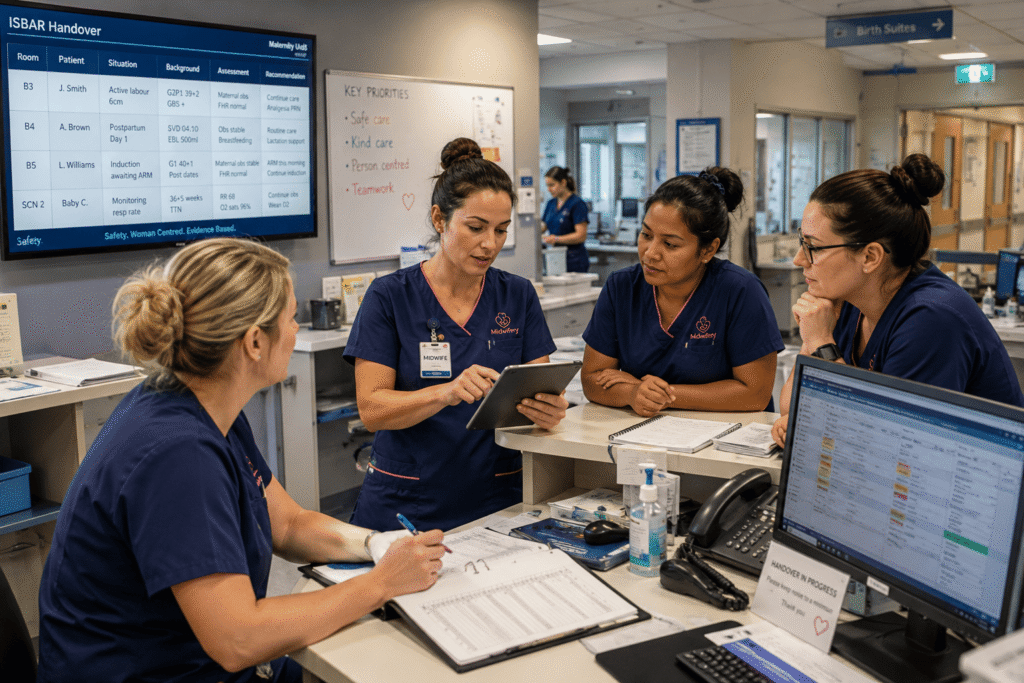
When daybreak arrives, most of the globe is still asleep. Digital ISBAR (Introduction, Situation, Background, Assessment, Recommendation) technologies will be used to transmit patient care in 2026. The night staff is worn out but focused, giving us updates on who is in active labor, who had a challenging birth throughout the night, and which newborns need more care.
As a midwife, your “Brain Sheet” becomes your savior. You record who needs antibiotics, who is waiting for an induction of delivery, and who might be coming home today. This 15-minute window is the only quiet time you will have to focus on your task before the “Bells” start ringing.
09:00 – The Birth Suite: High Stakes and Holding Space

You are frequently paired with a woman who is in active labor by the middle of the morning. The core of midwifery is the provision of “Continuous Support.” We put a lot of emphasis on “active birth” methods in 2026, assisting women in making progress through movement, submersion in water, and gravity.
But you’re more than just an emotional support system. You keep a close eye on the “Clinical Picture.” You are monitoring the fetal heart rate, evaluating the observations made by the mother, and keeping an eye out for any subtle indications of fetal distress. It involves striking a careful balance between “holding the space” for a natural process and being prepared to quickly escalate to the obstetric team if circumstances change.
13:00 – The Postnatal Ward: Education and Recovery

You are probably on the postnatal ward if you are not in the birth suite. The “heavy lifting” of schooling takes place here. Not only are you assessing wounds and fundal heights, but you are also assisting a frustrated mother with a challenging breastfeeding latch and teaching a new father how to appropriately wrap a newborn.
Our focus in 2026 will be “Person-Centered Care.” You may be monitoring a mother for symptoms of postpartum anxiety while also tending to a mother recuperating after a complicated Caesarean operation. Quick “task-switching” and a great deal of patience are needed. Before a parent leaves for home, every encounter is an opportunity to boost their confidence.
16:00 – Triage and Unexpected Challenges
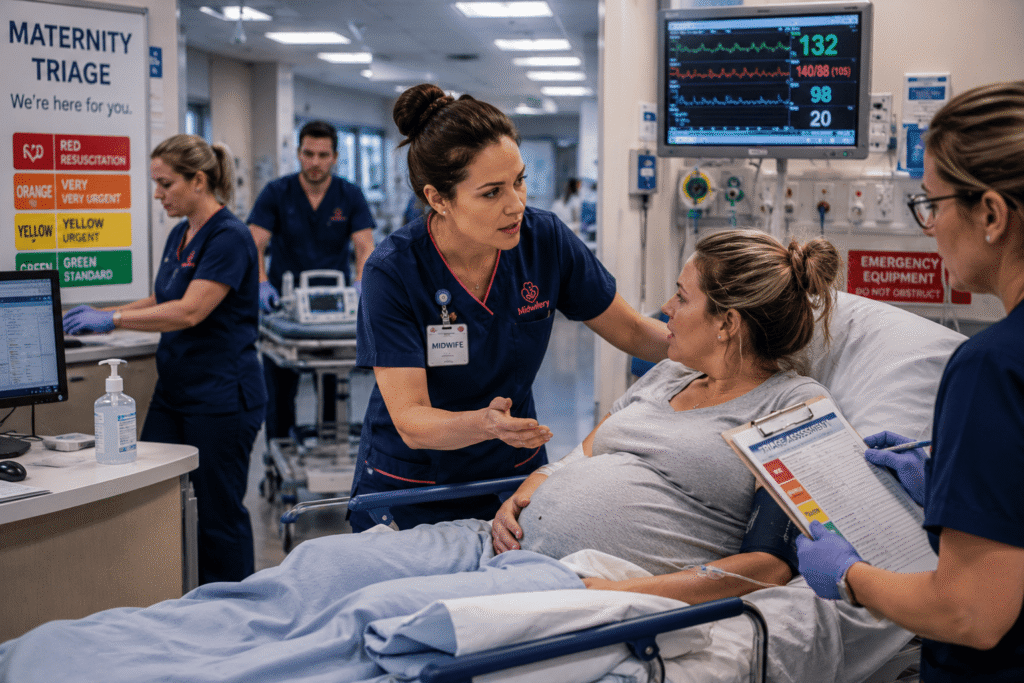
Rarely is midwifery predictable. A “Category 1” emergency can occur in a matter of seconds. When a woman enters the triage room with severe bleeding or decreased fetal movements, you may be helping with a basic check-up.
It’s usually busiest in the afternoon during “Admissions.” To guarantee that each family has a safe care plan, you collaborate with the multidisciplinary team, which includes physicians, social workers, and lactation consultants. We also oversee a large number of “Digital Health” duties in 2026, making sure that all clinical data is accurately synchronized so that the woman’s general practitioner and community midwife may offer seamless follow-up care.
19:00 – The Evening Handover and Reflection
The night shift begins as the sun sets. By giving a thorough handover, you guarantee that the subsequent midwife is aware of each mother’s and child’s precise position on the clinical spectrum. As you make your way to the car at 19:30, you experience a distinct kind of “Good Tired.”
Some days are spent helping a family through their most difficult farewell, while others are filled with the amazing joy of a first breath. We take those tales with us as midwives. Knowing that we will be able to repeat the “Emotional Labor” of the day tomorrow, we don’t simply quit our jobs.
People Also Ask (FAQ)
Q: Do midwives work 12-hour shifts in Australia?
Yes, frequently. Most major Australian hospitals in 2026 have moved to a “12-hour shift” model (e.g., 07:00 to 19:30). While long, this often allows for a “4 days on, 4 days off” roster, which helps with work-life balance.
Q: Is being a midwife physically hard?
Absolutely. You are on your feet for most of the shift, often assisting women in various birthing positions, moving equipment, and walking several kilometers across the hospital wards. Good comfortable shoes are a midwife’s best investment!
Q: How do midwives deal with the stress of emergencies?
We rely on “Crisis Resource Management” training. We practice emergency drills (like neonatal resuscitation or postpartum hemorrhage) regularly so that when a real emergency happens, our “Muscle Memory” takes over. Debriefing with colleagues after a shift is also vital for mental health.
Q: What is the most rewarding part of the day?
While birth is amazing, many midwives find the most reward in the “small wins” like a baby finally latching after hours of trying, or seeing a terrified first-time mom suddenly realize, “I can do this.”