
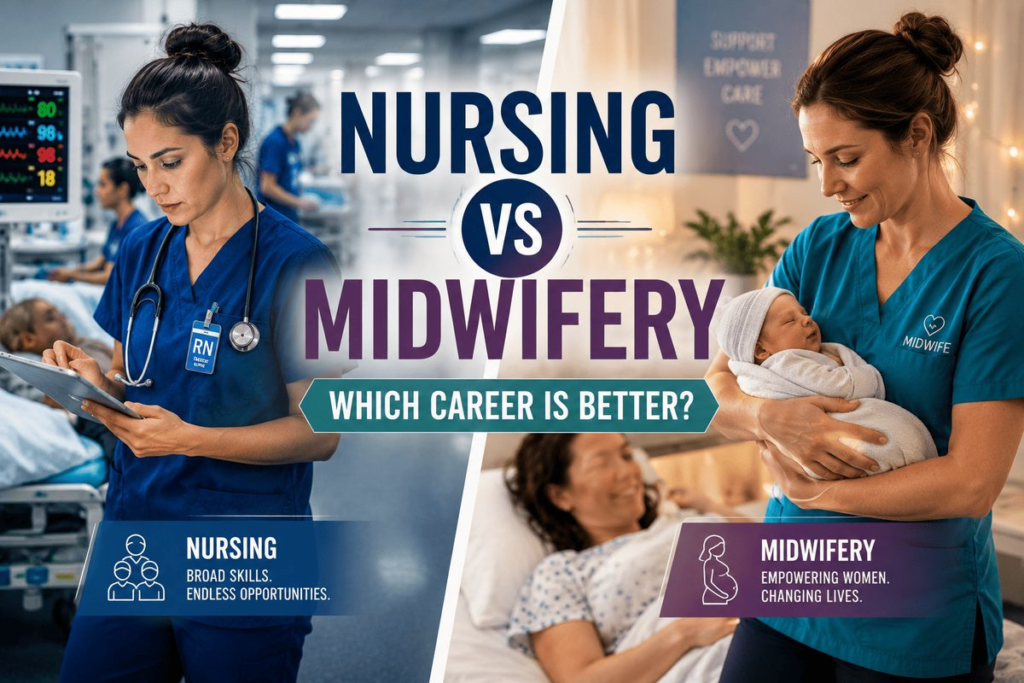
Deciding between a career in nursing and midwifery is one of the most common dilemmas for students entering the healthcare field in 2026. While both professions are built on a foundation of care, compassion, and clinical excellence, they offer vastly different daily experiences and career trajectories. In the Australian healthcare system, nurses are often the "Generalists" of the medical world, capable of working in any department from the ER to aged care. Midwives, conversely, are "Specialists" who focus specifically on the profound journey of pregnancy, birth, and the postnatal period.
Choosing which path is "better" isn't about which job is more important—both are critical to our society. Instead, it’s about which role aligns with your personality, your clinical interests, and the type of impact you want to have on your patients. This 2026 guide compares the salaries, daily routines, and career growth of both paths to help you decide which white (or blue!) uniform is the right fit for you.
1. The Scope of Practice: Generalist vs. Specialist
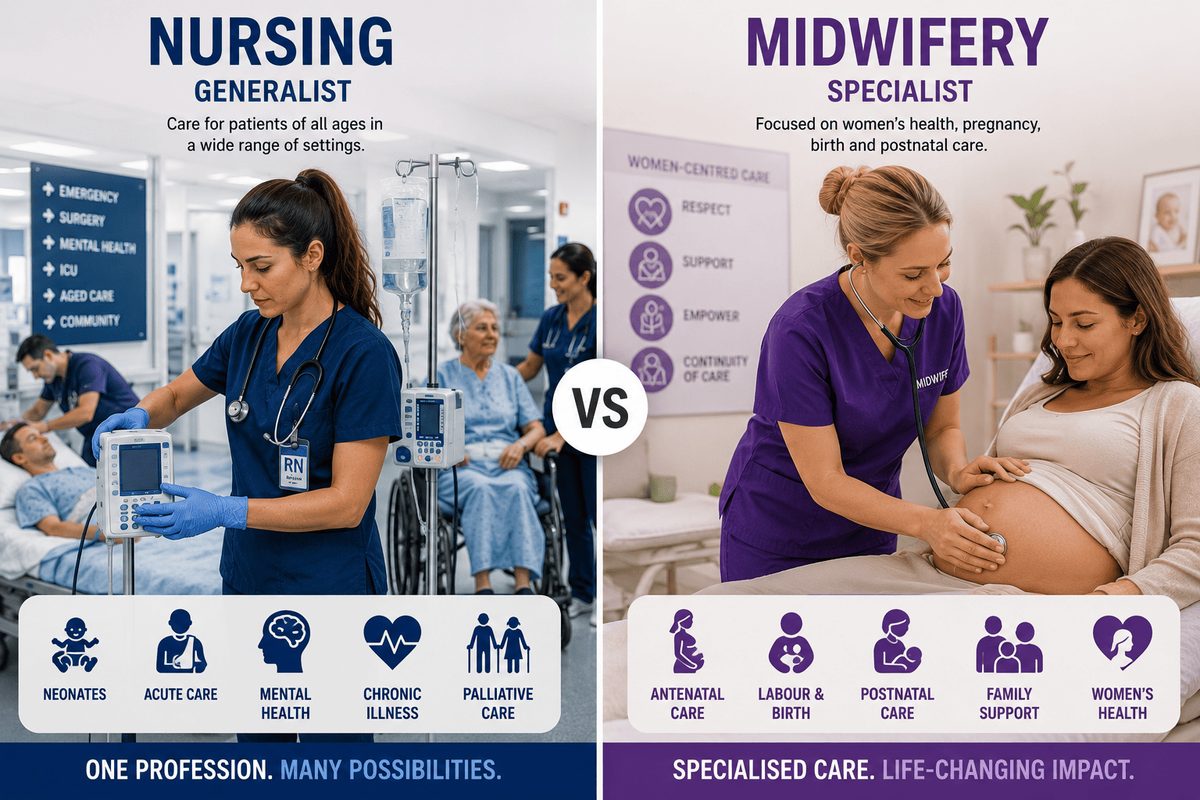
The primary difference lies in the "Who" and the "Where." Nursing is an incredibly broad field. As a Registered Nurse (RN), your scope of practice allows you to work with patients of all ages, from neonates in the NICU to the elderly in palliative care. You deal with acute illness, chronic disease, mental health, and surgical recovery. If you enjoy variety and want the ability to change your specialty every few years, nursing offers unparalleled flexibility.
Midwifery, on the other hand, is a specialized profession that views pregnancy and birth as a normal life event rather than a medical "illness." As a midwife, your scope is focused on the "Woman-Centred Care" model. You support women through healthy pregnancies, assist during labor, and provide vital postnatal care for both mother and baby. While you are trained to handle emergencies, your primary goal is to facilitate a safe and empowering birth experience. If you are passionate about women’s health and want to be an expert in a specific biological process, midwifery is a deeply rewarding calling.
2. Salary and Earnings: Which Pays More in 2026?
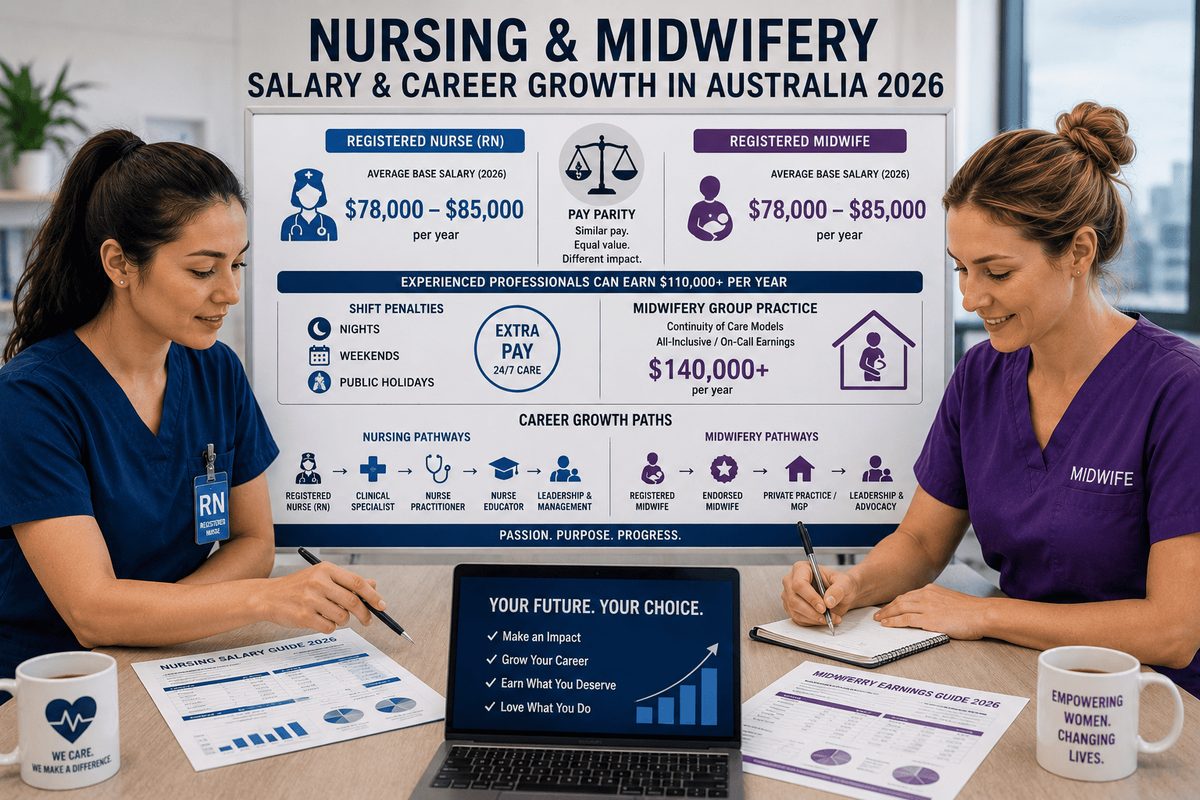
“Nursing and midwifery professionals discussing career growth and salary opportunities in the Australian healthcare system.”
In 2026, the salary gap between nurses and midwives in Australia has almost entirely disappeared, especially in the public sector. Both roles are typically paid under the same Enterprise Bargaining Agreements (EBAs). A first-year Registered Nurse or Midwife can expect a base salary of approximately $78,000 to $85,000 per year. As you gain experience and move up the "Pay Points," this base can exceed $110,000.
The "Real Earnings" in both professions come from Shift Penalties. Because both wards—the Emergency Department and the Birth Suite—operate 24/7, you will earn significant extra pay for working nights, weekends, and public holidays. However, Midwifery offers a unique earning pathway through "Midwifery Group Practice" (MGP) or "Continuity of Care" models. In these roles, midwives are often on-call for their specific clients and receive an "all-inclusive" loaded salary or a high-percentage allowance, which can push earnings over $140,000 per year.
3. Daily Work Environment: Fast-Paced vs. Focused
The "Vibe" of the workplace is another major factor to consider. In Nursing, especially in acute settings like a surgical ward or the ED, your day is often a series of rapid-fire tasks. You are managing multiple patients, coordinating with doctors, administering medications, and responding to "Buzzers." It is a high-energy environment that suits those who love multitasking and the "Adrenaline" of a busy hospital.
Midwifery also has high-adrenaline moments (labor can be unpredictable!), but the work is often more focused on one patient at a time. In the Birth Suite, you may spend your entire 12-hour shift with a single woman, supporting her through the stages of labor. It requires immense patience and the ability to provide emotional and physical support over a long period. In the postnatal ward, your day involves a lot of education—teaching new parents how to breastfeed, settle a baby, and care for themselves. If you prefer building a deep, short-term connection with a patient over the "task-based" speed of a ward, midwifery may be your better fit.
4. Career Progression: Where Can You Go?
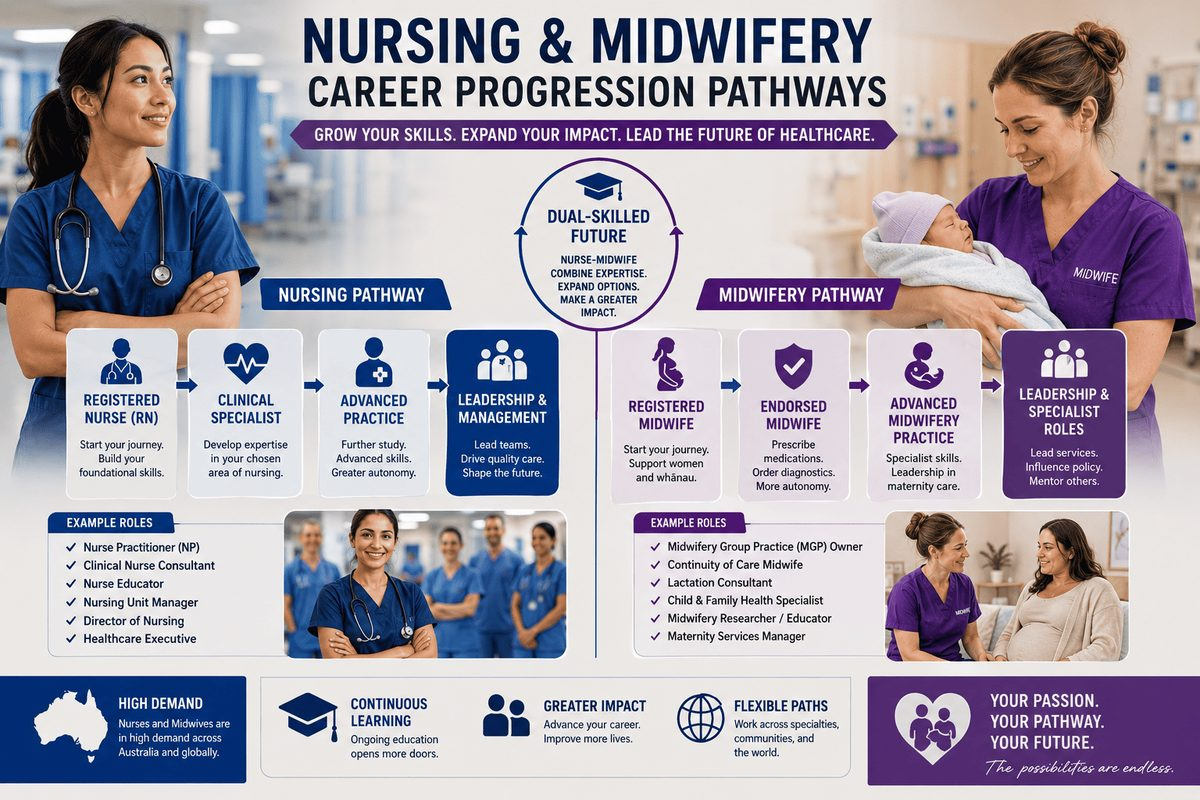
Both careers offer incredible pathways for advancement in 2026. Nursing has a massive range of "Postgraduate" options. You can become a Nurse Practitioner (NP), a Nurse Educator, or move into high-level Healthcare Management. The sheer number of specialties—like Oncology, ICU, or Perioperative nursing—means you can spend your whole life in nursing and never get bored.
Midwifery progression is more vertical. You can become an Endorsed Midwife, which allows you to have your own Medicare Provider Number, prescribe medications, and run your own private practice. Many midwives also move into Lactation Consultancy, Child and Family Health, or Research focusing on maternal outcomes. In 2026, the rise of "Nurse-Midwife" double degrees is also a popular option, allowing professionals to work in both fields, which is especially valuable in regional and remote Australia where "Dual-Skilled" practitioners are in high demand.
5. The Emotional Impact: Resilience vs. Joy
Healthcare is emotionally demanding, but the "Type" of stress differs. In Nursing, you will inevitably deal with death, dying, and the complexities of chronic illness. It requires a high level of "Emotional Resilience" and the ability to provide care for patients who may be at their most difficult or vulnerable. The reward comes from seeing a patient recover from a serious illness or providing dignity in their final stages.
[Image showing the emotional spectrum of healthcare: From critical care to the joy of a newborn]
Midwifery is often associated with the "Joy of New Life," but it also carries the weight of "High-Stakes" responsibility. When things go wrong in a birth, they can happen very quickly. Midwives also care for women experiencing pregnancy loss or stillbirth, which requires a specialized type of "Grief Support" and empathy. However, the unique reward of being the first person to hold a newborn and witnessing the moment a family is born is a feeling that few other professions can offer.
Frequently Asked Questions
Q: Is it easier to find a job as a nurse or a midwife? A: In 2026, both professions have critical shortages across Australia. However, because there are more hospitals and clinics than there are maternity units, there are technically more total job openings for nurses.
Q: Can I become a midwife if I am already a nurse? A: Yes. This is a very common path. Many nurses complete a 12-18 month "Graduate Diploma of Midwifery" to become "Dual-Registered." This makes you highly employable, especially in rural areas.
Q: Do midwives only work in hospitals? A: No. Midwives work in hospitals, private clinics, community health centers, and some work in Home Birth settings or run their own private practices as Endorsed Midwives.
Q: Which degree is harder? A: Both the Bachelor of Nursing and the Bachelor of Midwifery are demanding 3-year degrees. Midwifery students often find the "Continuity of Care" requirements (following a certain number of women throughout their whole pregnancy) a bit more time-consuming to manage.
Q: What are the high-RPM keywords for healthcare career articles? A: For AdSense optimization, focus on: "Nursing Salary Australia 2026," "Midwifery Group Practice Earnings," "Nurse vs Midwife Pay Comparison," and "Direct Entry Midwifery Australia."