


Summary
As more nurses in Australia combine clinical expertise with leadership, digital innovation, education, entrepreneurship, and community involvement, the term “nursepreneur” is gaining popularity. It’s a common misconception among nursing students that developing a solid professional profile requires years of experience. Even students can begin laying the groundwork for becoming nursepreneurs before they graduate in today’s healthcare system.
Creating a nursepreneur profile early helps you:
- stand out during job applications
- increase chances for graduate programs
- attract employer sponsorship
- improve PR (Permanent Residency) opportunities
- build confidence and leadership skills
This guide explains how nursing students can start developing a nursepreneur identity step by step, using simple, actionable strategies.
1. What Is a Nursepreneur and Why It Matters for Students?
A nursepreneur is a nurse who uses both clinical skills and entrepreneurial thinking to create value. This does not mean starting a business on day one. For students, being a nursepreneur simply means:
- taking initiative
- helping communities
- showing leadership
- creating health resources
- building an online identity
- contributing to healthcare beyond placement hours
In Australia, healthcare organisations increasingly value nurses who think creatively and can take responsibility. Hospitals, aged-care facilities, clinics, and NDIS providers all prefer candidates who demonstrate leadership skills.
For international nursing students, building a nursepreneur profile also improves eligibility for:
- competitive graduate programs
- job sponsorships
- state nomination under PR pathways
- rural healthcare opportunities
The earlier you start, the stronger your career foundation becomes.
2. Skills Nursing Students Need to Become Future Nursepreneurs

You don’t need advanced clinical expertise to start a nursepreneur journey. What you need is a combination of simple but powerful skills.
A. Leadership Skills (Small actions matter)
As a student, leadership looks like:
- coordinating a study group
- helping classmates during skills lab
- supporting patients with cultural sensitivity
- taking initiative during placement
Small acts of leadership build the foundation of your profile.
B. Communication & Education Skills
Nursepreneurs are often educators. You can practice this by:
- explaining medication calculations to classmates
- posting health tips on social media
- participating in health awareness events
- practicing patient education during placement
Clear communication is a core nursepreneur strength.
C. Digital & Creative Skills
Modern nursepreneurs use digital tools. You can start learning:
- Canva or Adobe Express
- simple video editing
- social media content creation
- writing health blogs
- making infographics
These skills help you stand out and build a powerful online presence.
D. Community Health Mindset
A community-focused attitude is highly valued in Australia.
You can show this by participating in:
- free blood pressure check events
- nursing volunteer activities
- aged-care community visits
- multicultural health support
These activities immediately strengthen your profile.
E. Professionalism & Ethics
Nursepreneurs must build trust.
This means:
- respecting patient privacy
- following policies
- staying accountable
- being punctual during placements
- keeping communication professional
Good ethics create strong long-term opportunities.
3. How Nursing Students Can Start Building a Nursepreneur Profile (Step-by-Step)
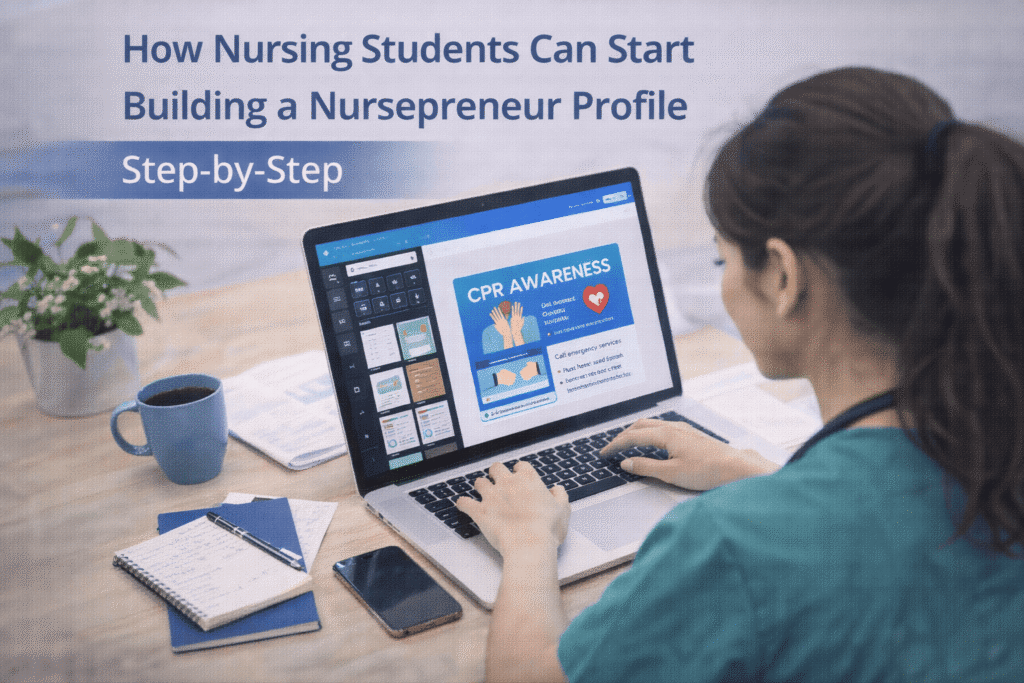
This section explains exactly what you can start doing today, even if you are a first-year nursing student.
A. Start an Online Health Identity (Simple & Safe)
Create a small, professional online presence where you share:
- basic study tips
- mental health awareness
- nursing motivation
- placement reflections (without patient info)
- health infographics
Platforms you can use:
✔ Instagram
✔ LinkedIn
✔ YouTube (short videos)
✔ TikTok
✔ A simple blog
Consistency is more important than perfection. Posting once a week is enough to start growing.
B. Create Mini Educational Projects
You don’t need to run a business — just create micro-projects such as:
- a weekly “nursing fact” infographic
- a medication calculation tutorial
- a simple CPR awareness post
- a short “placement tips” video
These can be added to your portfolio and help you stand out.
C. Build a Community Health Portfolio Through Volunteering
Volunteering is one of the strongest signals of leadership.
You can volunteer at:
- aged-care homes
- community health events
- multicultural associations
- disability support groups (NDIS-related events)
- university nursing societies
Volunteering shows commitment, compassion and initiative.
D. Attend Workshops, Webinars, Conferences
You can attend free or low-cost events offered by:
- Australian Red Cross
- local community hospitals
- nursing student groups
- online conferences
- mental health training organisations
Keep a record of all certificates — they strengthen job and PR applications.
E. Build Skills in Health Education Content
This includes:
- designing flyers
- making short health videos
- writing clear explanations
- presenting health information simply
These skills are extremely valuable for nursepreneurs because patient education is a core part of their role.
F. Build Networking Relationships Early
This is one of the most important steps.
Connect with:
- clinical facilitators
- registered nurses during placement
- nursing educators
- university career advisors
- healthcare managers
Networking helps you find mentorship, jobs and PR pathways faster.
G. Create a ‘Nursepreneur Starter Portfolio’
Your portfolio can include:
- certificates
- workshops attended
- volunteering letters
- community projects
- educational posts
- placement feedback summaries
- reflections on learning
- digital content samples
This document becomes powerful evidence during job interviews and graduate program applications.
4. What to Include in Your Nursepreneur Portfolio

Your portfolio is where your efforts become visible.
Here’s what a strong pre-graduation nursepreneur portfolio includes:
A. Personal Introduction Section
A short description of who you are:
- your background
- your nursing interest areas
- your passion for community health or education
B. Skills Section
Highlight skills such as:
- basic wound care
- communication
- teamwork
- digital content creation
- patient education
- cultural competence
- time management
C. Community Work Documentation
Include:
- volunteering letters
- event photos
- summaries of your contribution
This proves you are active and community-minded.
D. Certificates & Training
Examples:
- First Aid
- Mental Health First Aid
- CPR
- Infection prevention workshops
- Aged-care safety training
- Online nursing webinars
E. Digital Projects Section
Show your creativity through:
- simple infographics
- short educational videos
- health awareness posts
- medication calculation explanations
These differentiate you from other applicants.
F. Professional Networking Evidence
Include:
- mentorship meetings
- LinkedIn connections
- seminar participation
- student association involvement
This shows leadership and initiative.
5. How a Nursepreneur Profile Helps with Jobs, Graduate Programs & PR
Building a nursepreneur identity before graduation has many direct benefits.
A. Graduate Nurse Programs Prefer Leaders
Hospitals look for candidates who:
- show initiative
- have communication skills
- demonstrate community involvement
- can adapt quickly
These qualities shine through a strong nursepreneur portfolio.
B. Employers Sponsor Nurse Leaders Easily
Aged-care providers and rural hospitals prefer applicants who already show:
- professionalism
- community mindset
- digital competency
- leadership traits
This increases employer sponsorship opportunities.
C. State Nomination & PR Pathways Become Easier
States like South Australia, Western Australia, Tasmania, Northern Territory prefer candidates who show community involvement and leadership.
A nursepreneur profile strengthens your PR case because it demonstrates:
- contribution to community
- commitment to healthcare
- professional maturity
D. Confidence & Growth
You become more confident in:
- communication
- handling feedback
- presenting health information
- interacting with patients
This makes your transition from student → nurse → future leader much easier.
Conclusion: Start Small, Grow Steadily, Become a Nursepreneur
You can begin developing your identity as a potential nursepreneur before you graduate. Your career path can be completely changed by taking small measures like making basic health posts, volunteering, going to workshops, and expanding your network.
Hospitals and employers in Australia’s expanding healthcare system value nurses who demonstrate leadership, inventiveness, and a commitment to the community. Starting early gives you a significant advantage in employment, graduate school, and public relations.
People Also Ask
1. Can I become a nursepreneur while still studying nursing?
Yes. You can start by creating educational content, volunteering, and building leadership skills—no business needed.
2. What skills do I need as a student nursepreneur?
Communication, digital skills, leadership, community involvement, and creativity.
3. Will a nursepreneur profile help me get a job in Australia?
Yes. Employers prefer candidates who show initiative and responsibility.
4. Does a nursepreneur profile help with PR?
Yes. States favour nurses with community involvement and leadership qualities.
5. How can I start building my profile with no experience?
Start with small steps: make health posts, attend workshops, volunteer, build a LinkedIn profile, and keep a portfolio.
Useful Documents for every Nursing Student
CV Section Template for Nursing students
AHPRA – NMBA Registration Document Checklist (International Students-Graduates)
Clinical Placement Reflection Template (NMBA-aligned)
Cover Letter Template for Nursing Students
Disclaimer: “I researched this information on the internet; please use it as a guide and also reach out to a professional for assistance and advice.This information is not medical advice, so seek your medical professional’s assistance.”