

Finding a nursing job in Australia can feel confusing, especially for international students, new graduates, or nurses transitioning from study to professional practice. Many students assume that applying on one website is enough, but nursing jobs in Australia are spread across multiple platforms, hospital career portals, government listings, and professional networks. Some opportunities are openly advertised, while others are filled quietly through connections, referrals, and clinical placement relationships. Understanding where to look, how to apply, and how networking works in the Australian healthcare system can make a huge difference to your job search. This article explains everything in simple English so nursing students and graduates can confidently find real job opportunities across Australia.
Australia offers many types of nursing roles, such as aged-care positions, hospital ward roles, community nursing jobs, disability care work, clinical support roles, and transition-to-practice programs. These positions are not evenly distributed across every city. Some locations, especially regional and rural areas, have higher job demand and faster recruitment. The key is knowing where to search and how to present yourself effectively. When you understand how the Australian job market works, your chances of getting hired become much higher.
1. Understanding the Nursing Job Market in Australia (Before You Apply)
Before exploring job platforms, it is helpful to understand how the nursing job market works in Australia. Healthcare is one of the country’s fastest-growing industries because of population growth, ageing communities, and increasing demand for chronic disease management. This means there is a steady need for Enrolled Nurses (ENs), Registered Nurses (RNs), Assistant in Nursing (AIN) workers, and Graduate Nurses. However, competition is strong in major cities like Sydney, Melbourne, and Brisbane, especially for hospital graduate programs. Many students fail to secure roles not because they are not skilled, but because they apply only to big city hospitals and ignore other areas.
Australia has a strong public and private healthcare system. Public jobs are often advertised through state government websites, while private hospitals post openings on their own career portals. Aged-care providers, disability services, and NDIS providers also offer many nursing positions, especially for students gaining their first clinical experience. These organisations often hire quickly because of high demand, making them ideal for graduates starting their careers.
Another important part of the job market is clinical placements. During placements, students interact with nurses, educators, and managers who can later recommend them for roles. Many hiring managers have limited time, so they often prefer students they already know from placements. This makes networking a critical part of job hunting.
2. Best Platforms to Find Nursing Jobs in Australia (Where Students Actually Get Hired)
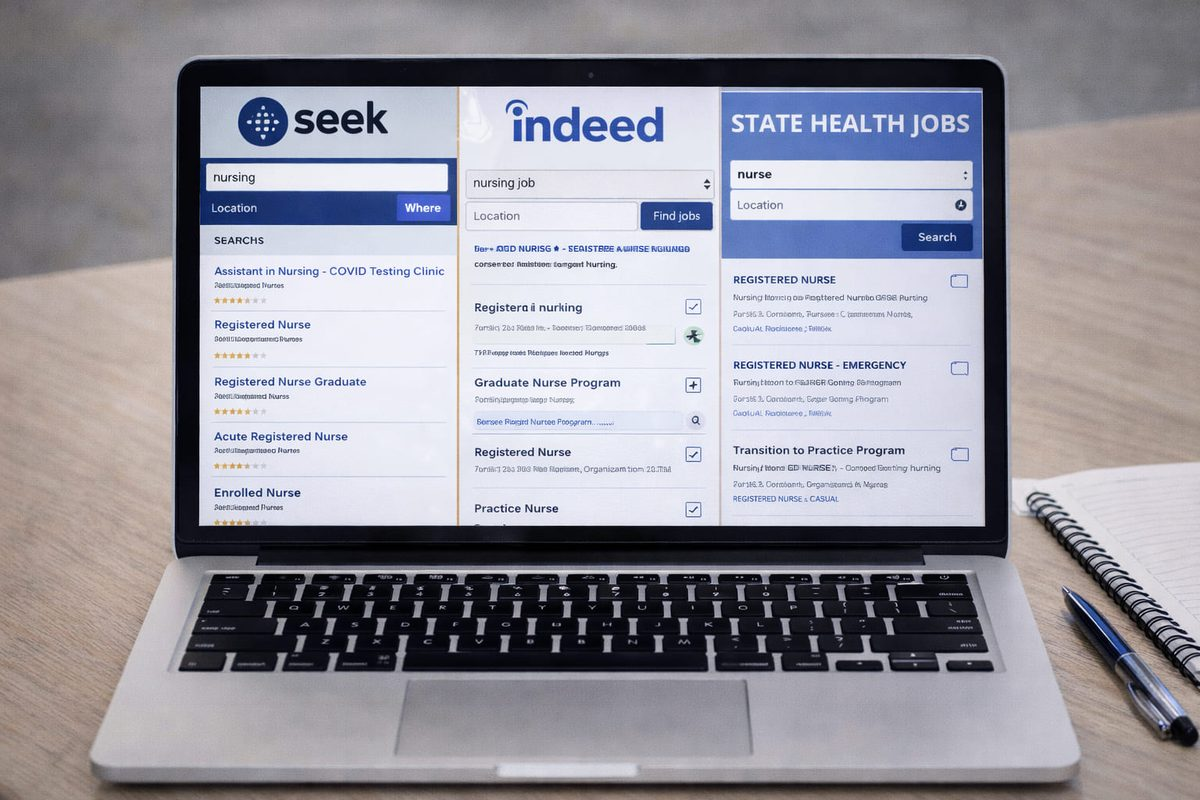
When people search for nursing jobs online, they usually check only one or two websites. But in Australia, different types of nursing jobs appear on different platforms. Some platforms are great for hospital roles, some for aged care, some for graduate programs, and some for regional opportunities.
One of the biggest job platforms in Australia is SEEK. Most major hospitals and aged-care providers post their job openings here. The platform allows you to filter roles by job type, experience level, and location, making it easier to find nursing positions that match your skills. Many international students find their first AIN or support worker role through this platform because employers regularly hire beginners.
Another popular website is Indeed. It collects job posts from various websites, making it a good place to explore a wide range of nursing jobs. If you want to see public, private, aged-care, and community roles all in one place, Indeed can be very helpful. Many rural and regional employers also use this platform because it has a wider reach.
For public hospitals, each state government has its own official job portal. For example, NSW Health, Queensland Health, WA Health, SA Health and other state health services list nursing vacancies on their websites. These roles often include permanent, temporary, and contract positions. They are especially useful if you want hospital experience or want to apply for transition programs.
Another important site is Health Workforce Queensland, Rural Health West, and other rural recruitment organisations. Rural hospitals offer faster hiring and often provide better support for graduates because the demand is higher. Many international students secure their first RN job in regional areas because competition is lower compared to big cities.
Aged-care providers like Bupa, Regis, Opal, and Estia also post job openings on their own websites. These roles are suitable for gaining clinical experience, especially if you are waiting for hospital opportunities. Community and disability nursing roles are also available through platforms like NDIS, Hireup, and Mable.
The most important thing to remember is that you should not depend on one website. You should create accounts on multiple platforms and turn on job alerts. This saves time and ensures you do not miss new opportunities.
3. How Networking Helps You Find Hidden Nursing Jobs (Australian Style)

Networking is one of the most powerful ways to find nursing jobs in Australia. Many graduate roles, hospital vacancies, and clinical support positions are filled internally or through recommendation. This means that the job may never be posted online because someone already knows a candidate who fits the role. Students who understand networking gain a major advantage.
Clinical placements are the best networking opportunity you will ever get. Every nurse, educator, ward manager, and supervisor you meet is a potential reference for future jobs. If you show professionalism, a positive attitude, and strong learning ability, they will remember you. Many hospitals ask placement educators to recommend students for roles, especially when they are hiring urgently. This is why your behaviour on placement impacts your job opportunities.
Another major networking tool is LinkedIn. Many students ignore LinkedIn, but Australian recruiters and nurse unit managers use it actively. You can follow hospitals, connect with nurses, join groups, and share posts that show your interest in healthcare. When a recruiter sees your name multiple times, your chances of being noticed increase.
Attending university career events is also helpful. Hospitals often visit universities to present information about graduate programs, scholarships, or new job openings. When you talk to these representatives, they may remember your name during recruitment season.
Networking also means staying in touch with your classmates. Many students find out about job openings through group chats, Facebook groups, and WhatsApp communities for nurses. When your friends get hired, they may refer you as well.
The key to networking in Australia is being polite, respectful, and confident. Australians prefer straightforward communication. If you want to ask a nurse unit manager for advice or information, you can send a short professional message and introduce yourself. Most people in healthcare are friendly and willing to help students.
4. How to Make Your Nursing Job Applications More Successful (What Employers Want)
Finding job openings is only half the process; the next step is preparing a strong application. Employers in Australia expect a specific format for nursing resumes and cover letters. Your resume should be clear, professional, and easy to read. It should highlight your clinical placements, key skills, certifications, and any previous healthcare experience. Generic resumes without placement examples often get rejected.
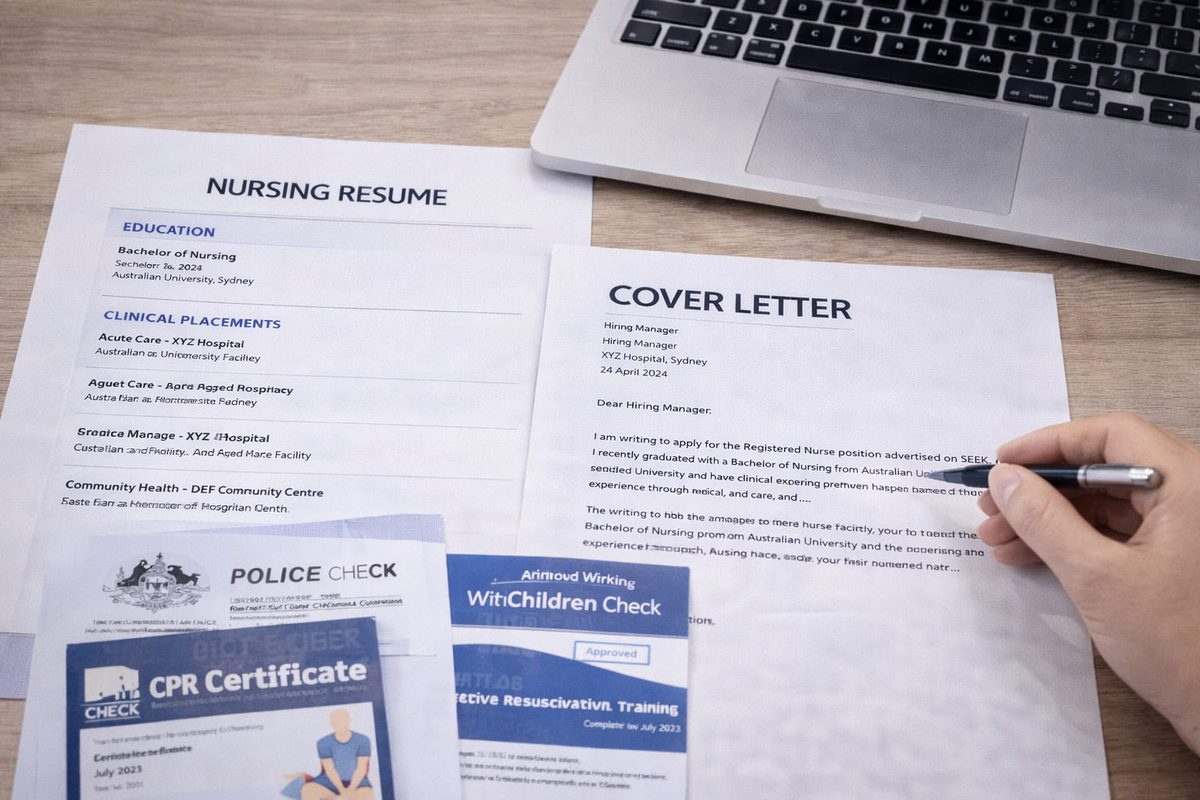
Your cover letter is equally important. Many students make the mistake of sending the same cover letter to every hospital. But employers want to see personalised letters that explain why you want the job, what experience you bring, and how you can contribute to the organisation. Mentioning the hospital’s values or care standards proves that you have done your research.
Another important part of your application is having proper documents ready. Some employers require police checks, working with children checks, immunisation records, and CPR certificates. Having these documents prepared before applying saves time and makes your application stronger.
International students should also mention their visa conditions clearly. Many employers hire student visa holders for AIN roles and hire temporary graduate visa holders for RN roles. If you communicate your visa situation honestly, employers will trust you more.
Finally, sending applications early increases your success rate. Many nursing job posts close early once enough applications are received. Setting job alerts helps you apply within the first 24–48 hours.
5. Tips to Build a Successful Nursing Career Through Smart Job Searching
Finding your first nursing job in Australia may take time, but with a smart strategy, you can build a strong career. One of the most effective tips is to start working early, even while studying. AIN or support worker jobs help you gain confidence, experience, and local references. These roles also help you understand the Australian healthcare environment, making your transition into RN roles much easier.
Another useful strategy is applying to regional areas. Many students focus only on big cities, but rural hospitals offer excellent learning opportunities and often hire new graduates faster. After gaining one or two years of experience, you can move back to the city if you prefer.
It is also important to stay updated with professional development. Completing short courses in manual handling, infection control, medication safety, or dementia care makes your resume stronger. Employers appreciate nurses who take learning seriously.
Finally, always follow up after interviews or applications. A short, polite email thanking the recruiter for their time shows professionalism and keeps your name fresh in their mind. These small habits build a strong impression that can help you stand out from other applicants.
Quick Summary
- (Heading 1 Summary – Job Market):
Australia’s nursing job market is strong but competitive in big cities; understanding public, private, and aged-care sectors helps you apply wisely. - (Heading 2 Summary – Job Platforms):
Different platforms list different nursing roles, so students must use multiple websites, career portals, and alerts to find opportunities. - (Heading 3 Summary – Networking):
Networking through placements, LinkedIn, and university events helps you access “hidden” jobs that are never advertised. - (Heading 4 Summary – Applications):
Strong resumes, tailored cover letters, early applications, and proper documents greatly increase your chances of success. - (Heading 5 Summary – Career Tips):
Starting early, exploring regional jobs, gaining experience, and following up professionally helps you build a long-term nursing career.
Frequently Asked Questions
1. Where do most nurses find jobs in Australia?
Most nurses use SEEK, Indeed, state health portals, aged-care websites, and LinkedIn networking.
2. Is it hard to get a nursing job in Australia as a new graduate?
Competition is high in major cities, but regional jobs and aged-care roles hire more quickly.
3. Do international students get nursing jobs easily in Australia?
Yes, especially in aged care, disability support, and rural hospitals where demand is stronger.
4. What is the best way to network as a nursing student?
Build strong relationships during placements, stay active on LinkedIn, and attend university career fairs.
5. What type of nursing job is best for beginners?
AIN roles, aged-care positions, and community support roles are ideal for gaining experience.