
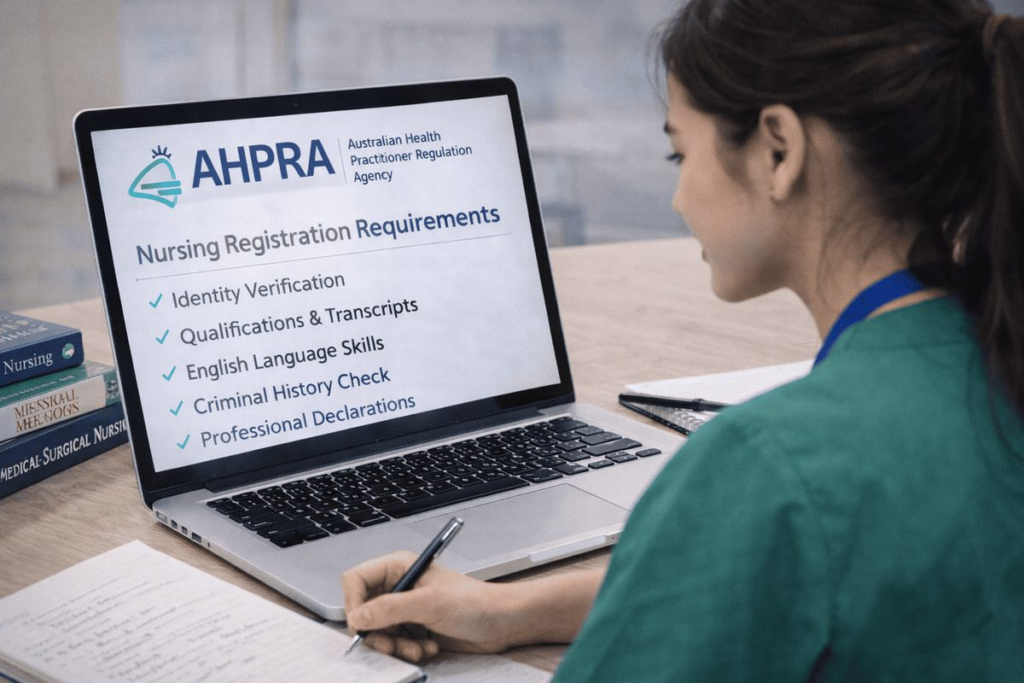
Getting registered with AHPRA (Australian Health Practitioner Regulation Agency) is one of the biggest steps for international nursing students who want to work as nurses in Australia. Many students think the AHPRA process is complicated, stressful, and slow because they are unsure about the documents, steps, timelines, and requirements. But the truth is, once you understand the full roadmap clearly, AHPRA registration becomes much easier to manage. This article explains the entire process in simple English so that international nursing students can follow each step confidently. Whether you are still studying, about to graduate, or applying for the first time, this guide will help you avoid common mistakes and prepare a complete, strong application.
AHPRA checks your identity, qualifications, English scores, fitness to practice, and legal documents before allowing you to work as an Enrolled Nurse (EN) or Registered Nurse (RN). This process ensures the Australian healthcare system maintains high standards and protects patients. Many international students delay or struggle because they do not plan ahead. The earlier you understand AHPRA, the smoother your transition from student to nurse will be. This roadmap shows exactly what to prepare, when to submit, how long things take, and what mistakes to avoid.
1. Understanding AHPRA: What It Is and Why It Matters for International Students
AHPRA is the national organisation that regulates healthcare professions in Australia, including nursing and midwifery. Every nurse must be registered with AHPRA before they can legally work. It does not matter if you studied in Australia or overseas—registration is required for everyone. For nursing students, understanding AHPRA early is important because it influences your job applications, visa planning, and career timeline. Many hospitals will not hire or even consider your application until you have submitted your AHPRA documents or at least received confirmation of your pending application.
AHPRA follows strict national standards set by the Nursing and Midwifery Board of Australia (NMBA). They evaluate whether you meet all professional, academic, and safety requirements to practice in Australia. International students often find the process overwhelming because AHPRA requires official documents, sealed transcripts, identity evidence, English test results, and statements of service. But once you learn the requirements clearly, the process becomes manageable.
AHPRA registration also opens many opportunities. Once registered, you can apply for RN positions, graduate nurse programs, state health jobs, and roles in aged care, community nursing, and hospitals. Employers prefer applicants who already have registration, so completing this process early improves your chances of being hired. Understanding the roadmap gives you a major advantage over other students who start preparing too late.
2. AHPRA Registration Documents Checklist (Step-by-Step Guide for International Students)
The most important part of the AHPRA process is gathering the correct documents. Many applicants face delays because they submit incomplete paperwork or documents that do not meet AHPRA’s standards. AHPRA accepts only certified, official documents, and every document must match your identity details exactly. Preparing your documents early saves months of waiting.
AHPRA usually requires the following documents from international students:
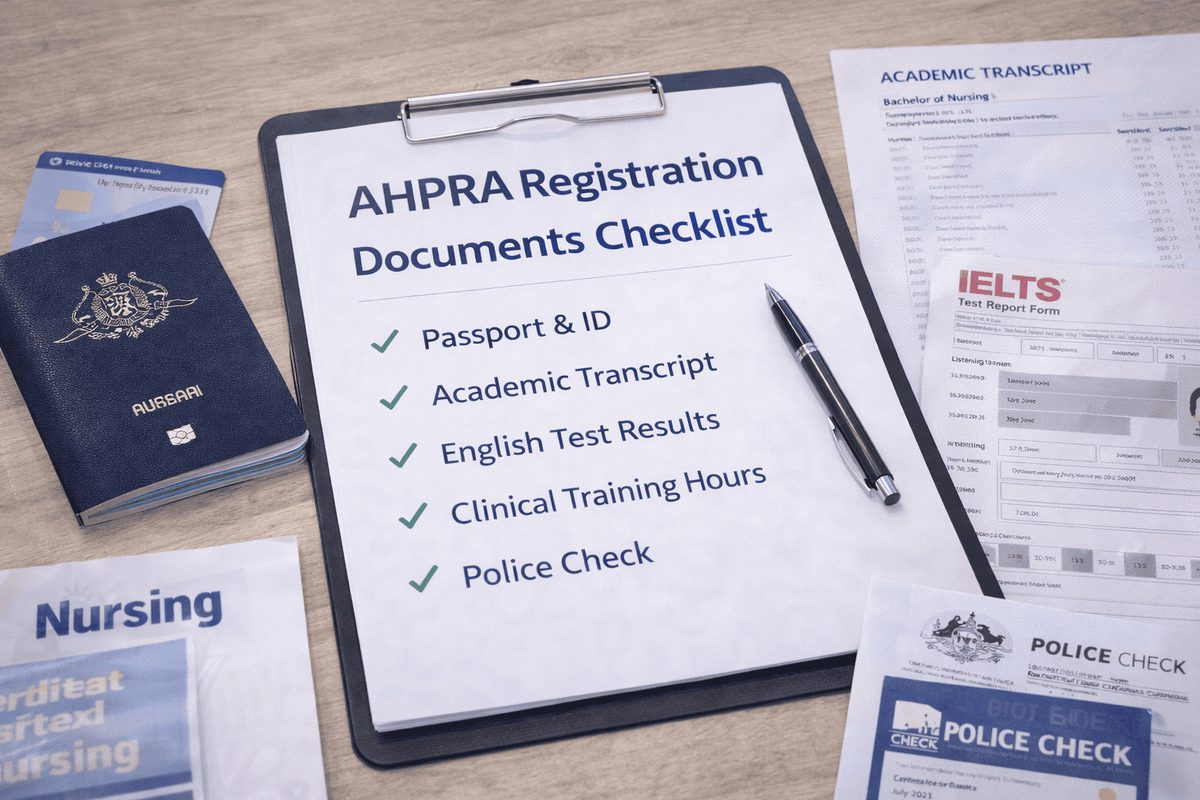
Identity Documents:
You must provide a combination of passport, birth certificate, driver’s licence, or national ID card. Your name must match exactly across all documents. If your name changed, you need a marriage certificate or legal name-change document. A small spelling mistake can delay your registration.
Proof of Qualification:
This includes your Bachelor of Nursing or Diploma of Nursing transcript, completion letter, and sometimes a qualification statement from your university or TAFE. The completion letter confirms you have finished your course and met Australian standards. Transcripts must include your clinical hours.
Clinical Placement Evidence:
AHPRA may ask for detailed placement logs or summaries showing your total clinical hours. Australian nursing programs usually meet the 800-hour requirement, but you must prove it through official documents.
English Language Requirements:
International students must submit valid scores from IELTS, PTE, or OET. AHPRA requires minimum scores such as IELTS 7.0 in each band, PTE 65 in each component, or OET Grade B across all parts. Scores must be from one or two sittings depending on the test rules.
Passport-Style Photo:
You must submit a recent passport-sized photo signed by an authorised professional who confirms your identity. AHPRA is strict about photo format and signatures.
Criminal History Check:
AHPRA conducts both an Australian police check and an international check if you lived overseas for six or more months. Any issues must be explained honestly.
Professional Declarations:
You must answer questions about health conditions, previous registrations, disciplinary actions, or legal issues. These questions must be answered truthfully.
Preparing these documents in advance ensures your application is complete when you submit it. Many students begin collecting documents halfway through their final semester to avoid delays after graduation.
3. AHPRA Registration Timeline: How Long It Takes and When to Apply
Timeline is the most confusing part for most international students. AHPRA does not provide a fixed processing time because every application is different, but there are common patterns. Understanding the general timeline helps you plan your visa, job search, and graduate program applications.
Most students begin preparing documents in the final semester of their course. Once you receive your completion letter, you can officially apply. Some universities send results directly to AHPRA, but you must still submit your own application form.
The initial assessment usually takes 4–6 weeks. During this period, AHPRA reviews your identity documents, transcripts, English results, and clinical hours. If anything is missing or unclear, AHPRA may email you for further evidence. Every request for additional documents adds more time, so a complete application is important.
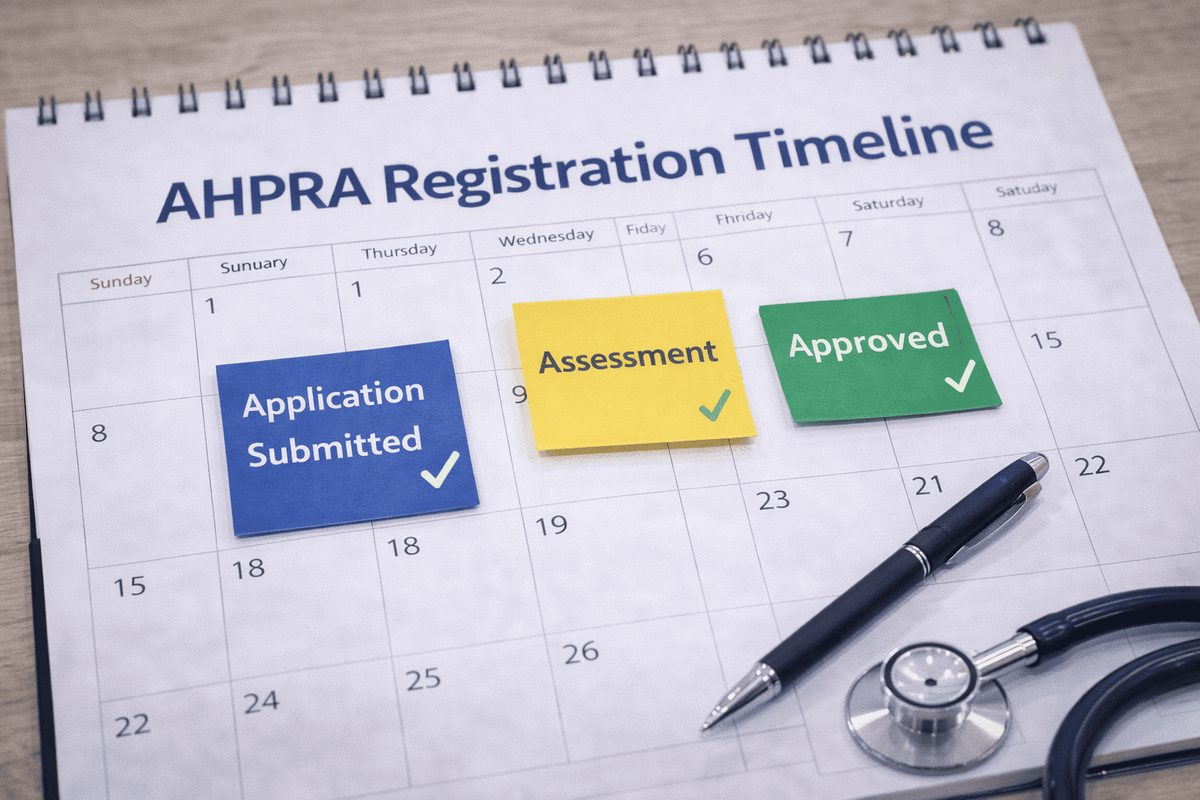
For most international students, the total process takes between 6–12 weeks. However, it can be faster if your documents are perfectly prepared. Students applying during peak seasons—such as December to March—may experience longer waiting times because many graduates apply at the same time.
Once your registration is approved, AHPRA will email your registration number. This number allows you to work legally as a nurse in Australia. You do not receive a physical certificate; everything is digital. The registration will also appear publicly in the AHPRA online register.
Planning your job applications around this timeline is important. Many hospitals hire RN graduates only after they receive registration confirmation. If you start the process early, you avoid missing job deadlines.
4. Common AHPRA Mistakes to Avoid (Most Students Make These Errors)
AHPRA rejects or delays thousands of applications every year simply because students make preventable mistakes. Understanding these mistakes helps you avoid unnecessary stress and waiting.
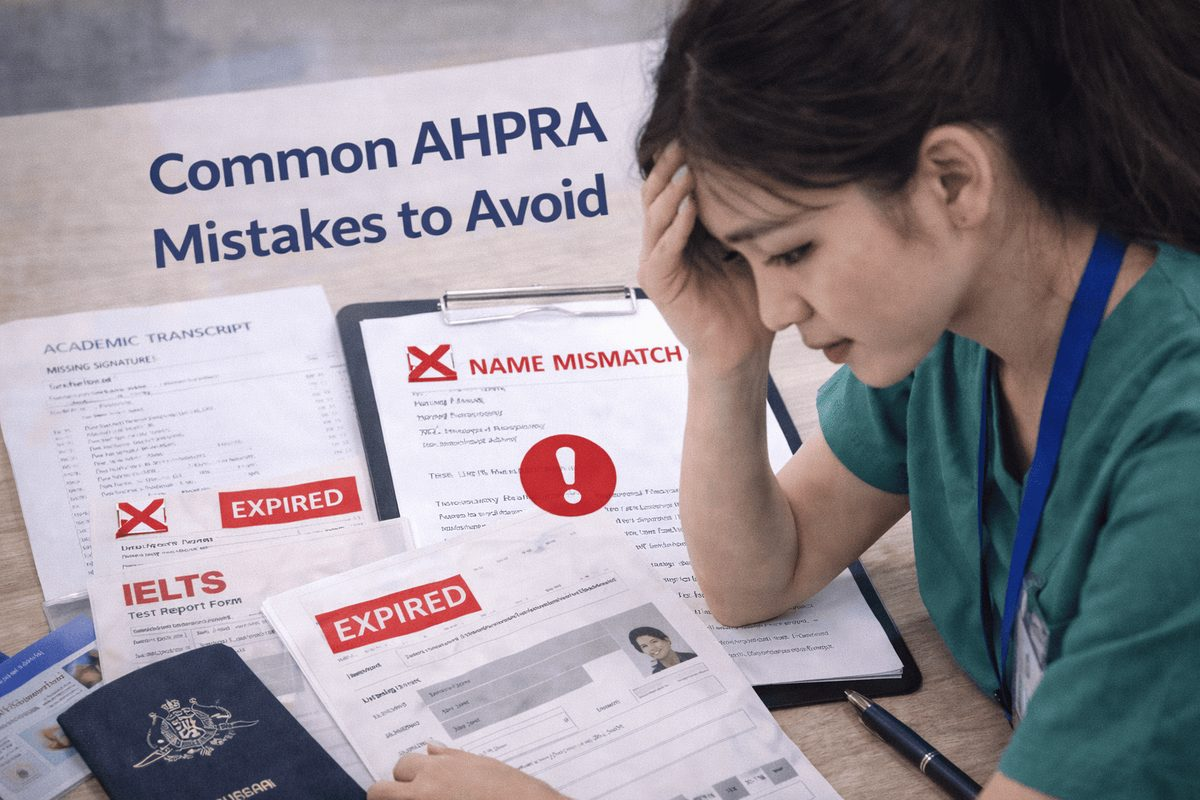
One of the biggest mistakes is submitting incomplete documents. Students often forget certified copies, signatures, or matching identity details. AHPRA requires exact formatting, so even a small mismatch can stop progress. Another common mistake is providing transcripts or completion letters that are not official or not sealed. AHPRA only accepts documents directly from the institution or certified by authorised witnesses.
English test issues are also common. Many students submit expired test results without realising that AHPRA only accepts scores within a two-year validity window. Sometimes students try to submit PTE or IELTS scores in screenshots instead of official reports, which AHPRA does not accept.
Another mistake is submitting the wrong passport photo—AHPRA has very strict photo guidelines. Incorrect signatures, outdated photos, or unclear images can lead to delays.
Students also misunderstand the declaration section. They assume minor issues such as medical conditions, previous visa refusals, or academic warnings should be hidden. But AHPRA requires full honesty and transparency. Hiding information can cause much bigger problems later.
Finally, many students apply too late. They wait months after graduation, which delays job offers and graduate program applications. Applying early helps you stay ahead of deadlines and reduces stress.
5. Tips for a Smooth AHPRA Registration and Strong Start to Your Nursing Career
AHPRA registration should not be stressful if you follow a proper plan. Start early, keep documents organised, and understand the exact requirements. Preparing a folder with all your academic, English, and identity documents helps you stay on track. You can also create a checklist to monitor your progress.
Another helpful tip is to communicate with your university. Most universities have official staff members who understand AHPRA requirements and can guide you through documents such as placement summaries and completion letters. Asking questions early prevents confusion later.
It is also important to keep your English test results ready well before graduation. Many students wait until the last moment, which creates unnecessary pressure. Taking the exam while studying helps you avoid delays.
Staying updated through the AHPRA website is also essential. Requirements sometimes change, and the official site always has the latest guidelines. Relying only on social media or other students’ experiences can lead to incorrect information.
Finally, once you receive registration, update your resume, LinkedIn profile, and job applications. Employers want to see your AHPRA registration number. Having your registration early gives you a strong advantage when applying for RN positions, hospital roles, and graduate nurse programs across Australia.
Quick Summary
- (Heading 1 Summary – Understanding AHPRA):
AHPRA regulates nursing in Australia and checks if international students meet all safety and professional standards before working. - (Heading 2 Summary – Documents Checklist):
International students must prepare identity documents, transcripts, completion letters, clinical hours, English test scores, police checks, and declarations. - (Heading 3 Summary – Timeline):
AHPRA processing usually takes 6–12 weeks; delays happen if documents are missing or if you apply during peak seasons. - (Heading 4 Summary – Mistakes to Avoid):
Common errors include incomplete documents, expired English scores, mismatched identity details, and late applications. - (Heading 5 Summary – Success Tips):
Start early, organise documents, get guidance from your university, stay updated with AHPRA rules, and apply for jobs as soon as registration is approved.
Frequently Asked Questions
1. How long does AHPRA registration take for international nursing students?
Most applications take 6–12 weeks depending on document completeness and season.
2. What documents do I need for AHPRA?
You need identity documents, academic transcripts, English test results, clinical hours, police checks, and a passport-style photo.
3. Do I need an English test for AHPRA registration?
Yes, unless you meet strict exemptions. IELTS, PTE, and OET are accepted.
4. Can I apply for jobs before AHPRA registration?
You can apply, but most employers require at least proof of application or confirmation letter.
5. What happens if AHPRA delays my application?
You may need to submit additional documents; responding quickly helps speed up processing.