
The healthcare landscape in 2026 is witnessing a powerful transformation as more highly skilled nurses step into the world of private practice. Starting a nurse-led clinic in Australia is a bold and rewarding move that allows you to offer specialized care directly to your community. However, moving from a clinical employee to a business owner involves more than just medical expertise; it requires navigating a strict "Regulatory Framework." From AHPRA compliance to Medicare provider numbers, the legal hurdles are designed to ensure patient safety and professional accountability.
For nursing students and registered professionals, the dream of independence must be built on a solid legal foundation. In Australia, the laws governing "Regulated Health Services" are among the most stringent in the world. Failing to tick the right boxes can lead to heavy fines, the loss of your registration, or personal liability. This comprehensive 2026 checklist breaks down the essential legal steps you must take to launch your nurse-led clinic safely, legally, and successfully.
1. Professional Endorsement and Scope of Practice
Before you even sign a lease for a clinic space, you must ensure your NMBA (Nursing and Midwifery Board of Australia) registration supports your intended business model. In 2026, the most successful nurse-led clinics are headed by Nurse Practitioners (NPs) or Endorsed Midwives, as these roles have the legal "Scope of Practice" to prescribe medications (Schedule 2, 3, 4, and 8) and order diagnostic tests. If you are a Registered Nurse (RN) opening a clinic, such as a wound care or wellness center, you must be extremely careful not to exceed your legal boundaries.
Your Scope of Practice is the legal "fence" around what you can and cannot do. For example, if your clinic offers cosmetic injectables, you must have a formal arrangement with a prescribing doctor or an NP unless you hold that endorsement yourself. The NMBA's 2026 "Decision-Making Framework" is your primary guide here. You must be able to prove that you have the education, training, and competence for every service you advertise. Operating outside your scope is not just an ethical issue; it is a breach of the National Law, which can result in immediate suspension of your license to practice.
2. Choosing the Right Business Structure (ABN vs. ACN)
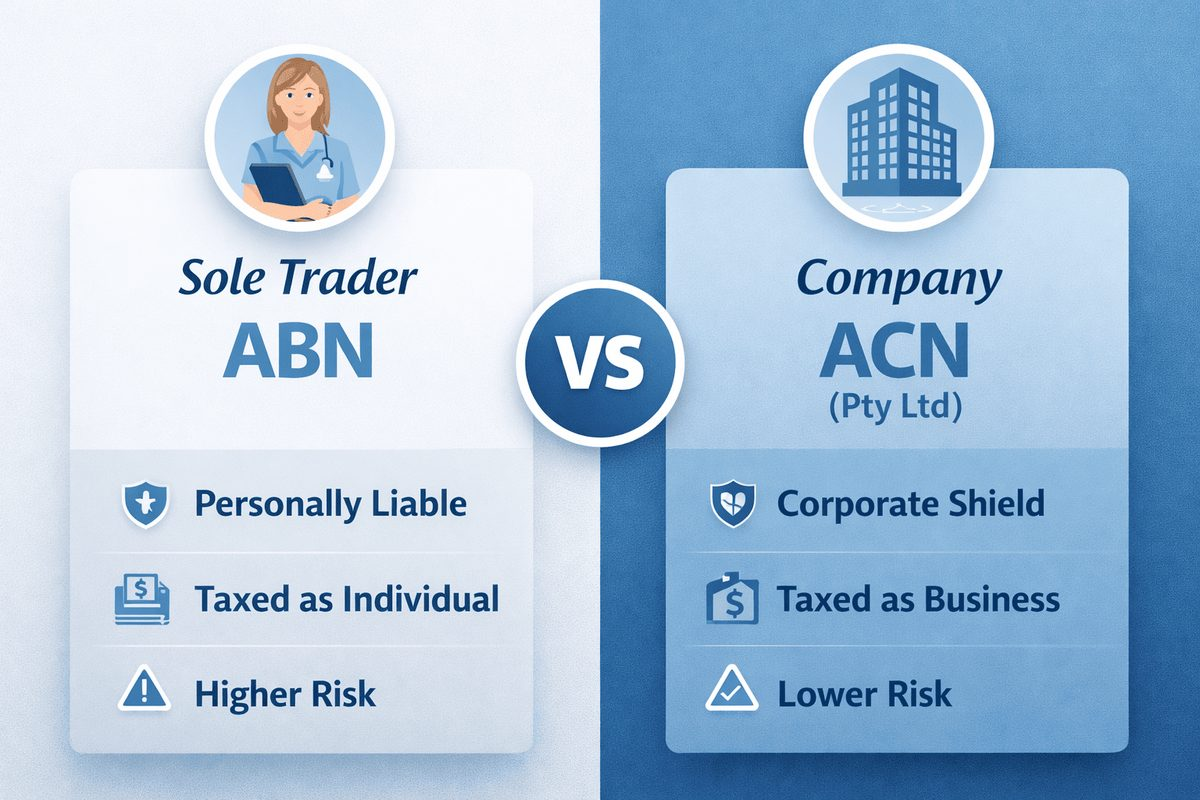
Running a clinic is running a business, and the Australian government requires you to choose a formal structure. Most nurses start as a Sole Trader using an ABN (Australian Business Number) because it is the simplest and cheapest to set up. However, as a sole trader, you are "Personally Liable" for the business. This means if the clinic is sued or falls into debt, your personal assets (like your home) could be at risk. In 2026, many nurses are opting to register a Company (Pty Ltd), which creates a separate legal entity and provides a "Corporate Shield" for their personal finances.
[Image showing a comparison of Sole Trader vs. Company structures for healthcare clinics]
Beyond the structure, you must register your Business Name with ASIC (Australian Securities and Investments Commission). You also need to consider your tax obligations, including GST (Goods and Services Tax). While many nursing services are "GST-free," selling products like skin creams, supplements, or certain medical supplies often requires you to collect and pay GST. Consulting with a "Healthcare Accountant" in the early stages is a critical legal step to ensure you aren't hit with unexpected tax bills or penalties from the ATO.
3. Mandatory Insurance: Protecting Your Practice
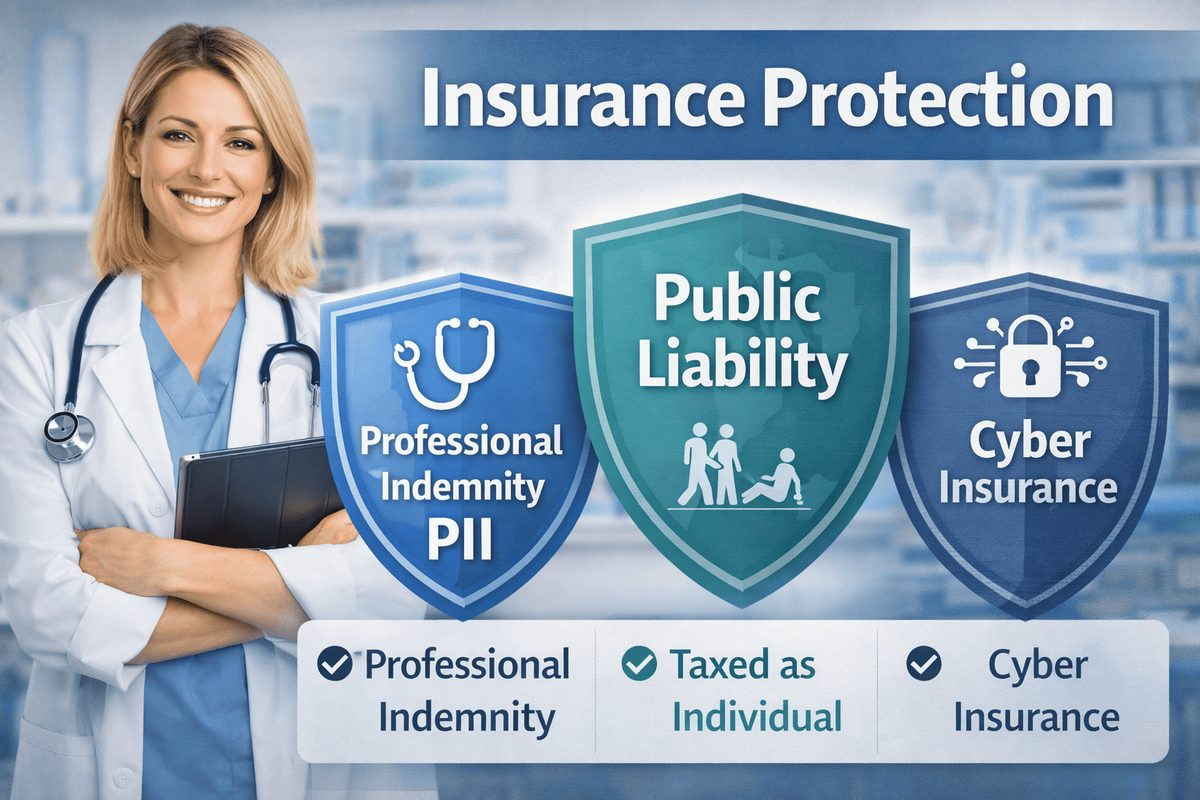
In Australia, you cannot legally practice as a nurse without Professional Indemnity Insurance (PII). When you own the clinic, your insurance needs become more complex. You need a policy that covers not just your individual actions, but the "Entity" itself. This is known as Medical Malpractice Insurance. In 2026, providers like Guild Insurance and the ACN offer specialized packages for nurse-led clinics that include coverage for clinical errors, "vicarious liability" (if you hire other staff), and the costs of legal representation for AHPRA investigations.
You also must hold Public Liability Insurance for your physical premises. If a patient trips on a rug or slips in your waiting room, this insurance protects you from the resulting claim. Additionally, with the rise of digital health records in 2026, Cyber Insurance is now considered a "legal necessity." Under the Privacy Act, you are legally responsible for protecting patient data. If your clinic’s computer system is hacked and patient records are leaked, the fines and "Notification Costs" can be hundreds of thousands of dollars. Having a "Cyber Rider" on your insurance policy is the only way to mitigate this modern risk.
4. Medicare Provider Numbers and Billing Compliance
If you want your patients to receive Medicare Rebates for your services, you (and any other NPs in your clinic) must apply for a Medicare Provider Number for that specific location. In 2026, the process is managed through Services Australia and the PRODA (Provider Digital Access) portal. You cannot simply use a provider number from a previous job; a unique number is required for every "Service Site" where you work. For Nurse Practitioners, this also involves getting a PBS (Pharmaceutical Benefits Scheme) Prescriber Number.
Legal compliance in billing is a high-priority area for the Australian government. The Professional Services Review (PSR) monitors billing patterns to catch "Inappropriate Practice." You must ensure that every Medicare claim meets the exact "Item Description" in the MBS (Medicare Benefits Schedule). Keeping "Contemporaneous" (real-time) notes that justify every billed item is your best legal defense. In 2026, the use of AI to help with billing is common, but the legal responsibility for the accuracy of that claim rests entirely with the "Provider" who signed off on the service.
5. Facility Licensing and "Safe Patient Care" Laws

on which state you are in (NSW, VIC, QLD, etc.), your physical clinic may need a Private Health Facility Licence. In states like Western Australia and South Australia, if you perform certain "Prescribed Procedures"—which can include some cosmetic surgeries or treatments involving sedation—your clinic must be licensed and audited by the state's Department of Health. These licenses ensure that your facility meets strict "Infection Control," "Sterilization," and "Emergency Equipment" standards.
You also need to comply with Local Council Planning and Zoning laws. You cannot simply open a clinic in a residential house without "Change of Use" approval from the council. Furthermore, if you employ other nurses or administrative staff, you must follow the Fair Work Act and the Safe Patient Care Act (where applicable). This includes providing correct "Award Wages," superannuation, and a safe working environment. In 2026, "Psychosocial Safety" is a major focus of WHS (Work Health and Safety) laws, meaning you are legally responsible for preventing workplace bullying and excessive stress within your clinic team.
Frequently Asked Questions
Q: Can a Registered Nurse (RN) open a clinic without a doctor?
A: Yes, but with limits. An RN can own and operate a clinic (e.g., for foot care, wound management, or health coaching). However, if the services require "Prescription-Only" medications (Schedule 4), the RN must have a legal partnership or standing orders from a doctor or a Nurse Practitioner.
Q: How do I get a Medicare Provider Number for my new clinic?
A: You must apply through Services Australia using the PRODA portal. You will need to provide your AHPRA registration details and the specific address of your new clinic. The process usually takes 2–4 weeks to be approved.
Q: Do I need a special license for a "Mobile" nurse-led clinic?
A: While you may not need a "Facility License" for a van or home-visiting service, you still need your ABN, Professional Indemnity Insurance, and a "Home Base" address for your Medicare Provider Number. You must also ensure your "Mobile Infection Control" protocols meet NMBA standards.
Q: What is "Title Protection" in Australian law?
A: Under the National Law, you can only use titles like "Nurse Practitioner" or "Specialist" if you are formally registered as such. Advertising yourself as a "Specialist Cosmetic Nurse" when you do not hold an AHPRA-recognized specialty is a criminal offense and can result in heavy fines.
Q: Is "Accreditation" mandatory for a small nurse-led clinic?
A: For many small clinics, Accreditation (like the RACGP or AGPAL standards) is voluntary. However, it is highly recommended as it demonstrates to patients and insurers that your clinic meets the "National Safety and Quality Health Service (NSQHS)" standards. It may also be required if you want to access certain government grants.