

Summary
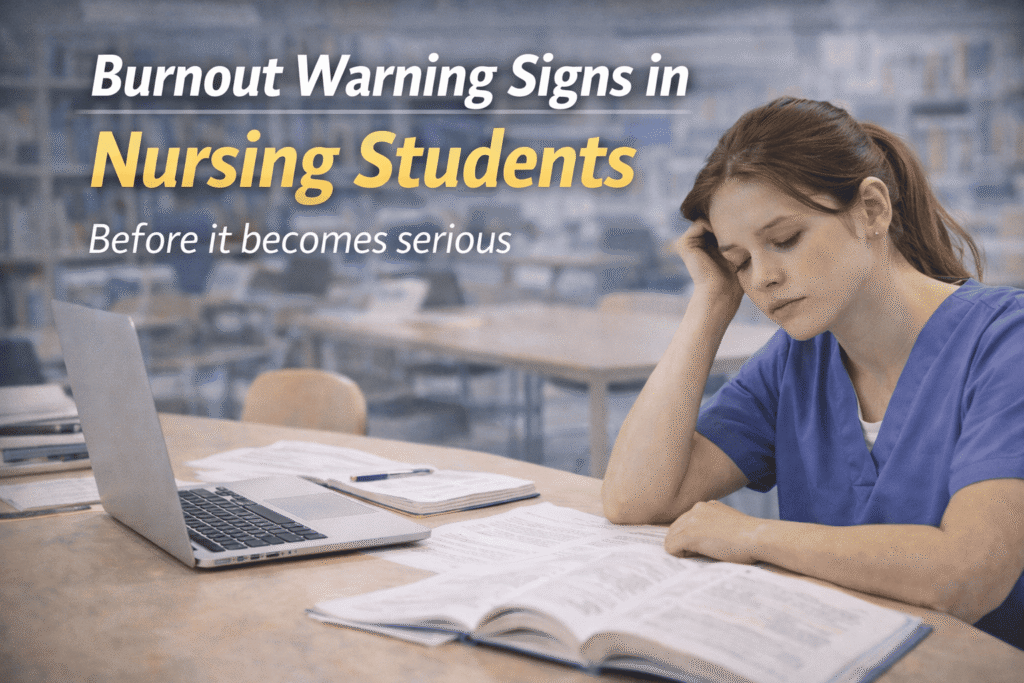
Many nursing students experience burnout, but very few are aware of it at an early stage. Most students don’t realize they are burned out until their health deteriorates, their grades decline, or they begin to fear placements. Burnout is already severe by then and more difficult to overcome.
Students studying nursing encounter particular challenges. Energy and motivation can be gradually depleted by long study sessions, clinical rotations, emotional patient contact, financial strain, and ongoing evaluation deadlines. Burnout develops gradually over time, in contrast to transient stress. It doesn’t always appear spectacular at first, and it doesn’t happen overnight.
With a strong emphasis on early warning signs, doable adjustments students may make, and when professional assistance is required, this article outlines burnout warning signs in nursing students before it gets serious. The goal is to help nursing students recognize burnout early and protect both their mental health and academic future.
What Burnout Really Means for Nursing Students
Feeling worn out or anxious before an exam is not the same as burnout. Burnout is a condition of persistent mental, emotional, and physical tiredness brought on by prolonged stress without adequate recuperation. Burnout frequently develops gradually over the course of semesters and placements for nursing students.
Burnout in nursing school can impact motivation, focus, empathy, and self-assurance. Even though they continue to attend classes and placements, they may feel overwhelmed, numb, or distant on the inside. Many nursing students disregard early symptoms and push themselves harder since they are great performers, which actually exacerbates burnout.
Students who understand what burnout is are better able to see that it is not a sign of personal failure. It is a reaction to ongoing stress, and even capable and driven students may experience it.
Early Burnout Warning Signs Nursing Students Often Ignore

Many students ignore the early warning signals of burnout because they are typically mild. These symptoms frequently manifest weeks or months before to the onset of major issues.
Constant mental tiredness is one typical early warning indication. Even after getting a good night’s sleep, nursing students may still feel exhausted. Simple things take a lot more effort, and studying feels heavier than normal. Pupils may become aware that they are reading the same content again without understanding it.
Emotional separation is another early indicator. It’s possible that nursing students will feel less emotionally invested in their patients, peers, or even their own objectives. Once-meaningful tasks may become tedious or pointless. The mind frequently uses this emotional detachment as a coping mechanism for overload.
Another early warning indicator is irritability. Small things like group projects, tutor criticism, or small placement difficulties can be frustrating. Pupils may feel bad about being agitated, but they may not know why.
Another important indicator is a decline in motivation. Nursing students may begin to put off preparing for their placement, skip classes, or procrastinate excessively. This is frequently an indication of emotional tiredness rather than laziness.
Early on, physical symptoms may also manifest. Headaches, gastrointestinal issues, recurrent colds, tense muscles, or irregular sleep patterns are some of them. Stress starts to manifest physically when it remains in the body for an extended period of time.
Early detection of these symptoms is crucial. Burnout develops gradually rather than all at once.
Academic and Placement Signs That Burnout Is Developing

Before students are aware of it, burnout frequently manifests itself in their clinical and academic performance.
Nursing students may find it challenging to focus in class or when studying. They could feel overburdened by tasks that were previously doable. Even in cases where students have demonstrated good performance in the past, a decline in confidence may cause them to question their skills.
Burnout during a clinical placement might manifest as heightened anxiety prior to shifts, emotional numbness while caring for patients, or a sense of alienation from the medical staff. Instead of participating in educational possibilities, students can begin to count the hours till the end of their shift.
During their placement, some students suffer from severe self-criticism. Feedback can be taken extremely personally, and minor errors can be devastating. Instead than being a sign of incompetence, this emotional sensitivity is frequently associated with fatigue.
Burnout can also reduce empathy. Students may feel guilty for not feeling as compassionate as they believe they should. This guilt can worsen burnout, creating a cycle of emotional exhaustion.
Practical Changes Nursing Students Can Make Early
Recovering from burnout doesn’t necessarily necessitate significant life adjustments. Early, small, doable changes can dramatically lower the risk of burnout.
Setting reasonable daily expectations is one significant adjustment. Long to-do lists are a common source of stress for nursing students. Dividing work into manageable chunks relieves mental strain and fosters a feeling of advancement.
Time limits are also crucial. Studying nonstop leads to fatigue and does not enhance learning. Regular pauses, even brief ones, aid in brain recovery and enhance concentration.
Another important component is sleep. Many nursing students forgo sleep in order to learn more, yet sleep deprivation impairs focus and increases emotional reactivity. Sleep protection is crucial for learning and mental well-being; it is not a sign of sloth.
Burnout is also impacted by nutrition and hydration. Fatigue and anxiety can be exacerbated by irregular meals, too much caffeine, and dehydration. Both physical and mental resilience are supported by simple routines like eating meals on a regular basis and drinking water.
Talking about their experiences helps nursing students emotionally. This might happen with acquaintances, students, even dependable family members. Burnout is frequently exacerbated by concealing stress.
Another defensive talent is the ability to say no. There may be pressure on nursing students to volunteer, take on more shifts, or overcommit. Resting instead of working nonstop is self-preservation, not a sign of failure.
Why Nursing Students Delay Seeking Help
Many nursing students put off getting assistance because they think they can handle it on their own. Resilience is highly valued in nursing culture, which may inadvertently deter students from seeking help.
Some students worry that asking for assistance would have an impact on their future enrollment or academic record. In actuality, early support is encouraged by academic institutions and professional associations because it averts more significant issues down the road.
Some fear that they may be perceived as weak or unprofessional. High achievers who are accustomed to managing pressure on their own are particularly prone to this idea.
There are also financial considerations. Unaware that universities frequently offer free or inexpensive counseling services, some students think mental health care is costly.
Knowing these obstacles enables students to see that postponing assistance frequently results in a longer and more challenging recovery.
When Nursing Students Should Seek Professional Help
Self-help techniques are insufficient after a certain point. It’s critical to know when to ask for assistance.
If burnout symptoms don’t go away after a few weeks, professional assistance should be taken into consideration. Signs that additional assistance is required include persistent tiredness, depression, anxiety, or lack of enthusiasm.
If students have panic attacks, persistent melancholy, hopelessness, or suicidal thoughts, they should get care right once. These are severe symptoms that call for quick assistance.
Strong evidence that professional assistance is required include academic warning notifications, failed exams, and inconsistent attendance at placement. Early assistance can help avoid problems with academic advancement.
Mental health specialists, general practitioners, and university counseling programs are all qualified to help students deal with burnout. Using these services is a responsible and professional choice.
How Universities and Nursing Schools Can Support Burnout Recovery
For nursing students who are experiencing burnout, Australian universities provide a variety of support channels. These could include academic advisers, placement coordinators, counseling services, and support groups for people with disabilities or wellness.
When burnout impacts performance, students might ask for academic support programs, flexible placement, or study modifications. Instead than punishing students, these options are there to safeguard them.
Understanding available support empowers students to seek help before burnout becomes severe.
Recovering from Burnout While Continuing Nursing Studies
Recovering from burnout does not always entail giving up on your studies. Many students make the necessary adjustments to continue their degrees while recovering.
Reducing stress, enhancing routines, and treating emotional stressors are all common components of recovery. Students can gradually regain their confidence and motivation with assistance.
Nursing is not a bad career option because of burnout. Despite experiencing burnout during their training, many students go on to become exceptional nurses. Recovery is made possible by early detection and assistance.
Final Thoughts: Burnout Is a Signal, Not a Failure
Burnout is neither a sign of weakness nor a lack of dedication. It is an indication that something has to be attended to. Burnout is inevitable for nursing students because they are learning complex skills while providing care for others.
Burnout can be avoided by identifying early warning indicators, making sensible adjustments, and asking for assistance when necessary. Being a competent nurse includes protecting mental health, not the other way around.
People Also Ask
1. Is burnout common among nursing students?
Yes, nursing students face high academic and emotional demands, making burnout common.
2. How do I know if I’m burned out or just stressed?
Burnout lasts longer and includes emotional exhaustion, detachment, and low motivation.
3. Can burnout affect clinical placements?
Yes, burnout can reduce focus, confidence, and emotional engagement on placement.
4. Should I tell my university if I feel burned out?
Yes, universities can provide counselling, academic support, and placement adjustments.
5. Can nursing students recover from burnout and continue their degree?
Yes, with early support and practical changes, recovery is very possible.
Useful Documents for every Nursing Student
CV Section Template for Nursing students
AHPRA – NMBA Registration Document Checklist (International Students-Graduates)
Clinical Placement Reflection Template (NMBA-aligned)
Cover Letter Template for Nursing Students
Disclaimer: “I researched this information on the internet; please use it as a guide and also reach out to a professional for assistance and advice.This information is not medical advice, so seek your medical professional’s assistance.”