

Unpaid clinical placements are one of the hardest parts of studying nursing. Many nursing students feel motivated and confident in the classroom, but when placement weeks arrive, reality hits hard. Long shifts, travel costs, reduced work hours, and no income can quickly create financial and emotional pressure. For some students, unpaid placement weeks become the point where they start questioning whether they can continue their nursing degree at all.
This experience is extremely common in Australia. Nursing placements are unpaid because they are considered part of professional training, yet they often require students to work full-time hours. Balancing placements with rent, food, transport, and bills can feel impossible, especially for students who rely on part-time work to survive.
This article explains how to survive unpaid placement weeks without quitting your nursing degree, focusing on budget survival strategies, how to talk to employers, and support options available in Australia. Everything is written in simple English so nursing students can understand and apply it easily.
Why Unpaid Placement Weeks Are So Financially Challenging
Unpaid placements are demanding because they often replace the time students would normally use for paid work. Many nursing placements require early starts, long shifts, and rotating schedules that make it difficult to keep regular job hours. Students may also need to travel long distances, buy uniforms, or pay for parking and meals.
For students who live week to week financially, this sudden loss of income can be frightening. International students, mature-age students, and students supporting families often feel this pressure even more strongly. The stress is not only about money; it also affects concentration, sleep, and mental health.
Understanding that this struggle is structural, not personal, helps students stop blaming themselves. The system is challenging, and many students feel exactly the same way during placement periods.
Budget Survival Strategies for Unpaid Placement Weeks
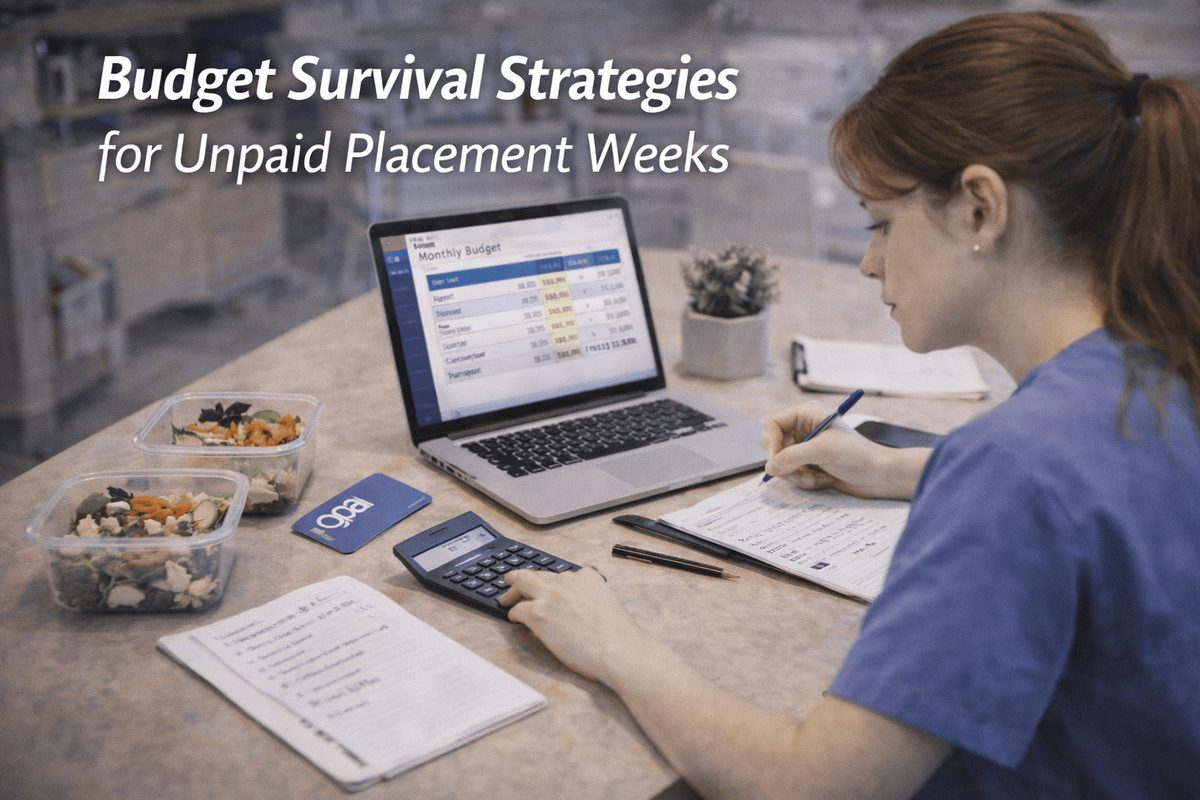
Surviving unpaid placement weeks starts with realistic budgeting. This does not mean perfect budgeting or extreme sacrifice. It means planning honestly around reduced income and increased expenses.
Before placement begins, it helps to calculate essential costs only. These include rent, utilities, food, transport, phone bills, and any compulsory placement costs. Non-essential spending should be reduced temporarily, not permanently. This mindset makes budgeting feel more manageable.
Meal planning is one of the most effective survival strategies. Preparing simple meals at home and bringing food to placement reduces daily expenses significantly. Even small daily purchases, like takeaway coffee or snacks, add up quickly over several weeks.
Transport planning is also important. Students can explore public transport concessions, carpooling with other students, or planning routes that reduce travel costs. Some hospitals offer discounted parking or public transport access, so asking early can help.
Another key strategy is building a small buffer before placement starts. Even saving a small amount each week before placement can reduce stress later. The goal is not to save a large amount but to reduce panic during unpaid weeks.
How to Talk to Employers About Placement Periods
Many nursing students worry about talking to their employers about unpaid placements. They fear losing shifts, appearing unreliable, or being replaced. However, clear communication often leads to better outcomes than silence.
The best approach is to speak to employers early, ideally as soon as placement dates are confirmed. Explaining that placement is a compulsory part of a professional degree helps employers understand that it is not optional.
Some employers are willing to offer flexible arrangements. This may include reduced hours before placement, extra shifts after placement, or temporary leave without penalty. While not all employers can accommodate this, many appreciate honesty and planning.
It is helpful to be clear and professional when discussing placement. Students can explain the dates, expected hours, and how long the placement will last. Showing commitment to returning to work after placement can reassure employers.
If an employer is unsupportive, this is not a reflection of the student’s worth. In some cases, students may need to consider alternative work arrangements or short-term financial strategies during placement periods.
Managing Emotional Stress During Unpaid Placement Weeks
Financial stress during unpaid placement weeks often leads to emotional exhaustion. Students may feel trapped, anxious, or resentful, especially when working long hours without pay. These feelings are valid and common.
One emotional challenge is comparing oneself to others. Some students have family support or savings, while others do not. Comparing situations often increases stress rather than reducing it.
It is important for nursing students to acknowledge their feelings rather than suppress them. Talking to trusted friends, classmates, or family members can reduce emotional pressure. Sharing the experience helps students feel less alone.
Self-care during placement does not need to be expensive or time-consuming. Simple routines, such as short walks, adequate sleep, and small moments of rest, can protect mental health during intense weeks.
Support Options Available to Nursing Students in Australia
Many nursing students are unaware of the support options available during unpaid placement periods. Australian universities and governments offer several forms of assistance.
Universities often provide emergency financial assistance or student hardship funds. These are designed for students experiencing short-term financial difficulty, including unpaid placements. Applying early increases the chance of support.
Some universities also offer food vouchers, transport assistance, or temporary accommodation support. These services are often confidential and student-focused.
For eligible students, government support such as Centrelink payments may help during placement weeks. While not all students qualify, it is worth checking eligibility, especially if income drops significantly.
International students can access support through university international offices, which may offer advice, emergency funds, or referrals to community services.
Placement coordinators and student advisors can also help students plan placement schedules, reduce unnecessary costs, or connect them with support services.
Balancing Placement, Study, and Survival Without Burning Out
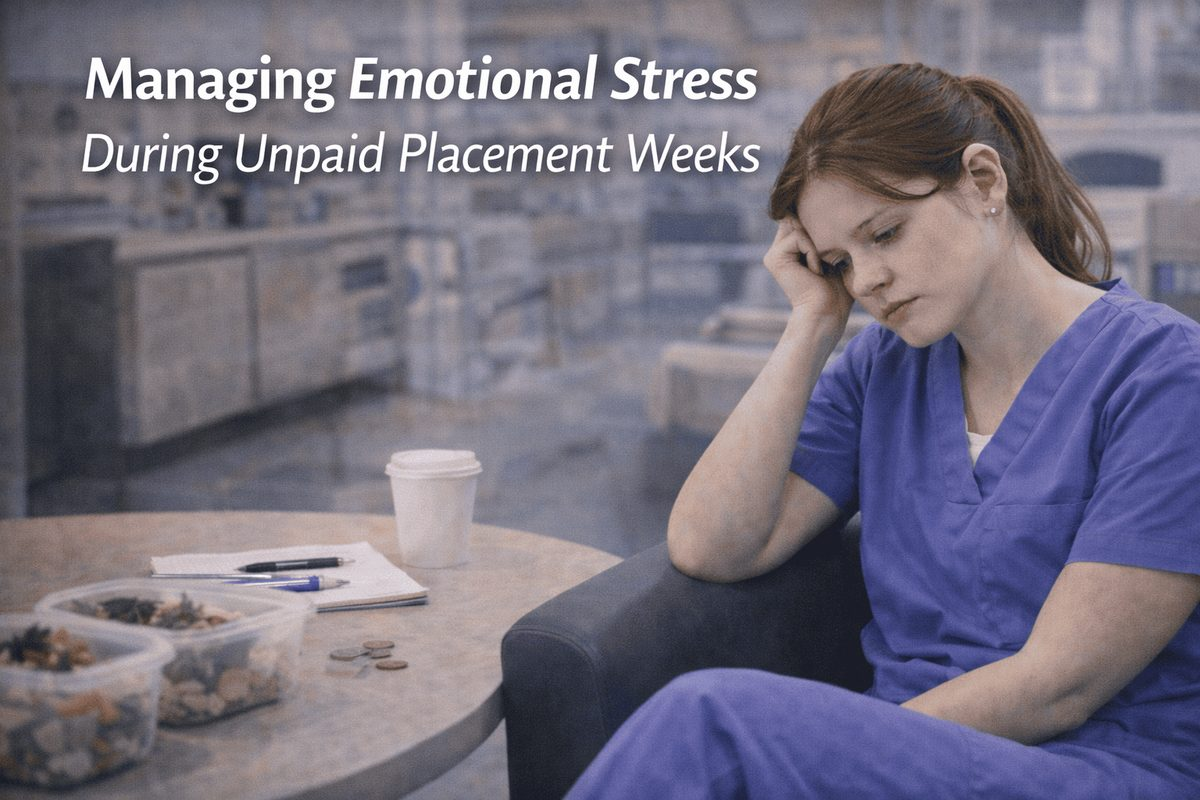
Unpaid placement weeks can push students toward burnout if not managed carefully. Long shifts combined with financial stress create a heavy emotional load.
Reducing academic pressure where possible is important. Many universities understand placement demands and may offer flexible deadlines or reduced academic load during placement periods.
Students should avoid overworking themselves during placement weeks. Trying to maintain full work hours, placement hours, and study at the same time often leads to exhaustion and poor performance.
Listening to one’s limits and prioritising health is essential. Completing placement safely and successfully is more important than maintaining unrealistic productivity.
Why Quitting Often Feels Like the Only Option (And Why It Isn’t)
During unpaid placement weeks, quitting can feel like the only way out. Financial pressure, exhaustion, and emotional strain can make students feel trapped. However, these weeks are temporary, even though they feel endless at the time.
Most nursing students who consider quitting during placement later feel relieved that they continued. The placement period ends, income resumes, and stability gradually returns.
Understanding that this phase is temporary helps students hold on during the hardest moments. Seeking support early can prevent impulsive decisions made under stress.
Building a Long-Term Strategy for Future Placements
Surviving one unpaid placement is important, but planning for future placements is equally valuable. Reflecting on what worked and what didn’t helps students prepare better next time.
Some students gradually build savings specifically for placement periods. Others adjust work arrangements earlier or seek scholarships and grants designed for healthcare students.
Developing a placement survival plan reduces fear and uncertainty in later years of the degree.
Final Thoughts: You Are Not Weak for Struggling
Unpaid placements are one of the most challenging parts of nursing education in Australia. Struggling during this time does not mean you are failing or incapable. It means you are human in a demanding system.
With planning, communication, and support, many nursing students survive unpaid placement weeks without quitting their degree. Reaching out for help is not a weakness — it is a professional skill that will serve you throughout your nursing career.
📦 SUMMARY BOX (Linked to Sections)
Introduction Section:
Unpaid placements create financial and emotional pressure for nursing students.
Budget Strategies Section:
Realistic budgeting and planning reduce placement stress.
Employer Communication Section:
Early, professional communication improves work flexibility.
Support Options Section:
Universities and services offer financial and emotional support.
Conclusion Section:
Unpaid placements are temporary, and support makes survival possible.
🔍 People Also Ask