

Summary
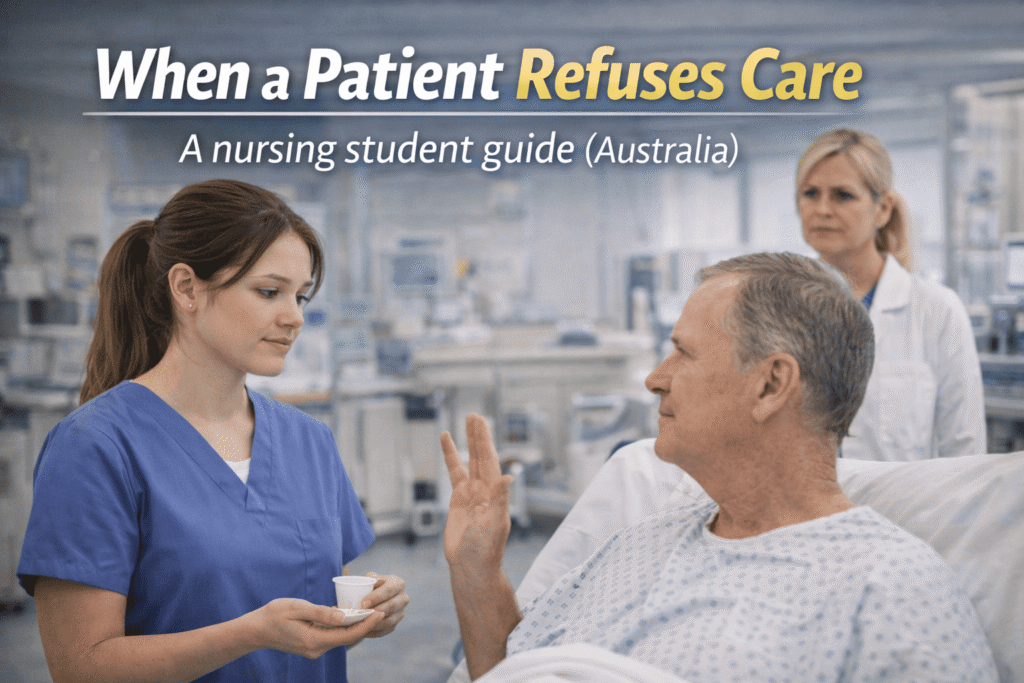
Many nursing students encounter patient refusal of care during their clinical placement, frequently sooner than anticipated. It can be perplexing, upsetting, and even terrifying, particularly if you are still learning about your responsibilities, job, and area of expertise. Students frequently worry about whether patient safety is at risk or whether refusal indicates that they have done anything wrong.
In Australia, patients who are capable of making their own decisions are legally protected from refusing medical treatment. From the standpoint of a nursing student, understanding consent, practicing cultural safety, communicating politely, and following the proper escalation pathway are more important than forcing care. This article provides a step-by-step explanation of what nursing students should do in the event that a patient denies care, in clear and simple language.
Understanding Patient Refusal of Care in Australian Healthcare
When a patient declines a suggested course of therapy, procedure, or nursing intervention, it is referred to as patient refusal. Refusing medication, vital signs, wound care, hygiene aid, evaluations, or even talks are examples of this. Adults in Australia who are capable of making their own decisions are legally allowed to refuse medical treatment, even if medical professionals think it is necessary.
This can be unsettling for nursing students since they are taught that giving care is crucial. But treating patients is vital, but so is preserving their autonomy. A student does not necessarily fail if they are rejected. It implies that the student needs to stop, evaluate, talk, and escalate the situation appropriately.
Recognizing that rejection is a patient’s prerogative promotes composed, professional behavior on the ward and lessens anxiety.
Consent: What Nursing Students Must Understand

In Australia, consent is the cornerstone of all medical procedures. Consent must be freely, informed, and provided by a patient with capacity in order to be considered legitimate. Care cannot lawfully proceed if any of these components are absent.
As a nursing student, you should never presume consent. Consent is needed even for everyday procedures like monitoring blood pressure or helping with personal hygiene. The first thing to do when a patient declines is to make sure they comprehend what is being provided. Refusal can occasionally occur due to a patient’s confusion, fatigue, pain, or anxiety.
Students should use straightforward language to gently explain the nature of the care and why it is being provided. After comprehending, if the patient continues to refuse, their decision must be respected unless there is an immediate life-threatening situation and you are instructed otherwise by a registered nurse.
Cultural Safety and Patient Refusal
When a patient declines treatment, cultural safety is particularly crucial. Refusal in Australia’s multicultural healthcare system might be impacted by trauma, religious practices, language problems, cultural views, or past experiences. Refusal should not be seen by nursing students as “difficult behavior” or “non-compliance.”
For instance, some patients can object to treatment from a healthcare professional of a particular gender, feel uncomfortable being touched, or need family support before consenting to treatment. Others’ decisions may be influenced by cultural attitudes toward pain, disease, or privacy.
Instead of passing judgment, students should approach refusal with curiosity. Patients can express their concerns when polite questions like “Is there something that makes you uncomfortable about this care?” are asked. To be culturally secure, one must listen, acknowledging, and adapting care when possible, while involving senior staff to guide appropriate next steps.
Communication: What Nursing Students Should Say (and Avoid)
When a patient resists treatment, it is crucial to communicate calmly and clearly. Students should refrain from arguing, using forceful persuasion, or making the patient feel bad. “You have to do this” or “It’s hospital policy” are examples of statements that might cause distress and intensify conflict.
Instead, pupils ought to speak in a neutral, courteous manner. For instance: “I know you don’t want this at this time.” Could you tell me what’s causing you concern?
or “I want to make sure you’re at ease.” I’ll inform the RN so we can discuss what to do next.
These reactions ensure that the situation is adequately escalated while demonstrating respect. Additionally, students should refrain from making decisions or pledges that are beyond of their purview. Never tell a patient that there are “no consequences” for refusing care; the doctor or registered nurse should clarify that.
Escalation Pathway: What to Do Step by Step

Nursing students cannot handle a patient’s refusal of care on their own. Escalation is a safety procedure, not a form of punishment. Notifying the preceptor or supervising RN right away is the first step. Give a detailed explanation of the treatment provided, the patient’s reaction, and any explanations provided.
The RN may consult the medical team or senior nursing staff if the refusal has an impact on medication, treatment plans, or patient safety. Under supervision, students can also be required to record their refusal. Documentation must always be factual, impartial, and free of bias.
Escalation becomes critical if the patient exhibits signs of anxiety, aggression, or confusion. Students should take a step back, make sure they are safe, and get aid right away. The patient is protected by adhering to the escalation procedure, the student, and the healthcare team.
Documentation and Legal Awareness for Students
Students need to know what constitutes safe documentation even though they typically don’t independently record rejections. What was offered, what the patient said, and who was told should all be documented. Steer clear of phrases like “uncooperative” or “refused because difficult.” Rather, it is fine to use objective wording like “Patient declined wound dressing change at this time.”
Students who comprehend documentation requirements are better equipped to promote safe practices and get ready for future careers.
Emotional Impact on Nursing Students
Students may experience feelings of rejection, embarrassment, or anxiety as a result of patient refusal. Some students fear they may receive a poor grade or be held accountable. It is crucial to keep in mind that the student is not being judged personally when they are rejected.
Students can develop resilience by talking to facilitators, thinking back on the event, and realizing that rejection is a common occurrence in the nursing profession. A crucial nursing skill that takes time to master is how to deal with rejection in a professional manner.
Learning Opportunities from Patient Refusal
Even though it can be difficult, patient refusal can be a valuable teaching moment. It emphasizes teamwork, communication, cultural sensitivity, and ethical behavior. Refusal handled politely by students shows maturity and preparation for nursing practice.
Students become more self-assured and equipped for challenging patient interactions with each experience.
Conclusion: Key Takeaways for Nursing Students
The nursing student’s job is to stay composed, courteous, and safety-focused when a patient declines treatment. Both patient rights and student protection are ensured by comprehending consent, exercising cultural safety, speaking effectively, and appropriately escalating.
It is not expected of you to handle the problem on your own. Seeking assistance is a professional practice, not a sign of weakness.
People Also Ask
1. Can a patient legally refuse nursing care in Australia?
Yes, if they have decision-making capacity and understand the information.
2. Should a nursing student try to convince a patient?
No. Students should explain, respect refusal, and escalate.
3. What if refusal affects patient safety?
Inform the RN immediately and follow escalation pathways.
4. Do students get failed for patient refusal situations?
No, if handled professionally and safely.
5. Should refusal always be documented?
Yes, under RN guidance and using objective language.
Useful Documents for every Nursing Student
CV Section Template for Nursing students
AHPRA – NMBA Registration Document Checklist (International Students-Graduates)
Clinical Placement Reflection Template (NMBA-aligned)
Cover Letter Template for Nursing Students
Disclaimer: “I researched this information on the internet; please use it as a guide and also reach out to a professional for assistance and advice.This information is not medical advice, so seek your medical professional’s assistance.”