
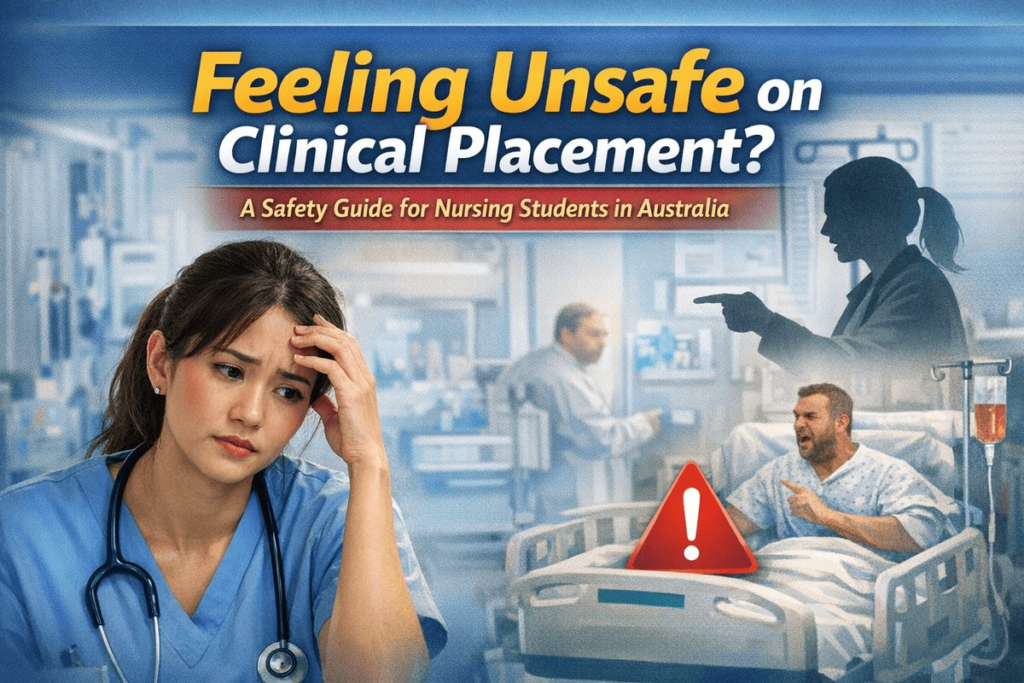
Clinical placement is one of the most important parts of nursing education in Australia. It is where students apply theory into real practice, build confidence, and learn how healthcare really works. However, while many placements are positive and supportive, some nursing students experience situations that make them feel unsafe, uncomfortable, or even frightened. These situations may include bullying, verbal abuse, unsafe clinical practices, lack of supervision, discrimination, or being asked to perform tasks beyond their scope.
Most blogs and university handbooks talk only about professional behaviour and student responsibilities, but very few talk openly about student safety. Nursing students are often afraid to speak up because they worry about failing placement, upsetting staff, or being labelled as “difficult.” This silence can lead to stress, anxiety, and in some cases, unsafe patient care.
This student-safe guide is written to clearly explain what to do if you feel unsafe on clinical placement, how to protect yourself, who to report to, and how Australian universities and hospitals are required to support you. You are not alone, and you are not wrong for prioritising your safety.
1. Understanding What “Unsafe” Really Means on Clinical Placement
Many nursing students believe that feeling unsafe is something they just have to tolerate. This belief is incorrect. Feeling unsafe does not only mean physical danger. In nursing placements, unsafe situations can be physical, emotional, psychological, or professional.
An unsafe placement can include being shouted at, humiliated in front of patients, or constantly criticised without guidance. It can also include being pressured to perform clinical tasks without proper supervision, such as administering medications you have not been signed off for, or handling aggressive patients without support. Discrimination based on race, accent, gender, religion, or visa status is also a serious safety issue and should never be ignored.
Unsafe practice can also involve poor infection control, understaffing, or being told to “just copy others” without being properly taught. These situations put both students and patients at risk. If your gut feeling tells you something is wrong, that feeling matters. Australian nursing education standards recognise that student safety is just as important as patient safety.
Understanding that unsafe situations are not your fault is the first step toward protecting yourself.

2. Common Safety Issues Nursing Students Face (That Are Often Ignored)
Many nursing students experience similar problems during placement, but they often think they are the only ones. This isolation makes the situation worse. One of the most common issues is bullying, which can come from registered nurses, senior staff, or even other students. Bullying may appear as sarcasm, eye-rolling, ignoring questions, spreading rumours, or giving unfair negative feedback.
Another major issue is lack of supervision. Students may be left alone with patients, expected to “figure things out,” or told they are slowing the ward down. This creates stress and fear of making mistakes. Being used as unpaid labour instead of a learner is also a common complaint.
Some students face verbal aggression from patients or families, especially in emergency departments, aged care, or mental health settings. Without proper staff support, this can feel overwhelming. International students may also face language-based discrimination, where their accent or communication style is mocked or criticised unfairly.
Sexual harassment, although less openly discussed, also happens. Inappropriate comments, touching, or jokes from staff or patients are never acceptable. Australian law protects students from this behaviour.
Recognising these issues as real safety concerns—not “part of nursing”—is essential.
3. What to Do Immediately If You Feel Unsafe on Placement
If you feel unsafe, your first priority is your immediate safety. If the situation involves physical danger, aggression, or serious risk, remove yourself from the area if possible and seek help from staff nearby. You are allowed to step away from unsafe situations.
If the issue is emotional or professional but ongoing, do not stay silent. Start by documenting everything. Write down dates, times, locations, names, and exactly what happened. Keep messages or emails if relevant. Documentation is very important if the issue needs to be escalated later.
If you feel comfortable, you can raise the issue directly with your clinical facilitator or preceptor. Sometimes problems happen due to miscommunication, and early discussion can resolve them. However, if the person making you feel unsafe is your direct supervisor, you do not need to confront them alone.

You should contact your university clinical placement coordinator or student support officer as soon as possible. Universities in Australia have a duty of care to protect students on placement. Reporting concerns does not mean you will automatically fail. In fact, universities prefer students to report early rather than suffer in silence.
If the situation affects your mental health, seek immediate support through university counselling services or helplines. Feeling anxious, tearful, or panicked is a sign you need support—not weakness.
4. How Reporting Works in Australia (And Why You Won’t Be Punished)
One of the biggest fears students have is, “What if I report this and fail placement?” This fear stops many students from speaking up. In Australia, universities and healthcare facilities follow strict policies around student safety, bullying, and professional conduct.
When you report an issue, universities usually follow a step-by-step process. This may include reviewing your documentation, speaking privately with you, and contacting the placement site if necessary. In many cases, solutions include changing your preceptor, adjusting supervision, providing mediation, or even moving you to a different placement site.
Students are not supposed to be penalised for reporting genuine safety concerns. The Nursing and Midwifery Board of Australia (NMBA) supports learning environments that are respectful and safe. Retaliation against students is not acceptable.
If bullying or unsafe practice is severe, universities may suspend the placement while investigating. Your wellbeing is prioritised over placement completion. Many students who report issues still pass their placement successfully once support is put in place.
Knowing your rights helps reduce fear and empowers you to speak up.
5. Protecting Your Mental Health During and After an Unsafe Placement
Experiencing an unsafe placement can affect your confidence, motivation, and mental health. Many students blame themselves or start questioning whether they are “good enough” to be a nurse. These thoughts are common, but they are not true.
It is important to talk about your experience with someone you trust. This could be a counsellor, mentor, fellow student, or academic advisor. Universities in Australia offer free and confidential counselling for students, including international students.
Self-care is not selfish. Rest, proper sleep, healthy meals, and time away from placement stress are essential. Journaling your experience can also help process emotions and regain perspective.
Remember that one bad placement does not define your nursing career. Many excellent nurses have experienced difficult placements and gone on to thrive. What matters is how you protect yourself, learn from the experience, and continue forward with support.
6. How Universities and Hospitals Are Responsible for Student Safety
Universities and placement providers have a legal and ethical responsibility to ensure students are placed in safe learning environments. This includes proper supervision, respectful treatment, and protection from bullying and discrimination.
Hospitals and aged-care facilities that accept students agree to follow these standards. Clinical facilitators are trained to support students, not intimidate them. When these standards are not met, it is appropriate—and necessary—to report concerns.
Students often feel powerless, but institutions take safety seriously because unsafe placements also risk patient care, legal issues, and accreditation problems. Speaking up helps improve the system for future students as well.
7. Final Advice: You Deserve Safety, Respect, and Support
Feeling unsafe on clinical placement is not something you should ignore or “push through.” You deserve to learn in an environment where you are respected, supported, and protected. Nursing is a challenging profession, but abuse, bullying, and unsafe practice are not part of the job description.
Trust your instincts. Document concerns. Reach out for help early. Your safety matters—not just as a student, but as a future nurse and healthcare professional.
Frequently Asked Questions
1. Can I fail placement for reporting safety concerns?
No. Universities are required to protect students who report genuine safety issues.
2. What if the nurse bullying me is my supervisor?
You can report directly to your university placement coordinator without confronting them alone.
3. Is feeling anxious or scared on placement normal?
Occasional nerves are normal, but ongoing fear, distress, or humiliation is not.
4. Can international students report unsafe placements?
Yes. International students have the same rights to safety and support.
5. Who should I contact first if I feel unsafe?
Your clinical facilitator, placement coordinator, or student support services.