
Documentation is one of the most important responsibilities in nursing practice, yet it is also one of the most confusing and stressful tasks for nursing students. Many students focus heavily on clinical skills like injections, wound care, or observations, but underestimate how serious documentation errors can be. In Australia, nursing documentation is a legal record, not just a university requirement. What you write—or fail to write—can directly affect patient safety, professional accountability, and even legal outcomes.
For nursing students, documentation anxiety often comes from not knowing what is appropriate, what language to use, and what must never be written. Students are rarely told clearly what mistakes are common, which errors are dangerous, and how small wording choices can change the meaning of a note completely. This article fills that gap by explaining the most common documentation mistakes nursing students make and showing how to write safe, professional, and legally sound notes during placement.
This guide is written especially for nursing students in Australia, including international students, and uses simple language that is easy to understand and apply on the ward.
1. Why Documentation Matters More Than Students Realise
Many nursing students think documentation is just “writing what happened” or something done quickly at the end of a shift. In reality, documentation is a formal communication tool between healthcare professionals. Doctors, nurses, allied health staff, auditors, and legal teams may all read nursing notes.
In Australia, if something goes wrong with patient care, documentation is often the first thing reviewed. If it is incomplete, vague, emotional, or incorrect, it can place responsibility on the nurse—even if the care itself was appropriate. For students, poor documentation can lead to placement failure, academic warnings, or professional concerns.
Documentation also directly affects patient safety. Clear notes ensure continuity of care, prevent medication errors, and help staff understand patient changes. Writing safe notes is not about using fancy language—it is about being clear, objective, factual, and respectful.
2. What NOT to Write in Nursing Documentation (Very Common Student Errors)

One of the biggest mistakes nursing students make is writing things that should never appear in patient notes. This often happens because students write casually, emotionally, or try to explain themselves instead of documenting patient care.
Never write opinions, assumptions, or judgements about a patient. For example, writing “patient is lazy,” “patient is rude,” or “patient exaggerates pain” is inappropriate and unprofessional. These statements are subjective and can be harmful.
Students also make the mistake of documenting emotions or frustration, such as “patient was annoying,” “patient kept pressing the bell,” or “patient refused care again.” These phrases reflect staff feelings rather than patient behaviour.
Another serious mistake is documenting blame. Writing “doctor did not come,” “nurse forgot,” or “physio didn’t attend” can create professional conflict and legal risk. Documentation should focus on what happened, not who failed.
Students should also never write personal comments, jokes, or sarcasm in notes. Even if documentation systems feel informal, everything entered is part of a permanent medical record.
Safe documentation focuses only on patient care, patient response, and actions taken.
3. Objective vs Subjective Language: A Critical Skill Students Struggle With
Understanding the difference between objective and subjective language is essential for safe nursing documentation. Many students mix the two without realising it.
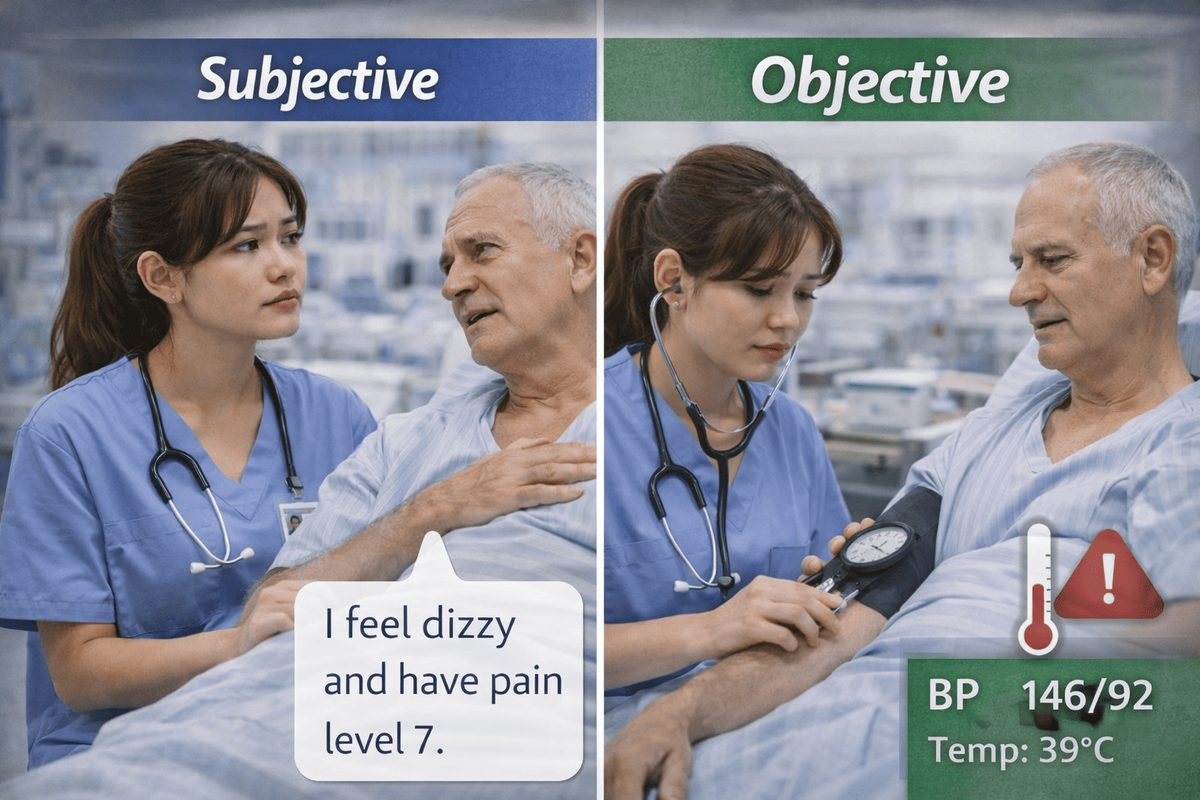
Subjective information is what the patient says. It includes feelings, pain descriptions, and symptoms reported by the patient. For example, “patient states pain is 7/10” or “patient reports feeling dizzy.”
Objective information is what you can see, measure, hear, or assess. This includes vital signs, physical observations, and visible behaviour. For example, “blood pressure 140/90,” “patient ambulated 10 metres with assistance,” or “wound dressing dry and intact.”
A common student mistake is turning subjective impressions into objective statements. Writing “patient is anxious” is subjective unless supported by evidence. A safer version would be “patient pacing, wringing hands, and states feeling anxious.”
Another mistake is writing conclusions instead of observations. For example, “patient had a panic attack” is a diagnosis, not an observation. A safer note would describe behaviour and reported symptoms without labelling.
Safe documentation clearly separates what the patient says from what the nurse observes.
4. Confidentiality Errors Nursing Students Don’t Realise They Are Making
Confidentiality breaches are one of the most serious documentation mistakes nursing students make—often without realising it. Australian healthcare laws strictly protect patient privacy, and students are held to the same standards as registered nurses.
One common error is using patient identifiers incorrectly. Writing full names, dates of birth, or bed numbers in personal notes, study documents, or reflective journals can breach confidentiality if those documents are not secure.
Another mistake is documenting unnecessary personal details. Information about family conflict, lifestyle choices, or social behaviour should only be documented if it is clinically relevant. Writing excessive personal information increases privacy risk.
Students also sometimes discuss documentation outside the clinical environment. Talking about patient notes with friends, classmates, or on social media—even without names—can still identify patients indirectly.
Accessing patient records without a clinical reason is another serious error. Students must only document or view information related to patients they are caring for.
Safe documentation follows one rule: only write what is necessary for patient care, and keep it professional and factual.
5. Common Documentation Style Mistakes That Can Get Students in Trouble
Many documentation issues are not about content but about how notes are written. Poor structure, unclear timing, and missing information are very common among students.
One frequent mistake is writing notes too late. Documentation should be completed as soon as possible after care is provided. Writing hours later increases the risk of forgetting details or making inaccurate statements.
Another issue is vague language. Phrases like “patient okay,” “care done,” or “no issues” provide no useful information. Documentation must be specific and measurable.
Students also forget to document follow-up actions. For example, noting a concern without documenting who was informed or what was done can make it seem like no action was taken.
Using abbreviations incorrectly is another risk. Only approved clinical abbreviations should be used. Informal or unclear abbreviations can be misunderstood and cause errors.
Clear, timely, and structured documentation protects both the patient and the student.
6. How to Write Safe, Professional Nursing Notes as a Student
Writing safe nursing notes is a skill that improves with practice. The key is to keep documentation simple, factual, and patient-focused.

Start by documenting the reason for care. Then record what you observed, what the patient said, what actions were taken, and how the patient responded. Always include time, date, and your student designation where required.
Use neutral language. Instead of writing emotional or dramatic statements, describe observable facts. For example, replace “patient extremely upset” with “patient crying, raised voice, states feeling overwhelmed.”
If something is outside your scope, document that supervision was provided. This protects you and shows safe practice.
Before submitting or finalising notes, read them as if someone else will review them later—because they likely will.
7. Final Thoughts: Documentation Is Part of Patient Safety
Documentation is not just paperwork. It is a core nursing responsibility and a professional skill that follows you throughout your career. As a student, learning safe documentation habits early will protect you from stress, mistakes, and future disciplinary issues.
You do not need perfect grammar or complex wording. You need clarity, honesty, and professionalism. When in doubt, keep notes factual, respectful, and relevant.
Safe documentation shows that you are a safe nurse in training.
📦 SUMMARY BOX (Section-Wise Explanation)
Introduction Summary:
Explains why documentation is legally and clinically important for nursing students.
Heading 1 Summary — Why Documentation Matters:
Shows how notes affect patient safety, legal protection, and student assessment.
Heading 2 Summary — What NOT to Write:
Explains inappropriate language, opinions, blame, and emotional documentation errors.
Heading 3 Summary — Objective vs Subjective Language:
Clarifies the difference and shows how students often mix them incorrectly.
Heading 4 Summary — Confidentiality Errors:
Highlights privacy mistakes students make without realising.
Heading 5 Summary — Style & Timing Mistakes:
Covers vague language, late notes, missing actions, and abbreviations.
Conclusion Summary:
Reinforces documentation as a patient safety and professional skill.
🔍 People Also Ask (FAQ)