

Working as a nurse is a demanding profession that requires high levels of physical stamina, emotional resilience, and sharp mental focus. For Muslim nurses and nursing students, the holy month of Ramadan adds an extra layer of complexity to an already busy schedule. Fasting from dawn to sunset while managing 8-hour or 12-hour shifts means that "business as usual" isn't always the best approach. Success during this month depends on how well you plan your shifts, manage your sleep, and fuel your body during the non-fasting hours.
This article provides a comprehensive roadmap for nursing professionals and students to navigate their work rotations while staying healthy and energized. By understanding the science of sleep and the importance of strategic nutrition, you can continue to provide excellent patient care without sacrificing your spiritual goals.
1. Master Your Sleep Schedule: The Key to Clinical Safety

In the world of nursing, sleep isn't just a luxury—it’s a matter of patient safety. Sleep deprivation can lead to slower reaction times and errors in medication administration. During Ramadan, your sleep is naturally disrupted by waking up for Suhoor (the pre-dawn meal) and staying up for Taraweeh (nightly prayers). For nurses, the challenge is multiplied by irregular shift patterns.
To maintain your energy, you must prioritize "sleep banking" and consistent napping. If you are working a day shift, try to go to sleep as early as possible after Iftar and your night prayers. Even a 4-to-5-hour block of solid sleep before Suhoor is better than multiple fragmented naps. If you are a student on clinical rotations, consider a power nap of 20 to 30 minutes during your lunch break. Since you aren't eating, this time is the perfect opportunity to close your eyes in a quiet breakroom or your car. This short rest can "reset" your brain and help you power through the final hours of your shift.
For those working night shifts, the strategy flips. Your "night" happens during the day. Use blackout curtains and earplugs to ensure the quality of your daytime sleep is high. Try to get a long stretch of sleep immediately after returning from your shift, and then wake up in time for Iftar. Consistency is your best friend; even on your days off, try to keep your sleep times relatively similar so your body's internal clock doesn't become completely confused.
2. Strategic Shift Planning and Communication
One of the most effective ways to manage Ramadan is to be proactive with your nursing supervisor or clinical lead. Many healthcare environments are supportive of religious observances, but they can only help if they know what you need. Early communication allows for small adjustments that can make a massive difference in your energy levels.

If possible, request to avoid "clustering" too many long shifts in a row during the first week of Ramadan. This is the period when your body is still adjusting to the new rhythm, and the risk of fatigue-related headaches is highest. If you have the flexibility, try to swap the most physically demanding tasks—such as heavy patient lifting or long dressing changes—to times of the day when you feel most alert. For many, this is early in the morning right after Suhoor.
Furthermore, discuss your Iftar break with your team. In nursing, things can get chaotic at sunset, which is exactly when you need to break your fast. By letting your colleagues know in advance, they can "cover" you for 10–15 minutes while you hydrate and eat a small snack. Offering to do the same for them during their traditional lunch hour creates a supportive, reciprocal environment that benefits the whole ward.
3. Nutritional Fueling for 12-Hour Rotations
When you are on your feet for 12 hours, what you eat at Suhoor and Iftar determines how you will feel at hour ten of your shift. The goal for a nursing professional is sustained energy, not a quick sugar high. High-sugar foods cause your insulin to spike and then crash, which will leave you feeling dizzy and lethargic while you are still on duty.
For Suhoor, focus on slow-release (complex) carbohydrates. Oats, whole-wheat bread, brown rice, and quinoa are excellent choices. Pair these with high-quality proteins like eggs, Greek yogurt, or beans to keep you full for longer. Healthy fats, such as avocado or a handful of nuts, are also essential as they provide a dense source of calories that the body burns slowly throughout the day.
When it comes to Iftar, avoid the temptation to overindulge in fried or heavily salted foods. Excessive salt will make you incredibly thirsty the next day, which is a major problem in dry hospital environments. Break your fast with dates and water first, then have a balanced meal that includes plenty of vegetables and lean protein. This ensures you get the vitamins and minerals needed for muscle recovery after a long day of walking the hospital halls.
4. Hydration Management in Dry Hospital Environments
Dehydration is a significant risk for nurses during Ramadan. Hospitals are often climate-controlled, which means the air is dry and can lead to faster fluid loss through breathing and skin evaporation. Since you cannot drink water during your shift, you must be a "hydration strategist" during the night.
The key is not to drink two liters of water all at once at Suhoor. The human body can only absorb about 200–300ml of water every hour; anything more is usually just processed by the kidneys and flushed out quickly. Instead, keep a water bottle with you from Iftar until you go to sleep and take small, frequent sips. This "steady drip" method ensures your cells are actually absorbing the moisture.
Consider adding electrolytes to your water. Electrolytes like potassium, magnesium, and sodium help your body retain water more effectively. You can get these through coconut water, watermelon, or simple electrolyte powders. Also, be mindful of caffeine. While a cup of coffee might feel necessary to start a night shift, caffeine is a diuretic. If you do have coffee, make sure you match it with an extra glass of water to prevent a dehydration headache later in the day.
5. Recognizing Fatigue and Prioritizing Safety
As a healthcare professional, your first duty is to the safety of your patients. It is important to be self-aware and recognize when your fasting might be impacting your clinical judgment. Ramadan is a time of spiritual discipline, but Islam also places a high value on the preservation of life and health.
Learn to recognize the early signs of severe dehydration or hypoglycemia (low blood sugar). These include extreme shakiness, confusion, blurred vision, or a racing heart. If you find yourself unable to focus while calculating a medication dose or if you feel you might faint during a procedure, you must prioritize safety. Taking a seat, informing a colleague, and—if medically necessary—breaking your fast is not a failure; it is a responsible clinical decision.
Nurses often feel a "spiritual guilt" if they can't fast perfectly while working, but it is helpful to remember that your work in caring for the sick is also an act of worship. By taking care of yourself, you are ensuring that you can continue to serve your patients with the compassion and excellence they deserve. Rest when you can, eat well when you are able, and don't be afraid to ask for help from your team.
The Shift-Friendly Meal Prep Guide for Fasting Nurses
As a nurse or healthcare worker, your "break" is rarely a full hour of relaxation. Often, you have exactly 15 minutes to sit down, catch your breath, and refuel before the next call bell rings. During Ramadan, this limited window is even more precious. You need food that is fast to eat, easy to digest, and packed with lasting energy so you don't crash before your shift ends.
This guide focuses on "Grab-and-Go" nutrition designed for the chaotic environment of a hospital ward or clinic.
1. The "Protein Power" Snack Box
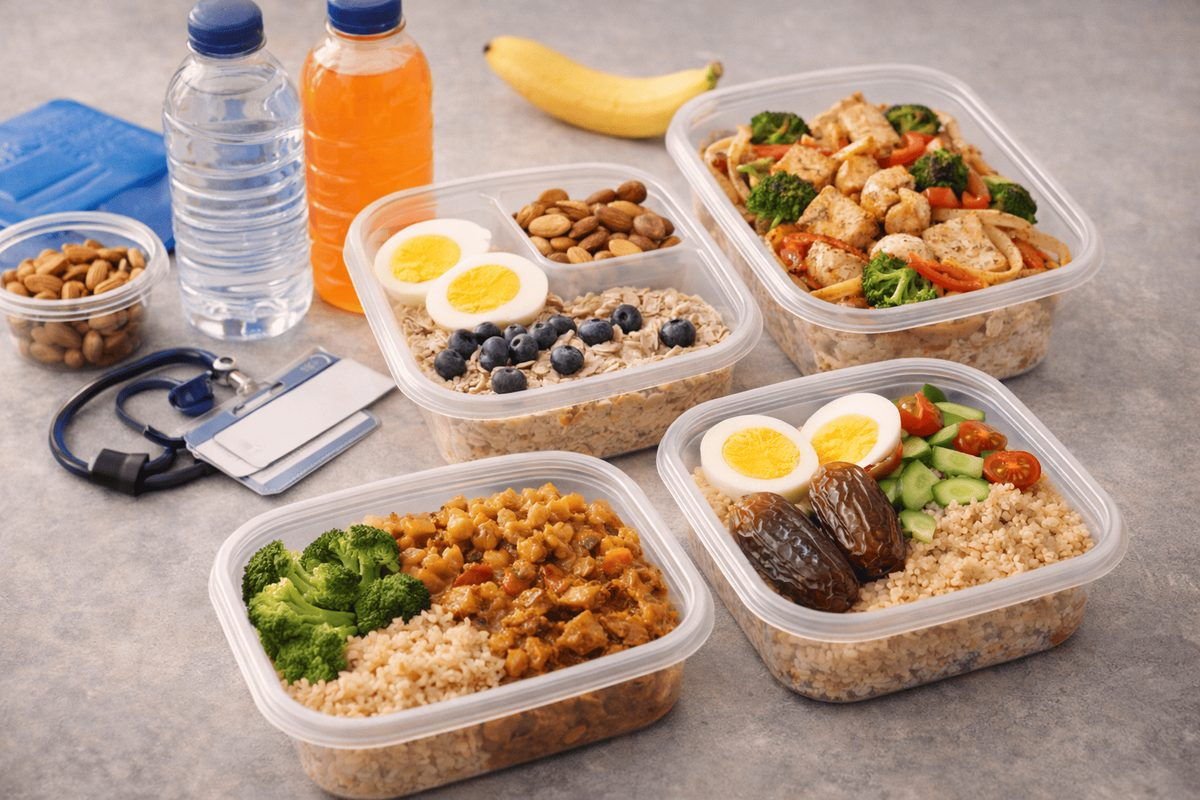
When you only have minutes to eat, skip the heavy, greasy meals that require a microwave and a fork. Instead, prepare a "Bento-style" snack box that you can pick at quickly. This method allows you to get a balance of macros without feeling uncomfortably full.
What to pack: Two hard-boiled eggs (peeled and ready), a handful of almonds, two Medjool dates, and a few slices of cheese.
Why it works: The eggs and cheese provide high-quality protein for muscle repair, while the dates offer an immediate glucose boost to sharpen your brain for medication calculations. The healthy fats in the almonds ensure that the energy from the dates lasts for hours rather than minutes.
Time to eat: 5 minutes.
2. The 60-Second "Liquid Suhoor" Smoothie
For many nursing students, waking up at 4:00 AM to eat a full meal is difficult. A nutrient-dense smoothie is often easier to stomach than solid food and can be consumed while you are getting dressed or driving to your clinical rotation.
The Recipe: 1 cup of milk (or oat milk), 1 scoop of protein powder, 1 tablespoon of peanut butter, half a cup of frozen berries, and 2 tablespoons of quick oats.
Why it works: This is a complete meal in a bottle. The oats provide the fiber needed for slow-release energy, the protein prevents muscle fatigue during long walks, and the berries offer antioxidants to help your body manage the stress of a busy shift.
Time to consume: 2 minutes.
3. "No-Heat" Quinoa or Pasta Salads
Waiting in line for the communal microwave in the breakroom can eat up your entire 15-minute break. The solution is to prep "cold" grain salads that taste better at room temperature and provide complex carbohydrates.
What to pack: Pre-cooked quinoa or whole-wheat pasta mixed with chickpeas, diced cucumbers, feta cheese, and a lemon-olive oil dressing.
Why it works: Chickpeas and quinoa are "low-glycemic" foods, meaning they won't cause a sugar crash. The cucumbers add an extra layer of hydration, which is vital since you can't drink water throughout the day.
Time to eat: 8 minutes.
4. The Hydration "Pre-Game" Strategy
If you are working a shift that starts after Iftar, your goal during your break is to maximize fluid absorption. Many nurses make the mistake of drinking a liter of water in five minutes, which usually results in frequent bathroom trips rather than actual hydration.
The Strategy: Pack a 500ml bottle of water infused with an electrolyte tablet or a pinch of sea salt and a splash of lemon.
The Pro-Tip: Eat a few slices of watermelon or an orange during your break. The "gel water" found in fruits stays in your system longer than plain water, keeping your tissues hydrated during the long hours when you are fasting.
Frequently Asked Questions
Q: Should I drink coffee during Suhoor to stay awake for my morning shift? A: It is generally better to avoid or limit caffeine at Suhoor. Caffeine can make you lose fluids faster and might lead to a "crash" and a headache by midday. If you need caffeine, try to have a small amount at Iftar instead so it doesn't interfere with your hydration during the day.
Q: How can I handle a night shift that starts before Iftar? A: If your shift starts before sunset, pack a "fast-breaking kit" with you. Include water, a few dates, and a portable protein snack like a protein bar or a bag of nuts. You can quickly break your fast at the nursing station or during a quick handover, then have a full meal during your scheduled break later in the evening.
Q: What are the best foods to prevent thirst during the day? A: Avoid salty, fried, and highly processed foods at Suhoor. Instead, eat "water-rich" foods like cucumbers, tomatoes, oranges, and yogurt. These foods have a high water content and release moisture slowly as they are digested.
Q: Can I take a nap during my 12-hour shift? A: Many hospitals allow for a 30-minute to 1-hour unpaid break during a 12-hour shift. Since you aren't eating lunch, you can use this time to take a "power nap." Even 20 minutes of rest in a quiet area can significantly improve your alertness and mood for the rest of the shift.
Q: What should I do if I feel dizzy while assisting in a surgery or a long procedure? A: Immediately inform the lead nurse or doctor. Do not try to "push through" it, as you could fall and injure yourself or the patient. Step away, sit down, and cool your body. If the dizziness is severe, you should break your fast with a juice or glucose drink and seek a medical check-up.
Q: Is it okay to just drink a protein shake for Iftar during my shift? A: While a protein shake is better than nothing, try to pair it with a carbohydrate like a banana or dates. Your brain runs on glucose, and after a long day of fasting, your "mental battery" needs those carbs to function safely during patient care.
Q: How can I stop my mouth from feeling so dry during my shift? A: Since you cannot drink, try to avoid talking excessively if possible, and breathe through your nose rather than your mouth. At Suhoor, avoid salty foods (like sausages or salty cheese), as these are the primary causes of "dry mouth" later in the afternoon.
Q: What is the best way to meal prep for the whole week? A: Spend 2 hours on your day off boiling eggs, cooking a large batch of grains (rice or quinoa), and chopping veggies. Store them in individual airtight containers. This "assembly line" approach means you can just grab a container and go when you are rushing to a 7:00 AM shift.