
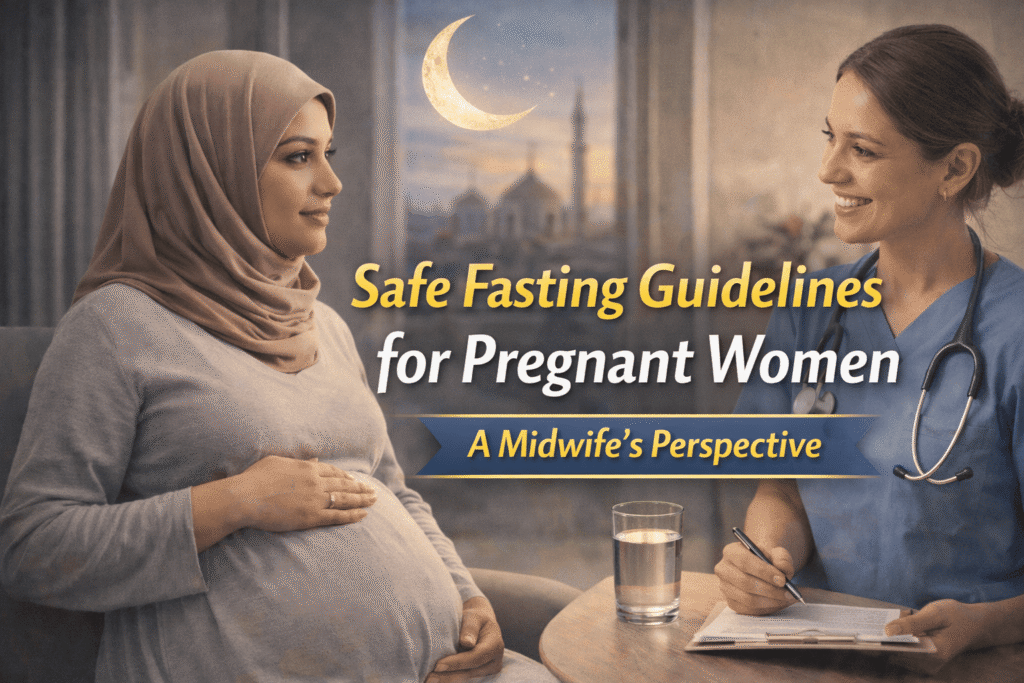

Summary
Understanding Fasting During Pregnancy
For many women worldwide, fasting is a significant spiritual practice, particularly during the month of Ramadan. Avoiding food and liquids from sunrise to sundown is part of it. However, fasting can cause a lot of worries and queries for expectant mothers. Is it secure? Will the infant suffer as a result? What impact might it have on the mother’s health? Are there any exceptions to the rule that all pregnant women should fast?
As a midwife, I’ve helped a lot of pregnant ladies who wanted to fast. Some felt strong and self-assured. Others were uncertain and concerned about the health of their unborn child. The most crucial takeaway is that each pregnancy is unique and that choices about fasting should always take the growth of the unborn child and the mother’s health into account.
A woman’s body is subjected to additional demands during pregnancy. The baby’s nutritional needs increase, blood volume rises, and it is totally dependent on the mother for nourishment and oxygen. For some healthy women with low-risk pregnancies, fasting might be safe; but, for others, particularly those with difficulties, it might not be advised.
This manual offers thorough, empirically supported, and useful guidance from the viewpoint of a midwife. For the benefit of students, expectant mothers, and families, it is written in plain English. The objective is to promote safe decision-making, awareness, and medical consultation rather than to support or oppose fasting.
Understanding the Body During Pregnancy

Significant hormonal and physical changes occur throughout pregnancy. Understanding how the body functions during pregnancy is crucial to comprehending the safety of fasting.
Increased Nutritional Needs
More is required by the body during pregnancy:
• Energy-producing calories
• Tissue growth-promoting protein
• Iron for the formation of blood
• Calcium for the formation of bones
• Folic acid for the development of the neural tube
• Fluids to keep the blood flowing
These nutrients promote the development of the fetus as well as the health of the mother. Food and water consumption while fasting are restricted to non-daylight hours, which, if improperly handled, may lower daily intake.
Blood Sugar and Energy Balance
Blood sugar regulation normally alters throughout pregnancy. Insulin sensitivity is influenced by hormones like human placental lactogen. Accordingly, expectant mothers may be more vulnerable to:
• Hypoglycemia, or low blood sugar, describes
• Elevated blood sugar (diabetes)
Blood sugar levels can be affected by fasting, particularly if meals are delayed or not balanced.
Hydration and Circulation
It’s crucial to stay hydrated during pregnancy. Drinking enough water is beneficial.
• Preserve the amounts of amniotic fluid
• Encourage the placenta’s blood flow
• Avoid constipation.
• Decrease infections in the urinary tract
Pregnancy-related dehydration can raise the risk of headaches, lightheadedness, and in extreme situations, contractions.
It is easier for expectant mothers to make educated fasting decisions when they are aware of these physiological changes.
Is Fasting Safe During Pregnancy?
No one solution is appropriate for all women. Safety is dependent upon:
• The pregnancy’s third trimester
• General well-being
• The existence of health issues
• Temperature and length of fasting
• Consumption of nutrients when not fasting
First Trimester Considerations
A crucial time for the development of fetal organs is the first trimester. A lot of women encounter:
• Feeling sick and throwing up
• Exhaustion
• A decrease in appetite
Dehydration and weakness may worsen if you fast during this phase. Fasting may be more challenging for women who already experience morning sickness.
Second Trimester Considerations
The “stable phase” of pregnancy is frequently referred to as the second trimester. Nausea may lessen and energy levels may increase. During this phase, fasting is easier for some healthy women.
Daily needs for nutritional intake must still be met, though.
Third Trimester Considerations
The baby grows quickly during the third trimester, and the mother’s body needs more energy. Preterm contractions may become more likely if you are dehydrated. Women may have greater fatigue and weight.
Midwives frequently advise close observation during this point.
Who Should Avoid Fasting During Pregnancy?
According to midwives, some women shouldn’t fast because of the heightened danger. These consist of:
• Women who have diabetes during pregnancy
• Women who suffer from anemia
• High blood pressure in women
• Women who have already experienced premature labor
• Women who are expecting multiples or twins
• Women with low levels of amniotic fluid
• Women who are extremely nauseous and vomiting
In some situations, fasting may be harmful to the mother’s and the child’s health. Pregnant women whose health may be impacted are frequently granted exemptions by religious teachings.
It’s crucial to speak with a healthcare professional before fasting.
Safe Hydration Strategies for Pregnant Women Who Choose to Fast
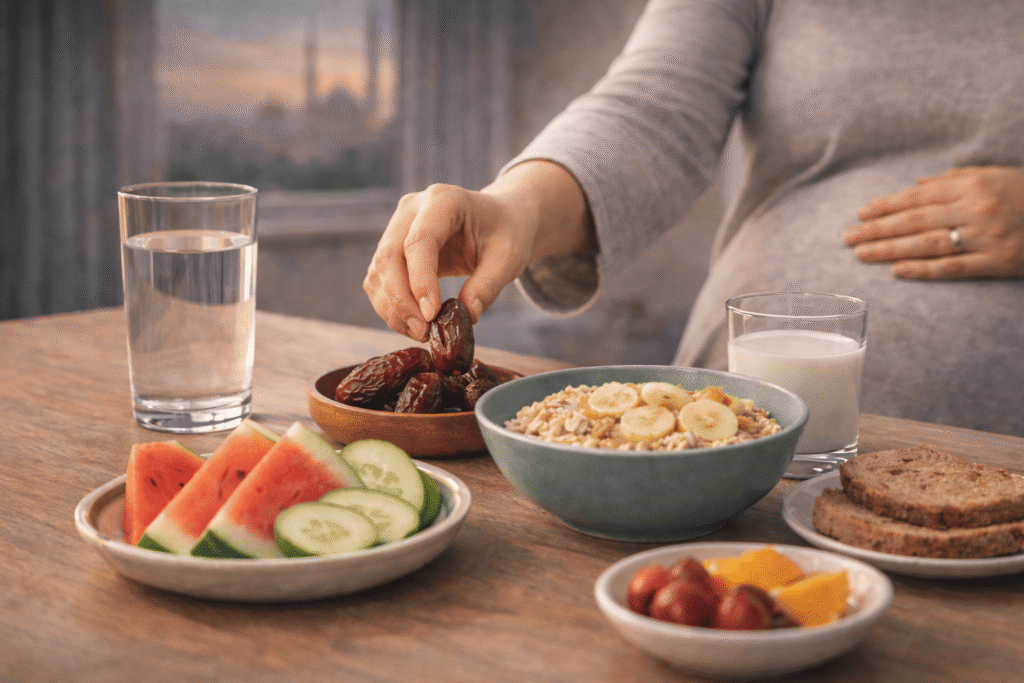
Hydration is the most important factor in safe fasting during pregnancy.
Spread Fluid Intake Evenly
Pregnant women should avoid consuming significant amounts of alcohol all at once by:
• Have one or two glasses during Iftar.
• Keep consuming liquids every hour.
• Have a drink before bed.
• Rehydrate at Suhoor
This methodical strategy facilitates optimal absorption.
Choose Hydrating Fluids
The best choices are as follows:
• Water
• Milk
• Fresh fruit juices in sensible quantities
• Soups
• Water from coconuts
Steer clear of too much caffeine because it causes fluid loss.
Monitor Urine Color
Light yellow urine indicates good hydration. Dark urine may suggest dehydration.
Nutrition Guidelines for Safe Fasting in Pregnancy
Proper nutrition is essential when fasting.
Balanced Iftar Meal
Iftar ought to consist of:
• Complex carbs (whole grains, brown rice)
• Lean protein, such as fish, poultry, and lentils
• Good fats (nuts, olive oil)
• Fruits and vegetables
Steer clear of very sugary and fatty foods. Nutritious Suhoor Meal, Suhoor ought to contain:
• Whole-grain bread or oats
• Yogurt or eggs
• Fruits
• Seeds or nuts
This mixture releases energy gradually.
Iron and Supplements
Continue prenatal vitamins as prescribed. Iron deficiency can worsen fatigue.
Warning Signs That Require Breaking the Fast
Pregnant women should stop fasting and seek medical advice if they experience:
- Severe dizziness
- Fainting
- Reduced fetal movements
- Persistent headaches
- Contractions
- Severe abdominal pain
- Very dark urine
Listening to the body is critical.
Emotional and Spiritual Considerations
Fasting causes emotional difficulty for many pregnant women. If they are unable to fast, some people feel bad. It’s critical to keep in mind that maintaining health does not equate to failing. It is still possible to sustain spiritual activities through contemplation, prayer, and almsgiving.
Women are encouraged by midwives to put their health first.
Monitoring Baby’s Health During Ramadan
If fasting, regular antenatal appointments are essential. Healthcare providers may:
- Monitor weight gain
- Check blood pressure
- Assess fetal growth
- Review blood sugar levels
Open communication with your midwife or doctor ensures safety.
A Midwife’s Final Advice
Each pregnancy is different. With careful preparation, some healthy women can safely fast. Others might have to delay their fast. The most crucial elements are:
• Consultation with a doctor
• Proper hydration
• A well-balanced diet
• Recognizing warning indicators
Health always comes first.
People Also Ask (FAQs)
Can pregnant women fast safely?
Some healthy women with low-risk pregnancies may fast safely, but medical consultation is essential.
Does fasting harm the baby?
In healthy pregnancies with proper nutrition and hydration, short-term fasting may not cause harm. However, risks increase in complicated pregnancies.
What trimester is safest for fasting?
The second trimester is often more manageable, but safety depends on individual health.
Should women with gestational diabetes fast?
Generally, fasting is not recommended for women with gestational diabetes due to blood sugar risks.
What should pregnant women eat at Suhoor?
Balanced meals with complex carbohydrates, protein, healthy fats, and fluids.
Conclusion: Making an Informed and Safe Decision
The choice to fast while pregnant is very personal. A midwife’s top priority is always the mother’s and the child’s health. Some women may be advised not to fast for medical reasons, while others may be able to do so safely with careful hydration and a well-balanced diet.
Pregnancy is a period of care and duty. Making educated decisions, keeping an eye out for warning indicators, and speaking with medical professionals guarantee the safest conclusion.
Maternal health and spiritual commitment can coexist, but safety must always come first.
Useful Documents for every Nursing Student
CV Section Template for Nursing students
AHPRA – NMBA Registration Document Checklist (International Students-Graduates)
Clinical Placement Reflection Template (NMBA-aligned)
Cover Letter Template for Nursing Students
Disclaimer: “I researched this information on the internet; please use it as a guide and also reach out to a professional for assistance and advice.This information is not medical advice, so seek your medical professional’s assistance.”