
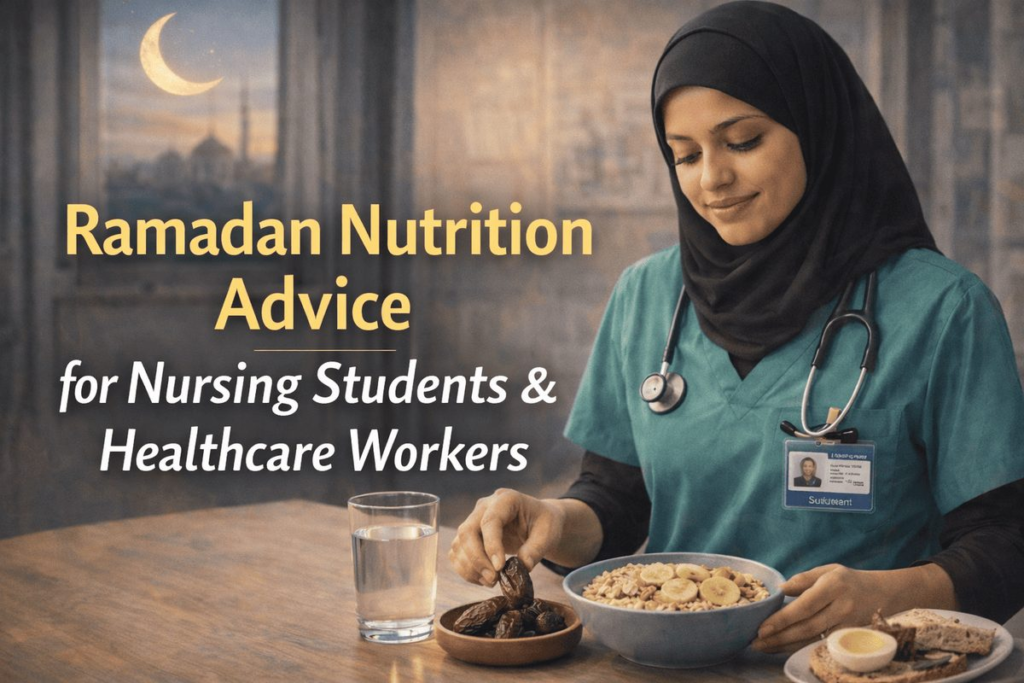
For nursing students and healthcare professionals, Ramadan is both spiritually meaningful and physically demanding. Managing a full clinical rotation or a 12-hour hospital shift while fasting is no small task. It requires thoughtful planning, especially when your role involves patient safety and critical decision-making.
When you’re caring for others, your own energy, focus, and hydration matter just as much. This guide offers practical, realistic nutrition advice to help you stay strong, alert, and healthy from Suhoor to Iftar.
1. Make Suhoor Count
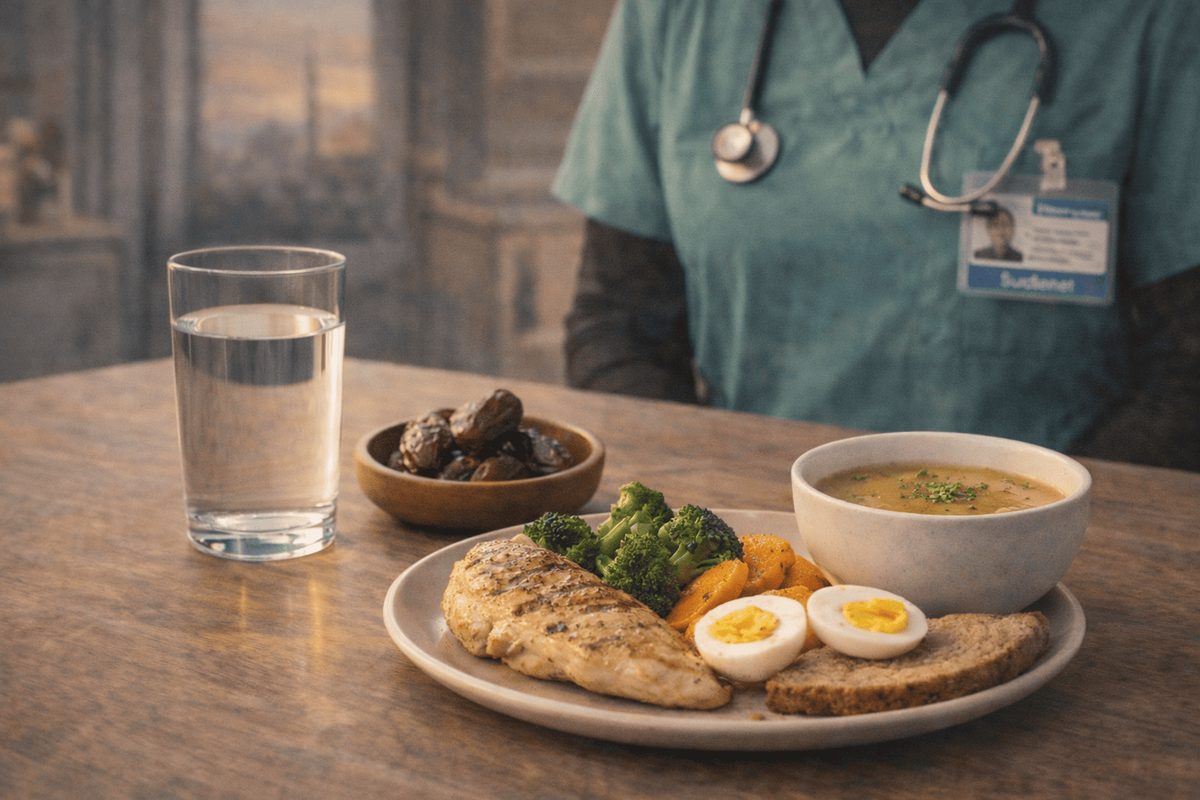
Suhoor isn’t just another meal—it’s your foundation for the entire day. For nursing students standing for hours in clinicals or healthcare workers moving constantly between patients, skipping Suhoor simply isn’t an option.
Think of this meal as your long-term fuel source. Choose complex carbohydrates like oats, whole-grain bread, or brown rice. These release energy slowly, helping you avoid sudden crashes mid-shift. Pair them with quality protein such as eggs, Greek yogurt, cottage cheese, or lentils to stay full longer and maintain muscle strength.
Healthy fats are equally important. A spoonful of peanut butter, a few walnuts, chia seeds, or avocado can significantly improve satiety and energy stability. On the other hand, sugary cereals, pastries, or white bread may give a quick burst of energy but often lead to fatigue and brain fog by late morning.
A balanced Suhoor keeps your blood sugar steady and your mind sharp—both essential when administering medications or making clinical decisions.
2. Be Intentional About Hydration
Dehydration is one of the biggest challenges during Ramadan, especially in hospital environments where air conditioning can dry you out quickly.
Instead of drinking large amounts of water at once, focus on steady hydration between Iftar and Suhoor. Start with one or two glasses of water when breaking your fast. Then continue sipping regularly throughout the evening. Spreading out your intake allows your body to absorb fluids more effectively.
Include hydrating foods such as watermelon, cucumbers, oranges, soups, and yogurt. These not only provide fluids but also replenish electrolytes lost through sweating and movement.
If you work night shifts, your schedule may shift, but the principle remains the same: hydrate consistently.
Be mindful of caffeine. While coffee or tea may feel necessary during long shifts, caffeine increases fluid loss. If you do consume it, balance it with extra water and try reducing intake gradually before Ramadan to prevent withdrawal headaches.
3. Break Your Fast the Smart Way
After a long shift or day of classes, it’s tempting to go straight for fried foods and heavy desserts. However, overeating can leave you feeling sluggish and mentally foggy—especially if you need to study afterward or continue working.
A gentle and balanced approach works best. Begin with dates and water to quickly restore blood sugar levels and initiate hydration. Follow with a light soup to prepare your digestive system.
For the main meal, aim for:
Lean protein (grilled chicken, fish, beans, tofu)
Moderate portions of carbohydrates
Plenty of vegetables
Vegetables provide fiber, which helps prevent constipation—a common issue during Ramadan due to changes in eating patterns and reduced fluid intake.
Keeping portions moderate helps you avoid that heavy, sleepy feeling often referred to as a “food coma.” A balanced Iftar supports both recovery and mental clarity.
4. Handling the Afternoon Energy Dip

Alt Text
“Nursing student taking a brief pause during a clinical shift while fasting in Ramadan to manage energy and focus.”
Many nursing students experience an energy slump between 2 PM and 4 PM. During fasting, this can feel even more intense as blood sugar levels are naturally lower.
Since eating isn’t an option, focus on energy management strategies:
Take brief moments for deep breathing.
Step into a cooler space if possible.
Splash cold water on your face.
Use a refreshing scent like peppermint oil for a mental boost.
Pacing yourself is important. Prioritize tasks that require high concentration earlier in your shift when possible.
Also, communicate openly with clinical instructors or supervisors. Most healthcare environments understand the importance of safety. If you experience dizziness, faintness, or confusion, your health comes first. Breaking your fast for medical reasons is permitted when necessary. Long-term well-being is more important than pushing yourself beyond safe limits.
5. Meal Prep to Reduce Stress
Nursing students and healthcare workers already have packed schedules. Cooking from scratch daily during Ramadan can quickly become overwhelming.
Meal preparation can make a huge difference. Choose one day per week to prepare simple, balanced meals in advance.
For Suhoor:
Overnight oats
Boiled eggs
Pre-cut fruit
Smoothies prepared in advance
For Iftar:
Cook larger batches of grains and proteins.
Pre-chop vegetables for quick salads or stir-fries.
Keep healthy snacks ready.
Smoothies are especially helpful on busy mornings. A blend of protein powder, oats, spinach, nut butter, and milk can provide substantial nutrition in a short amount of time.
Planning ahead reduces last-minute unhealthy choices and mental fatigue, allowing you to focus on your studies and patient care.
Frequently Asked Questions
How can I prevent headaches while fasting and working?
Headaches are commonly caused by dehydration or caffeine withdrawal. Reduce caffeine intake gradually before Ramadan and maintain steady hydration during non-fasting hours. Including magnesium-rich foods like spinach, pumpkin seeds, and nuts at Suhoor may also help.
Is it safe to work a 12-hour shift while fasting?
For most healthy individuals, yes—but preparation is essential. Focus on high-protein Suhoor meals, consistent hydration overnight, and proper rest. If you feel severely unwell, dizzy, or confused, consult a healthcare provider. Health-related exemptions exist for valid medical reasons.
What are good snacks between Iftar and Suhoor?
Choose snacks that combine protein and fiber, such as:
Greek yogurt with berries
Apple slices with peanut butter
Mixed nuts
Cottage cheese with fruit
Avoid salty or highly processed snacks, as they increase thirst the next day.
How should I manage night shifts during Ramadan?
If you work nights, your schedule will shift accordingly. Eat your main pre-fast meal before your shift begins and break your fast during your designated break time. Prioritize sleep during the day by creating a dark, quiet sleeping environment. Quality rest is just as important as nutrition for maintaining performance and recovery.
Ramadan can be demanding for nursing students and healthcare professionals, but with proper planning, balanced nutrition, and intentional hydration, it is absolutely manageable. Taking care of your body allows you to continue serving others safely, effectively, and with excellence.