
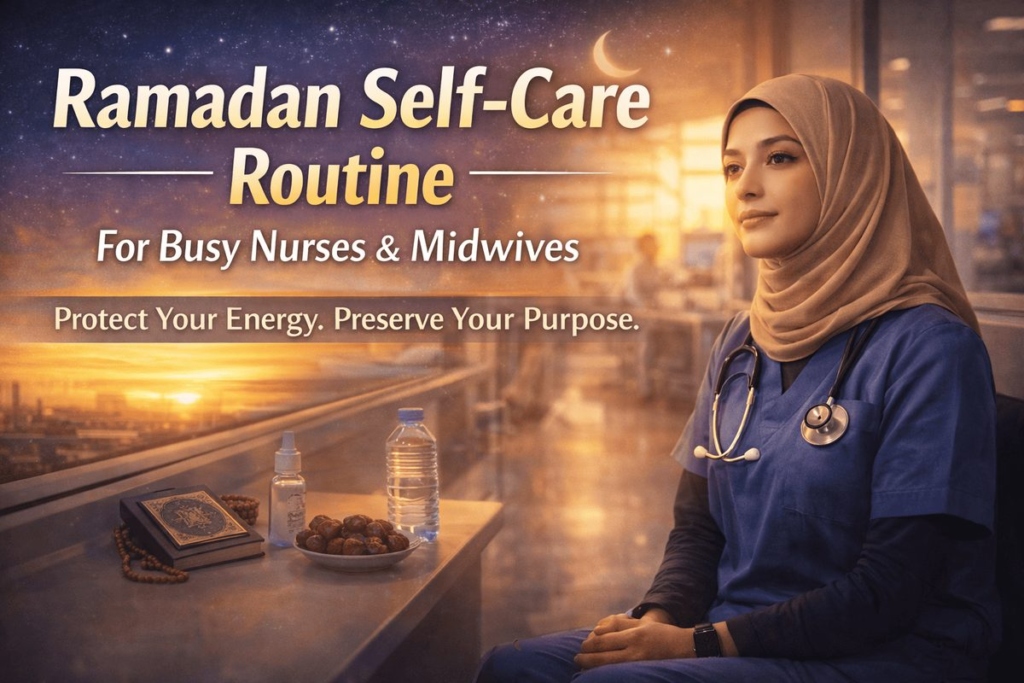
The life of a healthcare professional is one of constant giving. Nurses and midwives are the backbone of the medical world, often putting the needs of their patients, infants, and grieving families above their own. When the holy month of Ramadan arrives, this commitment to service is elevated to a spiritual level. However, the physical and mental toll of working 12-hour shifts while fasting can lead to rapid burnout if self-care is not prioritized. For nursing students and experienced clinicians alike, self-care during Ramadan is not about indulgence; it is about preservation. It is the act of maintaining your own "vessel" so that you can continue to pour care and expertise into others.
A successful Ramadan self-care routine for those in healthcare must be practical, time-efficient, and scientifically sound. It needs to account for the dry air of the hospital, the emotional weight of midwifery, and the irregular sleep patterns of shift work. This guide provides a comprehensive framework for a self-care routine that nourishes the body, calms the mind, and uplifts the soul, ensuring that you finish the month of Ramadan feeling spiritually enriched rather than physically depleted.
1. The "Clinical Skin and Hydration" Ritual

Hospitals are notorious for their harsh, drying environments. Between the constant use of alcohol-based hand sanitizers and the filtered, low-humidity air conditioning, a nurse’s skin and mucous membranes take a beating. When you are fasting, you lose the ability to hydrate from the inside out during the day, which can lead to cracked skin, headaches, and a general feeling of physical "tightness." A dedicated self-care routine must start with protecting your physical barrier.
Midwives and nurses should adopt a "Dermal Defense" routine. Before starting your shift, apply a high-quality, fragrance-free barrier cream to your hands and a thick moisturizer to your face. This creates a seal that prevents "trans-epidermal water loss." During your shift, since you cannot drink, use a cooling rosewater or mineral water spray on your face during breaks. This provides a "sensory hydration" effect that can trick the brain into feeling refreshed. Most importantly, focus on nasal hydration. Using a simple saline nasal gel can prevent the respiratory passages from drying out, which reduces the risk of picking up viral infections—a common issue for tired, fasting healthcare workers.
2. Micro-Mindfulness: Protecting the "Emotional Battery"
Nurses and midwives face high-stress decisions every hour. In the middle of a fast, your brain’s "executive function" can be strained, making you feel more irritable or anxious than usual. Self-care for the mind involves "Micro-Mindfulness"—short, 60-second bursts of mental resetting that you can do anywhere, even in a supply closet or while scrubbing in for a procedure. This practice prevents "sympathetic nervous system overload," where your body stays in a constant state of high stress.
Try the "4-7-8 Breathing Technique" between patient visits: inhale for 4 seconds, hold for 7, and exhale slowly for 8. This specific rhythm signals your vagus nerve to switch your body from "stress mode" to "rest and digest mode." For midwives, who often deal with the high-stakes emotions of birth, practicing "grounding" is essential. Touch a cold surface, name three things you can hear, and acknowledge one thing you are grateful for in that moment. These small acts of mental self-care keep your "emotional battery" from hitting zero, allowing you to remain the calm, steady presence your patients need.
3. Foot and Leg Care: The "Foundation" of Nursing

The average nurse walks between 4 and 5 miles during a 12-hour shift. For a fasting nurse, the lack of fluid intake can make the blood slightly more viscous, increasing the risk of leg swelling (edema) and varicose veins. Physical self-care must address the "foundation" of your body. Ignoring foot pain during Ramadan can lead to chronic fatigue that makes it impossible to enjoy the spiritual nights of the month.
A vital self-care step is the use of medical-grade compression stockings. These help push blood back up toward the heart, preventing it from pooling in the ankles. When you return home from the ward, spend 10 minutes with your "legs up the wall." This simple yoga inversion uses gravity to drain excess fluid from the lower extremities and reduces the workload on your heart. Following this with a cool foot soak in Epsom salts (magnesium sulfate) allows your skin to absorb magnesium, which helps relax tired muscles and promotes better sleep. Treating your feet with respect is an investment in your ability to stand for long hours in the labor room or the emergency department.
4. Nutritional "Self-Compassion" and the Iftar Reset
Many healthcare workers fall into the trap of "revenge eating" at Iftar—consuming large amounts of fried, salty, or sugary foods because they feel they "earned it" after a hard shift. However, true self-care is about eating with compassion for your future self. High-sugar foods lead to a massive energy crash, while high-sodium foods will make your next shift's fast incredibly difficult due to intense thirst.
Your Iftar should be a "Reset Ritual." Start with three dates and two large glasses of room-temperature water. Wait 15 minutes before eating your main meal to allow your brain to register that it is no longer hungry. Focus on "Anti-Inflammatory" foods: salmon, walnuts, berries, and leafy greens. These foods help reduce the systemic inflammation caused by the stress of the hospital. For midwives, including "healthy fats" like avocado is crucial for hormonal balance. By choosing nourishing foods, you are practicing a form of self-care that ensures you wake up for Suhoor feeling light and ready to work, rather than sluggish and bloated.
5. Spiritual Self-Care: Finding the "Internal Mosque"
The biggest source of stress for many nurses is the feeling that they are "missing out" on the spiritual atmosphere of Ramadan because they are stuck in the hospital. This "spiritual FOMO" (fear of missing out) can be deeply discouraging. Spiritual self-care involves changing your perspective: your work is your worship. In the Islamic tradition, serving the sick and the vulnerable is one of the highest forms of devotion.
Create an "Internal Mosque" by setting a specific intention (Niyyah) at the start of every shift. Tell yourself: "I am going into this hospital to serve God by serving His creation." This transforms every medication you give, every bed you change, and every mother you support into a continuous prayer. Use your commute for "Auditory Self-Care"—listen to the Quran, a peaceful podcast, or even just silence to decompress. By viewing your professional role as a spiritual mission, you eliminate the guilt of not being at the mosque and replace it with a sense of profound purpose. This mental shift is the ultimate form of self-care, providing a level of "spiritual energy" that no amount of food or sleep can replace.
Frequently Asked Questions
Q: I’m too tired to do a full skincare or self-care routine after a 12-hour shift. What’s the bare minimum? A: Focus on "The Big Three": 1. Hydrate (drink 500ml of water immediately), 2. Elevate (put your feet up for 5 minutes), and 3. Moisturize (apply a thick cream to hands and face). This takes less than 10 minutes but covers your most vital physical needs.
Q: Does using a face mist or rosewater spray break the fast? A: No. As long as you are not intentionally inhaling the mist deeply into your throat or swallowing it, external cooling mists are perfectly fine and are a great way to stay refreshed during a long shift.
Q: How can I manage my "Iftar" if I'm in the middle of a delivery? A: Midwives often face this! Keep a "Mini-Iftar" in your pocket: 2 dates and a small, sealed pouch of water. The moment there is a safe pause, you can break your fast in 30 seconds. A full meal can wait until the mother and baby are stable.
Q: Why do my legs hurt more during Ramadan shifts? A: Dehydration can lead to minor electrolyte imbalances and reduced blood circulation, making muscles feel achier. Using compression socks and ensuring you get enough magnesium (from nuts, seeds, or supplements) at Iftar can significantly reduce this pain.
Q: I feel lonely working while everyone else is at the mosque. How can I feel more "connected"? A: Reach out to other Muslim colleagues! Even a 2-minute "Ramadan Mubarak" greeting in the breakroom or a quick shared date at Iftar time can create a sense of "mini-community" on the ward. You aren't alone; you are part of a global team of healthcare heroes.