

Summary
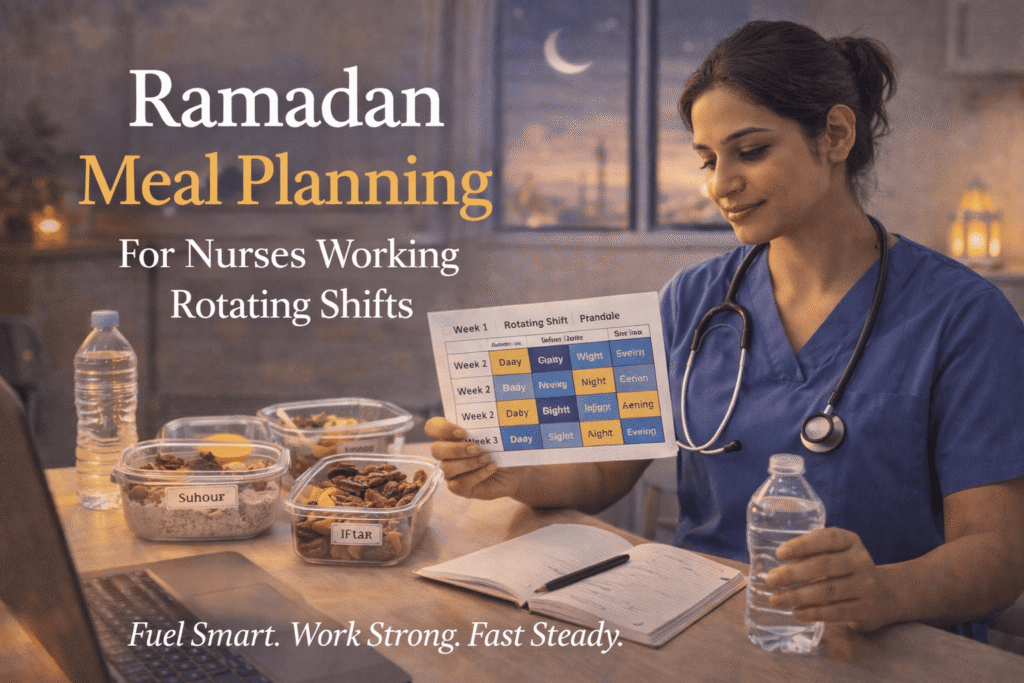
The nursing profession is a never-sleeping one. Nurses and nursing students frequently deal with the “chaos” of rotating shifts changing between days, evenings, and nights within the same week while the majority of people adhere to a typical 9-5 routine. This erratic lifestyle makes food preparation extremely difficult when the holy month of Ramadan approaches. A nurse’s schedule is far from consistent, but fasting from sunrise to sunset necessitates a steady regimen. One day you’re eating Iftar at home with your family, and the next you’re racing to a “Code Blue” at precisely dusk.
Strategic adaptability is essential to prospering and surviving this month. Meal planning for a nurse who works rotating shifts involves “mapping” your nutrition to your particular shift schedule, not just what you eat. You can keep your professional focus and your spiritual devotion without being completely exhausted by learning about the science of slow-release energy and preparing “grab-and-go” solutions.
The Science of Sustained Energy: What to Eat When Your Clock Flips
Your body’s internal clock, or circadian rhythm, is continuously attempting to catch up as you work rotational shifts. Your digestion and the way your body uses glucose are impacted by this. Your body requires sustenance that lasts until dusk if you perform a 12-hour day shift during Ramadan. Fuel that keeps you focused during the “3:00 AM slump” is essential if you work nights. Refined sugar and processed flour are the adversaries in both situations. These result in a sharp rise in blood sugar and a subsequent “crash” that can induce tremors, agitation, and poor judgment on the ward.
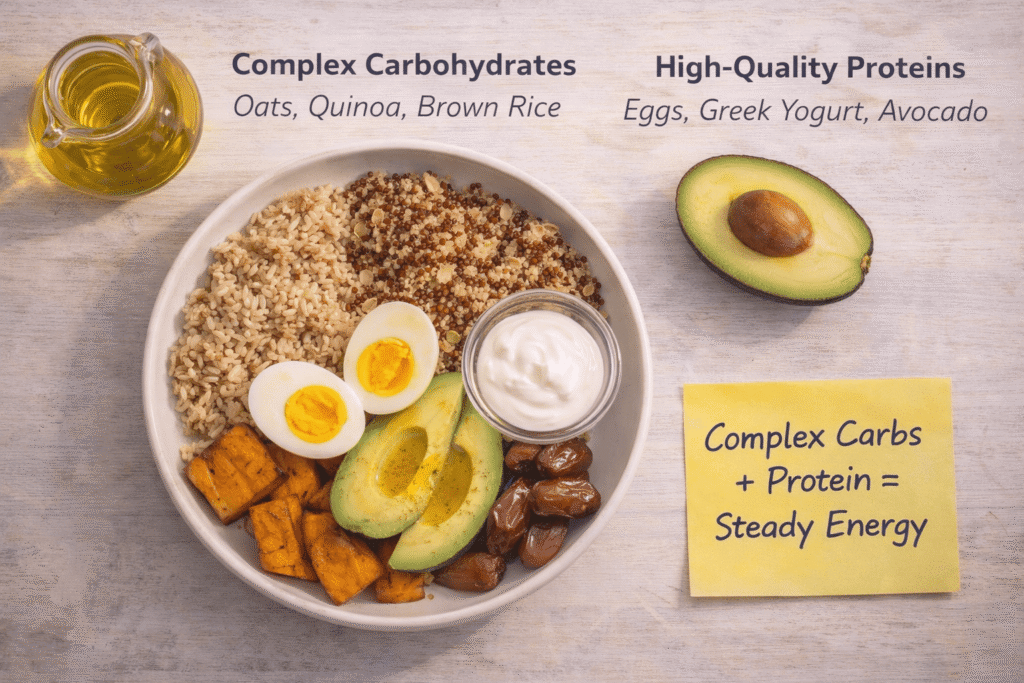
Nurses need to concentrate on complex carbs and high-quality proteins in order to fight this. Fiber found in complex carbohydrates, such as oats, quinoa, brown rice, and sweet potatoes, slows down the breakdown of meals into sugar. Your brain and muscles receive a “slow-drip” of energy as a result. For nurses who walk several miles in a single shift, protein found in eggs, Greek yogurt, poultry, and lentils is crucial for muscle regeneration. When you combine these two with healthy fats like avocado or olive oil, you produce a “metabolic anchor” that keeps you feeling content and focused throughout your workday.
Meal Planning for the Day Shift (7 AM – 7 PM)
Suhoor, or the pre-dawn meal, is the most significant meal for day shift nurses. Your Suhoor needs to be hydrating and dense because you will be fasting during the most physically demanding portion of the day. In an attempt to obtain an extra thirty minutes of sleep, many students make the mistake of skipping Suhoor, which can result in a severe dip in energy by mid-afternoon. Make your suhoor the night before so you can eat it while you’re half asleep.
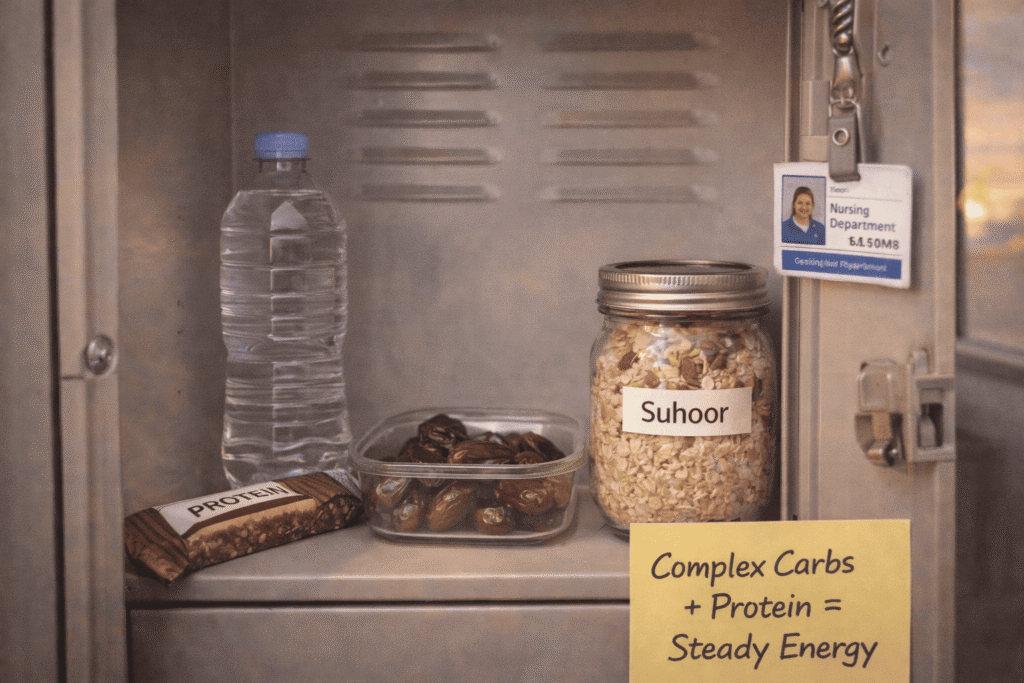
The ideal “Day-Shift Suhoor” is made with overnight oats soaked in milk (or a plant-based substitute) with chia seeds, then topped with banana and nuts. Because chia seeds absorb water many times their weight, they are very beneficial for maintaining internal hydration. Portability is essential during Iftar, which typically occurs as you are traveling home or wrapping up your shift. Keep a “Fast-Break Kit” with water, dates, and a protein snack in your locker. This enables you to break your fast as soon as the sun sets, providing your brain with the glucose it needs to complete your charting effectively before you go home to eat a more substantial, well-balanced dinner.
Meal Planning for the Night Shift (7 PM – 7 AM)
The Ramadan rules are reversed during the night shift. During the day, your “eating window” occurs while you are working, and your “fasting” occurs when you are sleeping. Here, digestion and attentiveness are more important than hunger. The food coma known as “post-prandial somnolence” might result from consuming a large, fried meal at Iftar just before beginning a 12-hour night shift. When you need to be vigilant for patient safety, this is risky.
Iftar should be light yet nutrient-dense for nurses who work nights. The perfect combination is a salad, grilled fish, and a bowl of lentil soup. It gives you the protein you need for the shift without making you feel heavy. During your shift, pack a “midnight snack” rather of going to the vending machine. This should resemble apple slices with peanut butter or Greek yogurt with berries. Your Suhoor will take place just before to the morning handover at the conclusion of your shift. The goal of this meal should be “recovery.” When you reach home, eat things that will improve your quality of sleep, including a protein shake or a turkey sandwich on whole-grain bread. You won’t be able to go asleep if you consume caffeine during this last supper, when you finally reach your bed.
Hydration Strategies for the “Dry Ward” Environment
For nurses, dehydration is a persistent risk. Hospitals are climate-controlled spaces with extremely low humidity, which dehydrates your skin and respiratory system. You are unable to replenish this fluid during the day when you are fasting. The “Ramadan Headache,” which is frequently only an indication of a thirsty brain, results from this. Being a “Tactical Hydrator” during non-fasting hours is mandatory for nurses working rotational shifts.
Consistent drinking is the greatest tactic. Don’t drink a gallon of water all at once; your kidneys will just flush it out. Rather, try to consume 250ml (one large glass) each hour you are awake. Include electrolytes to help your body “hold onto” the water. Eating a potassium-rich banana at Suhoor or adding a teaspoon of sea salt to your water works wonders; you don’t need pricey sports drinks. The hydration window for night shift nurses is while they are at work. Maintain a water bottle at the nursing station and take frequent sips. Steer clear of too much coffee because it is a diuretic that will leave you more dehydrated the next day, even though it may help you remain alert.
“Batch Cooking” for the Busy Nursing Student
Nursing students do not have the luxury of time. You probably don’t have the energy to cook every night due to clinical rotations, lectures, and exam preparation. The only way to make sure you eat healthful meals throughout Ramadan is to cook in bulk. Set aside a day each week, such as your day off, for “The Great Prep.” Cook a lot of proteins, such as roasted chickpeas, hard-boiled eggs, and shredded chicken. Make vast quantities of grains, such as quinoa or brown rice.
Use the “Bowl Method” to put your meals together after your ingredients are cooked. A base of grains, some greens, some protein, and a healthy fat (such as olive oil or hummus). You may keep these in the refrigerator for three to four days. For those who work rotating shifts, this means that a nutritious meal is prepared in two minutes, regardless of whether they get up at 4 PM for a night shift or 4 AM for a day shift. This keeps you from making the “hunger-driven” decision to purchase fast food, which is frequently heavy in sodium and will make you extremely thirsty while you’re fasting. Preparing meals is a self-care practice that safeguards both your health and your productivity at work.
People Also Ask (FAQ)
Q: I work 12-hour shifts and feel very dizzy by 4 PM. Should I stop fasting?
Dehydration or low blood sugar can cause dizziness. Try to take a 10-minute break in a cool place first. You have to break your fast if the dizziness is extreme, followed by confusion, or if you think you could pass out. In order to ensure patient safety, nurses must prioritize their own health in order to continue caring for others.
Q: Can I drink coffee at Suhoor to stay awake during my day shift?
Avoiding caffeine at Suhoor is often advised. As a diuretic, caffeine causes you to lose water more quickly. By noon, it may also result in a “caffeine crash” and a headache. If you must have coffee, drink it during Iftar so you may replenish your fluids later.
Q: What are the best snacks to keep in my locker?
Pay attention to non-perishables that include both protein and fiber. For a fast energy boost, raw nuts, seeds, dates, low-sugar protein bars, and dried apricots (in moderation) are great options.
Q: How do I handle Iftar if I am in the middle of a patient procedure?
Patient safety is the first priority at all times. Carry a couple dates and a tiny bottle of water in your pocket. Break your fast with the date and water as soon as the process is stabilized and you have a 30-second window. When your responsibilities are transferred or you are on a formal break, you can eat a full meal.
Q: Does “mouth care” or brushing teeth break the fast?
No, as long as you don’t ingest the water, using mouthwash or brushing your teeth won’t break the fast. Maintaining a clean mouth can actually help nurses feel less thirsty and be more comfortable over a lengthy shift.
Useful Documents for every Nursing Student
CV Section Template for Nursing students
AHPRA – NMBA Registration Document Checklist (International Students-Graduates)
Clinical Placement Reflection Template (NMBA-aligned)
Cover Letter Template for Nursing Students
Disclaimer: “I researched this information on the internet; please use it as a guide and also reach out to a professional for assistance and advice.This information is not medical advice, so seek your medical professional’s assistance.”