

The life of a nurse or midwife is characterized by high-pressure environments, constant movement, and the emotional weight of patient care. When these professional demands intersect with the holy month of Ramadan, the need for a strategic nutritional plan becomes paramount. For healthcare workers, fasting is not just a spiritual practice; it is a metabolic challenge that must be managed to ensure that patient safety is never compromised by maternal or clinician fatigue. Whether you are assisting in a delivery that lasts for hours or managing a busy ward during a double shift, the food you choose at Suhoor and Iftar acts as your primary biological fuel.
This guide is specifically designed for nursing students, registered nurses, and midwives. We will dive deep into the science of "slow-burn" energy, the critical nature of hydration in dry hospital air, and how to structure your meals to avoid the dreaded "post-Iftar crash." By treating your nutrition with the same precision you use for medication dosages, you can maintain your stamina and spirit throughout the month.
1. The Art of the "Slow-Burn" Suhoor for Clinical Endurance
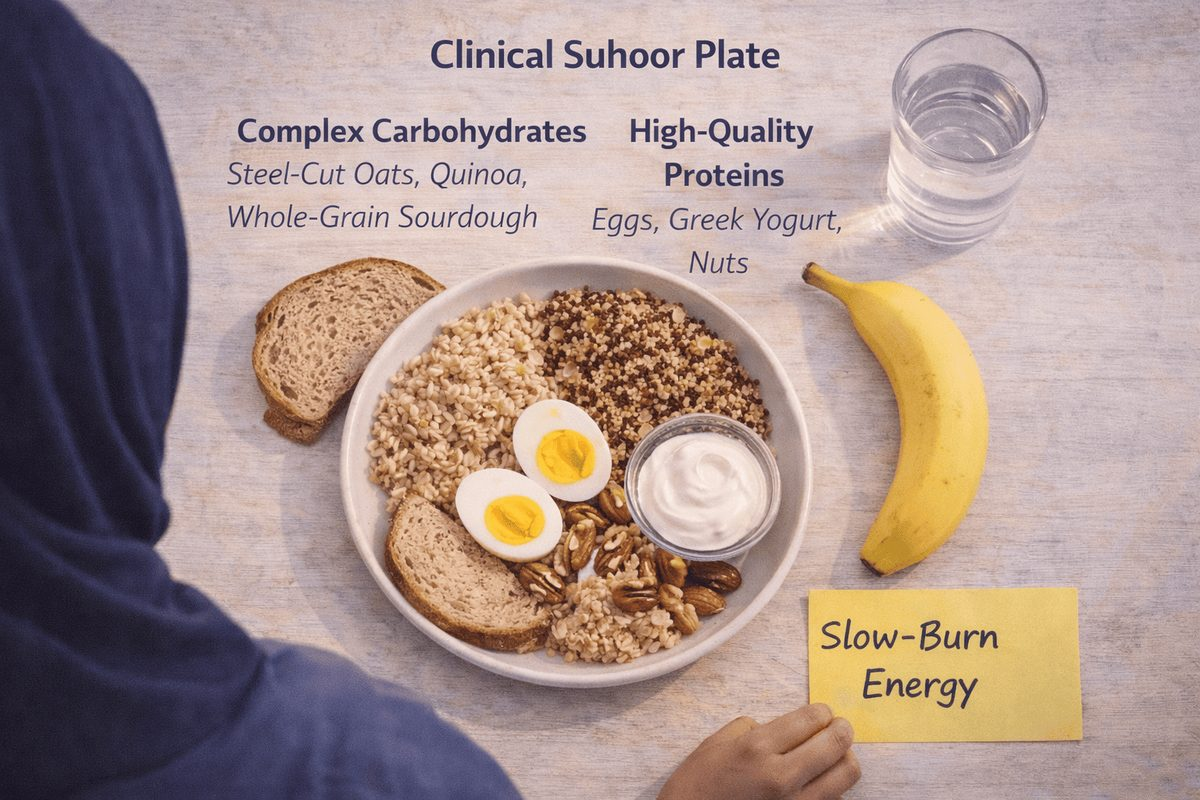
For a nurse starting a 12-hour day shift, Suhoor is the most important meal of the day. It is your final opportunity to "load" your system with the nutrients required to sustain cognitive focus and physical strength until sunset. Midwives, who may face unpredictable physical exertion during labor support, must be particularly careful not to skip this meal. The goal of a "Clinical Suhoor" is to provide a steady release of glucose into the bloodstream, preventing the sharp peaks and valleys that lead to irritability and "brain fog" by midday.
To achieve this "slow-burn" effect, your meal must be built around Complex Carbohydrates and High-Quality Proteins. Complex carbs like steel-cut oats, buckwheat, quinoa, and whole-grain sourdough contain high amounts of fiber. This fiber acts as a "braking system" for digestion, ensuring that energy is released over six to eight hours rather than all at once. Pairing these with proteins—such as eggs, Greek yogurt, or cottage cheese—further stabilizes blood sugar. Nurses should avoid "white" carbohydrates (like white bread or sugary cereals) at Suhoor, as these cause a rapid insulin spike that will leave you feeling shaky and exhausted by the time you reach your mid-morning medication rounds.
+2
2. Strategic Hydration: Managing the "Dry Hospital" Factor
One of the hidden challenges for nurses and midwives is the hospital environment itself. Healthcare facilities are climate-controlled to be very dry to prevent the growth of certain pathogens, but this dry air significantly increases "insensible water loss" through your breath and skin. Since you cannot drink water during your shift, your hydration strategy must be aggressive during the non-fasting hours. Dehydration is a leading cause of nursing errors, as it directly impacts short-term memory and concentration.
The key to staying hydrated is not the volume of water you drink at Suhoor, but the quality of your fluid retention. If you chug two liters of plain water just before dawn, your kidneys will simply flush it out within the hour. Instead, focus on Electrolyte-Rich Hydration. Adding a pinch of sea salt to your water or consuming potassium-rich foods like bananas, avocados, and coconut water helps your cells "grip" the moisture. Midwives should also incorporate "water-rich foods" into their Suhoor, such as cucumbers or watermelon. These foods release their water content slowly as they are digested, providing a "time-release" hydration effect that can keep your mouth from feeling parched during a long shift.
+1
3. Iftar: Reclaiming Energy Without the "Food Coma"
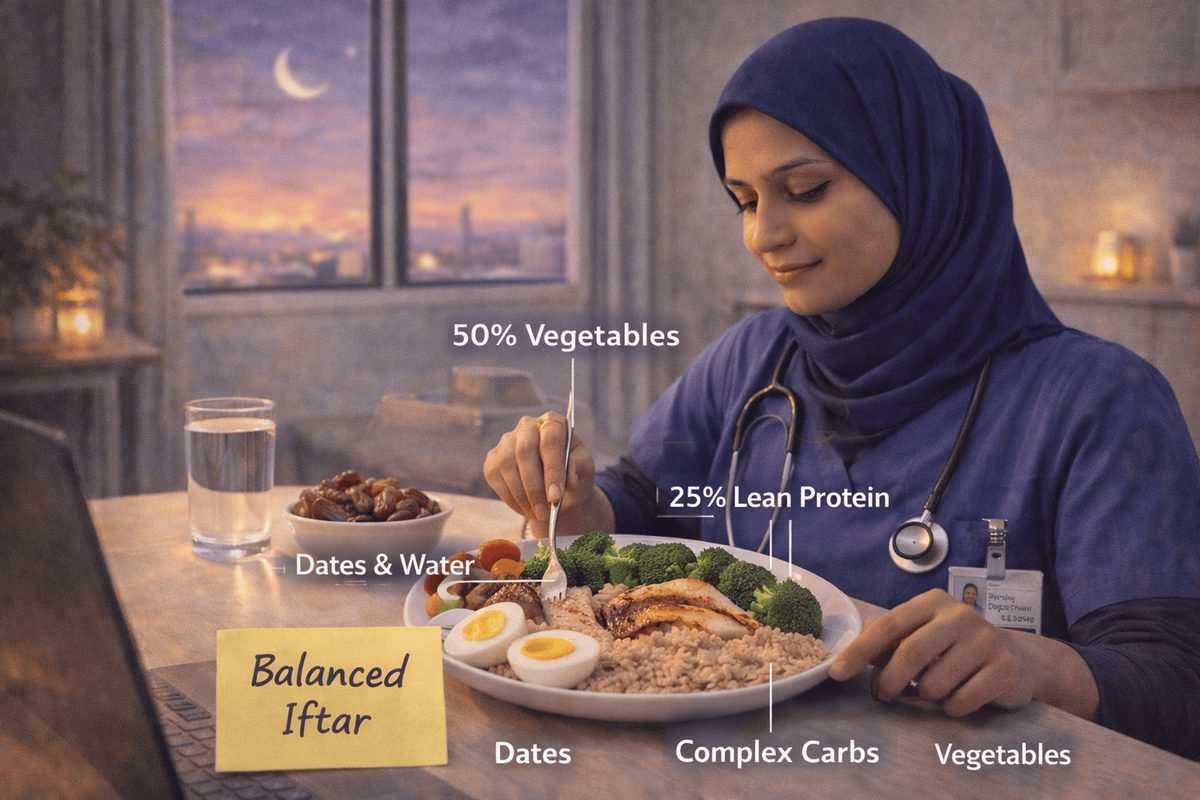
After a demanding day on the ward, the temptation to indulge in fried, salty, or sugary foods at Iftar is intense. However, for a healthcare worker, a heavy Iftar can be counterproductive. When you consume a large, high-fat meal after fasting, your body diverts a massive amount of blood flow to the digestive system to process the food. This leaves less blood for the brain, resulting in "post-prandial somnolence"—the famous "food coma." For a nursing student who needs to study in the evening or a nurse heading into a night shift, this loss of mental clarity is a major setback.
The best way to break your fast is the traditional method: Dates and Water. Dates provide an immediate burst of natural fructose to wake up your brain, while water begins the rehydration process. After a 10-minute break for prayer or rest, move to a "balanced plate" consisting of 25% lean protein, 25% complex carbs, and 50% fiber-rich vegetables. Vegetables are crucial because they provide the magnesium and Vitamin C needed for muscle recovery after a day spent standing. Avoid "heavy" fried foods like samosas or deep-fried chicken as your main source of energy; these lead to heartburn and lethargy, making it difficult to remain active or focused for the rest of the evening.
4. Managing Electrolytes and Micronutrients for Midwives
Midwives often experience high levels of physical and emotional stress, which can deplete the body’s stores of magnesium and B-vitamins. Magnesium is essential for muscle relaxation and preventing the leg cramps that many nurses suffer from after long shifts. During Ramadan, these stores are harder to replenish. A midwife's nutrition plan should consciously include magnesium-rich foods at both Suhoor and Iftar, such as spinach, pumpkin seeds, and dark chocolate (in moderation).
+1
Furthermore, B-vitamins (especially B12 and B6) are the "spark plugs" of the human energy system. They help convert food into cellular energy ($ATP$). Nursing students who find themselves struggling to memorize clinical notes during Ramadan should ensure they are getting enough B-vitamins through lean meats, eggs, and fortified cereals. If you find your energy levels are consistently low despite good meal planning, consult with a pharmacist about a high-quality B-complex vitamin to take at Iftar. Keeping your micronutrient levels optimized ensures that your nervous system can handle the "double stress" of a busy clinical rotation and the fast.
5. Meal Prep Hacks for the Busy Healthcare Student
Time is the rarest commodity in a nurse's life. Between 12-hour shifts, commuting, and sleeping, there is often very little time left for cooking. Meal prepping is the only way to ensure that you don't resort to unhealthy hospital vending machines or fast food when Iftar time hits. For a nurse, meal prep should be "modular"—meaning you prep individual components that can be quickly assembled into different meals depending on how much time you have.
Spend one day a week (like Sunday) roasting a large tray of vegetables, boiling a dozen eggs, and cooking a large pot of grains like brown rice or quinoa. Store these in airtight containers. At Suhoor, you can quickly toss an egg and some grains into a bowl for a 2-minute "power meal." For Iftar, you can reheat your pre-roasted veggies and pair them with a pre-cooked protein like grilled chicken or chickpeas. This "assembly line" approach to nutrition reduces the mental load of decision-making when you are exhausted, ensuring that you always have a high-quality, SEO-optimized (Scientifically Energy Optimized) meal ready to go.
Frequently Asked Questions
Q: Can I drink coffee at Suhoor to stay awake during my shift?
A: It is generally better to avoid caffeine at Suhoor. Caffeine is a diuretic, which means it encourages your body to lose water. This can lead to faster dehydration and a "caffeine headache" by midday. If you need a caffeine boost, try to have a small cup of tea or coffee at Iftar instead, when you can still drink water to compensate for the fluid loss.
Q: What should I do if I feel dizzy while assisting in a procedure?
A: Patient safety is the priority. If you feel dizzy, shaky, or confused, you may be experiencing hypoglycemia (low blood sugar) or severe dehydration. Inform your supervisor immediately. In Islam, there is a medical exemption for fasting if it poses a risk to your health or your ability to perform life-saving work. Breaking your fast with a quick glucose source is the responsible clinical choice in an emergency.
+1
Q: How can I prevent the "thirst" feeling during a long shift?
A: The best way to prevent thirst is to avoid high-sodium (salty) foods at Suhoor. Salt pulls water out of your cells and will make you feel thirsty very quickly. Stick to "water-rich" foods like yogurt, cucumbers, and fruits, and try to keep your physical activity paced rather than rushed.
+1
Q: Is it okay to take my vitamins on an empty stomach at Suhoor?
A: Some vitamins, especially fat-soluble ones like A, D, E, and K, require food for absorption and can cause nausea if taken on an empty stomach. It is usually best to take your supplements in the middle of your Iftar or Suhoor meal to ensure they are absorbed properly and don't cause stomach upset while you are on duty.
Q: What are the best "grab-and-go" snacks for a nurse’s locker?
A: Look for snacks that offer a balance of fiber and protein. Raw nuts, dates stuffed with almond butter, protein bars with low sugar, and individual packs of olives are excellent choices. These provide a quick energy boost without the "sugar crash" associated with candy or chips.