

Summary
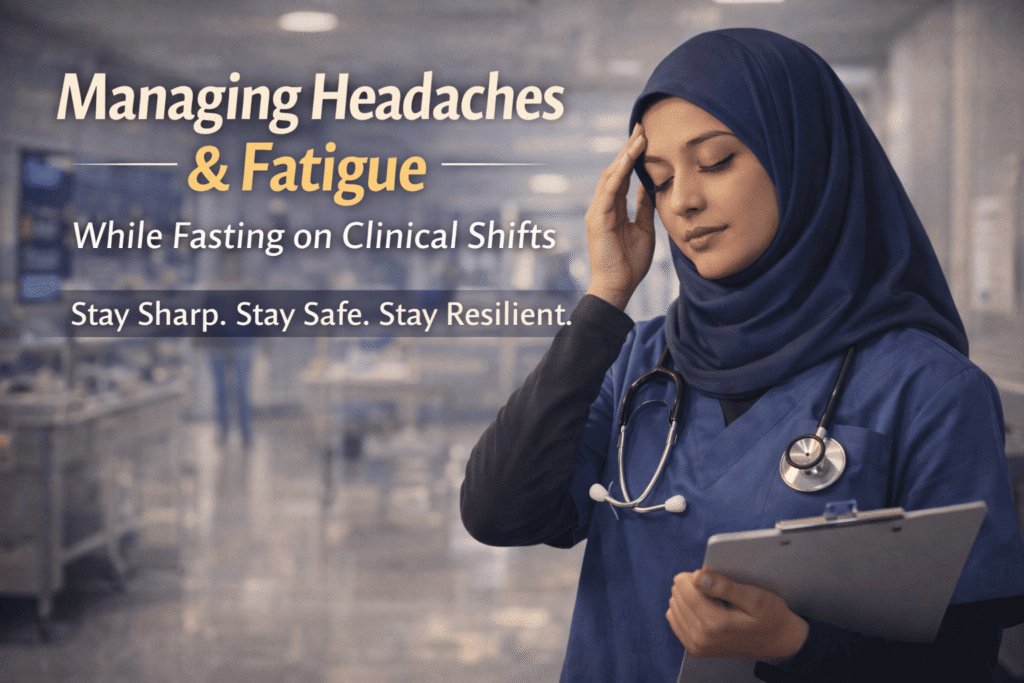
The clinical setting is a high-intensity workplace that requires frequent physical activity and acute mental focus for nursing students, midwives, and other healthcare professionals. The combination of working 12-hour shifts and fasting during the holy month of Ramadan can cause two main problems: chronic headaches and extreme physical exhaustion. These symptoms may seem exacerbated in a hospital setting, where you frequently struggle with dry air, glaring fluorescent lights, and the emotional strain of patient care. Managing them is an issue of clinical safety as much as personal comfort. A nurse or midwife who is experiencing severe sleepiness or a throbbing migraine is more likely to make mistakes when administering medication or evaluating patients.
The first step in preventing these symptoms is to comprehend their underlying causes. While weariness is typically brought on by disturbed sleep cycles and a lack of sustained energy from food, headaches during fasting are frequently caused by “caffeine withdrawal,” dehydration, or low blood sugar (hypoglycemia). For individuals who work on the front lines of healthcare, this article offers a thorough, SEO-optimized method to handling these difficulties. Throughout your clinical rotations, you can make sure that your body is resilient and your mind is clear by using these evidence-based practices.
Identifying and Preventing the “Ramadan Headache”

The “Ramadan Headache” is a well-known occurrence, especially in the first week of the month. This is frequently brought on by abruptly stopping caffeine consumption for healthcare professionals. The majority of nurses use tea or coffee to help them get through lengthy shifts; when this chemical stimulant is eliminated during the day, the brain’s blood vessels widen, resulting in a dull, throbbing discomfort. Dehydration is another significant trigger in the hospital. You lose moisture through your skin and breath because hospital settings are extremely dry and climate-controlled. A “dehydration headache” results from your brain momentarily shrinking away from the skull in the absence of water to replace your blood volume.
Midwives and nurses could implement a “Caffeine Taper” in the weeks preceding Ramadan to address this. Since caffeine is a diuretic that will cause you to become more dehydrated later in the day, if the month has already begun, make sure you consume very little or no caffeine at Suhoor. Consider “Magnesium Loading” instead when you’re not fasting. Pumpkin seeds, spinach, and almonds contain magnesium, a naturally occurring muscle relaxant that can help avoid tension headaches that are frequently brought on by the stress of the ward. Try a “Sensory Reset” if a headache starts during your shift. Spend two minutes in a quiet, dark room and tighten the back of your neck with a cool compress or a damp paper towel blood vessel and provide immediate relief.
Combating Fatigue with “Low-Glycemic” Fueling
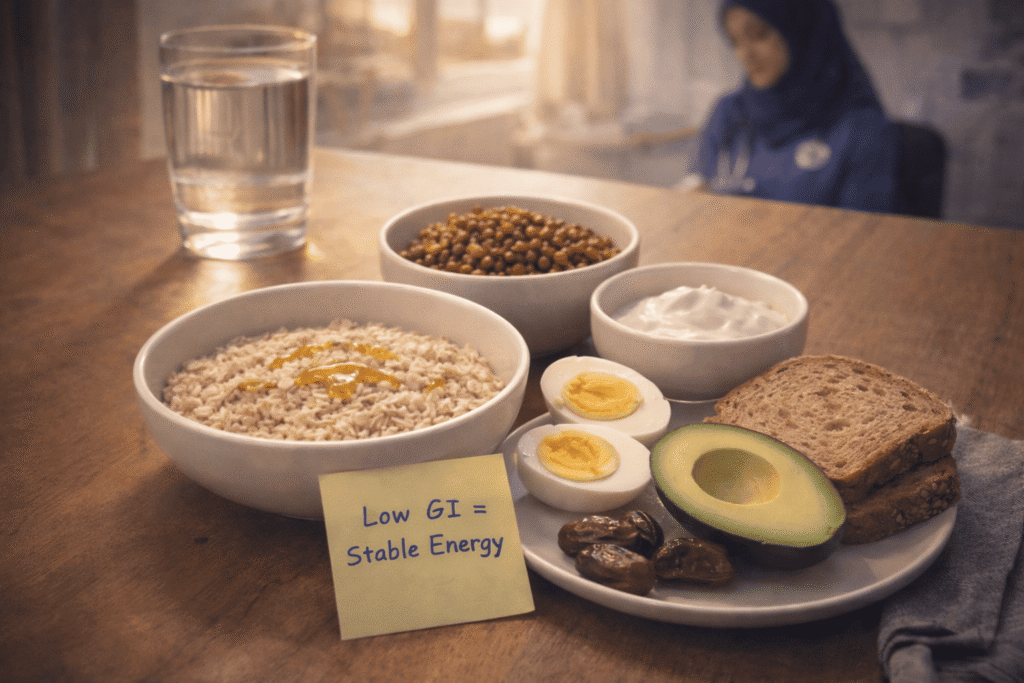
During a clinical shift, fatigue is more than just feeling “sleepy”; it’s a systemic lack of energy that causes your limbs to feel heavy and your head to feel “foggy.” This is typically brought on by the “Glucose Rollercoaster.” If you eat white bread or other high-sugar items at Suhoor, your blood sugar may surge and then drop quickly, leaving you weary by noon. This crash can be crippling for a nursing student who must be vigilant for a medication round at 2:00 PM. Your diet needs to be centered around slow-release carbohydrates in order to sustain energy levels.
At Suhoor, nurses should select dishes with a low Glycemic Index (GI). Foods that take several hours to digest, such as steel-cut oats, lentils, beans, and whole grains, give your muscles and brain a consistent “trickle” of energy. Combining them with “Healthy Fats” like peanut butter, avocado, or olive oil further slows down digestion and prolongs feelings of fullness. In order to prevent muscle atrophy and preserve physical stamina, midwives should make sure they eat enough protein during Suhoor, such as eggs or Greek yogurt, as they may encounter sudden bursts of high-intensity physical labor during a delivery. You can avoid the severe metabolic tiredness that frequently occurs in the last hours of a shift by regulating your blood sugar at dawn.
The Role of Electrolytes in Clinical Endurance

Many healthcare professionals just pay attention to how much water they consume, but electrolyte balance is even more crucial for those who work long shifts. The minerals that enable your muscles to contract and your neurons to fire are called electrolytes, and they are precisely sodium, potassium, and magnesium. Sweat and regular metabolic processes cause you to lose these minerals when you are fasting and working in a dry hospital. One of the main reasons why some students on the ward have “muscle fatigue” and “fainting spells” is a deficiency of electrolytes.
Including “Hydration-Boosting” dishes at Iftar and Suhoor is a recommended advice for nurses. Try coconut water or a homemade electrolyte drink (water with a bit of sea salt and a squeeze of lemon) in place of ordinary water, which can occasionally travel through the system too rapidly. Consuming foods high in potassium, such as potatoes, dates, and bananas, improves your body’s ability to control fluid levels. A magnesium pill at Iftar can be a lifesaver if you are prone to leg cramps after standing for 12 hours. Maintaining electrolyte balance gives your heart and muscles the “spark” they require to go through a demanding shift without feeling exhausted.
Strategic Resting: The 20-Minute “Clinical Reset”
“Rest” is frequently viewed as a luxury in the hectic fields of nursing and midwifery. However, it is clinically necessary to take deliberate breaks during Ramadan. Fatigue is largely caused by sleep deprivation; when you mix sleep deprivation with malnutrition, your “Executive Function” your capacity to organize, concentrate, and make decisions is severely compromised. This may result in errors in clinical reasoning or documentation for students.
Take a 20-minute Power Nap during your “lunch break” if your shift permits. A quick snooze can boost happiness and attentiveness for several hours later, according to research. If you are unable to snooze, try “Box Breathing” or “Non-Sleep Deep Rest” (NSDR). Close your eyes, take a seat in a peaceful place, and breathe in for four seconds, hold it for four, then exhale for four. This method reduces your levels of the stress hormone cortisol. Your body burns through its stored glucose more quickly when cortisol levels are high, which accelerates fatigue. You preserve your energy reserves for the times when your patients most need you by “pacing” your nervous system via these brief pauses.
Managing the Environmental Triggers of the Ward
Your headache or exhaustion may occasionally be caused by the hospital setting itself. A fasting brain may experience sensory overload due to fluorescent illumination, the continuous “beeping” of monitors, and the potent odors of sanitizers. Your senses may become hyper-acute when you are fasting, which makes these ambient elements feel much more bothersome and taxing.
Midwives and nurses should manage this by using “Environmental Modification.” Try lowering the computer’s screen brightness if you are charting at a desk. Use “Silence Therapy” in the break room for a minute if you are in a noisy location. Additionally, be mindful of your posture. Tension headaches and restricted blood supply to the brain can result from bad posture, particularly the “nursing hunch” over a computer or patient bed. You can increase oxygenation and lessen fatigue by deliberately pulling your shoulders back and stretching your neck every hour. The amount of energy you have at the end of the day can be greatly impacted by small adjustments to how you engage with your physical surroundings.
People Also Ask (FAQ)
Q: Should I take a painkiller at Suhoor to prevent a headache later?
Taking paracetamol or ibuprofen at Suhoor may help delay a headache, but it can also irritate an empty stomach. It is better to focus on hydration and caffeine tapering. If you must take medication, ensure you take it with a significant amount of food and water at Suhoor.
Q: Why do I feel more tired in the afternoon than in the morning?
This is usually due to the “Circadian Dip” combined with falling blood sugar. Around 2 PM – 4 PM, the body naturally wants to rest. For a fasting nurse, this is when your Suhoor fuel is running low. A quick sensory reset (splashing cold water on your face) can help you push through this window.
Q: Can I drink “Energy Drinks” at Iftar to help with fatigue?
It is highly recommended to avoid energy drinks. They are loaded with sugar and caffeine, which will give you a temporary high followed by a massive “crash” and increased thirst the next day. Stick to natural energy sources like dates, fruit, and complex carbs.
Q: How do I know if my headache is “normal” or a sign of something serious?
A “fasting headache” is usually a dull ache. If you experience a sudden, “thunderclap” headache, blurred vision, fainting, or confusion, these are “Red Flags.” You should break your fast, notify your supervisor, and seek medical attention, as these could be signs of severe dehydration or heatstroke.
Q: Is it okay to use “cooling patches” on my forehead while working?
Yes! Many nurses find that “fever cooling gel patches” or a simple damp cloth on the forehead or back of the neck can provide immense relief from tension and heat-related headaches without interfering with the fast.
Useful Documents for every Nursing Student
CV Section Template for Nursing students
AHPRA – NMBA Registration Document Checklist (International Students-Graduates)
Clinical Placement Reflection Template (NMBA-aligned)
Cover Letter Template for Nursing Students
Disclaimer: “I researched this information on the internet; please use it as a guide and also reach out to a professional for assistance and advice.This information is not medical advice, so seek your medical professional’s assistance.”