

Stepping into the "Night Duty" rotation is a rite of passage for almost every nurse and midwife in Australia. Whether you are a new graduate facing your first run of nights or a seasoned professional moving into a permanent nocturnal role, the shift from a diurnal to a nocturnal lifestyle is a major physiological and social challenge. In 2026, with our 24/7 healthcare demands, mastering the "Art of the Night Shift" is essential not just for patient safety, but for your own long-term health and career sustainability.
The human body is biologically programmed to be awake when the sun is up and asleep when it’s dark—a cycle known as the Circadian Rhythm. Working against this natural clock requires more than just extra caffeine; it requires a strategic approach to nutrition, sleep hygiene, and "Biohacking" your environment. This guide provides a grounded, professional roadmap to help you survive and thrive under the fluorescent lights of the night ward.
1. The "Pre-Night" Strategy: The Afternoon Anchor Nap
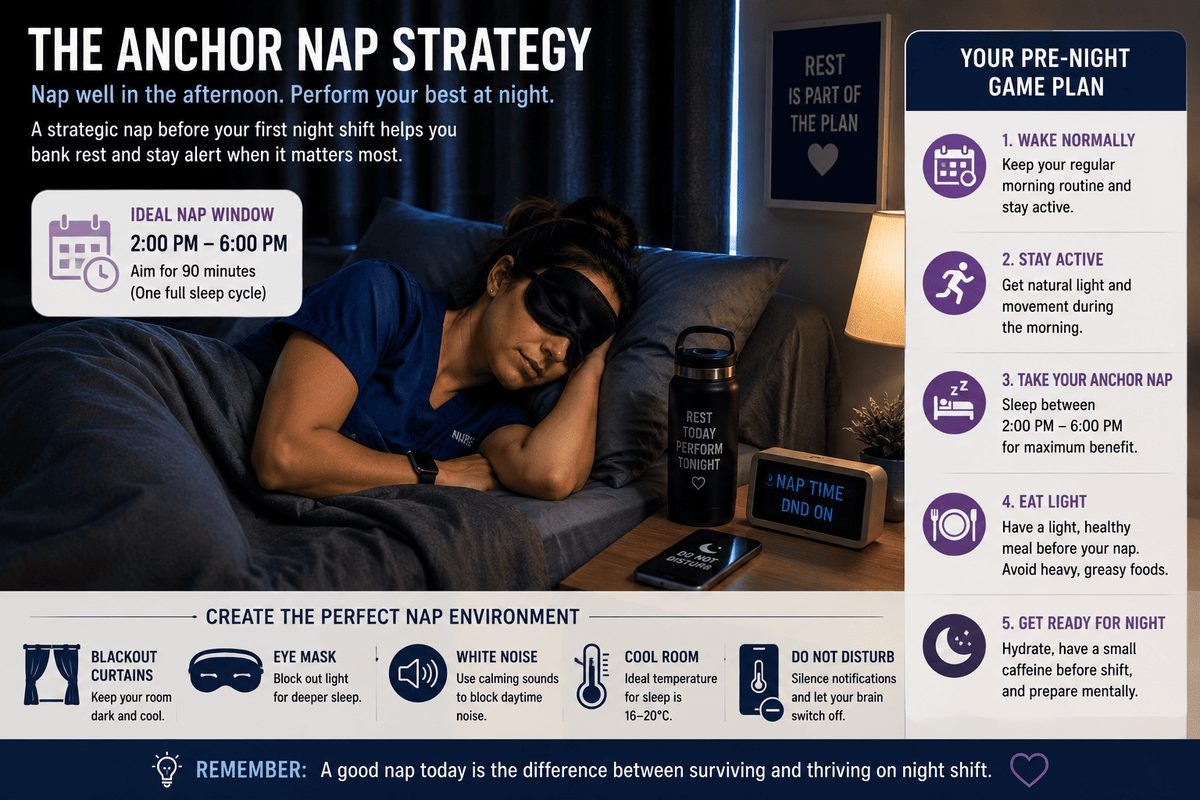
Your first night shift actually begins the day before you start. The goal is to "bank" as much rest as possible to push through the 12-hour stretch ahead. In the Australian nursing community, the most successful strategy is the "Anchor Nap." On the day of your first night shift, try to wake up at your normal time, stay active during the morning, and then take a deep, dedicated nap in the afternoon—ideally between 14:00 and 18:00.
This nap helps bridge the gap between your last normal sleep and your first "Day Sleep" after the shift. To make this nap effective, you need to simulate nighttime: use blackout curtains, a high-quality eye mask, and perhaps some white noise. The goal isn't just to "doze" on the couch; it’s to achieve at least 90 minutes of restorative sleep (one full sleep cycle) so that your brain is firing on all cylinders when you arrive for the 21:00 handover.
2. Strategic Caffeine and the "2 AM Slump"
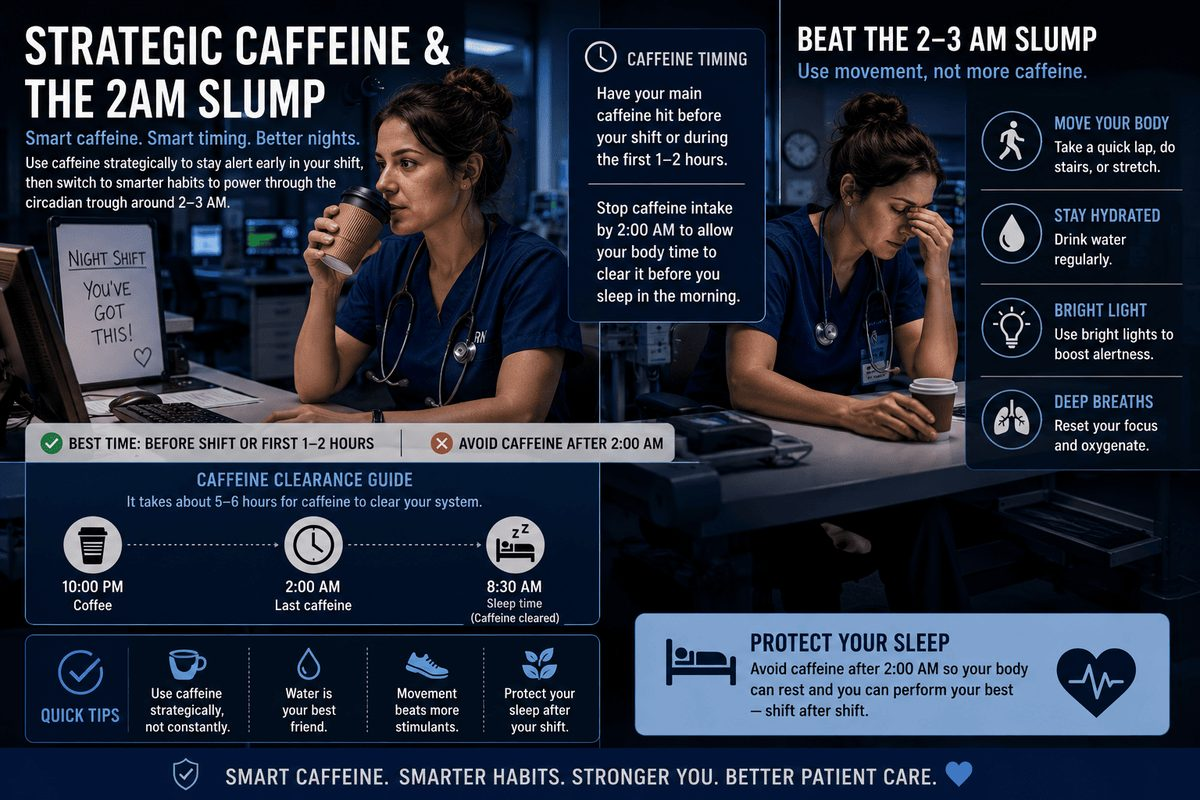
Caffeine is a powerful tool, but most nurses use it incorrectly. If you drink a double-shot latte at midnight and another at 03:00, you will likely struggle to fall asleep when you finally get home at 08:30. In 2026, the best-practice advice is "Strategic Caffeine Loading." Have your main caffeine hit right before your shift or during the first two hours of work.
By 02:00 or 03:00—the time most people hit the "Circadian Trough"—you should switch to water or herbal tea. This allows the caffeine to clear your system (which takes about 5-6 hours) by the time your head hits the pillow. To beat the 03:00 slump, try physical movement instead of stimulants. Do a quick set of stairs, a lap around the ward, or some light stretching. This increases your core body temperature and provides a natural boost in alertness without the "Caffeine Crash" that ruins your daytime sleep.
3. Nutrition: Eating for Energy, Not for Comfort
When you are tired and working at 04:00, your brain screams for high-sugar, high-carb "Comfort Foods." This is often referred to as "Hospital Toast Syndrome." However, eating heavy meals in the middle of the night can lead to "Shift Work Bloat" and metabolic issues because your digestive system is essentially in "Sleep Mode."
The 2026 nutrition gold standard for night shifts is "Grazing on Protein." Instead of one large "lunch" at 02:00, bring small, protein-rich snacks like nuts, Greek yogurt, boiled eggs, or a chicken salad. Avoid "Heavy Carbohydrates" (like pasta or large sandwiches) which can trigger a massive insulin spike followed by a sleep-inducing crash. Keeping your blood sugar stable is the secret to maintaining cognitive function when you are performing complex clinical tasks in the early hours of the morning.
4. The Morning "Darkness Protocol"
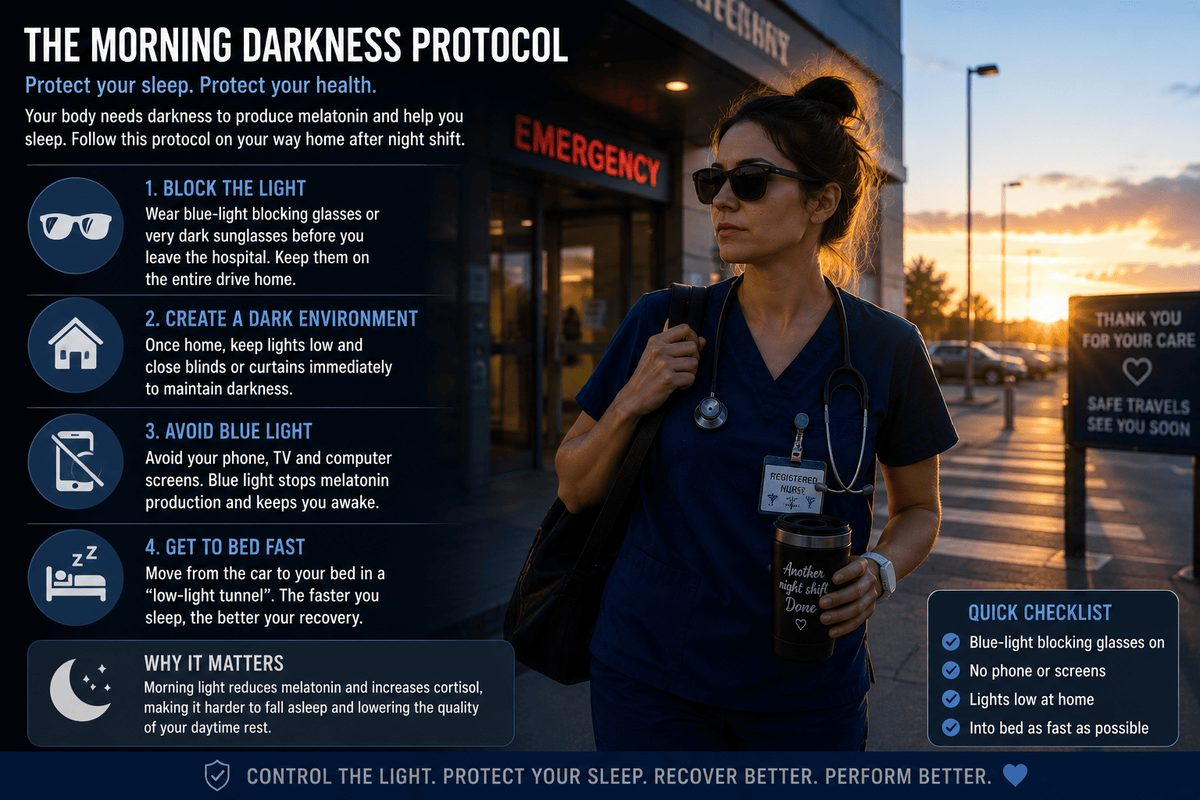
The journey home is the most dangerous part of a night shift. Not only are you driving while fatigued, but the morning sunlight hitting your retinas tells your brain to stop producing Melatonin (the sleep hormone) and start producing Cortisol (the wake-up hormone). If you want to fall asleep quickly, you must "Trick" your brain into thinking it is still nighttime.
Invest in a pair of high-quality Blue-Light Blocking glasses or very dark sunglasses and put them on before you walk out of the hospital doors. Wear them for the entire drive home. Once you get inside, keep the lights low. Avoid checking your phone or scrolling through social media, as the "Blue Light" from screens is a powerful stimulant that will keep you awake for hours. Your goal is to move from the ward to your bed in a "Low-Light Tunnel" to keep your melatonin levels high.
5. Managing Your Social and Domestic Life
The hardest part of night shifts isn't the work; it’s the feeling of "Social Isolation." While the rest of the world is at the park or having dinner, you are either sleeping or working. To survive the first year of rotating rosters, you must become an expert at Boundary Setting.
Communicate your "Sleep Window" clearly to family and friends. Use "Do Not Disturb" modes on your phone and put a sign on your front door for delivery drivers. It is also important to plan your social life around your recovery. Don't book a brunch for the morning after your last night shift; give yourself a "Buffer Day" to flip your clock back to normal. In 2026, we emphasize that "Recovery is an Active Task"—if you don't schedule it, it won't happen, and burnout will follow.
Frequently Asked Questions
Q: Is it better to stay up all day after my last night shift? A: This is the "Big Flip" strategy. Most nurses find that taking a short "Power Nap" (90 minutes) immediately after the last shift and then staying awake until 20:00 or 21:00 is the fastest way to reset your body clock for the weekend.
Q: Should I take Melatonin supplements for day sleep? A: Many Australian nurses use Melatonin to help shift their sleep cycle. However, it is a hormone, not a simple herbal tea. You should discuss this with your GP to ensure it’s appropriate for you and to determine the correct dosage.
Q: How do I stay safe driving home after a 12-hour night shift? A: If you feel "Micro-Sleeps" or are struggling to stay in your lane, stop immediately. Take a 20-minute nap in your car in the hospital car park or use public transport/rideshare services. Your life is worth more than the cost of an Uber.
Q: Does working nights affect my long-term health? A: Long-term shift work is linked to higher risks of cardiovascular issues and metabolic disorders. This is why we emphasize "Preventative Health"—regular check-ups with your GP, a high-protein diet, and consistent exercise are non-negotiables for career night-shifters.