


Summary
Under normal conditions, working a lengthy shift in a hospital or clinic is physically and mentally taxing. These duties are increased for healthcare workers who observe the holy month of Ramadan, including nurses, midwives, and students. It takes a great deal of self-control and careful planning to fast from sunrise to sunset while handling a large patient load, carrying out clinical procedures, and standing for eight to twelve hours. Maintaining energy levels is important for professional safety as well as personal comfort. Understanding how to regulate your body’s internal battery is crucial for any healthcare worker who fasts because low energy can cause cognitive attention to wane.
The best strategies for maintaining your endurance throughout the month are examined in this thorough guide. We will examine the science behind “slow-release” nutrients, the significance of mental pace, and the vital role of hydration. You can make sure that you continue to be a dependable, kind, and concentrated professional from the beginning of your shift until you break your fast by handling your energy management with the same clinical precision you use for patient care.
The Power of Low-Glycemic Nutrition at Suhoor
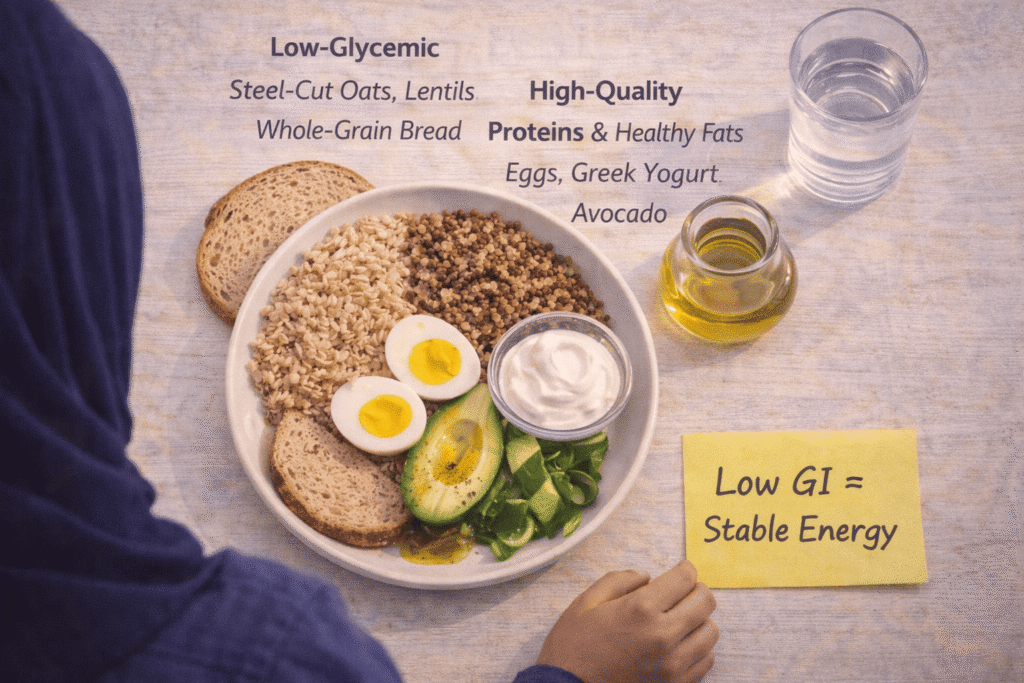
Hours before you clock in, the groundwork for a productive, high-energy shift is laid. During Ramadan, the pre-dawn meal, or Suhoor, is the most important intervention for your metabolic health. Suhoor aims to produce a “slow-drip” of energy that lasts for 12 to 15 hours for healthcare professionals. Eating white bread, pastries, or high-sugar cereals first thing in the morning is a common mistake made by students. These give you an immediate energy boost, but they also quickly raise insulin levels, which might result in a “sugar crash” a few hours into a shift. Shakiness, irritability, and “brain fog” are all consequences of this collapse that are risky in a therapeutic context.
Low-Glycemic Index (GI) foods must be your first priority if you want to keep your energy levels steady. These foods release glucose into the circulation steadily because the body breaks them down slowly. Steel-cut oats, quinoa, lentils, beans, and whole-grain sourdough are a few examples. These complex carbs form a “nutritional anchor” when combined with premium proteins such as eggs, Greek yogurt, or nut butters. This combination minimizes the mid-afternoon dip that many fasting workers encounter and maintains constant blood sugar levels. Even during the most physically demanding portions of your nursing or midwifery rounds, you can feel “full” and energized by adding healthy fats like avocado or olive oil.
Strategic Hydration and Electrolyte Management
The largest danger to healthcare workers’ energy levels is dehydration. Hospitals are frequently dry, climate-controlled spaces that hasten fluid loss via skin evaporation and respiration. Even slight dehydration can cause a 20% decline in a nurse’s or midwife’s physical stamina and cognitive function. Your hydration plan needs to be proactive during the non-fasting hours since you are not allowed to consume water during your shift. It’s a widespread misunderstanding that consuming a gallon of water at Suhoor can keep you hydrated all day, but the body can only absorb approximately 250 milliliters every hour; the remainder is just flushed out.
Electrolytes are the key to sustained hydration. Sodium, potassium, and magnesium are examples of electrolytes that function as “water magnets” to help your cells hold onto moisture. Try to eat items high in potassium at Suhoor, such as bananas or coconut water. Sugary sodas should not be consumed during Iftar since they can exacerbate dehydration. Rather, begin with dates and water, then have a hydrating soup. Instead of chugging water during the night, try to sip it regularly. By keeping your blood volume steady, this “steady-state” hydration helps avoid the headaches and lightheadedness that frequently occur in the last several hours of a long shift. Consider adding an electrolyte powder to your evening water to replace any lost electrolytes if you are wearing heavy PPE or working in a very warm ward.
Pacing Your Physical and Mental Workload
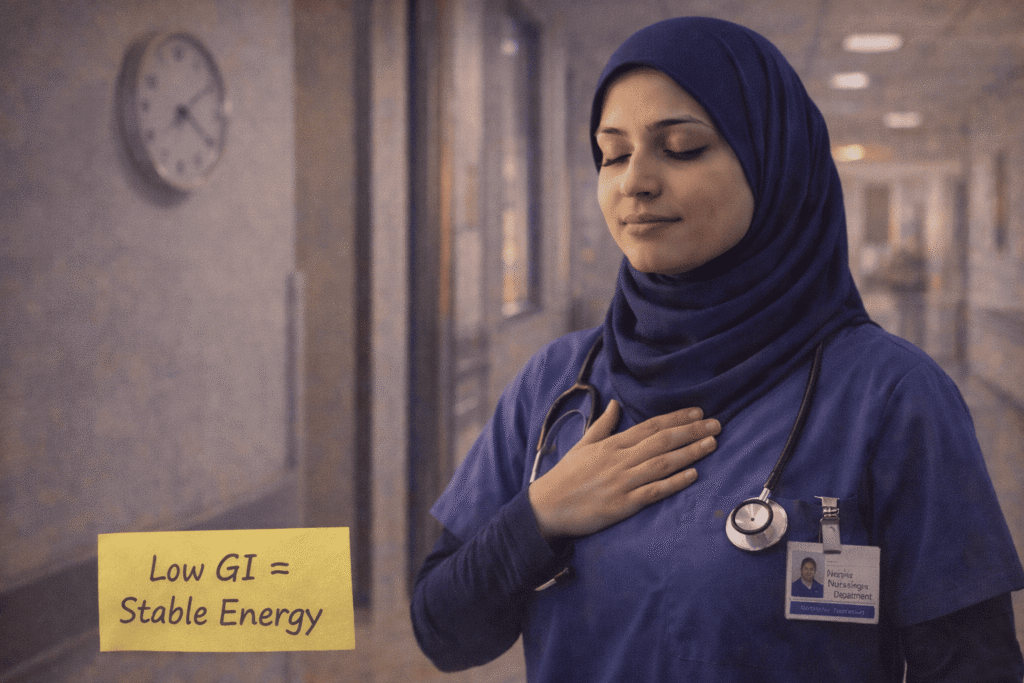
Energy management involves more than simply what you put into your body; it also involves how you use what you already have. There is a propensity to always operate at full capacity in the healthcare industry. But during Ramadan, you have to do “Clinical Pacing.” This entails planning when to complete the most demanding tasks at work. The first four to six hours following Suhoor are when most fasting healthcare professionals feel most energized. The most physically taxing duties, including heavy patient lifting, intricate dressing changes, or thorough charting, should ideally be scheduled for the early portion of your shift if your department permits.
Just as vital as physical energy is mental energy. Your blood sugar levels are rapidly depleted in high-stress situations. You can reduce your cortisol (stress hormone) levels by engaging in “micro-meditations” or deep breathing exercises for 60 seconds in between patient appointments. Your body uses up its energy reserves more quickly when cortisol levels are high. Maintaining composure and pace helps you “conserve your fuel.” It’s also essential to communicate with your staff. By letting your coworkers know that you are fasting, you can create a supportive environment where duties can be shared or scheduled more efficiently. You can “buffer” your energy with a team that is aware of your circumstances, preventing anyone from becoming completely exhausted.
Maximizing Rest and “Sleep Banking”
Sleep is the main recuperation aid during Ramadan, but for nurses and students, it’s frequently the first thing sacrificed. Your body’s capacity to control blood sugar is hampered by sleep deprivation, which makes the fast feel much more challenging and depletes your energy more quickly. Healthcare professionals must strike a balance that puts REM sleep first, even when the typical Ramadan schedule calls for staying up late for prayers and rising early for Suhoor. attempt to go into bed as soon as you finish your nightly prayers if you work a day shift, and attempt to get to bed at least five hours before Suhoor.
Napping or “sleep banking” can be a lifesaver if you are a nurse or student with a long commute. Since you aren’t eating during your lunch break, taking a 20-minute “power nap” might greatly increase your alertness for the remainder of the afternoon. Your brain may clear out metabolic waste and refocus during this brief period of rest. Avoid “revenge bedtime procrastination” the practice of staying up late on your phone because you feel like you missed out on free time when you get home from a long workday. Rather, give priority to getting some quick rest so that your body can heal the muscle damage and mental exhaustion you’ve collected over your time on the ward.
Recognizing Fatigue and Prioritizing Patient Safety
Self-awareness is the most crucial energy advice for every healthcare practitioner. You need to be able to identify when your energy level has fallen to the point where clinical practice is no longer safe. Low blood sugar and dehydration can cause “micro-errors,” such misreading a prescription label or forgetting a protocol step. For people who are sick or for whom fasting could endanger their health or the health of others, Islam offers explicit exceptions to fasting. Your “health of others” as a healthcare professional encompasses your patients.
Learn to recognize the “Red Flags” of extreme exhaustion, which include hand tremors, a chronic headache, disorientation, blurred vision, or feeling “lightheaded” upon standing. You must take a break, notify your supervisor, and, if need, break your fast if you encounter these symptoms. Breaking your fast for medical safety is a show of professional duty rather than a sign of weak faith. A nurse or student who puts patient safety ahead of “pushing through” a risky level of fatigue will be respected by most colleagues and institutions. You can continue to provide your patients with the high caliber of care they need by being honest with yourself about your energy levels.
People Also Ask (FAQ)
Q: Will coffee at Suhoor help me stay energized during my nursing shift?
Although coffee gives you a short-term boost, it is a diuretic and can make you lose fluids more quickly, which might result in dehydration. To stay hydrated when caffeine is in your system, try having a tiny cup at Iftar rather than Suhoor if you are a caffeine addict.
Q: How can I handle the “afternoon slump” around 3 PM?
Blood sugar is often at its lowest during this time. Apply “sensory resets” by moving your body (stretching), splashing cold water on your face, or entering a cooler part of the hospital. Instead of spending a lot of time studying, if you are a student, use this time for easier chores like organizing supplies or filing.
Q: What is the best way to break my fast if I am still on duty?
Store a “Fast-Break Kit” in your pocket or locker. Water and two to three dates should be included. Dates give your brain instant glucose, which will keep you focused during the last hour of work or on the way home. After you are officially off duty, have a well-balanced dinner.
Q: Can I exercise while fasting and working in healthcare?
The “workout” for the majority of healthcare professionals takes place throughout their shift (walking miles on the ward). Overexhaustion may result from adding strenuous exercise. If you want to work out, do it two hours after Iftar or thirty minutes before so you can hydrate right away.
Q: How do I explain to my patients that I am fasting?
A straightforward and courteous “Thank you so much, I’m actually fasting for Ramadan today” is typically welcomed with great respect and attention if a patient offers you food or drink, though you don’t necessarily have to. It might even be a fantastic method to establish a rapport with your patients!
Useful Documents for every Nursing Student
CV Section Template for Nursing students
AHPRA – NMBA Registration Document Checklist (International Students-Graduates)
Clinical Placement Reflection Template (NMBA-aligned)
Cover Letter Template for Nursing Students
Disclaimer: “I researched this information on the internet; please use it as a guide and also reach out to a professional for assistance and advice.This information is not medical advice, so seek your medical professional’s assistance.”