
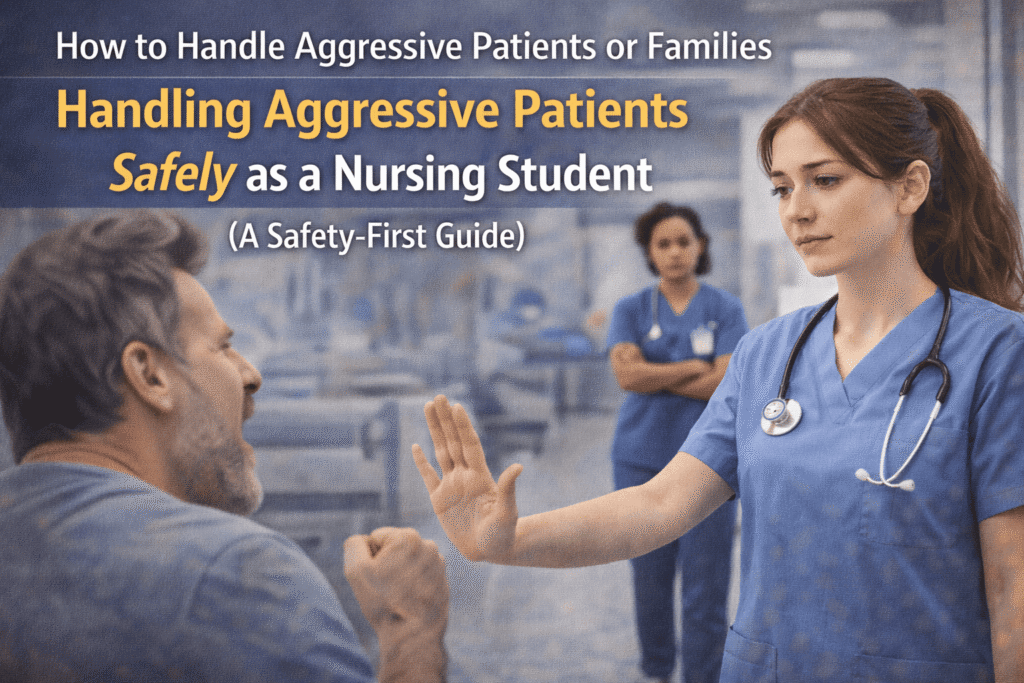

Summary
One of the most unpleasant scenarios a nursing student may encounter is aggression from patients or family members. Many kids enter placement expecting learning, supervision, and support but are unprepared for raised voices, verbal abuse, threats, or emotionally charged confrontations. Students frequently experience fear, confusion, and uncertainty about what they are permitted to do when this occurs.
This article describes how nursing students can deal with combative patients or families in a safe, professional manner without endangering themselves or negatively impacting their placement outcome. In the context of Australian healthcare, it focuses on de-escalation language, knowing when to back off, and safeguarding your personal safety.
Why Aggression Happens in Healthcare Settings (And Why Students Feel It More)
Many students are surprised to learn how widespread aggression is in hospitals and assisted living homes. Patients may be experiencing mental health or drug-related problems, as well as discomfort, confusion, or fear. Due to lengthy wait times or inadequate communication, family members may experience stress, grief, exhaustion, or anger.
You are frequently more susceptible as a nursing student since you are:
• New to the surroundings
• Communication skills are still being learned.
• At the bottom of the organizational ladder
• You’re unsure of your authority
Because they believe students have less authority, some patients or their families may view students as “safe targets.” This does not imply that you should put up with hostile behavior. Knowing why aggressiveness occurs enables you to react coolly, but it never justifies risky behavior.
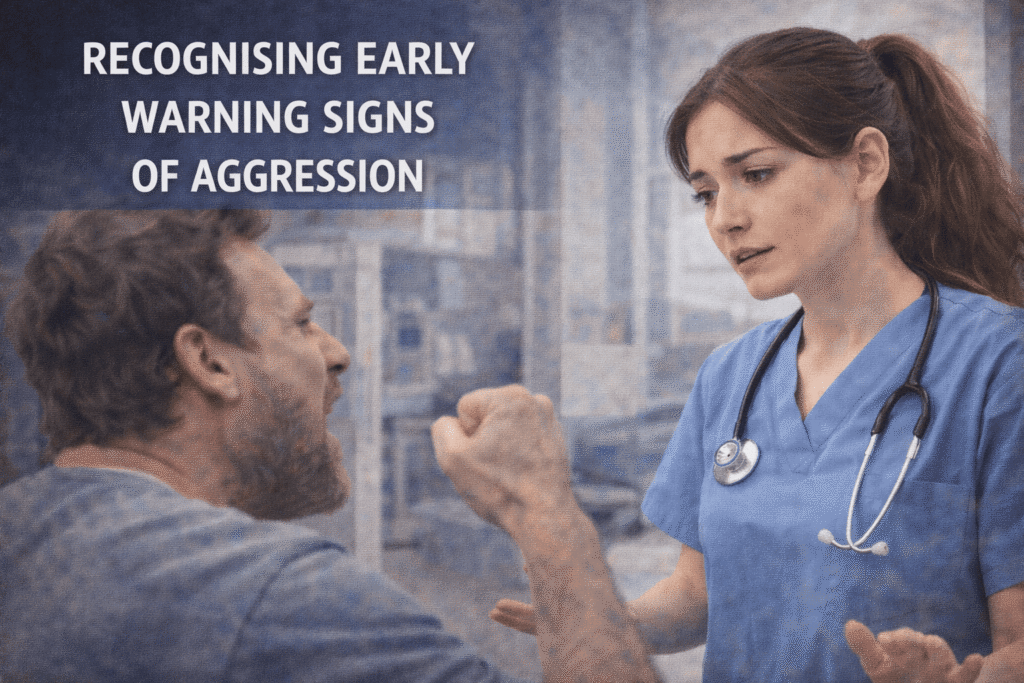
Recognising Early Warning Signs of Aggression
Rarely does aggression begin abruptly. When a problem is getting worse, there are typically early indicators. One of the most crucial safety skills for nursing students is the ability to identify these symptoms early on.
Early warning indicators could be:
• Sharp tone or raised voice
• Persistent demands or inquiries
• Body language like pacing, glaring, or clinched fists
• Insulting remarks or sarcasm
• Family members interrupting or talking over employees
Situations might rapidly worsen when students disregard these indicators. Before things get dangerous, you can slow down the conversation, get help, or leave by identifying early warning indicators.
De-Escalation Phrases Nursing Students Can Safely Use
“What do I say?” is one of the most common worries among students. While the wrong words might intensify anxiety, the correct words can ease it.
“Winning” an argument is not the goal of de-escalation. It is about minimizing emotional intensity and keeping everyone safe. It is your responsibility as a student to speak politely and quietly rather than to fix everything.
Effective de-escalation techniques acknowledge feelings without succumbing to unsuitable requests. Saying something like, “I can see this is very upsetting for you,” for instance, affirms emotions without taking responsibility. The other person will feel heard if you speak in a cool, collected manner.
Additionally, it’s critical to steer clear of statements that come out as defensive or contemptuous. “That’s not my problem” or “You’ll have to calm down” are examples of statements that can exacerbate the situation.
De-escalation works best when your voice is slow, your posture is open, and your language is simple. Silence can also be powerful pausing instead of reacting emotionally often reduces tension.
When to Step Back: Knowing Your Limits as a Nursing Student
Knowing when to back off is one of the most crucial lessons for nursing students. It is not expected of you to handle violent situations by yourself.
You should take a quick step back if:
• You sense danger or intimidation
• The individual is yelling, cursing, or threatening
• Despite calm conversation, the situation is getting worse.
• Someone is specifically targeting you.
Retreating is not a sign of failure. It’s expert judgment.
Student safety is the top priority in Australian healthcare facilities. You are permitted to say, “I’m going to get my registered nurse so we can help you properly.” This keeps you safe and guarantees that someone in a position of authority will handle the matter.
Never stay in a situation out of fear of being judged or failing placement. Universities and hospitals are very clear that students must not put themselves in danger.
Personal Safety Strategies Every Nursing Student Should Know
Personal safety is not about being fearful it is about being prepared.
As a student, you should always be aware of your surroundings. Position yourself so you have a clear exit. Avoid standing between a person and the door. Keep a safe physical distance, especially if someone is visibly agitated.
Trust your instincts. If something feels wrong, it probably is. Many students later say they “knew” the situation was unsafe but ignored the feeling.
It is also important to know your workplace procedures. Most Australian hospitals have Code Grey or similar emergency responses for aggression. Ask your preceptor early in placement how to call for help.
Remember: your role is to learn nursing safely not to absorb abuse.
What NOT to Do When Faced with Aggression
Students often make mistakes because they want to be helpful or avoid conflict. Unfortunately, these actions can increase risk.
Avoid arguing or correcting aggressively emotional people. Avoid matching their tone or becoming defensive. Never make promises you cannot keep, such as guaranteeing outcomes or timelines.
Do not apologise for things outside your control in a way that suggests fault. A simple acknowledgement of feelings is safer than saying “I’m sorry for everything.”
Most importantly, never stay silent if you feel unsafe. Silence can sometimes be misinterpreted as acceptance.
After the Incident: Reporting and Reflecting Safely
After an aggressive incident, many students feel shaken, embarrassed, or guilty. This is normal.
You should always inform your supervising nurse or facilitator about what happened. Reporting is not about blaming—it is about safety, documentation, and support.
Some universities require incident reports, especially if the aggression affected your learning or wellbeing. Reporting protects you if there are later questions about your placement performance.
Reflection is also important, but it should be supportive, not self-critical. Ask yourself what you learned about communication, boundaries, and safety—not what you “did wrong.”
How Handling Aggression Professionally Helps Your Nursing Career
Although these situations are challenging, handling them safely and professionally builds key nursing skills. Employers value graduates who understand boundaries, escalation pathways, and patient safety.
Learning when to step back shows maturity. Using calm communication shows professionalism. Seeking help shows good judgment.
You are not expected to be perfect you are expected to be safe.
Final Message for Nursing Students
Aggression in healthcare is never your fault. As a nursing student, your safety matters just as much as patient care. You have the right to step back, ask for help, and protect yourself.
Learning how to handle aggressive patients or families is not about being brave—it is about being prepared, supported, and safe.
People Also Ask
Can nursing students refuse to deal with aggressive patients?
Yes, if safety is at risk, students should step back and escalate.
What should I say if a patient becomes verbally abusive?
Use calm, acknowledging language and involve your RN early.
Will reporting aggression affect my placement assessment?
No, reporting protects students and is encouraged.
Are nursing students expected to manage aggression alone?
No, students should never manage aggressive situations independently.
What if I feel unsafe but don’t want to look weak?
Seeking help shows professionalism, not weakness.
Useful Documents for every Nursing Student
CV Section Template for Nursing students
AHPRA – NMBA Registration Document Checklist (International Students-Graduates)
Clinical Placement Reflection Template (NMBA-aligned)
Cover Letter Template for Nursing Students
Disclaimer: “I researched this information on the internet; please use it as a guide and also reach out to a professional for assistance and advice.This information is not medical advice, so seek your medical professional’s assistance.”