

Summary
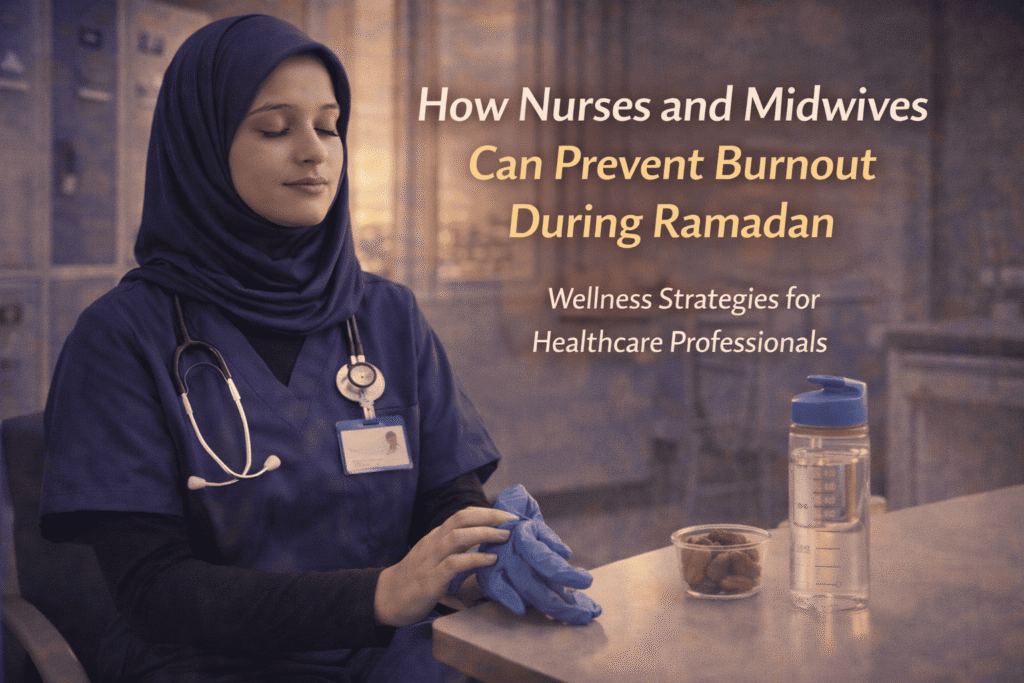
The healthcare profession is naturally high-stress, requiring a delicate balance of physical stamina, emotional intelligence, and clinical precision. For nurses and midwives observing the holy month of Ramadan, these demands are met with the added challenge of fasting from dawn until sunset. Burnout a state of emotional, physical, and mental exhaustion caused by excessive and prolonged stress is a real risk during this time. When you are running between patient rooms or supporting a long labor on an empty stomach and limited sleep, your internal “battery” can drain much faster than usual. Preventing burnout is not just about personal comfort; it is a clinical necessity to ensure that patient safety is never compromised by clinician fatigue.
For nursing and midwifery students, learning to manage this stress early is a vital part of your professional development. Ramadan is a time of spiritual rejuvenation, but it should not come at the cost of your health or your ability to care for others. By implementing strategic rest, nutritional planning, and emotional boundary-setting, you can navigate your shifts with excellence and finish the month feeling fulfilled rather than depleted. This article provides a comprehensive guide to identifying the early signs of burnout and practical steps to maintain your wellbeing while serving on the frontlines of healthcare.
Recognizing the Early Warning Signs of “Fasting Burnout”
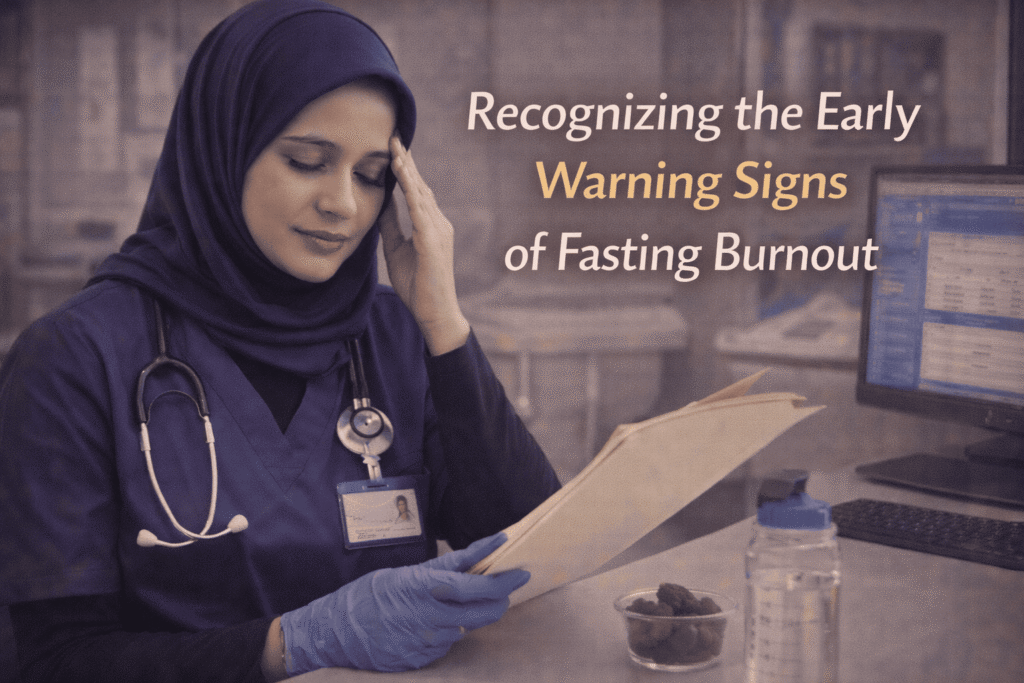
Before you can prevent burnout, you must be able to identify it. In the high-speed environment of a hospital, many nurses push through exhaustion, thinking it is just a normal part of the job. However, “Fasting Burnout” has specific markers that are different from standard workplace stress. The first sign is often Cognitive Fatigue, where you find it difficult to concentrate on simple tasks, such as documenting patient notes or calculating dosages. You might also experience Emotional Distancing, where you feel less empathy for your patients or find yourself becoming easily irritated by colleagues.
Physical signs are equally important. If you are experiencing persistent tension headaches, muscle tremors, or a feeling of “heaviness” in your limbs that doesn’t go away after a short break, your body is signaling that it is overextended. Midwives should be particularly careful, as the high-stakes environment of the labor ward can trigger a “fight or flight” response that burns through glucose stores very quickly. By performing a “Self-Check” at the start and middle of every shift, you can catch these symptoms early. If you notice you are slipping into a state of chronic exhaustion, it is time to adjust your pace and prioritize recovery before a minor stressor turns into a major health issue.
Strategic Pacing: Managing the “Clinical Workload”

One of the most effective ways to prevent burnout is to change how you work during your fasting hours. Healthcare is a marathon, not a sprint. “Strategic Pacing” involves identifying the most demanding parts of your shift and matching them to your energy levels. For most fasting professionals, energy is highest in the hours immediately following Suhoor (the pre-dawn meal). This is the best time to perform complex procedures, attend ward rounds, or complete difficult admissions.
As the day progresses and your blood sugar levels naturally dip, you should transition into “Conservation Mode.” This doesn’t mean doing less work, but rather doing work differently. Use the late afternoon for administrative tasks, organizing supplies, or quiet patient observations. Midwives can use the slower moments between active labor stages to sit and practice deep breathing. Furthermore, utilize your breaks for Sensory Resetting. Even five minutes in a quiet, dark room or splashing cold water on your face can lower your cortisol (stress hormone) levels. By avoiding the “100% all the time” mentality, you conserve the mental and physical energy needed to finish your shift safely.
The Role of “Sleep Banking” and Recovery
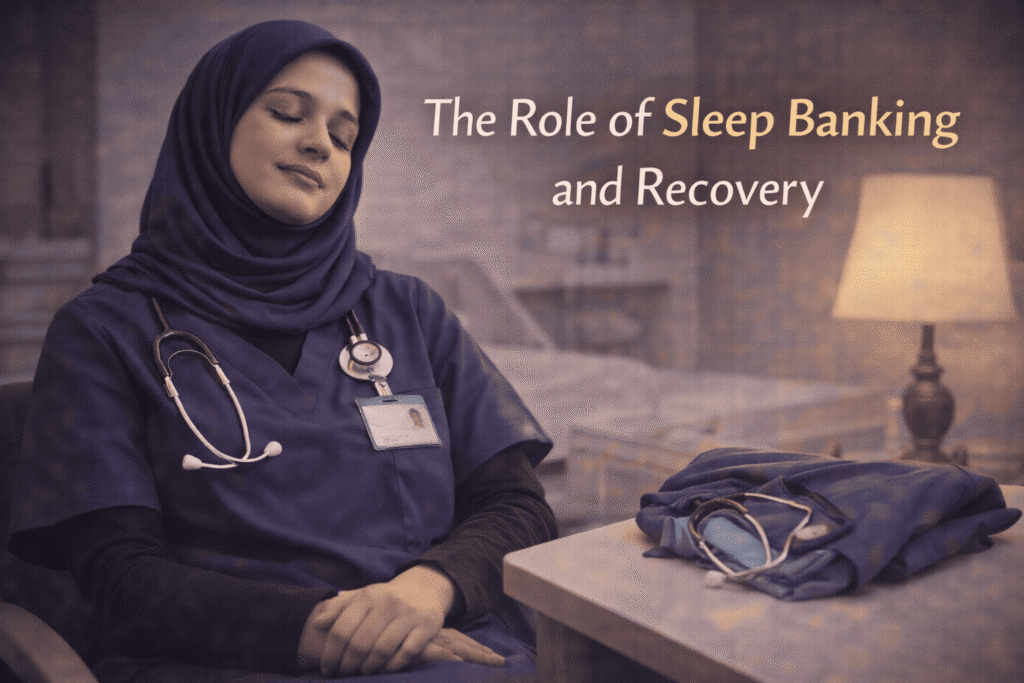
Sleep is the primary mechanism for the brain to clear out metabolic waste and repair muscle tissue. During Ramadan, sleep is often fragmented due to late-night prayers and the early Suhoor meal. For a nurse or midwife, chronic sleep deprivation is a leading cause of burnout. To combat this, you must adopt the concept of “Sleep Banking.” This involves getting extra sleep whenever possible to “deposit” energy into your system for the long shifts ahead.
If you work a day shift, try to go to bed as early as possible after Iftar (sunset) and your evening prayers. Even a 90-minute “core sleep” before waking for Suhoor can make a massive difference in your cognitive function. If you are a student with a gap in your lectures, a 20-minute “Power Nap” can reset your focus without causing “sleep inertia” (the groggy feeling after a long nap). Avoid “Revenge Bedtime Procrastination” the habit of staying up late on your phone because you feel you didn’t have enough free time during the day. The blue light from your screen suppresses melatonin, making the little sleep you do get less effective. Treat your sleep as a vital part of your clinical equipment.
Nutritional Resilience: Feeding the “Stress Response”
What you eat at Suhoor and Iftar directly impacts how your body handles stress. When you are under pressure on the ward, your body releases adrenaline and cortisol. These hormones require specific nutrients to be processed correctly. If your diet is high in processed sugars and caffeine, your “stress response” will be jagged, leading to rapid burnout. To build Nutritional Resilience, you must focus on anti-inflammatory foods that support the nervous system.
At Suhoor, prioritize “Slow-Release” energy. Foods like oats, walnuts, seeds, and eggs provide the healthy fats and proteins needed to keep your blood sugar stable. Stable blood sugar equals a stable mood and better stress tolerance. At Iftar, focus on rehydration and mineral replacement. Magnesium-rich foods like spinach, bananas, and dark chocolate are excellent for relaxing tired muscles and calming the mind after a long shift. Avoid the “Sugar Spike” from heavy desserts, as the following “Sugar Crash” will leave you feeling more exhausted the next morning. By eating with the intention of supporting your nervous system, you create a biological “shield” against the symptoms of burnout.
Finding Spiritual Meaning in the “Labor of Care”
In the nursing and midwifery professions, your work is a form of service that is highly regarded in the Islamic tradition. However, when you are exhausted, it is easy to lose sight of this and see your job as a burden. This “loss of meaning” is a core component of burnout. To prevent this, you must practice Spiritual Integration. This involves reframing your daily tasks as acts of worship (Ibadah). When you change a bandage, help a mother through a contraction, or offer a kind word to a grieving family, you are performing a spiritual deed.
Setting a “Morning Intention” (Niyyah) can transform your shift. Tell yourself: “I am going into this hospital to serve humanity and honor my Creator.” This mental shift provides a source of “internal energy” that is not dependent on food or water. If you feel overwhelmed, take a “Spiritual Micro-Break” thirty seconds of silent prayer or gratitude. Remind yourself that the relief you provide to a patient is a blessing. By connecting your professional identity with your spiritual values, you protect yourself from the “emotional emptiness” that often leads to burnout. You are not just a worker; you are a healer fulfilling a noble mission.
People Also Ask (FAQ)
Q: Is it okay to tell my supervisor I’m feeling burnt out?
Yes. In fact, it is professional to do so. A good supervisor would rather you ask for a short break or a lighter task than have you make a clinical error due to exhaustion. Use professional language: “I’m feeling a bit of fasting-related fatigue and want to ensure my focus remains 100% for patient safety. Can I take a 5-minute breather?”
Q: Can I drink coffee at Suhoor to keep my energy up?
While a small amount might help, coffee is a diuretic and will make you lose fluids faster. This leads to dehydration, which is a major cause of fatigue and burnout. It’s better to have your caffeine at Iftar so you can drink water to balance it out.
Q: I’m a student and feel guilty for not studying enough during Ramadan. What should I do?
“Academic Burnout” is common. Quality is better than quantity. Study for 1 hour after Suhoor when your brain is fresh, rather than 4 hours at night when you’re tired. Give yourself permission to do less; your brain needs rest to absorb information.
Q: How can I help a colleague who looks like they are struggling?
Offer “Micro-Support.” Offer to take over a small task for them, or simply ask, “How are you holding up?” Knowing they aren’t alone can significantly reduce a colleague’s stress levels. Ramadan is a month of community; looking out for each other is part of the spirit.
Q: What is the fastest way to recover after a very hard shift?
The “3-Step Recovery”: 1. Hydrate with electrolytes (coconut water is great). 2. Elevate your legs for 10 minutes to help circulation. 3. Practice 5 minutes of total silence to “reset” your brain before interacting with family or going to sleep.
Useful Documents for every Nursing Student
CV Section Template for Nursing students
AHPRA – NMBA Registration Document Checklist (International Students-Graduates)
Clinical Placement Reflection Template (NMBA-aligned)
Cover Letter Template for Nursing Students
Disclaimer: “I researched this information on the internet; please use it as a guide and also reach out to a professional for assistance and advice.This information is not medical advice, so seek your medical professional’s assistance.”