

Summary
For millions of Muslims throughout the world, the holy month of Ramadan is a time of intense devotion, camaraderie, and introspection. However, this holy time can also provide questions, worries, and physical difficulties for expectant and nursing mothers. Many women nevertheless have a great desire to observe the fast, even though Islamic law clearly exempts those who are pregnant or breastfeeding if they fear for their health or the health of their unborn child.
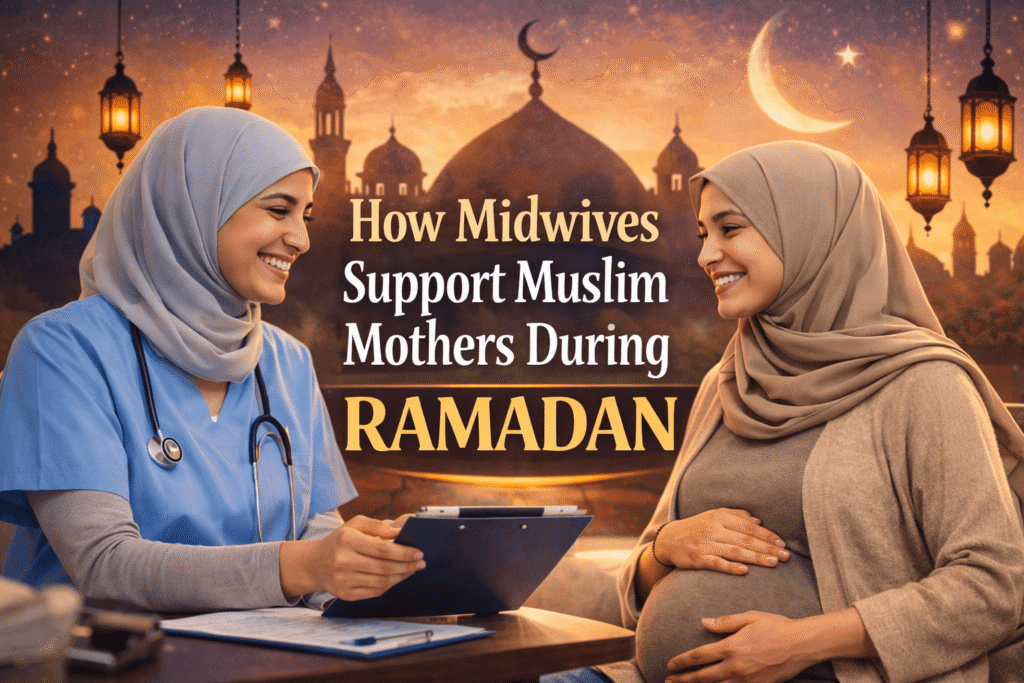
At this point, the midwife’s involvement becomes essential. Midwives bridge the gap between clinical safety and religious practice as advocates, educators, and pillars of support in addition to being medical professionals. Midwives guarantee Muslim mothers can safely observe Ramadan by offering culturally sensitive care, whether they choose to fast or take the religious exemption.
Facilitating Informed Decision Making

Assisting moms in determining if fasting is the best option for their particular circumstances is one of a midwife’s most important responsibilities during Ramadan. We call this method “shared decision-making.” Because each pregnancy is different, what is safe for one woman may not be for another. To give tailored recommendations, a midwife considers the mother’s medical history, pregnancy stage, and present health.
For example, a midwife may gently discuss the dangers of fasting to a mother who is experiencing severe morning sickness or dehydration during her first trimester. On the other hand, the midwife can offer a strategy to assist a woman in safely fasting if she is in a healthy second trimester and feels physically strong. Instead than giving orders, the objective is to arm the mother with knowledge, such as how fasting impacts blood sugar and hydration, so she may make a decision that supports her physical health and her beliefs.
Midwives also assist women in comprehending that preserving life is a top priority in Islam. Mothers can be reminded that the exemption is a “mercy” from God meant to keep them from suffering. Midwives establish a foundation of trust that enables candid and open communication throughout the month by structuring the discussion in a way that honors the mother’s spiritual objectives.
Tailored Nutritional and Hydration Guidance
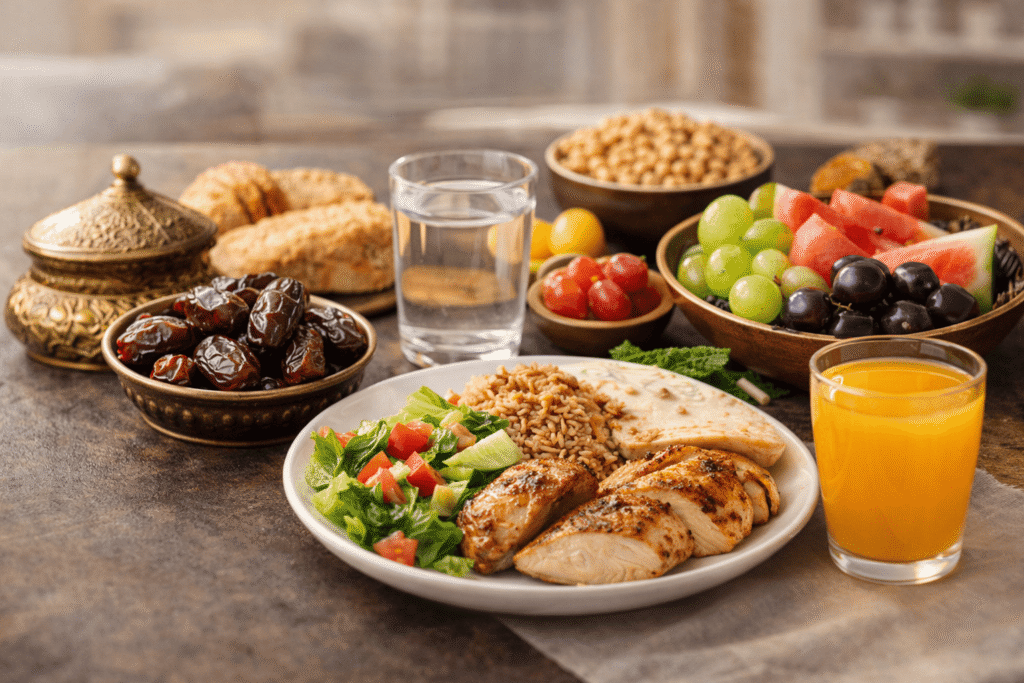
A Muslim mother’s nutritional requirements drastically alter when she chooses to fast. In the few hours between Iftar (breaking the fast) and Suhoor (the pre-dawn meal), a midwife serves as a specialist nutritionist, advising the mother on how to get the most nutrients. Following this advice is essential for preserving the energy levels needed for milk production or fetal growth.
During Suhoor, midwives frequently advise concentrating on complex carbs and high-fiber diets. Foods that release energy gradually, like as lentils, brown rice, and oats, help the mother feel fuller for longer. In order to assist the baby’s growth, they also stress the significance of consuming healthy fats and high-quality proteins. Certain “power meals” that are simple to make yet high in vitamins and minerals like iron, calcium, and folic acid may be recommended by a midwife.
Perhaps the most important topic is hydration. Women who are pregnant or breastfeeding have greater fluid needs, thus midwives assist them in creating a “sipping strategy.” Midwives recommend consuming modest amounts of water throughout the night rather than consuming huge amounts at once, which the body cannot absorb well. Additionally, they warn against caffeinated beverages that can worsen fluid loss and educate moms about hydrating foods like watermelon and cucumbers.
Monitoring Maternal and Fetal Well being
The foundation of midwifery care is safety. Midwives become more watchful throughout Ramadan to make sure neither the mother nor the infant are exhibiting symptoms of discomfort. They teach mothers about the “red flags” that signal breaking a fast right away. Dizziness, fainting, intense exhaustion, or a marked reduction in the baby’s movements are some of these symptoms.
Midwives advise nursing moms on how to keep an eye on their milk production. Although short-term fasting often has no effect on the fundamental makeup of breast milk, it may have an impact on its amount if the mother experiences severe dehydration. A midwife will instruct the mother on how to evaluate her infant’s level of hydration, including making sure the infant is alert and content after feedings and checking for an adequate quantity of wet diapers.
The mother’s weight and blood pressure may also be monitored more frequently during clinical checkups during Ramadan. A midwife provides the required medical care and advises the mother on the need to pause her fast in order to recover if she observes that the mother is losing weight or exhibiting symptoms of a urinary tract infection, which is frequently brought on by inadequate fluid intake.
Providing Emotional and Spiritual Encouragement

In addition to the emotional strain of pregnancy and new parenthood, the desire to fast during a communal celebration such as Ramadan can cause feelings of guilt or “missing out.” By acknowledging these emotions and providing different ways for moms to connect with the spirit of the month, midwives offer crucial emotional support.
When they are unable to fast, many mothers experience sadness because they believe they are losing their community ties. A midwife might remind them that taking care of one’s body and the life within it is regarded as an act of worship in and of itself in the Islamic tradition. They advise moms to concentrate on other spiritual pursuits that don’t demand physical labor, such extra prayers, reading the Quran, or charitable giving.
Midwives assist in easing the “spiritual guilt” that some women have by offering a nonjudgmental environment. The mother will feel supported, noticed, and valued thanks to an all-encompassing approach that treats the heart as much as the body. A healthy pregnancy and a satisfying postpartum experience depend on this mental stability.
Cultural Competency and Advocacy in Healthcare
The Muslim community and the larger healthcare system are frequently connected by midwives. Some medical experts might not be aware of the subtleties of the religious exemptions or the significance of Ramadan. In a hospital or clinic, a culturally competent midwife makes ensuring that the mother’s views are respected.
By making sure that her choices for fasting are taken into consideration in her birth plan and prenatal care, they act as an advocate for the woman. For instance, if the mother is hospitalized during the month, a midwife may help arrange appointments for later in the day when she has more energy or make sure that wholesome and “halal” meal alternatives are available. Additionally, they train their colleagues to approach patients who are fasting with empathy instead than condemnation.
This advocacy also applies to the family. Whether that means assisting with Suhoor’s meal preparation or urging her to take breaks during the warmest hours of the day, midwives frequently consult with partners and family members to make sure they are meeting the mother’s medical needs. The midwife guarantees a “circle of care” that shields the mother during the holy month by enlisting the help of the support system.
People Also Ask (FAQ)
Q: Can a midwife tell me not to fast?
A midwife will provide you with medical advise based on your health, but they cannot “force” you to stop fasting. They will strongly advise you to exercise your religious exemption to safeguard safety if they notice any indicators that you or your unborn child are in danger, such as low amniotic fluid or maternal weight loss.
Q: What is the best way to break my fast if I am pregnant?
For an instant boost of natural sugar and hydration, midwives typically advise breaking the fast with dates and water. A well-balanced supper that contains complex carbohydrates, veggies, and protein should come next. Steer clear of extremely spicy or oily foods, as these might exacerbate pregnancy-related heartburn.
Q: Does fasting affect the baby’s birth weight?
The majority of research indicates that fasting has no discernible impact on the baby’s birth weight if the mother is healthy and eats a nutritious diet during the non-fasting hours. Fasting, however, may result in a lower birth weight if the mother is already underweight or has other issues, which is why careful midwifery is crucial.
Q: How can I tell if my baby is okay while I am fasting?
Observing your baby’s motions is the best approach to keep an eye on them. Break your fast and call your midwife right away if you notice your baby is not moving as much as usual or if the patterns drastically alter.
Useful Documents for every Nursing Student
CV Section Template for Nursing students
AHPRA – NMBA Registration Document Checklist (International Students-Graduates)
Clinical Placement Reflection Template (NMBA-aligned)
Cover Letter Template for Nursing Students
Disclaimer: “I researched this information on the internet; please use it as a guide and also reach out to a professional for assistance and advice.This information is not medical advice, so seek your medical professional’s assistance.”