
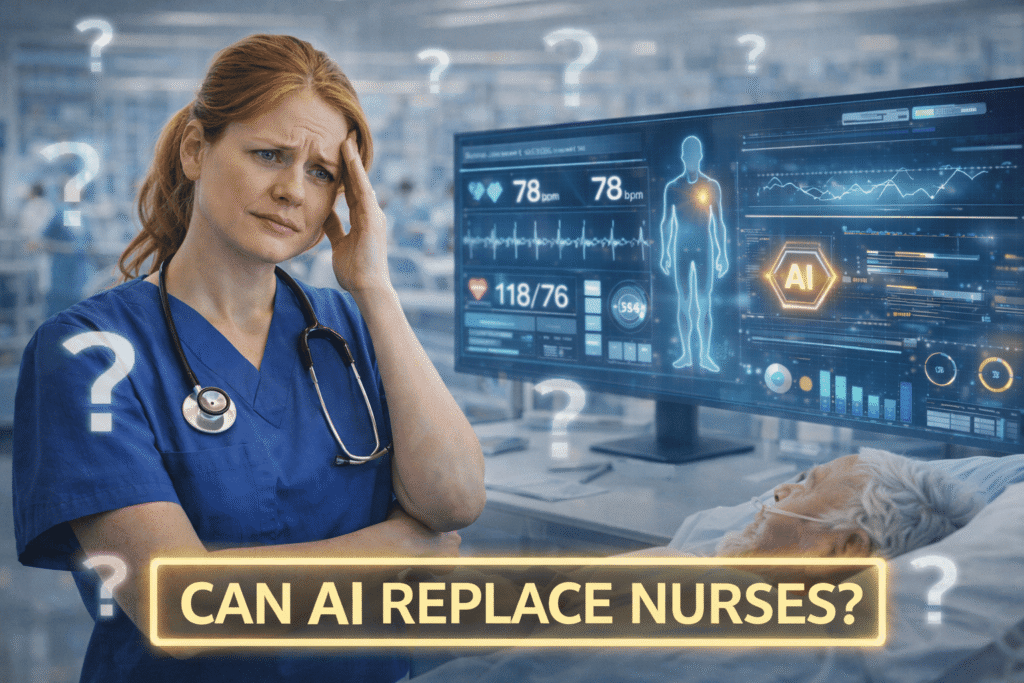

Every year, the use of artificial intelligence (AI) in healthcare grows. AI is transforming healthcare, from computer systems that assist physicians in diagnosing illnesses to smart devices that track patients’ vital signs. A significant question raised by this quick expansion is whether artificial intelligence can take the role of nurses in the medical field.
This question frequently causes uncertainty and worry. There are many who fear that machines will replace nurses. Some think AI will improve healthcare and assist nurses. We must examine what AI is capable of, what nurses do, and why nursing is more than just technical chores if we are to have a clear understanding of the future.
The function of AI in healthcare, its drawbacks, and the reasons why nurses are still crucial are all covered in this article.
Understanding Artificial Intelligence in Healthcare
Computer programs that can analyze data, recognize trends, and assist in decision-making are referred to as artificially intelligent. AI is utilized in healthcare to swiftly and precisely process vast volumes of data.
AI applications in healthcare include:
• Systems that track blood pressure, oxygen levels, and heart rate
• Software that uses test data or scans to identify illnesses
• Chatbots that respond to routine inquiries from patients
• AI-powered tools for scheduling and documentation
AI excels at handling data. It doesn’t get weary, preoccupied, or sentimental. But it only functions according to the information and commands it gets. It is incapable of comprehending complex social events, human emotions, or ideals.
We must first comprehend what nursing actually entails in order to determine whether AI can replace nurses.
What Do Nurses Really Do Beyond Clinical Tasks?

A common misconception is that nursing is all about administering medication, monitoring vital signs, and doing as doctors say. Even though these duties are crucial, nursing involves much more.
Nurses offer:
• Providing patients and their families with emotional assistance
• Promoting patient safety and rights
• Care that is ethical and cultural
• Making clinical decisions in challenging circumstances
• Interaction among medical teams
• Comfort, assurance, and confidence
Nurses frequently observe subtle shifts in patients’ moods, behaviors, or body language that computers are unable to pick up on. Additionally, nurses cultivate relationships with patients, which is essential to their recovery.
Human connection, empathy, and compassion cannot be replaced by artificial intelligence. Technology cannot replace these essential components of nursing.
What AI Can Do Well in Nursing Practice
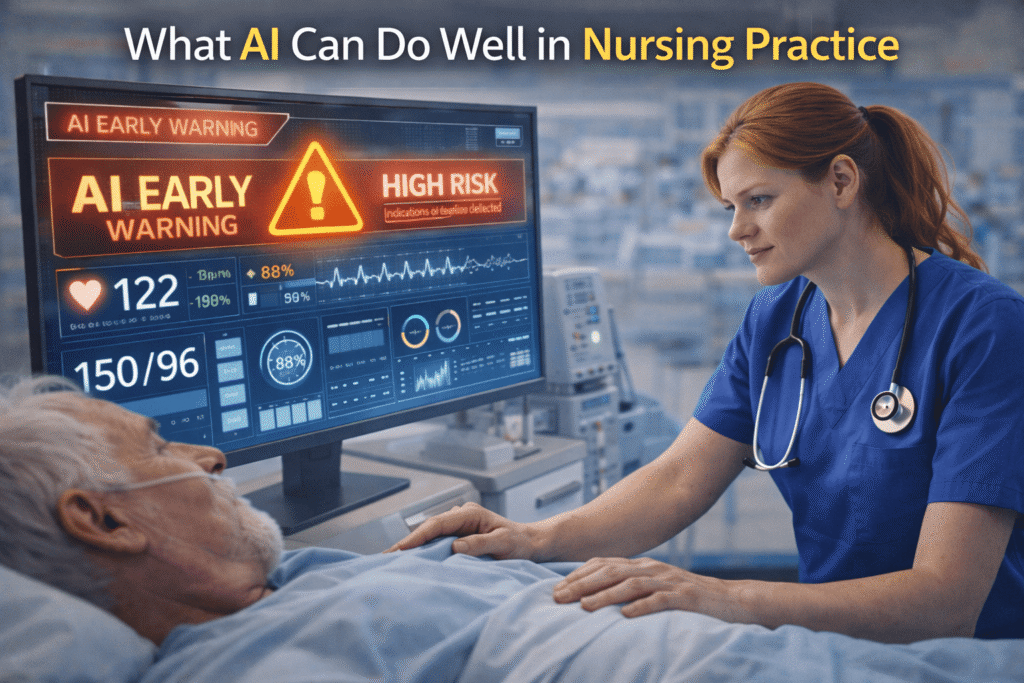
Although AI cannot replace nurses, it can support nursing practice in many helpful ways. Understanding these strengths helps explain why AI is better seen as a tool rather than a replacement.
Improving Efficiency
AI can handle repetitive tasks such as data entry, scheduling, and basic monitoring. This saves time and reduces workload for nurses.
Enhancing Patient Safety
AI systems can alert nurses early when a patient’s condition is worsening. These early warnings can prevent serious complications.
Reducing Errors
AI can double-check medication doses, allergies, and interactions. This helps reduce human error, especially in busy environments.
Supporting Clinical Decisions
AI can analyse large amounts of data and suggest possible actions. However, nurses must still decide what is best for each patient.
AI works best when it supports nurses, not when it replaces their judgment.
What AI Cannot Do: The Human Limits of Technology
Despite its benefits, AI has serious limitations. These limitations explain why AI cannot fully replace nurses.
Lack of Empathy
AI does not feel emotions. It cannot comfort a scared patient, support a grieving family, or understand emotional distress.
No Ethical Judgment
Nurses often face ethical dilemmas, such as end-of-life care decisions. These require human values, not just data.
Limited Context Understanding
AI relies on data inputs. It may miss cultural, social, or personal factors that affect patient care.
Dependence on Accurate Data
If data is incomplete or biased, AI can make incorrect recommendations. Nurses must recognise and correct these errors.
Because of these limitations, AI cannot safely function without human oversight.
The Role of Nurses in an AI-Supported Healthcare System
Instead of replacing nurses, AI is changing how nurses work. In the future, nurses will play an even more important role in guiding and supervising AI use.
Nurses as Decision-Makers
AI may suggest actions, but nurses will make final decisions based on patient needs.
Nurses as Patient Advocates
If AI recommendations conflict with patient preferences or safety, nurses must speak up.
Nurses as Educators
Patients may not understand AI systems. Nurses will explain how technology supports their care.
Nurses as Ethical Guardians
Nurses will help ensure AI is used fairly, safely, and respectfully.
This future requires nurses to be both caring professionals and skilled users of technology.
Will AI Replace Some Nursing Tasks? Yes. Will It Replace Nurses? No.
It is reasonable to assume that AI will take over some nursing duties, particularly administrative and routine work. But replacing nurses is not the same as replacing tasks.
Healthcare systems continue to require:
• Human discernment
• Caring attention
• Accountability for ethics
• The ability to communicate
• Accountability in the workplace
Legally and morally, AI cannot be held accountable for patient outcomes. Even with the usage of AI tools, nurses are still responsible for providing care.
Thus, rather than replacing nurses, the future of healthcare will be driven by nurses and assisted by AI.
Impact on Nursing Students and Future Careers
The development of AI requires that nursing students’ curriculum and skill sets change. Instead of being afraid of AI, students should learn how to use it securely.
Future nurses will require:
• A foundational understanding of digital
• Knowledge of the limitations of AI
• Excellent communication abilities
• The capacity for critical thought
• Consciousness of ethics
In fields including clinical informatics, digital health, education, and system design, AI may also lead to the creation of new nursing positions.
Students will have great employment prospects if they adapt and keep studying.
Ethical and Legal Responsibility: Why Nurses Remain Essential
Accountability is one of the main reasons AI cannot take the role of nurses. Human professionals, not machines, are accountable when patient care goes wrong.
Legal responsibilities for nurses include:
• Safety of patients
• The administration of medications
• Accuracy of documentation
• Moral principles
• Professional behavior
AI systems are not legally liable, do not have licenses, and are not subject to disciplinary action. Because of this, human nurses are crucial to the provision of healthcare.
The Future Relationship Between AI and Nursing
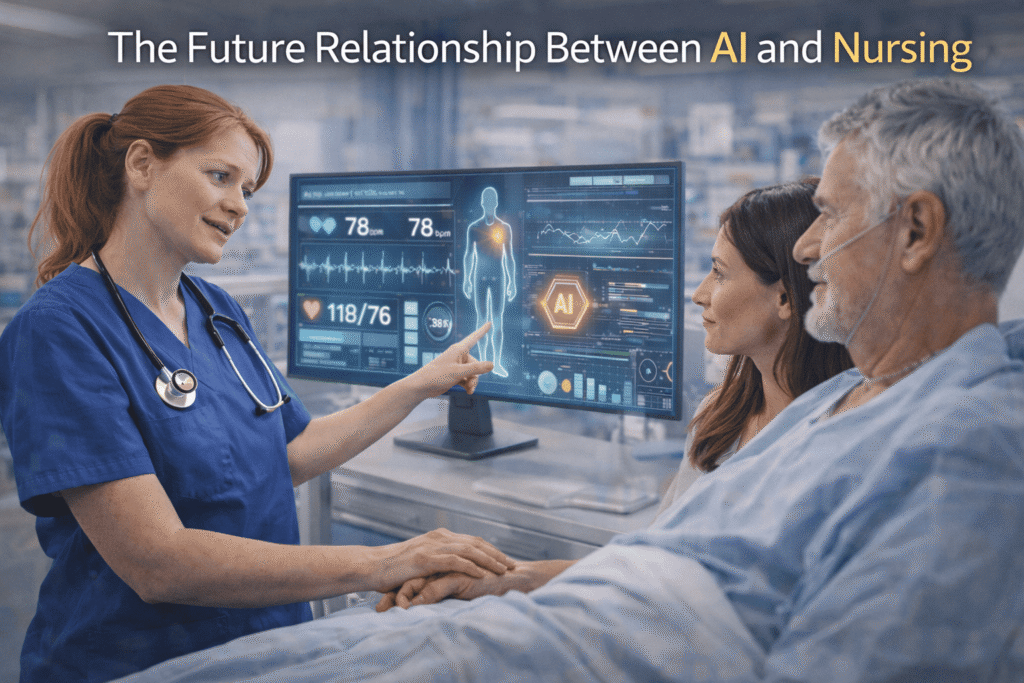
The future of nursing is not about competition between humans and machines. It is about collaboration.
AI will:
- Support faster decisions
- Reduce workload
- Improve safety
- Enhance efficiency
Nurses will:
- Provide compassion
- Apply judgment
- Protect ethics
- Build trust
- Deliver holistic care
Together, they can improve healthcare outcomes more than either could alone.
Conclusion: Can Artificial Intelligence Replace Nurses in Healthcare?
No is the obvious response. In the medical field, artificial intelligence cannot take the position of nurses. AI can enhance nursing practice and increase productivity, but it cannot take the place of the human characteristics that make nursing unique.
When it comes to patient care, nurses provide empathy, moral discernment, communication, and a comprehensive understanding. These attributes cannot be replaced.
Nurses who grasp technology and apply it responsibly without losing the human element of nursing are essential to the future of healthcare.
People Also Ask
Will AI take nursing jobs in the future?
AI may change tasks but will not replace nurses.
Can AI provide patient care independently?
No, AI requires human supervision and judgment.
Do nurses need to learn AI skills?
Yes, basic digital and AI literacy will be important.
Is AI safe to use in healthcare?
Yes, when used responsibly with nurse oversight.
Will nursing remain a respected profession?
Yes, human care will always be essential in healthcare.
Useful Documents for every Nursing Student
CV Section Template for Nursing students
AHPRA – NMBA Registration Document Checklist (International Students-Graduates)
Clinical Placement Reflection Template (NMBA-aligned)
Cover Letter Template for Nursing Students
Disclaimer: “I researched this information on the internet; please use it as a guide and also reach out to a professional for assistance and advice.This information is not medical advice, so seek your medical professional’s assistance.”