
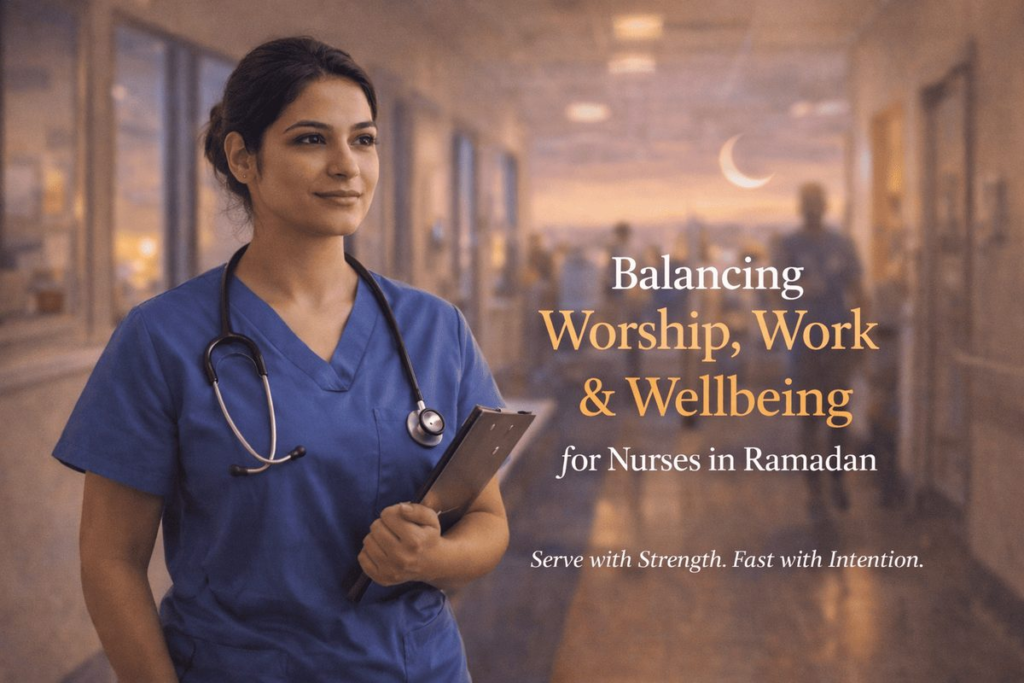
For nurses and nursing students, the holy month of Ramadan is a season of profound spiritual opportunity wrapped in a layer of significant physical demand. Nursing is a profession defined by service, sacrifice, and the preservation of life—values that align perfectly with the essence of Ramadan. However, balancing 12-hour clinical shifts, medication rounds, and patient emergencies with the requirements of fasting and nightly prayers can feel like an overwhelming juggling act. The challenge lies in finding a "middle path" where your professional excellence, your physical health, and your spiritual growth can all flourish simultaneously without one causing the collapse of the others.
Achieving this balance requires more than just good intentions; it requires a strategic framework for living. This article explores how healthcare professionals can navigate the complexities of the hospital ward while maintaining their fasts and their peace of mind. By focusing on intentionality, smart physical management, and a shift in perspective, you can transform your nursing shift into a form of continuous worship.
1. Reframing Nursing Care as a Form of Ibadah (Worship)

One of the most powerful tools for a nurse during Ramadan is the concept of Niyyah (intention). In many professional settings, work is seen as a separate entity from spiritual life. However, in the Islamic tradition, any action performed with the intention of pleasing the Creator and serving humanity is considered an act of worship. For a nursing student who is exhausted and thirsty, reframing a task as simple as checking a patient’s vitals or offering a glass of water to a thirsty patient can change the entire mental experience of the shift. Instead of feeling like a "burden" that takes you away from the mosque, your work becomes your mosque.
Midwives and nurses often spend their days providing comfort to those at their most vulnerable. During Ramadan, this service is amplified in reward. When you approach your clinical duties with the intention that your service is your "fast," the psychological weight of the shift begins to lift. This shift in mindset is a proven buffer against burnout. By acknowledging that you are fulfilling a communal obligation (Fard Kifayah) by being a healthcare provider, you can find a deep sense of spiritual fulfillment even if you are unable to attend every nightly Taraweeh prayer. Your patient’s room becomes a place of spiritual retreat, and your clinical skills become the tools of your devotion.
2. Physical Vitality: Fueling the Body for the Frontlines
Maintaining your wellbeing while fasting is a matter of biological strategy. As a nurse, you are on your feet for the majority of your shift, which means your caloric and hydration needs are higher than someone with a desk job. To balance work and wellbeing, your Suhoor (pre-dawn meal) must be treated as a "clinical fuel stop." Many students make the mistake of eating high-sugar pastries or heavy fried foods at dawn, which leads to a rapid insulin spike followed by a mid-morning crash. This crash can cause tremors, irritability, and a lack of focus during critical tasks like setting up an IV drip.
The "Well-Balanced Nurse’s Plate" should prioritize low-glycemic index (GI) foods. Think of complex carbohydrates like steel-cut oats, quinoa, or whole-grain bread, which release glucose slowly into your bloodstream. Pairing these with high-quality proteins—such as eggs, Greek yogurt, or nut butters—ensures that you have a steady supply of energy to last through the busiest part of your shift. Hydration must also be managed with surgical precision. Since you cannot drink during the day, focus on "cellular hydration" during the night. Incorporating foods with high water content, such as cucumbers and oranges, alongside your water intake helps your body retain moisture more effectively than plain water alone.
3. Time Management and the "Power of the Pause"
The pace of a hospital ward is often relentless, leaving little room for the quiet reflection that Ramadan encourages. To balance your wellbeing, you must master the art of the "Micro-Break." For a nursing student, this might mean taking sixty seconds after a stressful handover to practice deep breathing or a silent Dhikr (remembrance). These short pauses act as a "nervous system reset," moving your body out of the "fight or flight" mode that high-stress nursing environments often trigger. By calming your mind, you prevent the accumulation of cortisol, the stress hormone, which can make fasting feel much more difficult than it needs to be.
Communication with your clinical team is another essential component of balance. Most modern healthcare environments value diversity and inclusion. Don't hesitate to inform your charge nurse or mentor that you are fasting. This transparency allows for small but significant adjustments, such as taking your main break at Iftar (sunset) or avoiding the most physically draining tasks during the "afternoon slump" when your energy is at its lowest. Efficient time management also means prioritizing your rest. If you are working a night shift, your wellbeing depends on your ability to sleep during the day. This might mean saying "no" to daytime social commitments so that you are safe and alert for your patients at night.
4. Navigating the "Spiritual Guilt" of Professional Demands

A common struggle for Muslim nurses is the feeling of guilt when they cannot participate in community rituals like breaking fast with family or attending long nightly prayers due to their work schedule. This "spiritual guilt" can be a major drain on mental health. It is important to remember that the Islamic tradition is built on the principle of Ease (Yusr). If your professional duty to save lives or care for the sick prevents you from attending a communal event, your intention and your work are credited to you.
Midwives, for example, often find themselves in the middle of a birth exactly when the sun sets. In that moment, the safety of the mother and baby is the priority. Breaking your fast with a quick date and a sip of water while continuing your care is a powerful act of devotion. To balance your wellbeing, you should find alternative ways to connect with the spirit of the month. This could include listening to a podcast of a religious lecture during your commute, reading a single page of the Quran during your lunch break, or making a specific supplication for each patient you treat. By integrating spirituality into your professional life rather than keeping them separate, you eliminate the guilt and find harmony.
5. Post-Ramadan Recovery: Transitioning Back to Routine
Wellbeing doesn't end when the Eid moon is sighted. For nurses, the transition out of Ramadan requires just as much care as the beginning of the month. Your body has spent thirty days operating on a different schedule, and "re-feeding" your body during daylight hours should be done gradually. Jumping immediately back into heavy meals and high caffeine intake during shifts can lead to digestive upset and "rebound fatigue." Midwives and nurses should continue to prioritize hydration and slowly reintroduce breakfast and lunch into their workdays.
Reflecting on the month is also a key part of long-term wellbeing. What did you learn about your resilience? Did you find that you were more patient with difficult patients while fasting? Carrying these "Ramadan Lessons" into your year-round nursing practice is the ultimate way to maintain balance. The discipline, empathy, and focus you developed over the month are professional assets that make you a better nurse. By acknowledging your success in navigating such a challenging month, you build "professional self-efficacy"—the belief in your ability to handle whatever the healthcare world throws at you next.
Frequently Asked Questions
Q: How can I stay alert during a 12-hour shift while fasting? A: Focus on your Suhoor nutrition. High-protein and high-fiber foods are essential. Additionally, use sensory resets like washing your face with cold water or using peppermint oil on your wrists to stay alert. If you feel dizzy or confused, check your blood sugar; safety is always the priority.
Q: Is it okay to skip Taraweeh prayers if I have an early morning shift? A: Yes. In Islam, getting enough sleep to perform your job safely—especially a job that involves patient safety—is a priority. You can pray a shorter version of the night prayers at home or focus on extra "Dhikr" during your commute.
Q: What is the best way to handle a "code" or emergency at Iftar time? A: Patient safety comes first. Keep a "fast-break kit" in your pocket (a date and a small bottle of water). Attend to the emergency immediately, and the moment there is a stable pause, take a second to break your fast. Your service during a crisis is a highly rewarded act.
Q: How do I deal with thirst in a dry hospital environment? A: Since you cannot drink, try to breathe through your nose to keep your mouth from drying out. Use a damp cloth to cool your neck and face during breaks. Ensure you are drinking electrolyte-rich fluids during the night to help your body hold onto water longer.
Q: How can I explain my fasting to my non-Muslim colleagues? A: Most colleagues are interested and supportive! A simple explanation like, "I'm observing Ramadan, which involves fasting from sunrise to sunset to practice discipline and empathy. I might be a little quieter in the afternoon, but I'm still fully here for the team!" usually works wonders.