
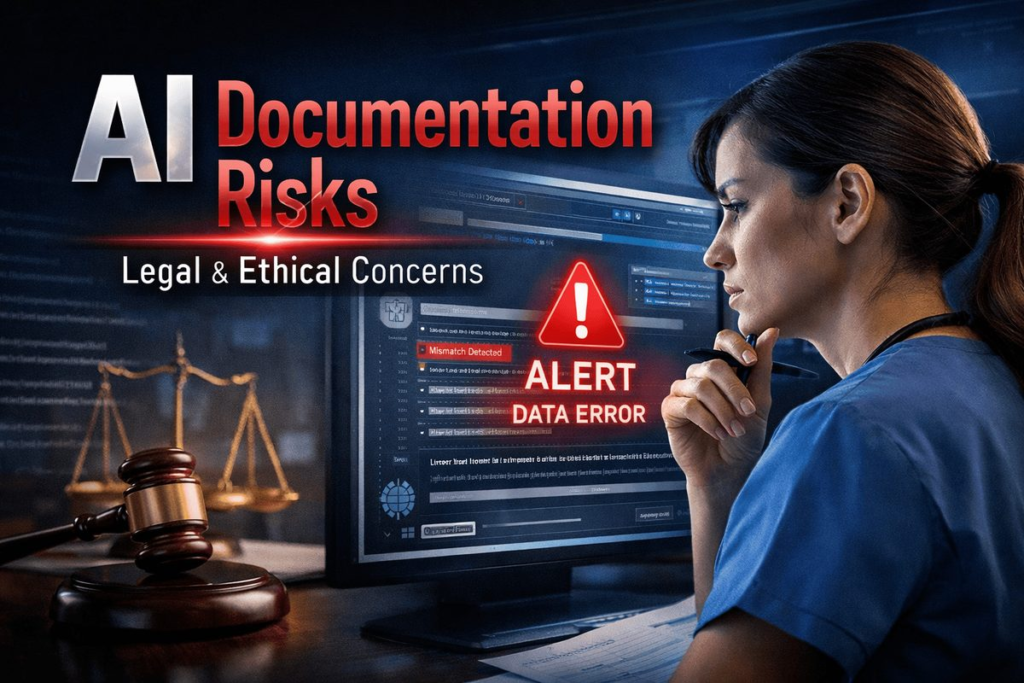
The year 2026 has brought a massive shift in how healthcare operates, with Artificial Intelligence (AI) now integrated into almost every bedside task. One of the most significant changes for the nursing profession is the rise of AI-powered documentation tools. These systems, often using "ambient listening" or "voice-to-text" technology, promise to end the hours nurses spend "charting" at a computer screen. While the prospect of having more time for direct patient care is exciting, the transition to AI-generated medical records introduces a complex web of legal and ethical risks. For nursing students and registered professionals, understanding these pitfalls is no longer optional—it is a requirement for protecting your license and your patients.
In the eyes of the law, a medical record is a legal document that serves as the "truth" of what happened during a shift. When a nurse signs off on an AI-generated note, they are legally adopting that text as their own professional statement. This article explores the hidden dangers of AI in nursing documentation, from "algorithmic bias" to "privacy breaches," and provides practical advice on how to navigate this high-tech landscape without compromising your professional integrity.
1. The Legal Burden of Accuracy: "The AI Wrote It, But You Signed It"
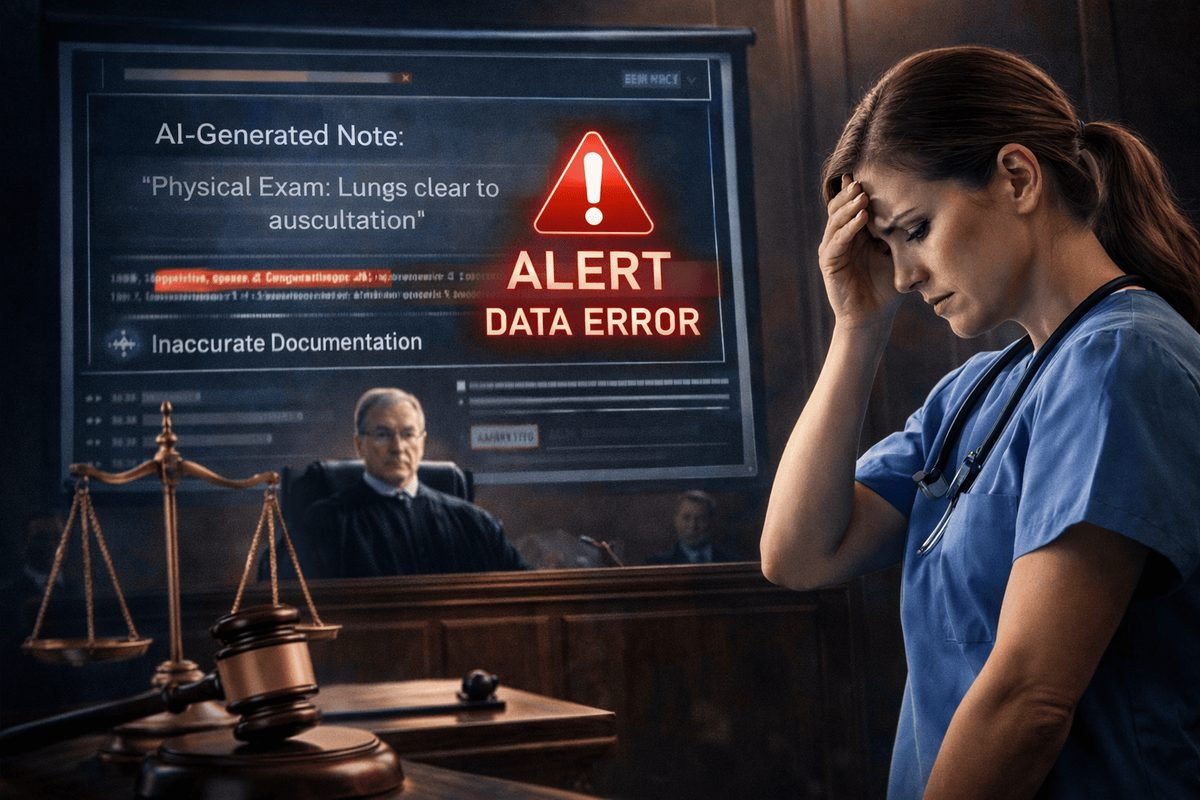
The most pressing legal risk for nurses using AI documentation is the concept of professional accountability. AI tools, such as Large Language Models (LLMs), are prone to a phenomenon known as "hallucination"—where the software confidently generates false information. For example, an AI might record that a patient’s lungs were "clear on auscultation" simply because that is a common phrase in nursing notes, even if the nurse actually heard crackles. If a nurse does not catch this error before saving the note, they have technically falsified a legal document.
In a court of law, "I didn't write it, the AI did" is not a valid defense. If a patient suffers an adverse event and the AI-generated note is found to be inaccurate, the nurse who "verified" the note is the one held liable. This creates a new type of workload called "Verification Fatigue." Nurses may feel pressured to move quickly and might skim-read AI notes rather than auditing them word-for-word. To protect yourself, you must treat every AI-generated sentence with the same scrutiny you would apply to a high-risk medication order. Legal experts in 2026 emphasize that the "Human-in-the-Loop" (HITL) model is the only way to maintain the legal standard of care.
2. Algorithmic Bias and Ethical Fairness in Care
Ethical concerns in AI documentation often center around Algorithmic Bias. AI systems are trained on historical data, and if that data contains human prejudices related to race, gender, age, or socioeconomic status, the AI will repeat those patterns. For a nurse, this might manifest in how the AI "summarizes" a patient’s behavior. An AI might use more aggressive or dismissive language when documenting the concerns of a minority patient compared to a white patient, simply because it "learned" those patterns from biased notes in the past.
Nurses have an ethical duty under the ICN Code of Ethics to provide unbiased care. If an AI tool suggests a "summary" of a patient as "non-compliant" or "drug-seeking" based on flawed data analysis, it can lead to a "reputation trap" that follows the patient throughout the healthcare system. Nurses must be the "Ethical Filter," ensuring that the language used in the medical record is objective, respectful, and free from automated stereotypes. Protecting the "Digital Dignity" of the patient is a core nursing skill in the age of AI.
3. Patient Privacy and the "Ambient Listening" Trap
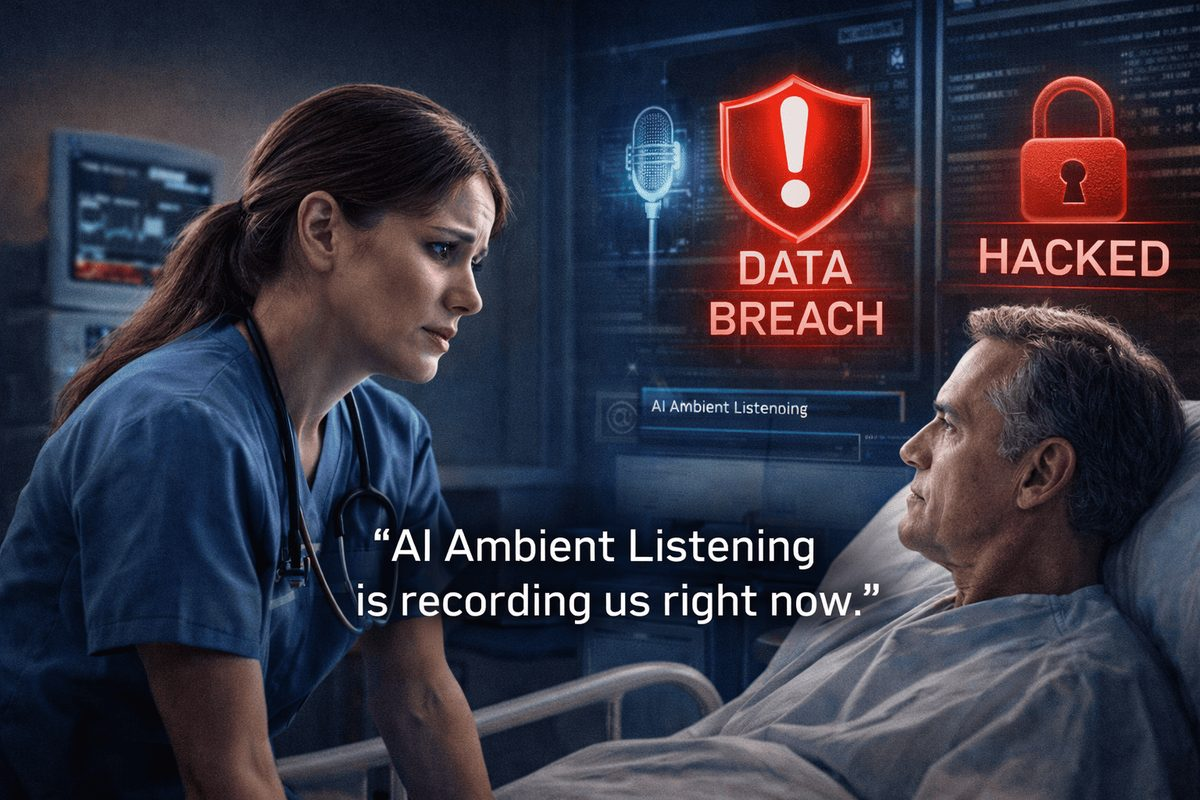
Many modern hospitals use Ambient Intelligence, where microphones in the patient’s room listen to the conversation between the nurse and the patient to create a draft note. This raises massive concerns regarding Informed Consent and Data Privacy. Does the patient know they are being recorded? Where is that audio being stored? Is the AI "learning" from the patient’s private family secrets mentioned during the bedside chat? In 2026, cybersecurity threats are at an all-time high, and a "data leak" of raw audio from a hospital room would be a catastrophic breach of trust.
Nurses are the primary guardians of the patient's environment. You must be able to explain to a patient exactly how the AI works and ensure they have the right to "Opt-Out" of AI documentation. There is also the risk of Secondary Data Usage, where the company that owns the AI might try to use the patient's data for research or profit without clear permission. Every nurse must be familiar with their facility’s "Data Governance" policies. If you are using a personal device or an unapproved "shortcut" AI app to help with your notes, you are likely violating HIPAA or the Australian Privacy Act, which can lead to immediate termination and legal action.
4. Loss of Clinical Nuance and "Cookie-Cutter" Charting
Nursing is an art as much as a science, and much of that art is found in the "nuance" of clinical observation. AI documentation tends to produce very "standardized" or "robotic" notes. While this makes the data easy for computers to read, it can strip away the Clinical Narrative that is so important for handover and care planning. An AI might record a "Stable Pulse," but it may fail to capture the "slight hesitation in the patient's voice" or the "subtle change in skin color" that an experienced nurse identifies as a warning sign.
This leads to a risk called "Automation Bias," where nurses stop looking for the subtle signs because "the computer says everything is fine." If the medical record becomes a series of "cookie-cutter" AI templates, we lose the unique story of the patient. This can result in a "fragmented" view of care, where the healthcare team treats the "data points" rather than the actual person. Nurses must ensure that they manually add the "Human Touch" to their documentation—adding those specific observations that an algorithm is simply not capable of feeling or understanding.
5. Managing "Alert Fatigue" and Over-Reliance on AI
Many AI documentation tools also provide Real-Time Clinical Alerts. For example, while you are typing, the AI might pop up a message saying: "Warning: Patient’s urine output is low, consider sepsis protocol." While helpful, the constant stream of digital interruptions leads to Alert Fatigue. When a nurse is bombarded with dozens of AI "suggestions" per hour, they may begin to click "Ignore" on autopilot. This is a massive legal risk; if the AI correctly identified a crisis and the nurse ignored the alert because they were "annoyed" by the software, the legal liability is severe.
Over-reliance is the opposite problem. Some newer nurses might trust the AI's summary of a patient's history more than their own physical assessment. This is known as "Deskilling." If we let the AI do all the thinking and summarizing, our own critical thinking muscles can grow weak. In 2026, the most successful nurses are those who use AI as a "Co-Pilot," not an "Auto-Pilot." You must remain the "Captain" of the clinical ship, using the AI's data as one tool among many, rather than the final word on patient care.
Frequently Asked Questions
Q: Can I be sued if the AI makes a mistake in my nursing note?
A: Yes. In the eyes of the law, you are responsible for any document you sign or "verify." If the AI includes an error and you don't correct it, you are legally liable for that misinformation in the medical record.
Q: Does "Ambient Listening" record everything my patient says?
A: Most professional medical AI is designed to "filter" out irrelevant talk (like weather or TV) and only record clinical facts. However, the raw audio is often processed by a server. You must always confirm with your hospital’s IT department that the system is "encrypted" and "HIPAA-compliant."
Q: What should I do if the AI keeps giving me biased summaries?
A: You should Report It. Most hospitals have a "Clinical Informatics" team. If you notice the AI is using biased or unfair language for certain groups of patients, you have an ethical duty to report this as a "Technical Error" so the developers can fix the algorithm.
Q: Is it okay to use ChatGPT to help me write my nursing care plans?
A: No, not unless it is a "Closed System" approved by your hospital. Public AI tools like ChatGPT save the data you type into them to "train" their models. If you type patient details into a public AI, you have committed a major Privacy Breach.
Q: Will AI documentation eventually replace the need for nursing students to learn how to chart?
A: Absolutely not. You must learn how to chart manually so that you understand what a "good note" looks like. If you don't know the principles of documentation, you won't be able to spot when the AI is making a dangerous mistake.