
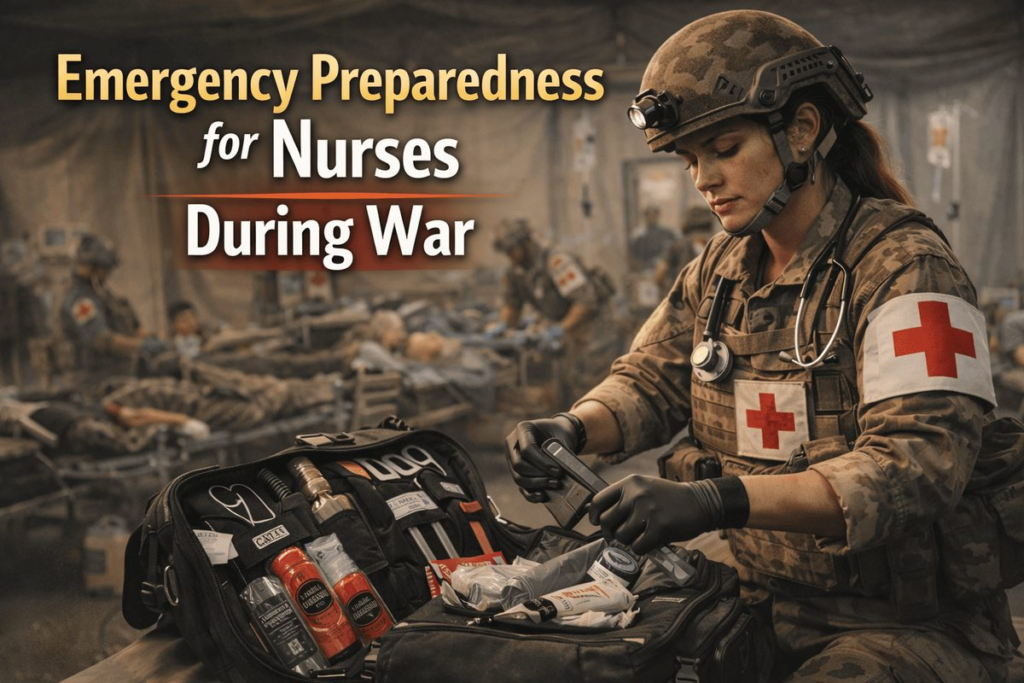
The transition from a peaceful hospital environment to a high-intensity conflict zone is one of the most challenging experiences a healthcare professional can face. In the event of war or armed conflict, the "standard of care" changes from luxury and abundance to survival and resourcefulness. For nursing students and experienced RNs alike, emergency preparedness is the difference between chaos and life-saving precision. When the power goes out, the supply chain breaks, and the casualties arrive in waves, a nurse’s manual skills and mental fortitude become the most valuable assets in the building.
Wartime nursing requires a specialized toolkit of practical skills that aren't always prioritized in a modern, tech-heavy classroom. You must learn to work with your hands, trust your physical assessments without a monitor, and manage trauma under extreme psychological pressure. This article provides a deep dive into the essential survival and clinical skills every nurse should master to stay prepared for the unpredictable nature of modern warfare.
1. Master of Hemorrhage Control: The "Stop the Bleed" Protocol
In a war zone, the primary cause of preventable death is exsanguination—bleeding to death. Whether from shrapnel, gunshot wounds, or blast injuries, a nurse must be able to stop major bleeding in seconds, often in the dark or under fire. This is the most critical practical skill in your emergency preparedness toolkit. You cannot wait for a doctor; the nurse is the first line of defense against hemorrhagic shock.
Practical preparedness involves mastering the use of Combat Application Tourniquets (CAT). A nurse should be able to apply a tourniquet to themselves or a patient using only one hand in under 60 seconds. Beyond mechanical devices, you must learn "Wound Packing" techniques using hemostatic gauze (gauze treated with agents that clot blood). For junctional wounds (groin, armpit, or neck) where a tourniquet cannot be placed, manual pressure and deep packing are life-saving. Every nurse should keep a "Personal Trauma Kit" on their person at all times during a conflict, containing high-quality shears, two tourniquets, and pressure dressings.
2. Physical Assessment Without Technology: "Back-to-Basics" Nursing
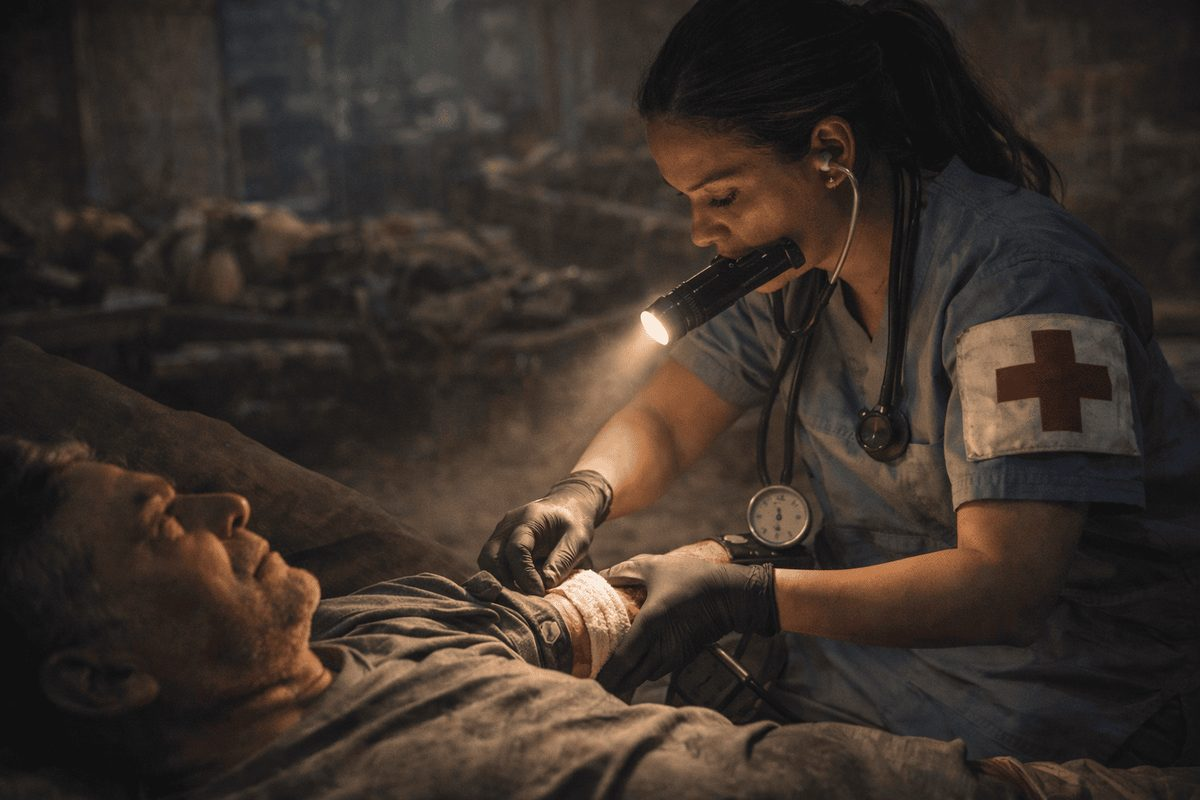
Modern nursing relies heavily on electronic monitors for heart rate, oxygen saturation, and blood pressure. However, in a war zone, electricity is a luxury. Cyber-attacks or physical damage to the power grid can render high-tech machines useless. Emergency preparedness means returning to the "Art of Physical Assessment." A nurse must be able to accurately estimate a patient's status using only their senses.
Nurses must practice the "MARCH" algorithm (Massive Hemorrhage, Airway, Respiration, Circulation, Head/Hypothermia). You should be able to estimate a systolic blood pressure by feeling for pulses: if a radial pulse is present, BP is likely above 80 mmHg; if only a carotid pulse is felt, it is likely significantly lower. Learning to count respirations by watching chest rise and checking "Capillary Refill" (pressing a fingernail to see how fast color returns) are vital for triaging patients when the monitors go dark. Mastering these manual skills ensures that your clinical judgment remains sharp, even when the hospital is running on flashlights and manual blood pressure cuffs.
3. Resourcefulness and "Improvised Medicine"
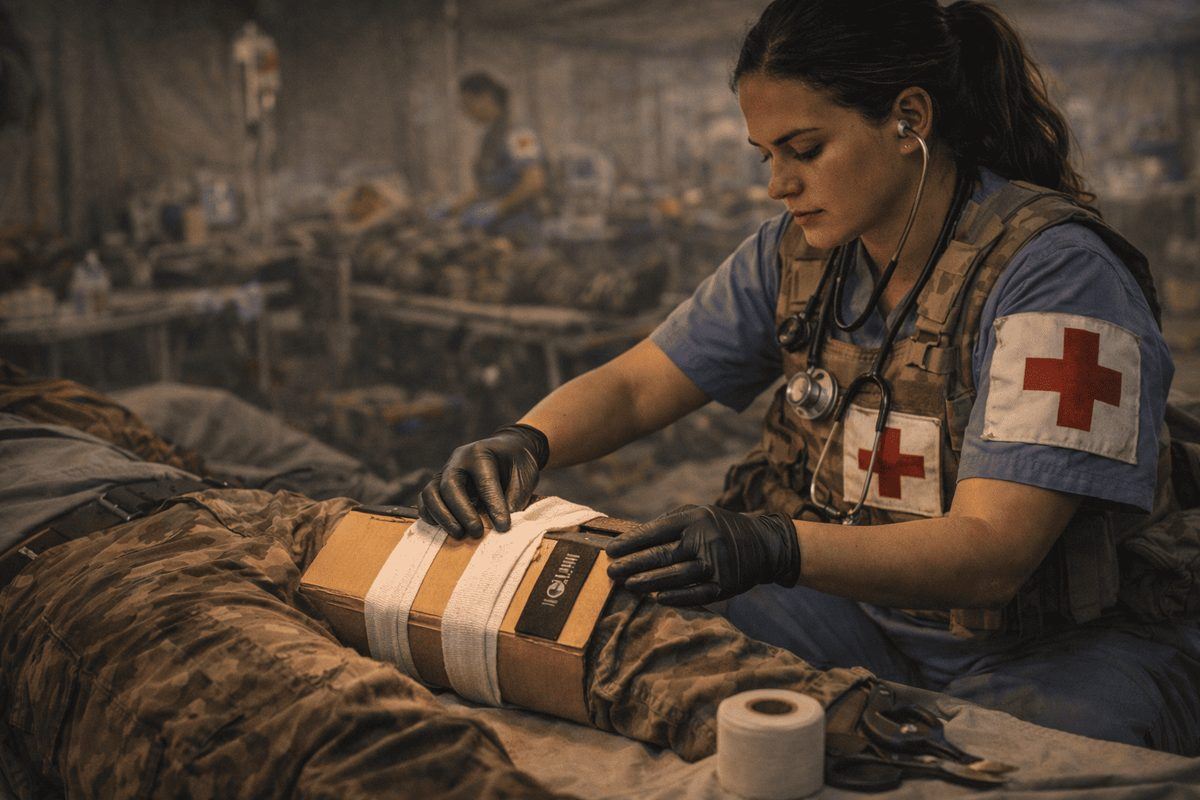
One of the hardest parts of wartime nursing is the lack of supplies. You may run out of sterile bandages, splints, or even clean water. A prepared nurse is a resourceful nurse. Improvised Medicine is the skill of using everyday items to perform clinical tasks safely. This is not about being "messy"; it is about using engineering principles to save lives when the supply truck doesn't arrive.
Practical skills include making "Improvised Splints" from cardboard, rolled-up newspapers, or sticks to stabilize broken limbs and prevent further nerve damage. Nurses can learn to create "Occult Dressings" (airtight seals) for sucking chest wounds using the plastic packaging from a gauze pad and some tape. In extreme cases, you may need to learn how to filter water using basic sand and charcoal methods or how to re-use and re-sterilize instruments using high-heat boiling or chemical soaks. This "MacGyver" approach to nursing keeps the ward functioning during a total blockade or siege.
4. Psychological First Aid and Crisis Communication
Emergency preparedness isn't just physical; it is mental. In a war, patients are not just physically wounded; they are often terrified, grieving, and suffering from acute stress. A nurse must be a master of Crisis Communication. In a crowded, noisy trauma bay, the ability to give clear, calm instructions can prevent a riot and keep the medical team focused.
Nurses should learn Psychological First Aid (PFA). This involves "The 3 Ls": Look, Listen, and Link. You Look for safety concerns and distressed people; you Listen to their needs without judgment; and you Link them to basic needs and information. Practical "Grounding Techniques"—like asking a panicked patient to name five things they can see—can lower their heart rate and make them more cooperative during painful procedures. Additionally, "Peer Support" is a skill. You must know how to spot signs of "Combat Fatigue" in your fellow nurses and encourage brief "Micro-Rest" periods to prevent the entire team from collapsing under the emotional weight of the conflict.
5. Triage Leadership and "The Black Tag" Ethics
During a mass casualty event in a war, the nurse often acts as the Triage Officer. This is a heavy responsibility that requires rapid decision-making. You must categorize patients based on their chance of survival, not just the severity of their injury. This requires a "Cold-Head, Warm-Heart" approach. Emergency preparedness involves studying triage systems like SALT (Sort, Assess, Lifesaving Interventions, Treatment/Transport) before the crisis happens.
The most difficult skill to master is the "Ethical Shift." In a normal hospital, we do everything for every patient. In war, if you have 50 patients and only 2 nurses, you cannot spend two hours on one patient who has a 5% chance of survival while 10 other "Red Tag" patients (who have an 80% chance) die waiting. Nurses must be prepared for the reality of "Palliative Triage"—providing comfort and dignity to the "Black Tag" (expectant) patients who cannot be saved, so that resources can be saved for those who can. This leadership skill ensures the hospital remains a place of "The Greatest Good" rather than a place of total chaos.
Frequently Asked Questions
Q: What should be in a nurse's "Go-Bag" during a war? A: A nurse's emergency kit should include: Stethoscope, trauma shears, 2 CAT tourniquets, hemostatic gauze, a headlamp with extra batteries, a permanent marker (for writing on skin/tags), personal water filter, high-calorie protein bars, and a small manual for drug dosages and triage protocols.
Q: Is it safe to use "expired" medications during a war? A: In a conflict zone, some medications may be used past their expiration date if no other options exist, but this is a high-risk decision. Most tablets remain stable for several years, but liquids and antibiotics (like tetracycline) can become toxic or lose potency. Always consult with a pharmacist or senior clinician if available.
Q: How do I handle a "Chemical Attack" as a nurse? A: Safety first! You must don personal protective equipment (PPE) before touching the patient. Decontamination is the priority—remove the patient's clothing and wash them with large amounts of water and soap. Never bring a contaminated patient into a "clean" ward, as the fumes can disable the entire nursing staff.
Q: How can I help patients with chronic diseases (Diabetes/Asthma) when the pharmacy is closed? A: This is part of "Continuity of Care." Nurses should teach patients "Rationing Strategies" if safe, and help the community organize "Medicine Pools" where neighbors share supplies. You may also need to teach patients how to manage their conditions using "Low-Resource" diets if insulin or inhalers are unavailable.
Q: What is the best way to handle "Burnout" during a month of continuous conflict? A: Use the "Buddy System." Pair up with another nurse and agree to watch each other's backs. Ensure your buddy eats, drinks water, and takes a 10-minute nap every 6 hours. Social support is the most powerful tool against "Combat Fatigue" in healthcare workers.