
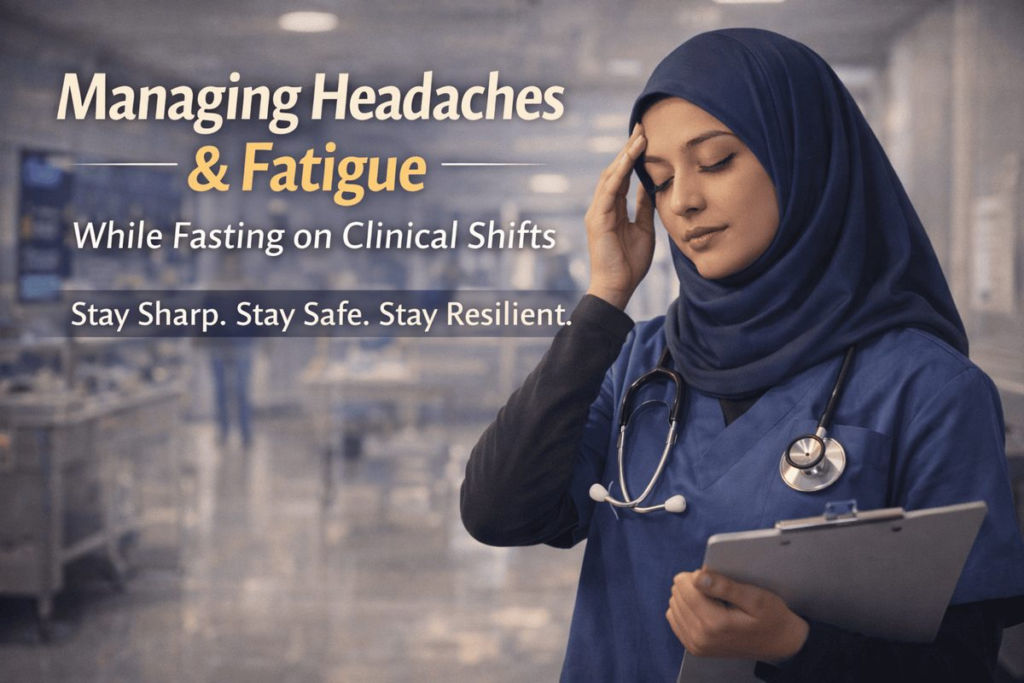
For nursing students, midwives, and healthcare professionals, the clinical environment is a high-intensity workspace that demands constant physical movement and sharp mental focus. When observing the holy month of Ramadan, the combination of 12-hour shifts and fasting can lead to two primary hurdles: persistent headaches and deep physical fatigue. In a hospital setting, where you are often dealing with dry air, bright fluorescent lights, and the emotional stress of patient care, these symptoms can feel magnified. Managing them is not just about personal comfort—it is a matter of clinical safety. A nurse or midwife struggling with a throbbing migraine or extreme lethargy is at a higher risk of making errors in medication administration or patient assessment.
Understanding the root causes of these symptoms is the first step toward prevention. Headaches during fasting are often caused by "caffeine withdrawal," dehydration, or low blood sugar (hypoglycemia), while fatigue is usually a result of disrupted sleep cycles and a lack of sustained energy from food. This article provides a comprehensive, SEO-optimized guide to managing these challenges specifically for those working on the frontlines of healthcare. By applying these evidence-based strategies, you can ensure that your body remains resilient and your mind stays clear throughout your clinical rotations.
1. Identifying and Preventing the "Ramadan Headache"

The "Ramadan Headache" is a well-documented phenomenon, particularly during the first week of the month. For healthcare workers, this is often triggered by the sudden cessation of caffeine intake. Most nurses rely on tea or coffee to get through long shifts; when that chemical stimulant is removed during daylight hours, the blood vessels in the brain dilate, causing a dull, throbbing pain. Another major trigger in the hospital is dehydration. Because clinical environments are climate-controlled and very dry, you lose moisture through your breath and skin. Without water to replenish your blood volume, your brain temporarily shrinks away from the skull, leading to a "dehydration headache."
+1
To manage this, midwives and nurses should practice a "Caffeine Taper" in the weeks leading up to Ramadan. If the month has already started, ensure that your caffeine intake at Suhoor is minimal or non-existent, as caffeine is a diuretic that will make you more dehydrated later in the day. Instead, focus on "Magnesium Loading" during your non-fasting hours. Magnesium, found in pumpkin seeds, spinach, and almonds, is a natural muscle relaxant that can prevent the tension headaches often caused by the stress of the ward. If a headache begins during your shift, try a "Sensory Reset": step into a dark, quiet room for two minutes and apply a cold compress or a damp paper towel to the back of your neck to constrict blood vessels and provide immediate relief.
2. Combating Fatigue with "Low-Glycemic" Fueling
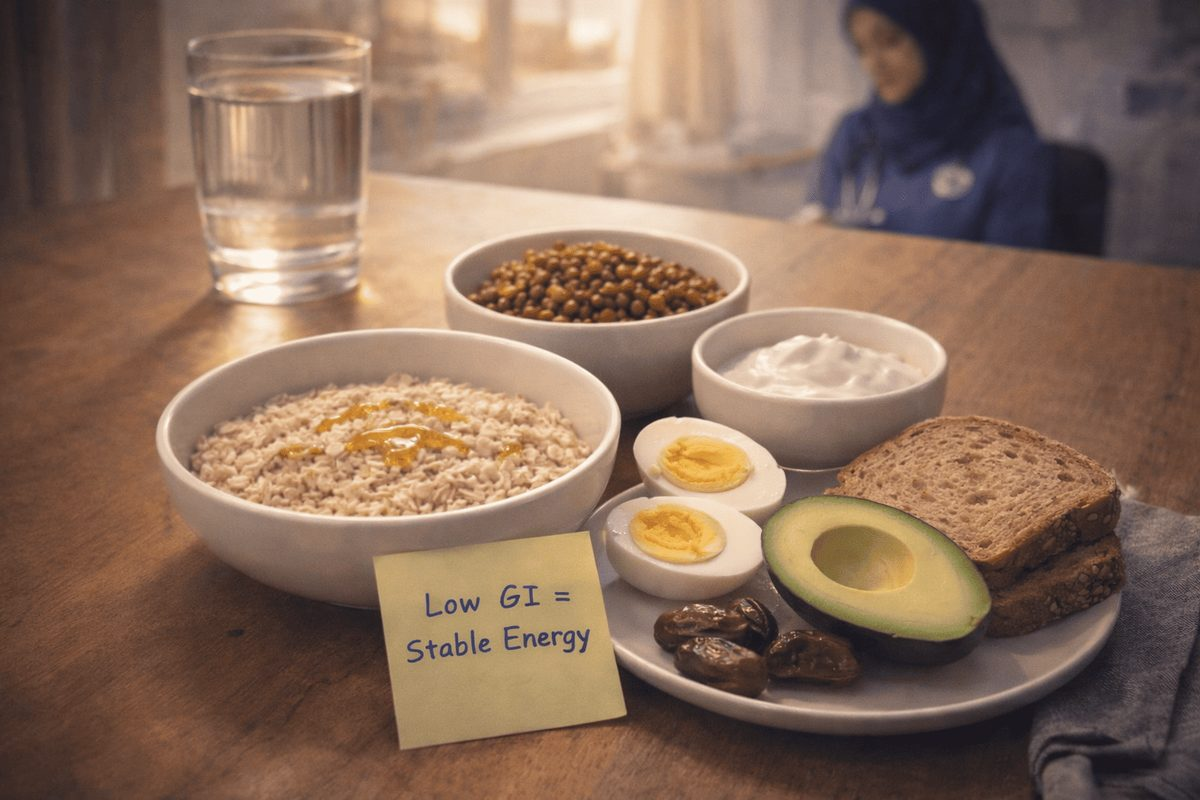
Fatigue on a clinical shift is more than just feeling "sleepy"; it is a systemic lack of energy that makes your limbs feel heavy and your brain feel "foggy." This is usually caused by the "Glucose Rollercoaster." If you eat high-sugar foods or white bread at Suhoor, your blood sugar spikes and then crashes rapidly, leaving you exhausted by noon. For a nursing student who needs to be alert for a 2 PM medication round, this crash can be debilitating. To maintain energy levels, your nutrition must be focused on Slow-Release Carbohydrates.
Nurses should choose foods with a low Glycemic Index (GI) at Suhoor. Foods like steel-cut oats, lentils, beans, and whole grains take several hours to digest, providing a steady "trickle" of energy to your muscles and brain. Pairing these with "Healthy Fats" like avocado, olive oil, or peanut butter further slows down digestion, helping you feel satisfied for longer. Midwives, who may face sudden bursts of high-intensity physical work during a delivery, should ensure they have adequate protein at Suhoor—such as eggs or Greek yogurt—to prevent muscle wasting and maintain physical stamina. By stabilizing your blood sugar at dawn, you prevent the deep metabolic fatigue that often hits during the final hours of a shift.
+1
3. The Role of Electrolytes in Clinical Endurance

Many healthcare workers focus only on the amount of water they drink, but for those on long shifts, Electrolyte Balance is even more important. Electrolytes—specifically sodium, potassium, and magnesium—are the minerals that allow your nerves to fire and your muscles to contract. When you are fasting and working in a dry hospital, you lose these minerals through sweat and normal metabolic processes. A lack of electrolytes is a primary cause of the "muscle fatigue" and "fainting spells" that some students experience on the ward.
A pro-tip for nurses is to include "Hydration-Boosting" foods at Iftar and Suhoor. Instead of plain water, which can sometimes pass through the system too quickly, try coconut water or a homemade electrolyte drink (water with a pinch of sea salt and a squeeze of lemon). Eating potassium-rich foods like bananas, dates, and potatoes helps your body regulate its fluid levels more effectively. If you are prone to leg cramps after standing for 12 hours, a magnesium supplement at Iftar can be a lifesaver. By keeping your electrolytes in balance, you ensure that your heart and muscles have the "spark" they need to keep you moving through a busy shift without feeling drained.
4. Strategic Resting: The 20-Minute "Clinical Reset"
In the fast-paced world of nursing and midwifery, "rest" is often seen as a luxury. However, during Ramadan, strategic resting is a clinical necessity. Sleep deprivation is a major contributor to fatigue; when you combine a lack of food with a lack of sleep, your "Executive Function"—your ability to plan, focus, and make decisions—is significantly impaired. For students, this can lead to mistakes in documentation or clinical reasoning.
If your shift allows, utilize your "lunch break" for a 20-minute Power Nap. Research shows that a short nap can improve alertness and mood for several hours afterward. If napping is not possible, practice "Non-Sleep Deep Rest" (NSDR) or "Box Breathing." Sit in a quiet area, close your eyes, and inhale for 4 seconds, hold for 4, exhale for 4, and hold for 4. This technique lowers your cortisol (stress hormone) levels. High cortisol levels cause your body to burn through its stored glucose faster, leading to quicker exhaustion. By "pacing" your nervous system through these small breaks, you conserve your energy stores for the moments when your patients need you most.
5. Managing the Environmental Triggers of the Ward
Sometimes, the hospital environment itself is the cause of your headache or fatigue. Fluorescent lighting, the constant "beeping" of monitors, and the strong smells of sanitizers can trigger sensory overload in a fasting brain. When your body is in a fasted state, your senses can become hyper-acute, making these environmental factors feel much more intrusive and draining.
To manage this, midwives and nurses should practice "Environmental Modification." If you are charting at a desk, try to dim the screen brightness on your computer. If you are in a high-noise area, use a minute of "Silence Therapy" in the breakroom whenever possible. Furthermore, pay attention to your posture. Poor posture—especially the "nursing hunch" over a computer or patient bed—can restrict blood flow to the brain and cause tension headaches. Making a conscious effort to pull your shoulders back and stretch your neck every hour can improve oxygenation and reduce fatigue. Small changes in how you interact with your physical environment can have a massive impact on how much energy you have left at the end of the day.
Frequently Asked Questions
Q: Should I take a painkiller at Suhoor to prevent a headache later? A: Taking paracetamol or ibuprofen at Suhoor may help delay a headache, but it can also irritate an empty stomach. It is better to focus on hydration and caffeine tapering. If you must take medication, ensure you take it with a significant amount of food and water at Suhoor.
Q: Why do I feel more tired in the afternoon than in the morning? A: This is usually due to the "Circadian Dip" combined with falling blood sugar. Around 2 PM – 4 PM, the body naturally wants to rest. For a fasting nurse, this is when your Suhoor fuel is running low. A quick sensory reset (splashing cold water on your face) can help you push through this window.
Q: Can I drink "Energy Drinks" at Iftar to help with fatigue? A: It is highly recommended to avoid energy drinks. They are loaded with sugar and caffeine, which will give you a temporary high followed by a massive "crash" and increased thirst the next day. Stick to natural energy sources like dates, fruit, and complex carbs.
Q: How do I know if my headache is "normal" or a sign of something serious? A: A "fasting headache" is usually a dull ache. If you experience a sudden, "thunderclap" headache, blurred vision, fainting, or confusion, these are "Red Flags." You should break your fast, notify your supervisor, and seek medical attention, as these could be signs of severe dehydration or heatstroke.
Q: Is it okay to use "cooling patches" on my forehead while working? A: Yes! Many nurses find that "fever cooling gel patches" or a simple damp cloth on the forehead or back of the neck can provide immense relief from tension and heat-related headaches without interfering with the fast.