
Meta Title: Safe Fasting Guidelines for Pregnant Women – A Midwife’s Perspective
Meta Description: Learn safe fasting guidelines for pregnant women from a midwife’s perspective. Discover hydration tips, nutrition advice, trimester considerations, risks, and when to avoid fasting during pregnancy.
Introduction: Understanding Fasting During Pregnancy
Fasting is an important spiritual practice for many women around the world, especially during the month of Ramadan. It involves avoiding food and drink from dawn to sunset. For pregnant women, however, fasting can raise many questions and concerns. Is it safe? Will it harm the baby? How can it affect the mother’s health? Should every pregnant woman fast, or are there exceptions?
As a midwife, I have supported many women who wanted to fast while pregnant. Some were confident and felt strong. Others were unsure and worried about their baby’s wellbeing. The most important message is this: every pregnancy is different, and decisions about fasting should always consider both the mother’s health and the baby’s development.
Pregnancy places extra demands on a woman’s body. Blood volume increases, nutritional needs rise, and the baby depends entirely on the mother for oxygen and nutrients. Fasting may be safe for some healthy women with low-risk pregnancies, but it may not be recommended for others, especially those with complications.
This guide provides detailed, evidence-informed, and practical advice from a midwife’s perspective. It is written in simple English so students, pregnant women, and families can understand the information clearly. The goal is not to encourage or discourage fasting but to promote safe decision-making, awareness, and medical consultation.
Understanding the Body During Pregnancy

Pregnancy is a time of major physical and hormonal changes. To understand fasting safety, it is important to first understand how the body works during pregnancy.
Increased Nutritional Needs
During pregnancy, the body needs more:
Calories for energy
Protein for tissue growth
Iron for blood production
Calcium for bone development
Folic acid for neural tube formation
Fluids to maintain blood circulation
These nutrients support both maternal health and fetal development. When fasting, food and water intake are limited to non-daylight hours, which may reduce total daily intake if not managed properly.
Blood Sugar and Energy Balance
Pregnant women naturally experience changes in blood sugar regulation. Hormones such as human placental lactogen affect insulin sensitivity. This means pregnant women may be more prone to:
Low blood sugar (hypoglycemia)
High blood sugar (gestational diabetes)
Fasting can influence blood sugar levels, especially if meals are unbalanced or delayed.
Hydration and Circulation
Hydration is extremely important in pregnancy. Adequate fluids help:
Maintain amniotic fluid levels
Support blood flow to the placenta
Prevent constipation
Reduce urinary tract infections
Dehydration during pregnancy can increase the risk of headaches, dizziness, and in severe cases, contractions.
Understanding these physiological changes helps pregnant women make informed decisions about fasting.
Is Fasting Safe During Pregnancy?
There is no single answer that applies to every woman. Safety depends on:
The trimester of pregnancy
Overall health
Presence of medical conditions
Climate and fasting duration
Nutritional intake during non-fasting hours
First Trimester Considerations
The first trimester is a critical period for fetal organ development. Many women experience:
Nausea and vomiting
Fatigue
Loss of appetite
Fasting during this stage may worsen dehydration and weakness. Women who already struggle with morning sickness may find fasting more difficult.
Second Trimester Considerations
The second trimester is often called the “stable phase” of pregnancy. Energy levels may improve, and nausea may decrease. Some healthy women find fasting more manageable during this stage.
However, nutritional intake must still meet daily requirements.
Third Trimester Considerations
In the third trimester, the baby grows rapidly, and the mother’s body requires more energy. Dehydration may increase the risk of preterm contractions. Women may feel heavier and tire more easily.
Midwives often recommend careful monitoring during this stage.
Who Should Avoid Fasting During Pregnancy?
From a midwife’s perspective, certain women should not fast due to increased risk. These include:
Women with gestational diabetes
Women with anemia
Women with high blood pressure
Women with a history of preterm labor
Women carrying twins or multiples
Women with low amniotic fluid levels
Women experiencing severe nausea and vomiting
In such cases, fasting may pose health risks to both mother and baby. Religious teachings often provide exemptions for pregnant women whose health may be affected.
Consulting a healthcare provider before fasting is essential.
Safe Hydration Strategies for Pregnant Women Who Choose to Fast
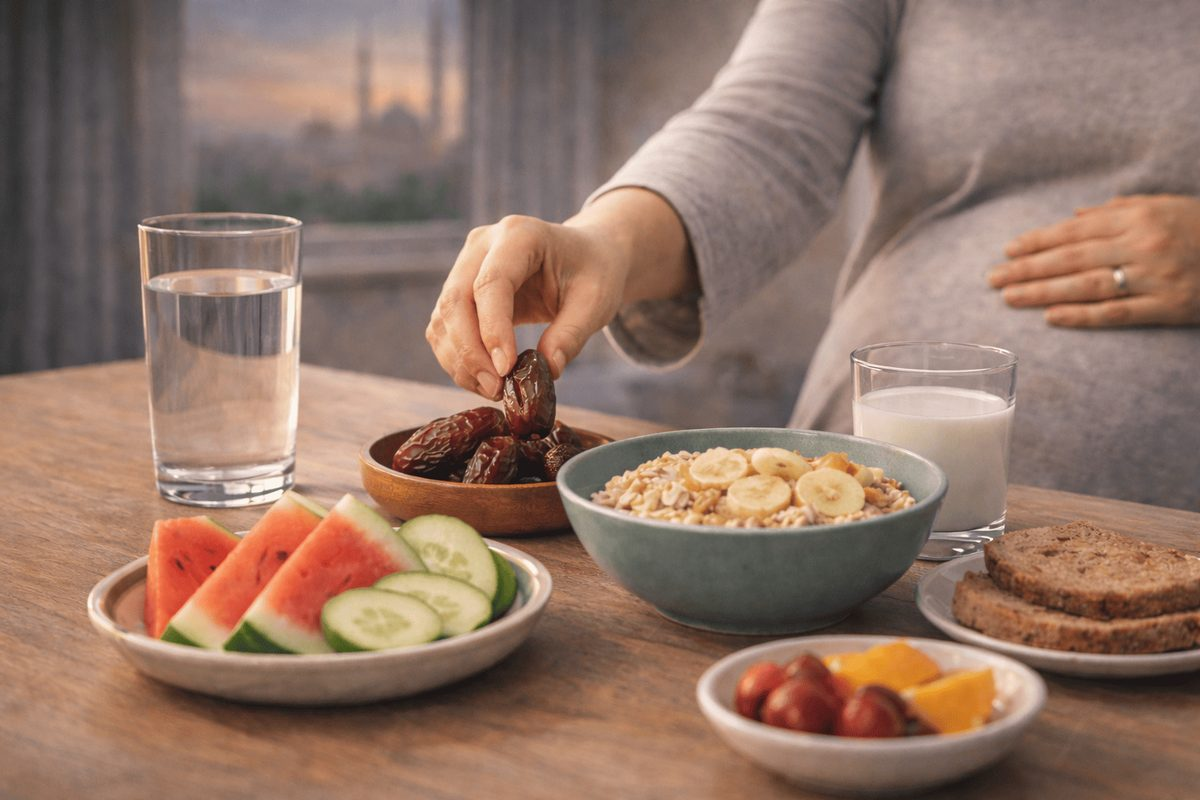
Hydration is the most important factor in safe fasting during pregnancy.
Spread Fluid Intake Evenly
Instead of drinking large amounts at once, pregnant women should:
Drink 1–2 glasses at Iftar
Continue drinking fluids every hour
Drink before sleeping
Drink again at Suhoor
This steady approach supports proper absorption.
Choose Hydrating Fluids
Best options include:
Water
Milk
Fresh fruit juices (moderate amounts)
Soups
Coconut water
Avoid excessive caffeine, as it increases fluid loss.
Monitor Urine Color
Light yellow urine indicates good hydration. Dark urine may suggest dehydration.
Nutrition Guidelines for Safe Fasting in Pregnancy
Proper nutrition is essential when fasting.
Balanced Iftar Meal
Iftar should include:
Complex carbohydrates (brown rice, whole grains)
Lean protein (chicken, fish, legumes)
Healthy fats (olive oil, nuts)
Vegetables and fruits
Avoid heavy fried foods and excessive sweets.
Nutritious Suhoor Meal
Suhoor should include:
Oats or whole-grain bread
Eggs or yogurt
Fruits
Nuts or seeds
This combination provides slow-releasing energy.
Iron and Supplements
Continue prenatal vitamins as prescribed. Iron deficiency can worsen fatigue.
Warning Signs That Require Breaking the Fast
Pregnant women should stop fasting and seek medical advice if they experience:
Severe dizziness
Fainting
Reduced fetal movements
Persistent headaches
Contractions
Severe abdominal pain
Very dark urine
Listening to the body is critical.
Emotional and Spiritual Considerations
Many pregnant women feel emotional conflict about fasting. Some feel guilty if they cannot fast. It is important to remember that protecting health is not failure. Spiritual practices can still be maintained through prayer, charity, and reflection.
Midwives encourage women to prioritize wellbeing.
Monitoring Baby’s Health During Ramadan
If fasting, regular antenatal appointments are essential. Healthcare providers may:
Monitor weight gain
Check blood pressure
Assess fetal growth
Review blood sugar levels
Open communication with your midwife or doctor ensures safety.
A Midwife’s Final Advice
Every pregnancy is unique. Some healthy women may fast safely with careful planning. Others may need to postpone fasting. The most important factors are:
Medical consultation
Adequate hydration
Balanced nutrition
Awareness of warning signs
Health always comes first.
Frequently Asked Questions
Can pregnant women fast safely?
Some healthy women with low-risk pregnancies may fast safely, but medical consultation is essential.
Does fasting harm the baby?
In healthy pregnancies with proper nutrition and hydration, short-term fasting may not cause harm. However, risks increase in complicated pregnancies.
What trimester is safest for fasting?
The second trimester is often more manageable, but safety depends on individual health.
Should women with gestational diabetes fast?
Generally, fasting is not recommended for women with gestational diabetes due to blood sugar risks.
What should pregnant women eat at Suhoor?
Balanced meals with complex carbohydrates, protein, healthy fats, and fluids.
Conclusion: Making an Informed and Safe Decision
Fasting during pregnancy is a deeply personal decision. From a midwife’s perspective, the priority is always the health of the mother and baby. While some women may fast safely with careful hydration and balanced nutrition, others may be advised not to fast due to medical reasons.
Pregnancy is a time of responsibility and care. Consulting healthcare providers, monitoring warning signs, and making informed choices ensure the safest possible outcome.
Spiritual devotion and maternal health can coexist—but safety must always come first.