
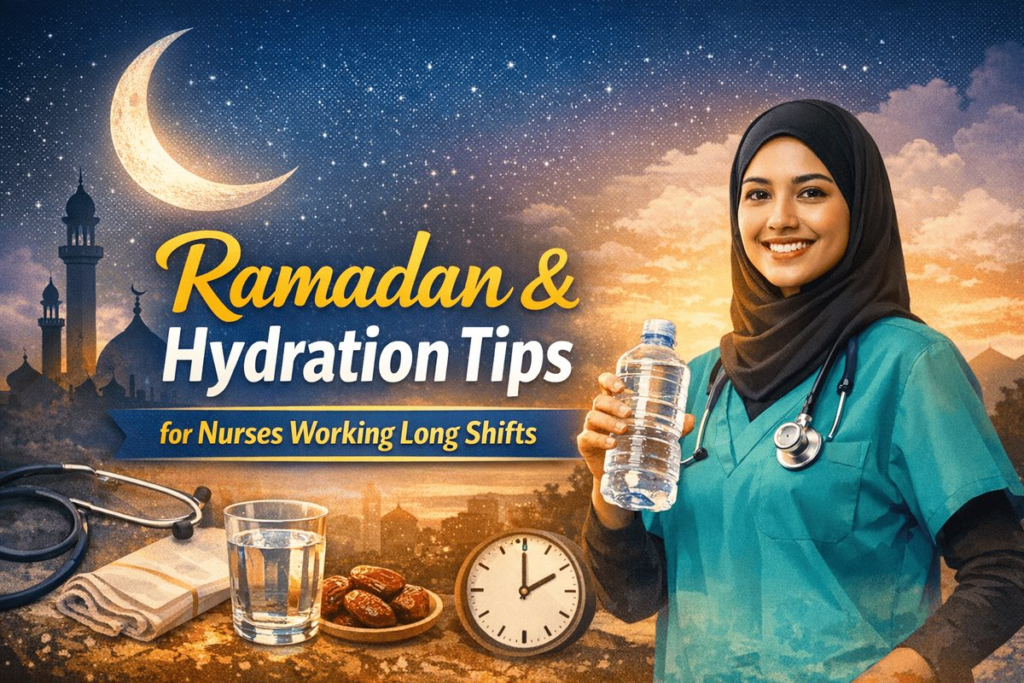
Meta Title: Ramadan and Hydration Tips for Nurses Working Long Shifts (Complete Guide)
Meta Description: Discover practical hydration tips for nurses working long shifts during Ramadan. Learn how to stay energized, prevent dehydration, and balance fasting with demanding clinical duties.
Introduction: Nursing During Ramadan – A Unique Challenge
Ramadan is a sacred month observed by Muslims around the world. During this month, fasting from dawn to sunset is an important spiritual practice. Muslims avoid food and drink during daylight hours, focusing on prayer, reflection, and self-discipline.
For nurses, however, Ramadan can be physically demanding. Nursing is already a high-energy profession that requires long hours, critical thinking, emotional strength, and constant movement. When fasting is added to 8–12 hour clinical shifts, hydration and energy management become serious concerns.
Nurses often work in busy hospital wards, emergency departments, intensive care units, aged care facilities, and community settings. These environments can be fast-paced and stressful. Without proper hydration planning, fasting nurses may experience fatigue, headaches, dizziness, reduced concentration, or even dehydration.
This guide provides evidence-informed, practical hydration and health strategies specifically designed for nurses working long shifts during Ramadan. The goal is to help nurses maintain both spiritual commitment and professional safety.
Understanding Hydration and Why It Matters for Nurses

Hydration is essential for every human being. The body depends on water to regulate temperature, maintain blood pressure, transport nutrients, and remove waste. For nurses, hydration is even more critical because their work requires physical activity, quick decision-making, and emotional resilience.
When a nurse becomes dehydrated, the following may occur:
Reduced concentration and slower reaction time
Headaches and irritability
Muscle weakness or cramps
Increased heart rate
Low blood pressure
Fatigue and dizziness
In clinical settings, these symptoms can affect patient care. A dehydrated nurse may struggle with complex calculations, medication administration, or emergency response situations.
During Ramadan, nurses fast for long hours without drinking water. In some regions, fasting can last between 12 to 18 hours depending on the season and location. This makes hydration planning during non-fasting hours extremely important.
Hydration is not just about drinking water. It also includes maintaining electrolyte balance and consuming water-rich foods that support the body throughout the fasting period.
The Physical Demands of Long Nursing Shifts During Ramadan
Nursing shifts often last between 8 and 12 hours, and in some settings, they may extend even longer. Many nurses work rotating shifts, including nights and early mornings. These demanding schedules can increase the risk of dehydration during Ramadan.
1. Constant Movement
Nurses rarely sit for long periods. They walk between patient rooms, assist with repositioning patients, respond to alarms, and manage clinical tasks. Physical movement increases fluid loss through sweating and respiration.
2. High-Stress Situations
Stress can increase heart rate and metabolic demand. Emergency situations, critical patients, and high workloads require intense focus. Stress hormones can also impact fluid balance and energy levels.
3. Limited Break Opportunities
In busy units, nurses may struggle to find time for rest. During Ramadan, fasting nurses must carefully use their pre-dawn (Suhoor) and sunset (Iftar) time to prepare their bodies for long shifts.
Understanding these demands allows nurses to plan hydration and nutrition strategies more effectively.
Smart Hydration Strategies Between Iftar and Suhoor

Proper hydration during non-fasting hours is the key to staying healthy while working long shifts.
1. Follow the “Gradual Hydration” Method
Instead of drinking a large amount of water all at once during Iftar, it is better to spread fluid intake throughout the evening.
A simple structure could include:
1–2 glasses of water at Iftar
1–2 glasses after evening prayer
1–2 glasses before sleep
1–2 glasses at Suhoor
Drinking too much water at once can cause discomfort and does not guarantee better hydration. Gradual intake allows the body to absorb fluids properly.
2. Include Electrolytes Naturally
Electrolytes like sodium, potassium, and magnesium help maintain fluid balance. Good natural sources include:
Coconut water
Yogurt
Milk
Bananas
Dates
Leafy greens
These foods help prevent muscle cramps and fatigue during long shifts.
3. Avoid Dehydrating Drinks
Caffeinated drinks such as coffee and strong tea increase urine output. While many nurses rely on caffeine during regular shifts, consuming large amounts during Ramadan can worsen dehydration.
Try to:
Limit coffee intake
Replace some caffeinated drinks with herbal tea
Avoid sugary sodas
Moderation is essential.
Suhoor: The Most Important Meal for Hydration
Suhoor, the pre-dawn meal, plays a major role in supporting nurses throughout their shifts.
A balanced Suhoor should include:
Complex carbohydrates (oats, whole-grain bread, brown rice)
Protein (eggs, yogurt, beans)
Healthy fats (nuts, seeds, avocado)
Water-rich foods (cucumber, watermelon)
Complex carbohydrates release energy slowly, preventing sudden fatigue. Protein supports muscle strength, while healthy fats help maintain satiety.
Avoid very salty foods at Suhoor, as they increase thirst during the day.
Managing Energy and Preventing Dehydration During the Shift
While fasting nurses cannot drink water during the day, there are ways to conserve energy and reduce dehydration risk.
1. Pace Physical Activity
Whenever possible:
Organize tasks efficiently
Avoid unnecessary movement
Use teamwork to reduce physical strain
Smart task planning reduces exhaustion.
2. Use Cooling Strategies
If allowed in your workplace:
Stay in well-ventilated areas
Avoid direct sunlight
Wear breathable uniforms
Overheating increases fluid loss.
3. Monitor Warning Signs
Nurses must be aware of dehydration symptoms such as:
Dark urine
Dizziness
Rapid heartbeat
Confusion
If symptoms become severe, it is important to prioritize safety and consult medical advice.
Night Shifts During Ramadan: Special Considerations
Night shifts during Ramadan can be especially challenging because sleep patterns change.
To manage night shifts:
Hydrate consistently before starting the shift
Eat a balanced Iftar meal
Avoid heavy, oily foods that cause fatigue
Rest adequately during the day
Sleep is crucial for maintaining cognitive function.
Mental and Spiritual Strength During Ramadan Shifts
Ramadan is not only a physical experience but also a spiritual one. Many nurses find that spiritual reflection increases patience, empathy, and resilience.
However, emotional fatigue can occur. Nurses should:
Practice mindful breathing
Take short rest moments when possible
Seek peer support
Communicate with managers if adjustments are needed
Self-care is not weakness; it is professional responsibility.
Workplace Communication and Support
It is important for nurses to communicate professionally with supervisors about fasting.
Some workplaces offer:
Flexible scheduling
Adjusted break times
Temporary workload modifications
Open and respectful communication improves safety and teamwork.
Special Considerations for High-Risk Areas
Nurses working in:
Emergency departments
Intensive care units
Surgical units
may experience higher physical demands.
In these settings, careful planning is critical. If health risks arise, Islamic teachings allow flexibility in fasting for medical reasons. Personal health and patient safety must always come first.
Long-Term Health Tips for Ramadan
To maintain health throughout the month:
Maintain consistent sleep
Avoid overeating at Iftar
Engage in light physical activity
Monitor weight changes
Stay connected with supportive communities
Consistency helps the body adapt to fasting patterns.
Frequently Asked Questions
How can nurses avoid dehydration during Ramadan?
By drinking water gradually between Iftar and Suhoor, eating water-rich foods, limiting caffeine, and monitoring symptoms during shifts.
Is it safe for nurses to work long shifts while fasting?
Yes, if they plan hydration carefully and monitor their health. Safety should always be prioritized.
What should nurses eat at Suhoor to prevent thirst?
Complex carbohydrates, protein, healthy fats, and water-rich fruits and vegetables.
Can fasting affect concentration during nursing shifts?
Mild dehydration may affect concentration. Proper hydration planning reduces this risk.
Should nurses inform their managers about fasting?
Yes, professional communication helps ensure safe workload distribution.
Conclusion: Balancing Faith and Professional Responsibility
Ramadan is a meaningful and spiritual time for many nurses. However, nursing is also a demanding profession that requires physical strength, mental clarity, and patient safety.
By following smart hydration strategies, eating balanced meals, conserving energy, and communicating openly at work, nurses can successfully manage long shifts during Ramadan.
The key is preparation, awareness, and self-care. When nurses care for themselves, they are better able to care for their patients.
Ramadan teaches discipline and compassion—qualities that are already at the heart of nursing. With proper hydration and planning, nurses can honor both their faith and their profession safely and confidently.