
Meta Title: How Nurses Can Manage Fasting During Clinical Placements in Ramadan – Complete Student Guide
Meta Description: Learn practical, safe, and student-friendly strategies to manage fasting during clinical placements in Ramadan. Discover hydration tips, energy management, safety advice, and placement survival strategies.
Introduction: Balancing Faith and Clinical Responsibility During Ramadan
Ramadan is a deeply spiritual month observed by Muslims around the world. From dawn until sunset, Muslims fast by avoiding food and drink. The month focuses on prayer, discipline, gratitude, and self-control. For nursing students, however, Ramadan can feel especially challenging when it falls during clinical placements.
Clinical placements require physical strength, mental focus, emotional resilience, and professional responsibility. Students often work long hours in hospitals, aged care facilities, community clinics, or specialty units. They may be on their feet most of the day, assisting patients, observing procedures, completing documentation, and learning new skills. Adding fasting to this already demanding environment can increase fatigue and dehydration risk.
The good news is that with proper preparation, smart hydration strategies, and awareness of personal limits, nursing students can successfully manage fasting during clinical placements. This guide provides practical and safe advice in simple language to help students balance their spiritual commitment with patient safety and academic success.
Understanding the Physical and Mental Demands of Clinical Placements

Clinical placements are one of the most important parts of nursing education. They allow students to apply classroom knowledge in real healthcare settings. However, placements are physically and mentally demanding, especially for students who are still developing confidence and clinical skills.
Students may work 8–10 hour shifts, sometimes starting early in the morning. Tasks often include assisting with patient hygiene, repositioning patients, observing wound care, measuring vital signs, preparing documentation, and participating in medication rounds under supervision. Many students report that placements are more tiring than classroom learning because they involve constant movement and emotional engagement.
Fasting during Ramadan adds another layer of physical challenge. Without food or water during daylight hours, the body relies on stored energy. Blood sugar levels may fluctuate, and dehydration may develop, especially in warmer environments or busy wards.
Mentally, fasting can also affect concentration. Nursing students must pay close attention to instructions, patient safety protocols, and medication calculations. Mild dehydration may cause headaches, dizziness, or slower reaction times.
Understanding these physical and mental demands is the first step toward safe fasting during placements. Awareness allows students to plan properly and avoid unnecessary risks.
Preparing Before Ramadan: Planning for Success
Preparation is the most important strategy for managing fasting during clinical placements. Instead of waiting until the first day of Ramadan, students should plan ahead.
Speak With Your Clinical Educator Early
It is professional and appropriate to inform your clinical facilitator or placement coordinator that you will be fasting. You do not need to provide personal details, but open communication helps create understanding.
Some educators may:
Offer guidance on workload pacing
Allow short seated breaks when appropriate
Provide flexibility if placements fall on particularly long fasting days
Most healthcare environments value diversity and respect religious practices. Professional communication builds trust.
Adjust Your Sleep Schedule Gradually
Ramadan changes sleep patterns because of Suhoor (pre-dawn meal) and late-night prayers. Instead of making sudden changes, try adjusting your sleep one week before Ramadan begins.
For example:
Go to bed slightly earlier
Wake up earlier for light hydration
Reduce late-night screen time
Good sleep improves focus during placements and reduces fatigue.
Improve Hydration Habits Before Ramadan
Start practicing structured hydration before Ramadan begins. Gradually increase water intake during the evenings and reduce excessive caffeine. This helps your body adapt more easily.
Preparation reduces stress and builds confidence.
Smart Hydration Strategies Between Iftar and Suhoor
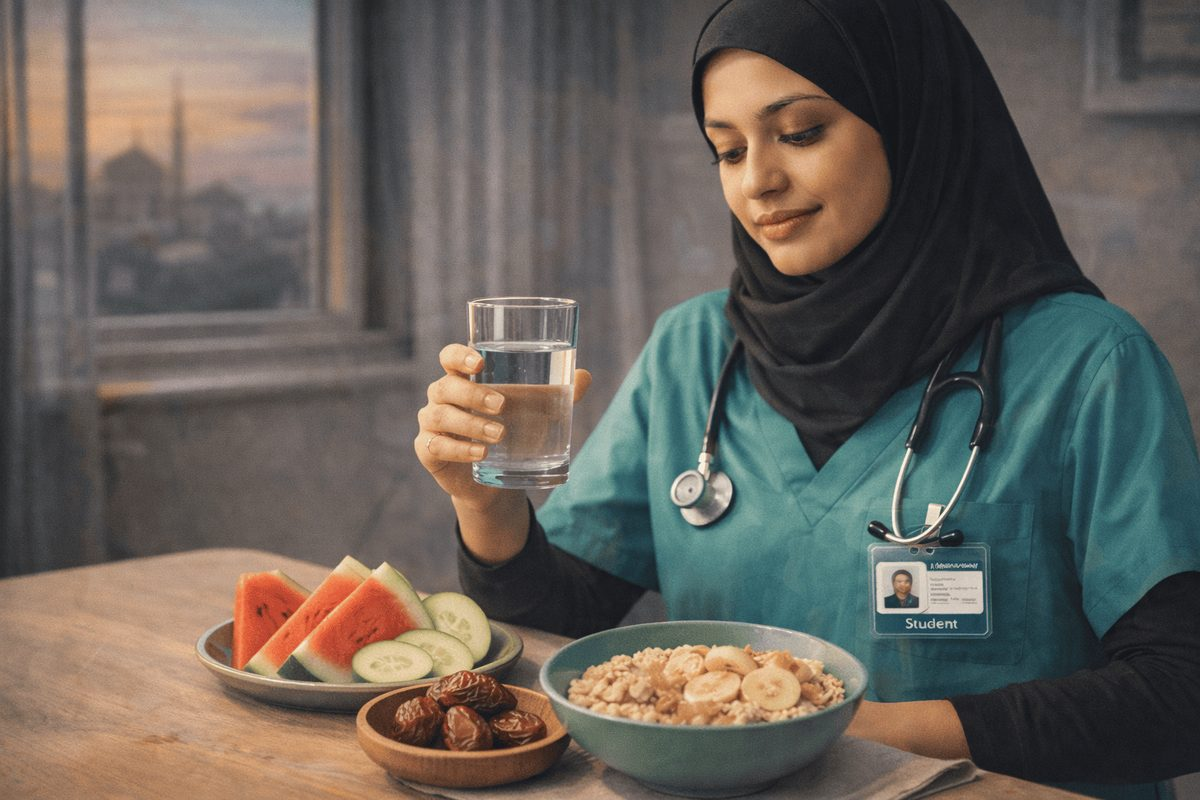
Hydration is the most critical factor for fasting nursing students. Since water cannot be consumed during daylight hours, students must maximize hydration during non-fasting times.
Use the “Evening Hydration Plan”
Instead of drinking large amounts of water all at once during Iftar, spread your intake across the evening.
For example:
1–2 glasses of water at Iftar
1–2 glasses after dinner
1–2 glasses before sleep
1–2 glasses at Suhoor
This steady approach allows the body to absorb fluids properly and prevents stomach discomfort.
Include Water-Rich Foods
Foods that contain high water content help maintain hydration levels. Examples include:
Watermelon
Cucumber
Oranges
Yogurt
Soups
These foods release fluids slowly and help reduce thirst during clinical hours.
Limit Dehydrating Drinks
Caffeine increases urine output. Many nursing students rely on coffee during placements, but during Ramadan it is important to reduce caffeine intake gradually to prevent withdrawal headaches.
Choose:
Herbal tea
Warm milk
Fresh juices (in moderation)
Balanced hydration reduces the risk of dizziness and fatigue during shifts.
The Importance of a Balanced Suhoor for Clinical Placement Days
Suhoor is the meal that supports you throughout your clinical placement day. Skipping Suhoor may increase weakness and concentration difficulties.
A strong Suhoor should include:
Complex carbohydrates (oats, whole-grain bread)
Protein (eggs, yogurt, beans)
Healthy fats (nuts, seeds)
Fruits and vegetables
Complex carbohydrates digest slowly and provide long-lasting energy. Protein supports muscle function, especially if you are lifting or assisting patients. Healthy fats help maintain fullness.
Avoid salty foods because they increase thirst. Also avoid excessive sugary foods, as they may cause rapid energy crashes later in the day.
Managing Energy During Clinical Hours
Even with good preparation, fasting students may feel tired during placements. Managing energy wisely is essential.
Pace Your Physical Activity
Clinical placements involve constant movement. Try to:
Combine tasks when possible
Organize patient care efficiently
Ask for help when lifting or repositioning
Smart planning conserves energy.
Take Short Rest Moments
If appropriate and safe, sit briefly during documentation or handover. Even a few minutes of rest can reduce dizziness and muscle fatigue.
Monitor Your Body
Pay attention to warning signs such as:
Severe dizziness
Blurred vision
Rapid heartbeat
Confusion
If symptoms become serious, patient safety must come first. It is important to seek medical advice if needed.
Maintaining Focus and Patient Safety While Fasting
Patient safety is the highest priority during clinical placements. Fasting should never compromise safe practice.
Double-Check Calculations
Fatigue can affect mathematical accuracy. Always double-check medication calculations with your supervising nurse.
Communicate Clearly
If you feel unwell, inform your clinical instructor. This is not weakness—it is professional responsibility.
Use Checklists
Following structured procedures reduces errors and supports safe care delivery.
Maintaining professionalism ensures that fasting does not interfere with academic performance or patient wellbeing.
Emotional and Spiritual Wellbeing During Placement
Ramadan is spiritually uplifting, but placements can be emotionally intense. Students may encounter suffering, emergencies, or end-of-life care.
To maintain emotional balance:
Practice deep breathing
Reflect quietly during breaks
Stay connected with supportive friends or family
Remember your intention for fasting
Spiritual strength can improve patience and compassion, qualities that are essential in nursing.
Night Placements During Ramadan
Some nursing students complete evening or night placements. This schedule can be challenging during Ramadan.
To manage night placements:
Hydrate fully before the shift
Eat a balanced Iftar
Rest properly during the day
Keep Suhoor simple but nutritious
Adjusting sleep is crucial for mental clarity.
When Health Comes First
Islam allows flexibility if fasting harms health. If a nursing student experiences significant medical issues, it is important to consult a healthcare professional or religious advisor.
Your health and patient safety are always priorities.
Frequently Asked Questions
Can nursing students fast during clinical placements?
Yes, many students fast successfully by planning hydration, sleep, and nutrition carefully.
What should I eat at Suhoor before a placement?
Choose complex carbohydrates, protein, healthy fats, and water-rich foods to maintain energy and hydration.
How can I avoid dizziness while fasting on placement?
Stay well hydrated during non-fasting hours, avoid salty foods, and monitor warning signs during the shift.
Should I tell my clinical educator that I am fasting?
Yes, professional communication helps create understanding and support if needed.
What if I feel unwell during placement while fasting?
Patient safety comes first. Inform your supervisor and seek medical advice if symptoms are severe.
Conclusion: Fasting Safely and Successfully During Clinical Placements
Managing fasting during clinical placements in Ramadan requires preparation, awareness, and responsibility. With structured hydration, balanced meals, good sleep, and smart energy management, nursing students can balance their spiritual commitments with professional obligations.
Clinical placements are a time for growth and learning. Ramadan is a time for reflection and discipline. With careful planning, both experiences can strengthen resilience, compassion, and dedication to nursing.
The key is preparation, communication, and prioritizing safety—for yourself and for your patients.