
Burnout is something many nursing students experience, but very few recognise early. Most students only realise they are burned out when their grades drop, their health suffers, or they start dreading placements. By that stage, burnout is already serious and harder to recover from.
Nursing students face unique pressures. Long study hours, clinical placements, emotional exposure to patients, financial stress, and constant assessment deadlines can slowly drain energy and motivation. Unlike short-term stress, burnout builds quietly over time. It does not appear overnight, and it does not always look dramatic at first.
This article explains burnout warning signs in nursing students before it becomes serious, with a strong focus on early signs, practical changes students can make, and when professional help is needed. The goal is to help nursing students recognise burnout early and protect both their mental health and academic future.
What Burnout Really Means for Nursing Students
Burnout is not the same as feeling tired or stressed before exams. Burnout is a state of ongoing physical, emotional, and mental exhaustion caused by long-term pressure without enough recovery. For nursing students, burnout often develops slowly across semesters and placements.
In nursing education, burnout can affect concentration, empathy, confidence, and motivation. Students may still attend classes and placements, but internally feel numb, detached, or overwhelmed. Because nursing students are often high achievers, many ignore early symptoms and push themselves harder, which actually makes burnout worse.
Understanding what burnout is helps students realise that it is not a personal failure. It is a response to prolonged stress, and it can happen even to motivated and capable students.
Early Burnout Warning Signs Nursing Students Often Ignore

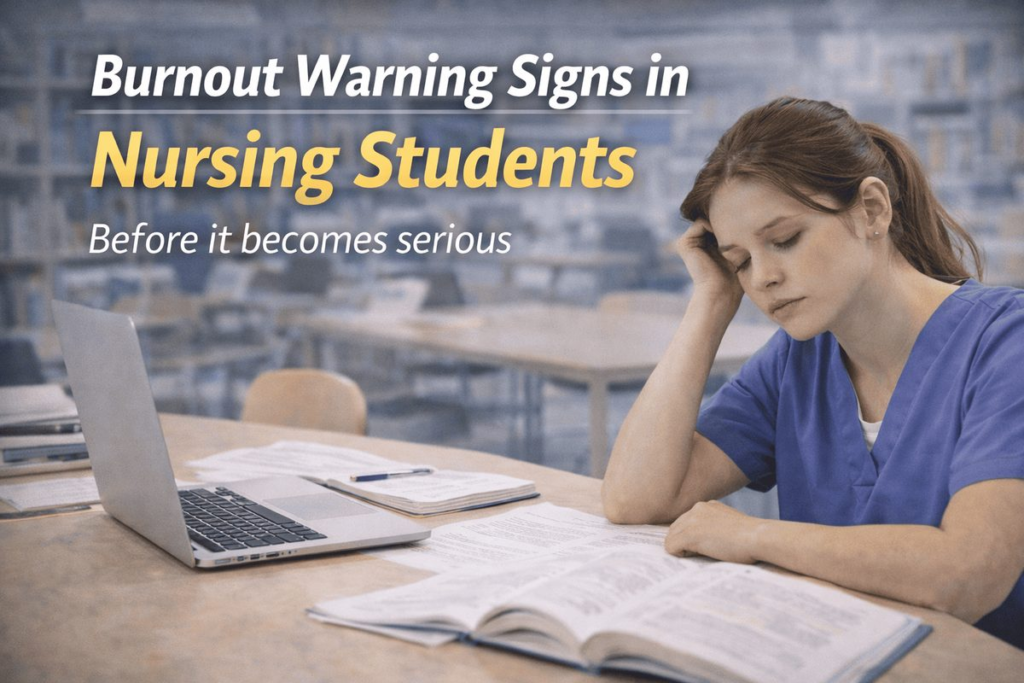
“Nursing student struggling to concentrate while studying, illustrating early mental and emotional burnout signs.”
The early signs of burnout are usually subtle, which is why many students miss them. These signs often appear weeks or months before serious problems begin.
One common early sign is constant mental exhaustion. Nursing students may feel tired even after sleeping well. Studying feels heavier than usual, and simple tasks require much more effort. Students may notice they are rereading the same material without absorbing it.
Another early sign is emotional detachment. Nursing students might feel less emotionally connected to patients, classmates, or even their own goals. Tasks that once felt meaningful may start to feel pointless or draining. This emotional distancing is often the mind’s way of coping with overload.
Irritability is also an early warning sign. Small things may trigger frustration, such as group work, feedback from tutors, or minor placement challenges. Students may feel guilty for being irritable but not understand why it is happening.
Loss of motivation is another key sign. Nursing students may start procrastinating more, skipping lectures, or delaying placement preparation. This is not laziness; it is often a sign of emotional exhaustion.
Physical symptoms can also appear early. These include headaches, stomach problems, frequent colds, muscle tension, or changes in sleep patterns. When stress stays in the body for too long, it begins to show physically.
Recognising these signs early is critical. Burnout does not suddenly appear — it grows quietly.
Academic and Placement Signs That Burnout Is Developing

Burnout often shows itself in academic and clinical performance before students realise what is happening.
Academically, nursing students may notice difficulty concentrating during lectures or while studying. They may feel overwhelmed by assignments that previously felt manageable. Confidence may drop, leading students to doubt their abilities even when their past performance was strong.
On clinical placement, burnout may appear as increased anxiety before shifts, emotional numbness during patient care, or feeling disconnected from the healthcare team. Students may start counting the hours until the shift ends rather than engaging with learning opportunities.
Some students experience intense self-criticism during placement. Small mistakes feel devastating, and feedback may be taken very personally. This emotional sensitivity is often linked to exhaustion rather than lack of competence.
Burnout can also reduce empathy. Students may feel guilty for not feeling as compassionate as they believe they should. This guilt can worsen burnout, creating a cycle of emotional exhaustion.
Practical Changes Nursing Students Can Make Early
Burnout recovery does not always require major life changes. Small, practical adjustments made early can significantly reduce burnout risk.
One important change is setting realistic daily expectations. Nursing students often overload themselves with long to-do lists. Breaking tasks into smaller, achievable steps helps reduce mental pressure and creates a sense of progress.
Time boundaries are also essential. Studying endlessly without breaks does not improve learning and increases exhaustion. Scheduling regular breaks, even short ones, helps the brain recover and improves focus.
Sleep is another critical factor. Many nursing students sacrifice sleep to study more, but lack of sleep increases emotional reactivity and reduces concentration. Protecting sleep is not laziness; it is essential for learning and mental health.
Nutrition and hydration also affect burnout. Irregular meals, excessive caffeine, and dehydration can worsen fatigue and anxiety. Simple routines, such as regular meals and drinking water, support both physical and mental resilience.
Emotionally, nursing students benefit from talking about their experiences. This can be with classmates, friends, or trusted family members. Keeping stress hidden often makes burnout worse.
Learning to say no is another protective skill. Nursing students may feel pressure to take extra shifts, volunteer, or overcommit. Choosing rest over constant productivity is not failure — it is self-preservation.
Why Nursing Students Delay Seeking Help
Many nursing students delay seeking help because they believe they should be able to cope. Nursing culture often values resilience, which can unintentionally discourage students from asking for support.
Some students fear that seeking help will affect their academic record or future registration. In reality, universities and professional bodies encourage early support because it prevents more serious problems later.
Others worry about being judged as weak or unprofessional. This belief is especially common among high-achieving students who are used to handling pressure independently.
Financial concerns also play a role. Some students believe mental health support is expensive, not realising that universities often provide free or low-cost counselling services.
Understanding these barriers helps students recognise that delaying help often makes recovery longer and more difficult.
When Nursing Students Should Seek Professional Help
There is a point where self-help strategies are no longer enough. Knowing when to seek help is crucial.
Professional support should be considered if burnout symptoms last for several weeks without improvement. Persistent exhaustion, low mood, anxiety, or loss of motivation are signs that extra support is needed.
Students should seek help urgently if they experience panic attacks, ongoing sadness, feelings of hopelessness, or thoughts of harming themselves. These are serious signs and require immediate support.
Academic warning notices, failed assessments, or inability to attend placement consistently are also strong indicators that professional help is needed. Seeking help early can prevent academic progression issues.
University counselling services, general practitioners, and mental health professionals are trained to support students through burnout. Using these services is a responsible and professional choice.
How Universities and Nursing Schools Can Support Burnout Recovery
Australian universities offer multiple support pathways for nursing students experiencing burnout. These may include counselling services, academic advisors, disability or wellbeing support teams, and placement coordinators.
Students can request study adjustments, placement flexibility, or academic support plans when burnout affects performance. These options exist to protect students, not punish them.
Understanding available support empowers students to seek help before burnout becomes severe.
Recovering from Burnout While Continuing Nursing Studies
Burnout recovery does not always mean stopping study completely. Many students recover while continuing their degree with appropriate adjustments.
Recovery often involves reducing pressure, improving routines, and addressing emotional stressors. With support, students can rebuild motivation and confidence over time.
Burnout does not mean nursing is the wrong career choice. Many students experience burnout during training and still become excellent nurses. Early recognition and support make recovery possible.
Final Thoughts: Burnout Is a Signal, Not a Failure
Burnout is not a weakness or a lack of commitment. It is a signal that something needs attention. Nursing students are caring for others while learning complex skills — it is natural that burnout can develop.
Recognising early warning signs, making practical changes, and seeking help when needed can prevent burnout from becoming serious. Protecting mental health is not separate from becoming a good nurse — it is part of it.
📦 SUMMARY BOX
Introduction Section:
Burnout develops slowly and often goes unnoticed by nursing students.
Early Signs Section:
Mental exhaustion, emotional detachment, irritability, and low motivation appear early.
Academic & Placement Section:
Burnout affects concentration, confidence, and placement engagement.
Practical Changes Section:
Small routine changes can significantly reduce burnout risk.
Seeking Help Section:
Early professional support prevents serious academic and mental health issues.
🔍 People Also Ask