
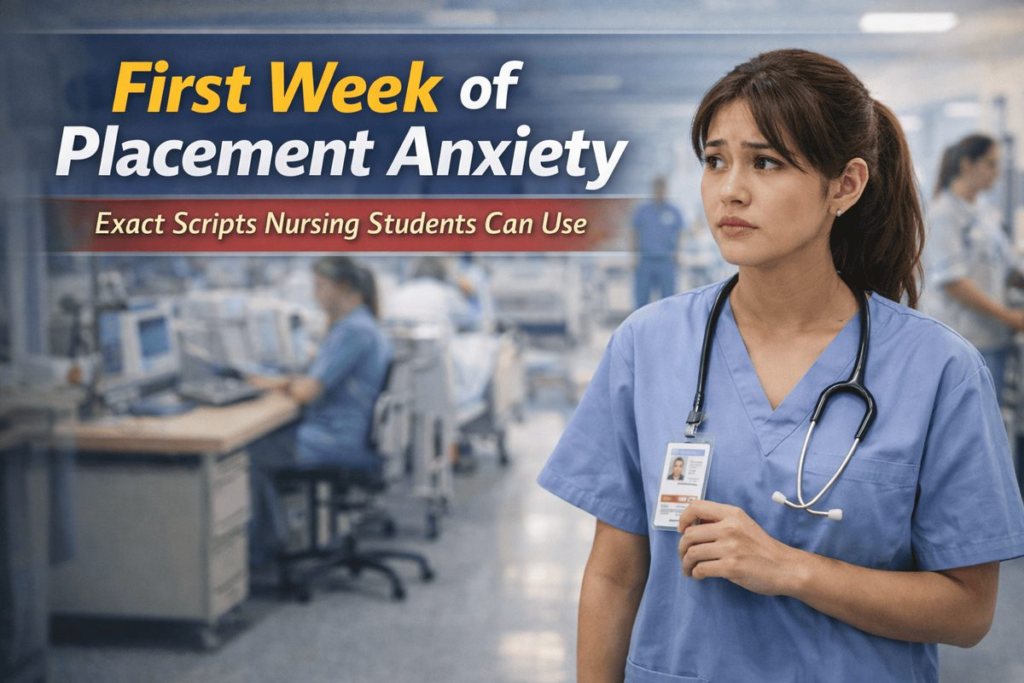
The first week of clinical placement is one of the most stressful experiences for nursing students in Australia. Even confident students often feel anxious, quiet, and unsure of themselves when they step onto a ward for the first time. Your heart races, your mind goes blank, and suddenly you forget how to introduce yourself, ask for help, or explain your limitations. This anxiety is normal, but many students suffer silently because they don’t know what to say or how to say it safely.
Most universities teach clinical skills, but very few teach real ward communication—the exact words students can use when they feel nervous, unsafe, or unsure. This article focuses on that missing gap. It gives you clear, respectful, professional scripts you can actually use on placement to reduce anxiety, protect patient safety, and show professionalism.
This guide is written especially for nursing students in Australia, including international students, and is designed to help you survive—and succeed—during your first week on placement.
1. Why the First Week of Placement Feels So Overwhelming
The first week of placement anxiety happens because everything is new at once. You are learning the ward layout, routines, staff personalities, documentation systems, and patient expectations—all while trying not to make mistakes. Many students feel pressure to “prove themselves” quickly, which can make them afraid to speak up or ask questions.
Another major reason for anxiety is fear of judgement. Students worry they will look slow, incompetent, or annoying if they ask for help. International students may also worry about their accent, communication style, or cultural differences. This fear often leads students to stay silent, nod along, or agree to tasks they are not ready for—which can be unsafe.
It is important to understand this clearly: clinical placement is a learning environment, not a test of perfection. You are not expected to know everything in your first week. What matters most is how safely and professionally you communicate. Knowing the right words to use can immediately reduce anxiety and build trust with staff.
2. How to Introduce Yourself Confidently on the Ward (Exact Scripts)
Introducing yourself properly on your first day sets the tone for your entire placement. A clear, confident, and polite introduction helps staff understand your level and makes them more willing to support you.
Many students freeze and say very little, which can make staff unsure how to involve them. Instead, a simple structured introduction works best.
Here is an exact script you can use when meeting staff on the ward:
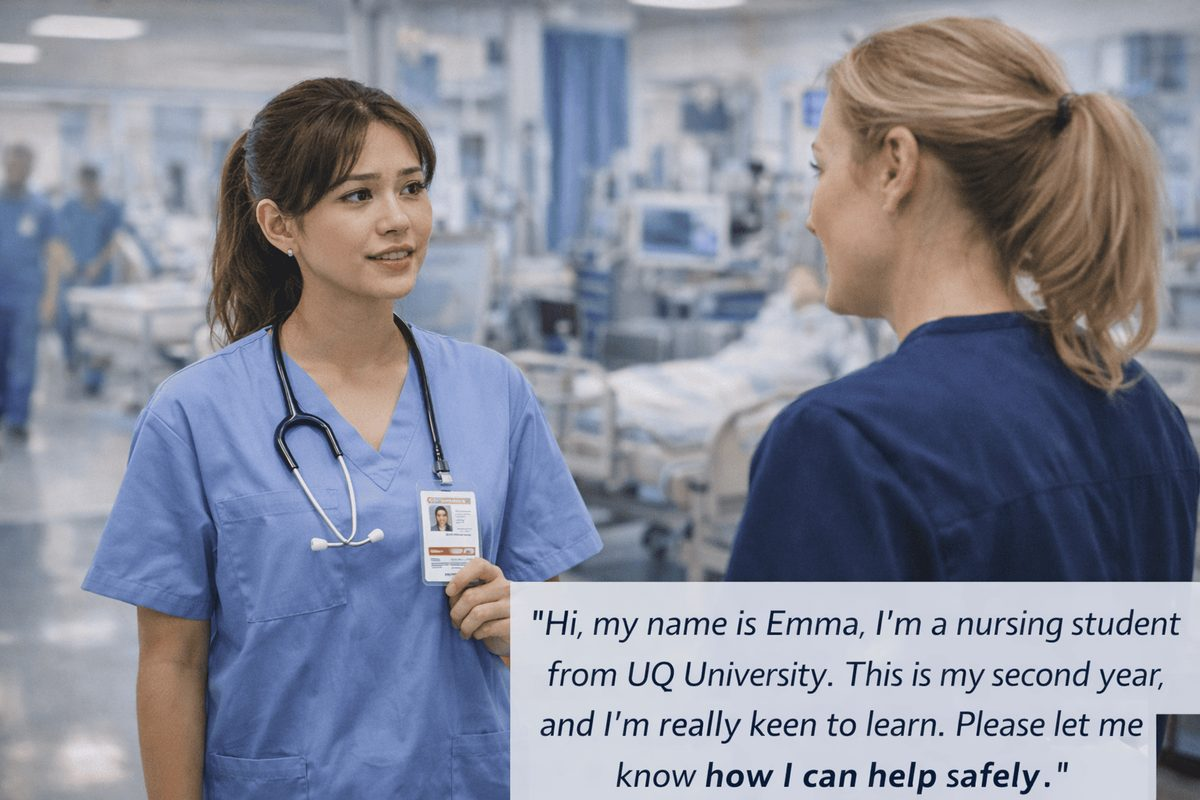
“Hi, my name is ___, I’m a nursing student from ___ University. This is my ___ year/semester, and I’m really keen to learn. Please let me know how I can help safely.”
This introduction does three important things. First, it clearly identifies you as a student. Second, it shows enthusiasm without arrogance. Third, it reminds staff that safety matters.
When introducing yourself to your preceptor or buddy nurse, you can say:
“Hi ___, I’ll be working with you today. I’ve covered basic skills like observations, hygiene care, and documentation, but I’m still learning and would appreciate guidance.”
This statement shows honesty and professionalism. It sets realistic expectations and invites support instead of judgement.
When meeting patients, a respectful introduction is essential:
“Hello, my name is ___, I’m a student nurse working with the team today. Is it okay if I help with your care under supervision?”
This reassures patients and protects you legally and ethically.
3. How to Ask for Help Without Feeling Embarrassed or Weak
Many nursing students believe asking for help makes them look incompetent. In reality, asking for help is a sign of safe practice. Registered nurses expect students to ask questions—especially in the first week.
The key is how you ask. Instead of apologising repeatedly or sounding unsure, use calm, respectful language.
If you are unsure about a task, you can say:
“I want to make sure I do this correctly. Could you please guide me through this step?”
This shows responsibility and focus on patient safety.
If a nurse looks busy and you don’t want to interrupt, try:
“When you have a moment, could I please check something with you to make sure I’m doing it safely?”
This respects their time while still advocating for yourself.
If you didn’t understand instructions, you can say:
“Just to confirm, you’d like me to ___ first and then ___, is that correct?”
This avoids mistakes and shows good communication skills.
Asking for help early prevents small errors from becoming big problems. Most nurses would rather answer a question than fix a mistake later.
4. How to Safely Say “I’m Not Competent Yet” (Without Fear)
One of the hardest things for nursing students to say is “I’m not competent yet.” Many students worry this sentence will make them look incapable or cause negative feedback. However, pretending to be competent when you are not is far more dangerous.
Australian nursing standards clearly state that students must only perform tasks within their level of competence and supervision. Saying you are not competent yet is not a failure—it is safe practice.
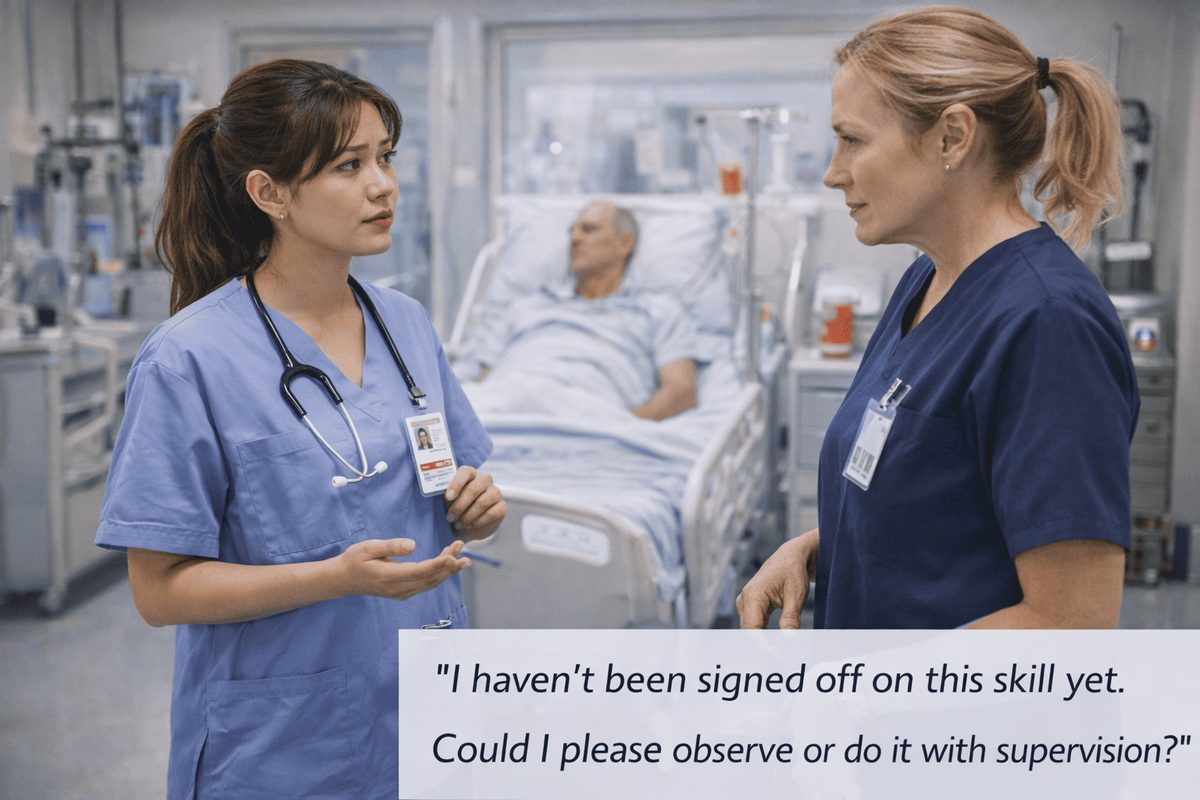
Here are safe, professional scripts you can use:
“I haven’t been signed off on this skill yet. Could I please observe or do it with supervision?”
This shows honesty and willingness to learn.
If you are asked to do something you have never done before, you can say:
“I haven’t performed this skill independently yet. I’m happy to assist or learn under supervision.”
If you feel pressured, stay calm and firm:
“For patient safety, I’m not comfortable doing this without guidance. Could we do it together?”
This language protects you, the patient, and the nurse.
Remember, competence develops over time. No one expects a first-week student to function like a registered nurse.
5. What to Say When You Make a Mistake (Because It Happens)
Mistakes can happen, especially when you are learning. What matters is how you respond. Hiding mistakes increases risk and anxiety.
If you realise you made an error or are unsure if something was done correctly, speak up immediately.
You can say:
“I want to let you know that I’m not sure if I completed this correctly. Could we please review it together?”
This shows accountability and professionalism.
If you forget something small, such as documentation:
“I realised I missed documenting ___. I wanted to let you know so it can be corrected.”
Nurses respect honesty far more than silence. Owning mistakes early builds trust and protects patients.
6. Managing Anxiety Internally During the First Week
Even with the right words, anxiety can still feel overwhelming. Your body may react with sweating, shaking, or mental blankness. This does not mean you are weak—it means you care.
Simple strategies help regulate anxiety during placement. Take slow breaths before speaking. Remind yourself that you are a learner. Focus on one task at a time instead of trying to impress everyone.
After each shift, reflect on what went well instead of only what went wrong. Confidence builds gradually, not overnight.
If anxiety becomes intense or constant, speak to your clinical facilitator or university support services. Early support prevents burnout.
7. Final Words: Confidence Comes From Communication, Not Perfection
Your first week of placement is not about being perfect. It is about being safe, honest, and willing to learn. Knowing what to say gives you power. Clear communication protects you, your patients, and your future career.
You deserve support, respect, and guidance. Use these scripts as tools—not as weakness—but as signs of professional maturity.
Frequently Asked Questions
1. Is it normal to feel anxious in the first week of placement?
Yes. Almost all nursing students experience anxiety in their first week.
2. Will I fail placement if I say I’m not competent yet?
No. Saying this shows safe practice and professionalism.
3. What if nurses think I’m slow or annoying?
Asking questions safely is expected and respected in nursing education.
4. Can international students use these scripts?
Yes. These scripts are especially helpful for international students.
5. What if my anxiety feels overwhelming?
Speak to your facilitator or university support services early.