

Summary
The healthcare industry is evolving more quickly than in the past. The stereotype of a nurse using only a clipboard and a stethoscope is becoming less common as 2026 progresses. Nursing is evolving into a high-tech field where clinical expertise and digital tools are equally crucial. Every hospital ward and community clinic now relies heavily on technology, from wearable sensors that monitor heart rates from a distance to Artificial Intelligence (AI) assisting with patient notes. Being “good with computers” is not enough to stay relevant for nursing students and practicing professionals; they also need to acquire a particular set of digital health abilities.
In 2026, data-driven decision-making has taken precedence over basic data entry. It is required of nurses to act as a link between sophisticated technology and human care. This essay, which is designed in plain English to help you get ready for the future of healthcare, breaks down the fundamental digital skills you need to succeed in this new era. These abilities will be the cornerstone of your career whether you work at a remote telehealth facility or a large metropolis hospital.
AI Literacy and Clinical Decision Support
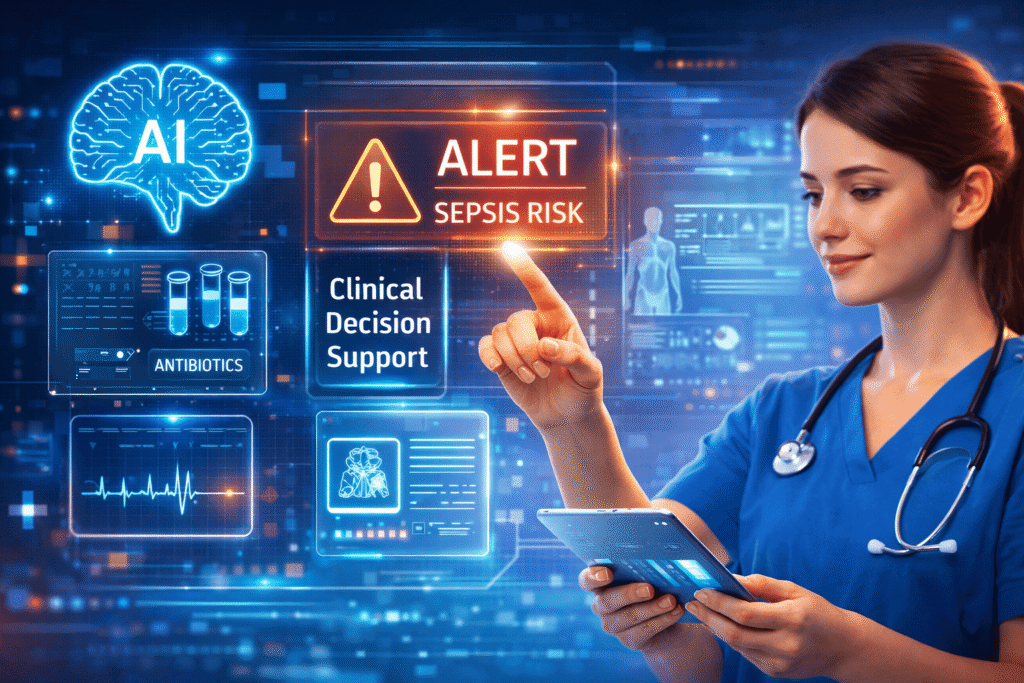
By 2026, artificial intelligence (AI) will be a commonplace element in the nursing workflow rather than a future idea. It’s not necessary to know how to write code to be AI literate, but you must comprehend how AI tools function to help you. The introduction of Clinical Decision Support Systems (CDSS) is one of the most significant changes. These are intelligent software applications that evaluate patient data in real time and “flag” possible hazards, including a high chance of a fall or an early indication of infection. In 2026, a nurse must be able to decipher these notifications without becoming “robot-dependent.”
Ambient intelligence in patient rooms is another significant AI trend. These devices automatically record a nurse’s actions using sensors and microphones, such as “Patient turned at 10:00 AM” or “Medication administered.” The amount of time spent “charting” at the end of a shift is greatly decreased as a result. Nonetheless, nurses need to be able to examine and confirm the accuracy of these automated notes. It is becoming a fundamental prerequisite for professional registration to comprehend the ethics of AI, such as identifying bias in algorithms or protecting patient privacy.
Remote Patient Monitoring and Wearable Tech
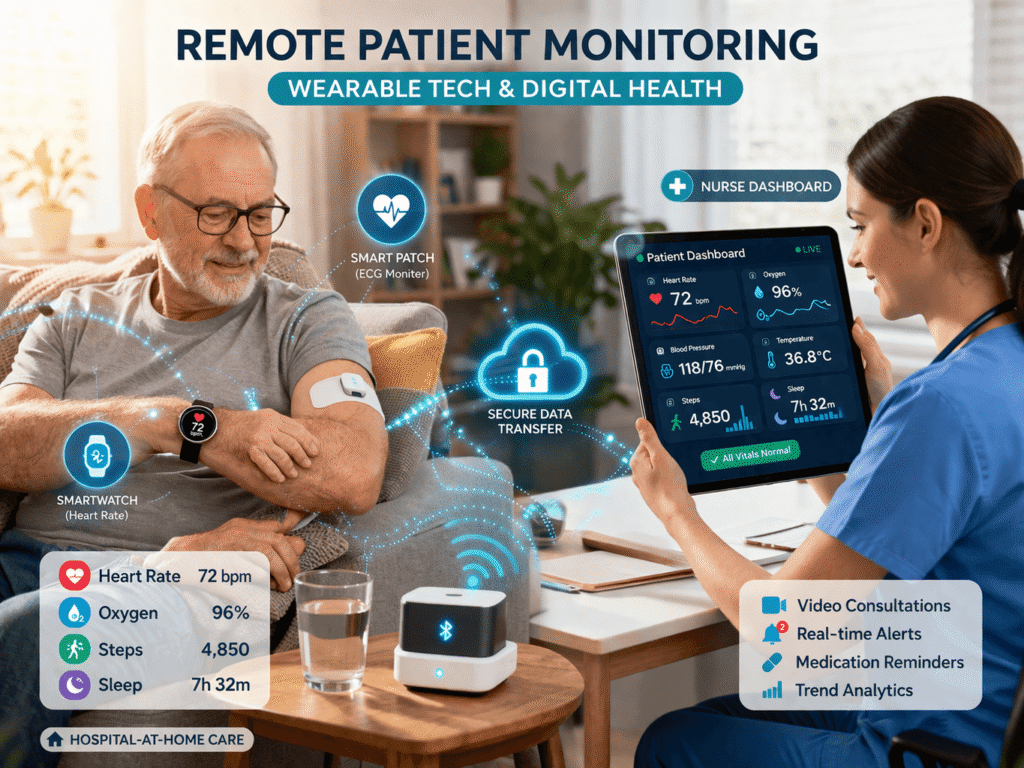
In 2026, the hospital of choice is frequently the “Hospital at Home.” Many patients who were formerly kept in hospital beds are now watched from their living rooms as a result of the growth of Remote Patient Monitoring (RPM). These days, nurses are “data navigators” who keep an eye on constant streams of data from smart patches, medical-grade wearables, and even “smart beds.” Digital triage is a new skill needed for this. You must be able to determine which “red alert” is a real emergency and which is simply a sensor that has run out of battery by looking at a dashboard of fifty patients at home.
In this regard, nurses must also be instructors. You’ll spend a lot of time teaching patients, particularly the elderly, how to wear their devices, sync them with an app, and solve simple connectivity problems. This “digital health coaching” is essential. The data will be inaccurate and the care will be compromised if a patient does not comprehend their wearable technology. In order to ensure that technology closes the care gap rather than creating a “digital divide” for those who are less tech-savvy, a great nurse in 2026 must also be a great digital educator.
Advanced Telehealth and Virtual Care Models
Telehealth is now much more than just video calls. Virtual nursing will become widely used in 2026. In this concept, a skilled nurse uses high-definition cameras and screens to keep an eye on many hospital rooms while helping the bedside nurse with duties like verifying high-risk drugs, making admissions, or educating patients. You must have outstanding virtual communication abilities to be successful in this position. You need to be able to conduct visual evaluations via a screen, establish trust, and portray empathy.
“Hybrid Models” where care is divided between in-person visits and digital check-ins are another aspect of virtual care. Nurses must be adept at using interoperable Electronic Health Records (EHR) that communicate with one another across various clinics and secure messaging platforms. Using a digital platform to manage a multidisciplinary team that includes social workers, doctors, and therapists is a highly sought-after expertise. By ensuring that nothing is lost in translation, nurses who are adept at handling these virtual “handovers” greatly increase patient safety.
Cybersecurity and Data Privacy Awareness
Healthcare is becoming vulnerable to hackers as it grows more digital. In 2026, cybersecurity is a patient safety issue as well as an IT issue. Medication orders may be altered or patient vitals may not update if a hospital’s system is compromised. The “first line of defense” against these dangers is frequently the nurse. You must be proficient in digital hygiene, which includes utilizing multi-factor authentication, spotting phishing emails, and making sure mobile devices used for patient care are always safe.
In 2026, privacy will likewise be more complicated. Nurses need to be proficient in digital consent when using smart cameras and home sensors. You must be able to clearly explain to a patient what information is being gathered, who has access to it, and how it is safeguarded. This fosters “Digital Trust,” which is necessary for patient cooperation. A serious legal and ethical violation may occur if a nurse unintentionally leaves a tablet unlocked or divulges private information over an unencrypted chat. Nowadays, safeguarding “Digital Privacy” during a bedside procedure is just as crucial as safeguarding physical privacy.
Digital Professionalism and Information Literacy
Digital professionalism is the last and possibly most crucial ability for 2026. This relates to your online behavior in both your personal and professional life. Given that patients commonly use “Dr. Google” or Google their ailments, nurses must possess good information literacy. You must be able to direct patients away from “medical misinformation” on social media and toward excellent, evidence-based digital resources. You are now a “filter” for the enormous amount of information that is accessible online rather than only a source of knowledge.
In 2026, nurses will also use digital identities for learning and networking. This entails taking part in specialist nursing forums or professional “Communities of Practice” on websites like LinkedIn. But you have to keep up a polished “Digital Footprint.” It is a non-negotiable skill to understand the bounds of social media, such as never sharing personally identifiable information about a patient or criticizing a place of employment online. Using technology to improve your professional reputation and keep up with the most recent medical research is what it means to be a digitally fluent nurse.
People Also Ask (FAQ)
Q: Do I need to be a “tech genius” to be a nurse in 2026?
No. Being a computer scientist is not required. All you need is “Digital Confidence.” This entails having a basic understanding of troubleshooting techniques, being receptive to learning new tools, and comprehending the “why” behind the technologies you use on a daily basis.
Q: Will AI replace bedside nurses in 2026?
Not at all. AI is excellent at seeing patterns and handling paperwork, but it is unable to give complex medical treatment, emotional intelligence, or empathy. AI is not a substitute for human interaction in nursing, but rather a tool to free up more time for it.
Q: How can I improve my digital health skills while I am still a student?
Utilize VR (Virtual Reality) training and EHR systems in Simulation Labs. Get comfortable using various applications and wearables to monitor your own health, and keep up with the latest developments in digital health on reliable websites such as HIMSS.
Q: What is “Alert Fatigue” and how do I avoid it?
When a nurse receives so many digital notifications that they begin to disregard them, it is known as alert fatigue. By 2026, nurses will have received training on how to “customize” their digital settings and apply critical thinking to differentiate between a “nuisance alarm” and a “critical alert.”
Q: Are digital health skills required for nursing registration in Australia?
Indeed. Digital literacy is becoming included in regulatory organizations like the NMBA’s “Professional Standards.” To keep your registration active, you must be able to prove that you can use medical technology in a safe and efficient manner.
Useful Documents for every Nursing Student
CV Section Template for Nursing students
AHPRA – NMBA Registration Document Checklist (International Students-Graduates)
Clinical Placement Reflection Template (NMBA-aligned)
Cover Letter Template for Nursing Students
Disclaimer: “I researched this information on the internet; please use it as a guide and also reach out to a professional for assistance and advice.This information is not medical advice, so seek your medical professional’s assistance.”