

Summary
High-stress workplaces, frequent travel, and the emotional burden of patient care define the life of a nurse or midwife. A planned nutritional strategy becomes crucial when these work responsibilities coincide with the holy month of Ramadan. Fasting is not only a spiritual activity for healthcare professionals; it is a metabolic challenge that needs to be controlled to guarantee that patient safety is never jeopardized by clinician or mother exhaustion. The food you select for Suhoor and Iftar serves as your main biological fuel, whether you are managing a busy hospital during a double shift or helping with a delivery that takes hours.
This manual is intended especially for midwives, registered nurses, and nursing students. We’ll go into great detail on the science behind “slow-burn” energy, the need of staying hydrated in dry hospital air, and how to plan your meals to prevent the dreaded “post-Iftar crash.” You can sustain your energy and mood throughout the month by managing your diet with the same attention to detail that you use to prescription dosages.
The Art of the “Slow-Burn” Suhoor for Clinical Endurance
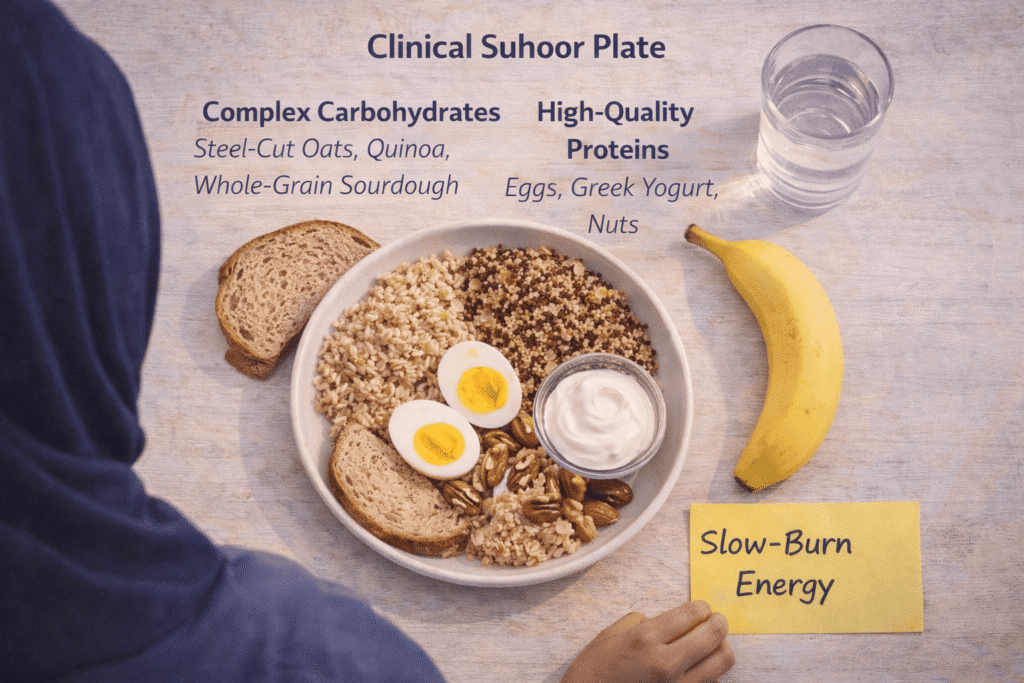
Suhoor is the most significant meal of the day for a nurse beginning a 12-hour workday. This is your last chance to “load” your body with the nutrients needed to maintain mental clarity and physical stamina until dusk. Midwives need to be especially careful not to miss this meal since they may experience unforeseen physical exertion during labor support. A “Clinical Suhoor” aims to deliver glucose into the bloodstream steadily, avoiding the dramatic peaks and valleys that cause irritability and “brain fog” around noon.
Your meal needs to be centered around complex carbs and high-quality proteins in order to produce this “slow-burn” effect. High levels of fiber can be found in complex carbohydrates including steel-cut oats, buckwheat, quinoa, and whole-grain sourdough. By acting as a “braking system” for digestion, this fiber makes sure that energy is released gradually over the course of six to eight hours rather than all at once. Blood sugar is further stabilized when these are combined with proteins like eggs, Greek yogurt, or cottage cheese. At Suhoor, nurses should steer clear of “white” carbohydrates (such as white bread or sugary cereals) since they trigger a fast insulin rise that leaves you feeling weak and worn out by the time you get to your midmorning medication rounds.
Strategic Hydration: Managing the “Dry Hospital” Factor
The hospital setting itself is one of the unspoken difficulties faced by nurses and midwives. In order to stop some infections from growing, healthcare facilities are climate-controlled to be extremely dry. However, this dry air greatly increases “insensible water loss” through your skin and breath. Your hydration plan needs to be aggressive during the non-fasting hours because you are not allowed to consume water during your shift. Due to its direct effects on short-term memory and concentration, dehydration is a major contributor to nursing errors.
The quality of your fluid retention is more important for remaining hydrated than the amount of water you consume during Suhoor. Your kidneys will simply eliminate two liters of plain water within an hour if you drink them right before dawn. Rather, concentrate on electrolyte-rich hydration. Your cells can “grip” the moisture if you add a little sea salt to your water or eat foods high in potassium, such as bananas, avocados, and coconut water. Additionally, midwives should include “water-rich foods” like watermelon or cucumbers in their Suhoor. These foods have a “time-release” hydration impact that can prevent your mouth from becoming dry during a long shift because they release their water content gradually as they are digested.
Iftar: Reclaiming Energy Without the “Food Coma”

The temptation to overindulge in fried, salty, or sugary foods at Iftar is strong after a demanding day on the ward. A big Iftar, however, may be detrimental to a healthcare professional. Your body diverts a significant quantity of blood flow to the digestive system in order to metabolize a large, high-fat meal after a fast. As a result, the brain receives less blood, which causes “post-prandial somnolence” the well-known “food coma.” This loss of mental clarity is a significant setback for a nurse starting a night shift or a nursing student who must study in the evening.
The traditional approach of breaking your fast with dates and water is the most effective. Water starts the rehydration process, while dates provide your brain an instantaneous boost of natural fructose. Switch to a “balanced plate” with 25% lean protein, 25% complex carbohydrates, and 50% fiber-rich vegetables after taking a 10-minute break for prayer or relaxation. Because they supply the magnesium and vitamin C required for muscular rehabilitation following a day of standing, vegetables are essential. Steer clear of “heavy” fried foods like deep-fried chicken or samosas as your primary energy source because they cause heartburn and tiredness, which makes it hard to stay focused or active for the remainder of the evening.
Managing Electrolytes and Micronutrients for Midwives
The body’s reserves of magnesium and B vitamins might be depleted by the high levels of physical and mental stress that midwives frequently endure. Magnesium is crucial for relaxing muscles and avoiding the leg cramps that many nurses experience during extended shifts. It is more difficult to restock these stores throughout Ramadan. At both Suhoor and Iftar, a midwife’s diet plan should deliberately incorporate items high in magnesium, like spinach, pumpkin seeds, and dark chocolate (in moderation).
Moreover, the “spark plugs” of the human energy system are B vitamins, particularly B12 and B6. They aid in the conversion of food into ATP, or cellular energy. During Ramadan, nursing students who are having trouble remembering clinical notes should make sure they are consuming enough lean meats, eggs, and fortified cereals. See a pharmacist about a high-quality B-complex vitamin to take at Iftar if you discover that, despite careful meal preparation, your energy levels are consistently low. Your nervous system can withstand the “double stress” of a hectic clinical rotation and the fast if you maintain optimal vitamin levels.
Meal Prep Hacks for the Busy Healthcare Student
The most valuable resource in a nurse’s life is time. There is frequently very little time left over after 12-hour shifts, commuting, and sleeping. When Iftar time comes, the only way to make sure you don’t turn to fast food or unhealthy hospital vending machines is to prepare your meals in advance. Meal preparation should be “modular” for nurses, which means you should prepare separate ingredients that may be swiftly put together into various meals based on time constraints.
Cook a huge pot of grains, such as quinoa or brown rice, boil a dozen eggs, and roast a large tray of vegetables on one day of the week, such as Sunday. Keep these in sealed receptacles. For Iftar, you can reheat your pre-roasted vegetables and serve them with a pre-cooked protein like grilled chicken or chickpeas. At Suhoor, you can quickly put an egg and some grains into a bowl for a two-minute “power meal.” This “assembly line” approach to nutrition ensures that you always have a high-quality, SEO-optimized (Scientifically Energy Optimized) meal ready to go and lessens the mental strain of making decisions when you’re tired.
People Also Ask (FAQ)
Q: Can I drink coffee at Suhoor to stay awake during my shift?
In general, avoiding coffee at Suhoor is preferable. As a diuretic, caffeine causes your body to expel water. Faster dehydration and a “caffeine headache” by midday may result from this. At Iftar, when you can still drink water to make up for the fluid loss, try having a small cup of tea or coffee if you need a caffeine boost.
Q: What should I do if I feel dizzy while assisting in a procedure?
The top priority is patient safety. You may be suffering from severe dehydration or hypoglycemia (low blood sugar) if you feel lightheaded, unsteady, or disoriented. Notify your supervisor right away. If fasting puts your health at jeopardy or prevents you from performing life-saving tasks, there is a medical exemption in Islam. In an emergency, the responsible clinical decision is to break your fast with a quick source of glucose.
Q: How can I prevent the “thirst” feeling during a long shift?
Avoiding high-sodium (salty) foods at Suhoor is the easiest strategy to avoid thirst. Salt quickly causes you to feel thirsty because it draws water out of your cells. Eat only “water-rich” meals, such as fruits, cucumbers, and yogurt, and try not to rush your exercise.
Q: Is it okay to take my vitamins on an empty stomach at Suhoor?
Certain vitamins, particularly fat-soluble ones like A, D, E, and K, might make you sick if you take them without meals. To ensure that your vitamins are effectively absorbed and do not disturb your stomach while you are on duty, it is normally better to take them in the middle of your Iftar or Suhoor meal.
Q: What are the best “grab-and-go” snacks for a nurse’s locker?
Seek out foods that provide a healthy mix of protein and fiber. Good options include individual packs of olives, low-sugar protein bars, dates filled with almond butter, and raw nuts. These offer a little energy boost without the “sugar crash” that comes with chips or candies.
Useful Documents for every Nursing Student
CV Section Template for Nursing students
AHPRA – NMBA Registration Document Checklist (International Students-Graduates)
Clinical Placement Reflection Template (NMBA-aligned)
Cover Letter Template for Nursing Students
Disclaimer: “I researched this information on the internet; please use it as a guide and also reach out to a professional for assistance and advice.This information is not medical advice, so seek your medical professional’s assistance.”