

Summary
One of the most difficult and very personal choices a Muslim woman may have to make is whether to fast during Ramadan while pregnant or nursing. On the one hand, there is the spiritual need to take part in a month full of fellowship and blessings. The biological obligation to support a developing life or a nursing infant is the other. In this journey, midwives are essential because they serve as a link between medical safety and religious tradition.
This article offers advice that respects the holiness of the fast as well as the importance of maternal and newborn health by thoroughly examining the health effects of fasting during these life stages. Knowing the physiological alterations brought on by fasting, mothers can make informed choices that align with their faith and their physical needs.
Understanding the Religious Exemptions and Medical Priorities
According to Islamic law, protecting life and health comes before practically all other duties. Maqasid al-Shari’ah is a principle that expressly exempts anyone who would be at risk from fasting. Along with the sick and travelers, pregnant and nursing women are allowed to break their fast if they are concerned for their own health or the safety of their unborn child. Midwives frequently start their consultations by telling moms that refusing to fast is an act of obedience to the supernatural permission given for their protection rather than a sign of weak faith.
Clinically speaking, nursing and pregnancy are high-metabolic states. While a nursing mother is creating a complicated fluid that is her baby’s only source of sustenance, a pregnant woman’s body is working overtime to develop organs, tissues, and a placenta. Complications may arise if fasting results in extreme dehydration or ketosis, which occurs when the body burns fat for energy because there is not enough glucose. In order to comprehend that, depending on the particular school of thought practiced, the “debt” of the fast can typically be paid off later or resolved by Fidya (charitable feeding of the needy), midwives advise mothers to speak with both their healthcare practitioner and a reliable religious scholar.
Physical Risks: Dehydration and Blood Sugar Fluctuations
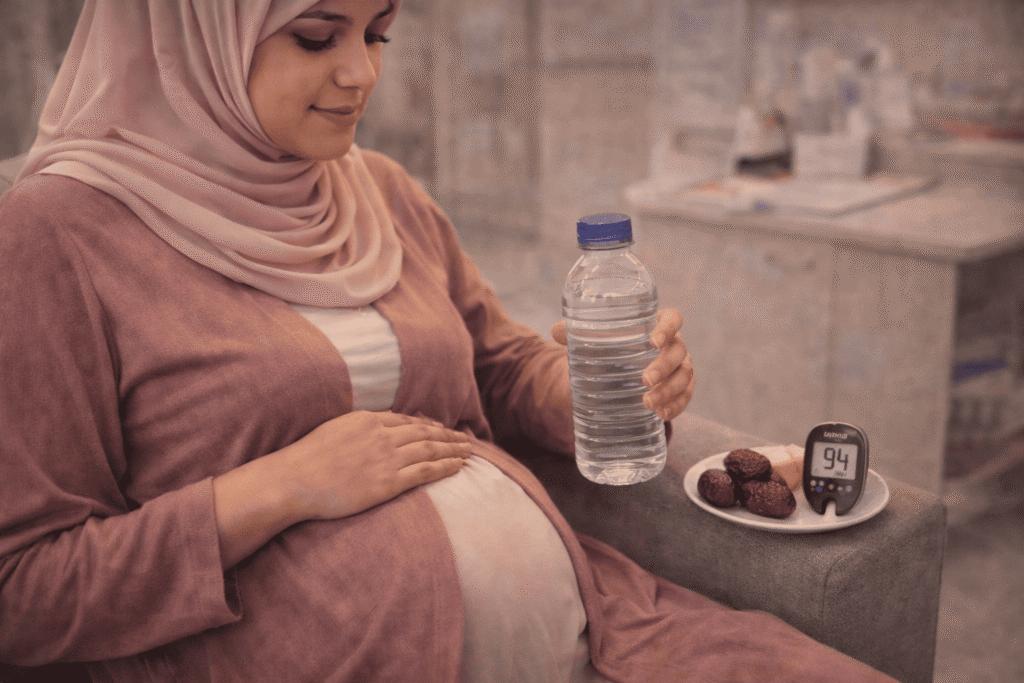
The risk of dehydration is the main worry of midwives during Ramadan, particularly in warmer climates or on long summer days. A consistent fluid intake is necessary to support the almost 50% increase in blood volume that occurs during pregnancy. Amniotic fluid levels, which are crucial for safeguarding the unborn child and promoting lung development, can drop as a result of dehydration. Severe dehydration can sometimes cause “false labor” (Braxton Hicks), which can be upsetting for the mother and necessitate medical attention.
The second significant obstacle is blood sugar control. A mother’s blood glucose levels decrease when she fasts. The liver releases stored glucose to make up for this in the majority of healthy persons. But during pregnancy, the fetus is continuously taking glucose from the mother’s circulation. Hypoglycemia, which manifests as shakiness, chills, and fainting episodes, may result from this. Because repeated decreases in blood sugar can leave a mother fatigued and unable to carry out everyday duties, midwives keep a constant eye on these levels. Low blood sugar can occasionally cause breastfeeding moms to have a brief decrease in energy, which makes it challenging to meet the physical demands of caring for a newborn.
Monitoring Fetal Growth and Infant Hydration
The midwife’s top goal when a pregnant woman fasts is to make sure the unborn child keeps reaching developmental milestones. The majority of research indicates that short-term fasting has little effect on birth weight if the mother is healthy and well-fed during non-fasting hours. But each body responds differently. Mothers learn how to keep an eye on “fetal kick counts” from midwives.” A baby may become less active if they are not getting enough energy. The midwife will advise breaking the fast right away and visiting for a check-up to assess the baby’s heart rate and fluid levels if the mother observes a noticeable decrease in movement.
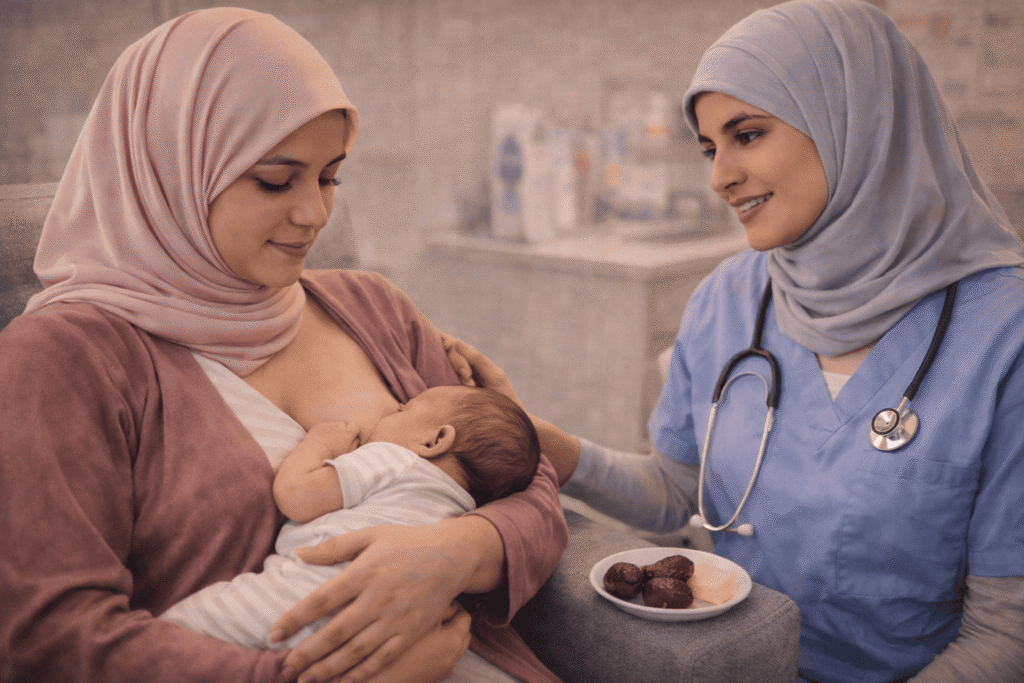
Concerns about the baby’s weight gain and hydration change for nursing moms. While the quantity (volume) of breast milk can drop if the mother is dehydrated, the quality (vitamins and minerals) of the milk typically stays constant even while fasting. The mother will receive guidance from a midwife on how to monitor her infant: Does the infant produce at least six or eight heavy, wet diapers each day? After feeding, is the baby content and calm, or is he or she acting strangely agitated and tugging at the breast? The midwife will advise the mother to cease fasting if the baby exhibits symptoms of dehydration, such as black urine or a sunken soft area (fontanelle), in order to maintain a healthy milk supply and keep the baby hydrated.
Nutritional Strategies for Mothers Who Choose to Fast
The approach for medically cleared women who decide to fast should be “quality over quantity.” Midwives stress that high-density nutrients should be consumed during the window between Iftar and Suhoor rather than “junk food” or heavy sweets. Giving the body adequate raw ingredients to keep the infant alive during the fasting hours is the aim. This entails striking a balance between “slow-burning” carbohydrates that supply a constant supply of energy, lean proteins, and healthy fats.
At Suhoor, midwives frequently recommend dishes like Greek yogurt, fruit, and overnight oats with chia seeds. A “time-release” impact of energy is produced by the protein in the yogurt and the fiber in the oats. The development of the fetus’s brain depends on healthy fats like those in avocados and walnuts, which also prolong the mother’s feelings of fullness. It is essential to break the fast during Iftar with dates and a full glass of water. A nutrient-dense soup and a well-balanced dinner of grilled chicken or fish with lots of leafy greens are what midwives advise having after this. Avoiding foods high in sodium is essential since salt can hasten the process of dehydration during the day.
The Emotional and Psychological Role of the Midwife
Midwives offer vital emotional assistance in addition to the physical examinations. When they are unable to fast, many Muslim women experience “spiritual FOMO” (fear of missing out). They could feel guilty about not “doing enough” for the holy month or cut off from their family who are celebrating together. In addition to providing a change of viewpoint, a midwife who provides culturally sensitive care will validate these emotions. They serve as a reminder to the mother that one of the most holy acts of service in the world is feeding her child, whether it is done at the breast or in the womb.
In the family, midwives also serve as mediators. When a mother doesn’t feel physically capable of fasting, she may occasionally feel pressured to do so by her in-laws or the community. The midwife can give the mother’s choice “medical weight” by outlining for the family the clinical reasons why fasting might be dangerous in her particular situation. The midwife’s advocacy lowers the mother’s stress levels, which benefits the mother and the unborn child. Regardless of whether the mother is fasting or using the permitted exemption, the midwife’s job is to make sure that she finds the tranquility that is intended to be experienced during the month of Ramadan.
People Also Ask (FAQ)
Q: Is it safe to fast during the first trimester?
If the mother has nausea or “morning sickness” during the first trimester, many midwives advise against fasting. Rapid fluid and electrolyte loss from vomiting combined with a fast can result in severe dehydration and fatigue. You should still see your midwife to make sure your blood sugar levels are steady even if you don’t feel queasy.
Q: Does fasting make breast milk less nutritious?
Studies show that short-term fasting has no discernible effect on the main nutrients in breast milk, such as calcium and protein. Certain micronutrients, such as magnesium and zinc, may, nevertheless, marginally decline. Dehydration can temporarily reduce your milk supply, thus the “quantity” rather than the “quality” is the major risk.
Q: How do I know if I should stop my fast immediately?
Studies show that short-term fasting has no discernible effect on the main nutrients in breast milk, such as calcium and protein. Certain micronutrients, such as magnesium and zinc, may, nevertheless, marginally decline. Dehydration can temporarily reduce your milk supply, thus the “quantity” rather than the “quality” is the major risk.
Q: Can I fast every other day instead of every day?
Indeed, “intermittent” fasting, fasting one day and resting the next is easier for some women to handle. As a result, the body has a day to “recharge” its glycogen and fluid reserves. Talk to your midwife about this strategy to determine whether it’s a healthy compromise.
Q: Will fasting cause me to go into early labor?
Fasting doesn’t “cause” labor in and of itself, but the dehydration it causes can raise oxytocin-like hormones, which make the uterus contract. The best defense against these contractions due to dehydration is to stay extremely hydrated during the night.
Useful Documents for every Nursing Student
CV Section Template for Nursing students
AHPRA – NMBA Registration Document Checklist (International Students-Graduates)
Clinical Placement Reflection Template (NMBA-aligned)
Cover Letter Template for Nursing Students
Disclaimer: “I researched this information on the internet; please use it as a guide and also reach out to a professional for assistance and advice.This information is not medical advice, so seek your medical professional’s assistance.”