

Summary
Ramadan is both physically taxing and spiritually significant for nursing students and medical professionals. It’s not easy to manage a 12-hour hospital shift or a full clinical rotation while fasting. It calls for careful preparation, particularly if your job entails making important decisions and ensuring patient safety.
Your own vitality, concentration, and hydration are as important when you’re taking care of other people. From Suhoor until Iftar, this guide provides realistic, doable dietary tips to keep you robust, focused, and healthy.
Make Suhoor Count
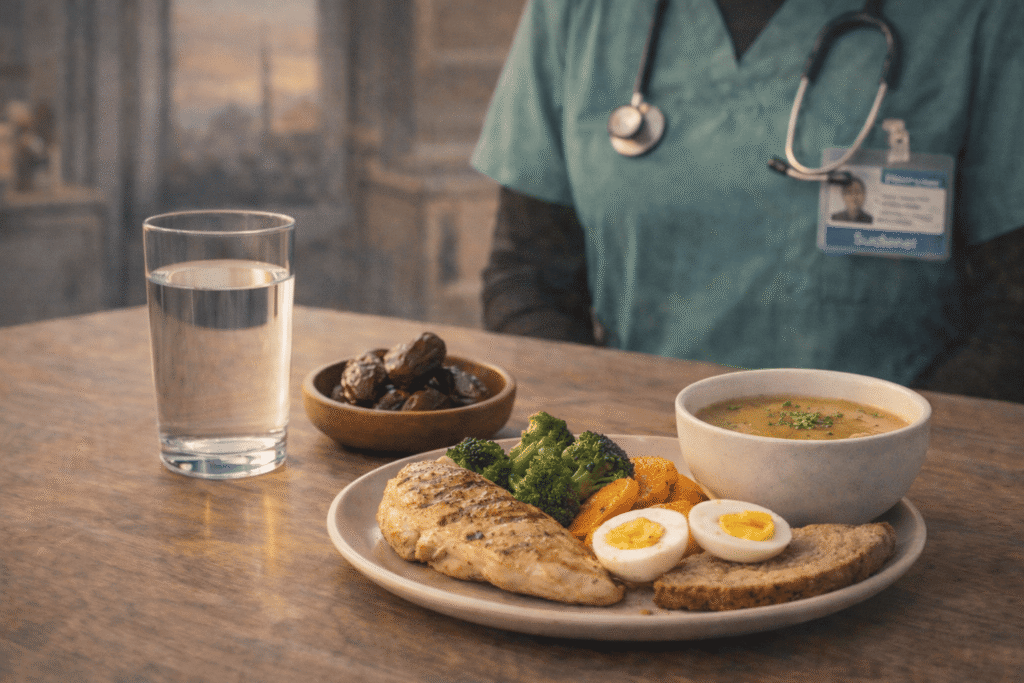
Suhoor is the cornerstone of your day, not simply another meal. Skipping Suhoor is just not an option for healthcare workers who are constantly moving between patients or nursing students who stand for hours during clinicals.
Consider your long-term fuel supply to be this meal. Select complex carbs such as brown rice, whole-grain bread, or oats. These assist you prevent unexpected crashes during your shift by releasing energy gradually. To keep your muscles strong and feel fuller for longer, pair them with high-quality protein like eggs, Greek yogurt, cottage cheese, or lentils.
Healthy fats are equally important. Satiety and energy stability can be greatly increased with a tablespoon of peanut butter, a few walnuts, chia seeds, or avocado. On the other hand, sugary cereals, pastries, or white bread may give a quick burst of energy but often lead to fatigue and brain fog by late morning.
A healthy Suhoor maintains stable blood sugar levels and mental clarity, both of which are critical for clinical decision-making and drug administration.
Be Intentional About Hydration
One of the main problems during Ramadan is dehydration, particularly in hospital settings where air conditioning can quickly cause dehydration.
Focus on maintaining consistent hydration between Iftar and Suhoor rather than consuming big amounts of water all at once. When breaking your fast, start with one or two glasses of water. After that, keep drinking often all evening. Your body can better absorb fluids if you spread out your intake.
Add meals that are hydrating, such yogurt, soups, oranges, cucumbers, and melons. These restore electrolytes lost through perspiration and movement in addition to providing fluids.
Your schedule may change if you work nights, but the basic idea is always the same: drink enough of water.
Watch out for caffeine. Caffeine increases fluid loss, even though it might feel important to have tea or coffee during lengthy shifts. To avoid withdrawal symptoms, try cutting back on your intake gradually before Ramadan and counterbalance it with extra water.
Break Your Fast the Smart Way
It’s easy to reach for fried food and decadent desserts after a demanding workday or a full day of lectures. But eating too much can make you feel lethargic and confused, especially if you have to study or work later.
The optimum strategy is one that is balanced and compassionate. To start hydrating and rapidly restoring blood sugar levels, start with dates and water. To get your digestive system ready, have a little soup afterward.
For the main course, try to:
• Lean protein (fish, beans, tofu, and grilled chicken)
• Moderate carbohydrate intake
• An abundance of vegetables
Fiber from vegetables helps avoid constipation, which is a typical problem during Ramadan because of altered eating habits and decreased fluid intake.
Keeping portions moderate helps you avoid that heavy, sleepy feeling often referred to as a “food coma.” A balanced Iftar supports both recovery and mental clarity.
Handling the Afternoon Energy Dip

An energy drop is common among nursing students between the hours of 2 and 4 PM. Because blood sugar levels are naturally lower when fasting, this can feel even more severe.
Since eating is out of the question, concentrate on energy-management techniques:
• Take a few moments to breathe deeply.
• If at all feasible, move into a cooler area.
• Douse your face with cold water.
• For a mental lift, use a revitalizing aroma, such as peppermint oil.
It’s crucial to pace yourself. When possible, give high-concentration chores priority sooner in your shift.
Communicate honestly with supervisors or clinical teachers as well. The majority of healthcare settings recognize the value of safety. Your health comes first if you feel lightheaded, faint, or confused. If you need to break your fast for medical reasons, you can do so. Long-term well-being is more important than pushing yourself beyond safe limits.
Meal Prep to Reduce Stress
Healthcare professionals and nursing students already have full schedules. During Ramadan, cooking from scratch every day can easily become too much to handle.
Preparing meals can have a significant impact. Set aside one day each week to make easy, well-balanced meals ahead of time.
For Suhoor:
- Overnight oats
- Boiled eggs
- Pre-cut fruit
- Smoothies prepared in advance
For Iftar:
- Cook larger batches of grains and proteins.
- Pre-chop vegetables for quick salads or stir-fries.
- Keep healthy snacks ready.
- Smoothies are particularly beneficial on hectic mornings.
In a short period of time, a combination of milk, nut butter, spinach, oats, and protein powder can offer significant nourishment.
By planning ahead, you can focus on your academics and patient care by avoiding last-minute unwise decisions and mental exhaustion.
People Also Ask
How can I prevent headaches while fasting and working?
Dehydration and caffeine withdrawal are typical causes of headaches. Before Ramadan, progressively cut back on caffeine use, and during the hours when you are not fasting, stay properly hydrated. Including foods high in magnesium at Suhoor, such as nuts, spinach, and pumpkin seeds, may also be beneficial.
Is it safe to work a 12-hour shift while fasting?
Yes, for the majority of healthy people, but planning is crucial. Prioritize eating Suhoor meals that are high in protein, staying hydrated during the night, and getting enough sleep. See a healthcare professional if you feel really ill, lightheaded, or confused. There are legitimate medical justifications for health-related exemptions.
What are good snacks between Iftar and Suhoor?
Choose snacks that combine protein and fiber, such as:
- Greek yogurt with berries
- Apple slices with peanut butter
- Mixed nuts
- Cottage cheese with fruit
Avoid salty or highly processed snacks, as they increase thirst the next day.
How should I manage night shifts during Ramadan?
You will have to adjust your schedule if you work nights. Before your shift starts, have your major pre-fast meal. Then, during your allotted break time, break your fast. Make sleep a priority during the day by setting up a peaceful, dark sleeping space. For sustaining performance and recuperation, getting enough good sleep is just as crucial as eating well.
For nursing students and medical professionals, Ramadan can be somewhat taxing, but it is completely manageable with careful preparation, a healthy diet, and deliberate hydration. Maintaining your physical health enables you to continue providing safe, efficient, and excellent service to others.
Useful Documents for every Nursing Student
CV Section Template for Nursing students
AHPRA – NMBA Registration Document Checklist (International Students-Graduates)
Clinical Placement Reflection Template (NMBA-aligned)
Cover Letter Template for Nursing Students
Disclaimer: “I researched this information on the internet; please use it as a guide and also reach out to a professional for assistance and advice.This information is not medical advice, so seek your medical professional’s assistance.”