

Summary
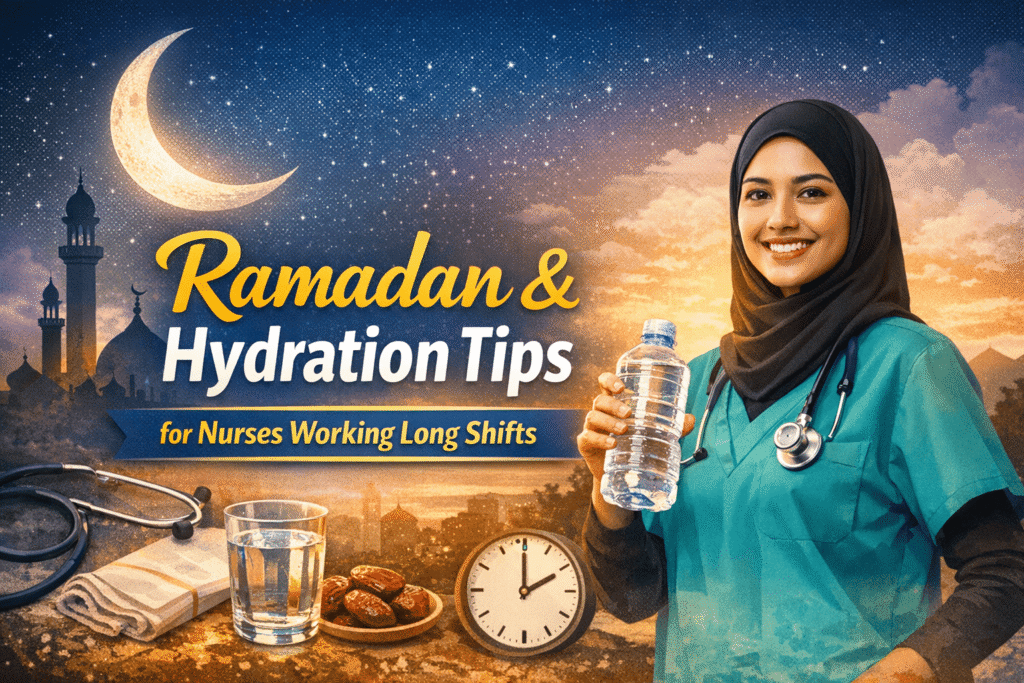
Nursing During Ramadan A Unique Challenge
Muslims all throughout the world observe Ramadan as a holy month. Fasting from sunrise to sunset is a significant spiritual practice throughout this month. Muslims abstain from food and liquids during the day in order to concentrate on introspection, prayer, and self-control.
However, Ramadan can be physically taxing for nurses. The nursing profession is already a high-energy one that demands frequent mobility, critical thinking, emotional fortitude, and long hours. When 8 to 12 hour clinical shifts are combined with fasting, energy management and hydration become major issues.
Busy hospital wards, emergency rooms, critical care units, assisted living homes, and community settings are common places for nurses to work. These settings can be hectic and demanding. Fasting nurses may suffer from headaches, lightheadedness, decreased focus, exhaustion, or even dehydration if they don’t plan their water.
For nurses who work long shifts during Ramadan, this handbook offers evidence-based, doable hydration and wellness practices. Assisting nurses in upholding their professional safety and spiritual devotion is the aim.
Understanding Hydration and Why It Matters for Nurses

Every human being needs to stay hydrated. Water is essential to the body’s ability to carry nutrients, control temperature, maintain blood pressure, and eliminate waste. Because their jobs include physical activity, fast decision-making, and emotional fortitude, nurses need to stay hydrated even more.
The following could happen to a nurse who is dehydrated:
• A delayed reaction time and decreased concentration
• Irritation and headaches
• Weakness or cramping of the muscles
• A higher heart rate
• Low blood pressure
• Weariness and lightheadedness
These symptoms have the potential to impact patient treatment in clinical settings. Complex calculations, medicine administration, and emergency response scenarios may be difficult for a dehydrated nurse to handle.
Nurses refrain from drinking water for extended periods of time during Ramadan. Depending on the time of year and the location, fasting in some areas might last anywhere from 12 to 18 hours. Planning for hydration during non-fasting hours is so crucial.
Drinking water isn’t the only way to stay hydrated. In order to sustain the body during the fasting phase, it also entails eating foods high in water and preserving electrolyte balance.
The Physical Demands of Long Nursing Shifts During Ramadan
Nursing shifts typically last eight to twelve hours, though they can go longer in rare situations. Nights and early mornings are part of the rotational shifts that many nurses work. Dehydration during Ramadan may become more likely as a result of these rigorous schedules.
1. Constant Movement
Long periods of sitting are uncommon for nurses. They handle clinical duties, stroll between patient rooms, help move patients, and react to alarms. Moving around causes more fluid to be lost through breathing and perspiration.
2. High-Stress Situations
Stress can raise metabolic demand and heart rate. Emergency situations, critical patients, and high workloads require intense focus. Stress hormones can also affect energy levels and fluid balance.
3. Limited Break Opportunities
Nurses may find it difficult to find time to relax in hectic wards. In order to prepare their bodies for extended shifts during Ramadan, fasting nurses must make cautious use of their pre-dawn (Suhoor) and sunset (Iftar) time.
Nurses can more efficiently plan hydration and nutrition regimens when they are aware of these demands.
Smart Hydration Strategies Between Iftar and Suhoor

Proper hydration during non-fasting hours is the key to staying healthy while working long shifts.
1. Follow the “Gradual Hydration” Method
Instead of drinking a large amount of water all at once during Iftar, it is better to spread fluid intake throughout the evening.
A simple structure could include:
- 1-2 glasses of water at Iftar
- 1-2 glasses after evening prayer
- 1-2 glasses before sleep
- 1-2 glasses at Suhoor
Drinking too much water at once can cause discomfort and does not guarantee better hydration. Gradual intake allows the body to absorb fluids properly.
2. Include Electrolytes Naturally
Electrolytes like sodium, potassium, and magnesium help maintain fluid balance. Good natural sources include:
- Coconut water
- Yogurt
- Milk
- Bananas
- Dates
- Leafy greens
These foods help prevent muscle cramps and fatigue during long shifts.
3. Avoid Dehydrating Drinks
Caffeinated drinks such as coffee and strong tea increase urine output. While many nurses rely on caffeine during regular shifts, consuming large amounts during Ramadan can worsen dehydration.
Try to:
- Limit coffee intake
- Replace some caffeinated drinks with herbal tea
- Avoid sugary sodas
Moderation is essential.
Suhoor: The Most Important Meal for Hydration
The pre-dawn meal, suhoor, is crucial to nurses’ ability to function during their shifts.
A well-rounded Suhoor ought to contain:
• Complex carbs (found in brown rice, whole-grain bread, and oats)
• Protein (found in beans, yogurt, and eggs)
• Good fats from avocado, almonds, and seeds
• Foods high in water (watermelon, cucumber)
In order to avoid abrupt weariness, complex carbs release energy gradually. Healthy fats aid in preserving satiety, while protein promotes muscle strength.
Steer clear of extremely salty dishes during Suhoor since they make you thirstier during the day.
Managing Energy and Preventing Dehydration During the Shift
While fasting nurses cannot drink water during the day, there are ways to conserve energy and reduce dehydration risk.
1. Pace Physical Activity
Whenever possible:
- Organize tasks efficiently
- Avoid unnecessary movement
- Use teamwork to reduce physical strain
Smart task planning reduces exhaustion.
2. Use Cooling Strategies
If allowed in your workplace:
- Stay in well-ventilated areas
- Avoid direct sunlight
- Wear breathable uniforms
Overheating increases fluid loss.
3. Monitor Warning Signs
Nurses must be aware of dehydration symptoms such as:
- Dark urine
- Dizziness
- Rapid heartbeat
- Confusion
If symptoms become severe, it is important to prioritize safety and consult medical advice.
Night Shifts During Ramadan: Special Considerations
Night shifts during Ramadan can be especially challenging because sleep patterns change.
To manage night shifts:
- Hydrate consistently before starting the shift
- Eat a balanced Iftar meal
- Avoid heavy, oily foods that cause fatigue
- Rest adequately during the day
Sleep is crucial for maintaining cognitive function.
Mental and Spiritual Strength During Ramadan Shifts
Ramadan is not only a physical experience but also a spiritual one. Many nurses find that spiritual reflection increases patience, empathy, and resilience.
However, emotional fatigue can occur. Nurses should:
- Practice mindful breathing
- Take short rest moments when possible
- Seek peer support
- Communicate with managers if adjustments are needed
Self-care is not weakness; it is professional responsibility.
Workplace Communication and Support
It is important for nurses to communicate professionally with supervisors about fasting.
Some workplaces offer:
- Flexible scheduling
- Adjusted break times
- Temporary workload modifications
Open and respectful communication improves safety and teamwork.
Special Considerations for High-Risk Areas
Nurses working in:
- Emergency departments
- Intensive care units
- Surgical units
may experience higher physical demands.
In these settings, careful planning is critical. If health risks arise, Islamic teachings allow flexibility in fasting for medical reasons. Personal health and patient safety must always come first.
Long-Term Health Tips for Ramadan
To maintain health throughout the month:
- Maintain consistent sleep
- Avoid overeating at Iftar
- Engage in light physical activity
- Monitor weight changes
- Stay connected with supportive communities
Consistency helps the body adapt to fasting patterns.
People Also Ask (FAQs)
How can nurses avoid dehydration during Ramadan?
By drinking water gradually between Iftar and Suhoor, eating water-rich foods, limiting caffeine, and monitoring symptoms during shifts.
Is it safe for nurses to work long shifts while fasting?
Yes, if they plan hydration carefully and monitor their health. Safety should always be prioritized.
What should nurses eat at Suhoor to prevent thirst?
Complex carbohydrates, protein, healthy fats, and water-rich fruits and vegetables.
Can fasting affect concentration during nursing shifts?
Mild dehydration may affect concentration. Proper hydration planning reduces this risk.
Should nurses inform their managers about fasting?
Yes, professional communication helps ensure safe workload distribution.
Conclusion: Balancing Faith and Professional Responsibility
For many nurses, Ramadan is a spiritual and significant period. But nursing is also a hard job that demands mental acuity, physical stamina, and patient safety.
Nurses may effectively handle long shifts during Ramadan by eating balanced meals, staying hydrated, using less energy, and being open and honest with one another at work.
Self-care, awareness, and preparation are crucial. Nurses are more equipped to care for their patients when they take care of themselves.
Discipline and compassion, which are already fundamental to nursing, are taught throughout Ramadan. Nurses can safely and confidently uphold their profession and their beliefs by preparing ahead and staying properly hydrated.
Useful Documents for every Nursing Student
CV Section Template for Nursing students
AHPRA – NMBA Registration Document Checklist (International Students-Graduates)
Clinical Placement Reflection Template (NMBA-aligned)
Cover Letter Template for Nursing Students
Disclaimer: “I researched this information on the internet; please use it as a guide and also reach out to a professional for assistance and advice.This information is not medical advice, so seek your medical professional’s assistance.”