

One of the most challenging aspects of nursing school is unpaid clinical placement. In the classroom, many nursing students are driven and self-assured, but reality sets in during placement weeks. Financial and emotional strain can be swiftly created by long shifts, expensive travel, fewer hours worked, and little revenue. Unpaid placement weeks can cause some students to doubt their ability to pursue a nursing degree at all.
In Australia, this is a very typical occurrence. Despite frequently requiring students to work full-time hours, nursing placements are unpaid since they are regarded as a component of professional training. For students who depend on part-time employment to make ends meet, juggling placements with rent, food, transportation, and bills can seem unachievable.
This article, which is written in plain English so that nursing students can easily understand and apply it, explains how to survive unpaid placement weeks without giving up on your nursing degree. It focuses on budget survival strategies, how to communicate with employers, and support options available in Australia.
Why Unpaid Placement Weeks Are So Financially Challenging
Because they frequently take up time that students would otherwise utilize for paid labor, unpaid placements are difficult. It is challenging to maintain regular work hours because many nurse postings call for early starts, lengthy shifts, and shifting schedules. Additionally, students could have to pay for meals and parking, purchase uniforms, or travel great distances.
This unexpected loss of revenue might be unsettling for students who are struggling financially. Mature students, international students, and students who are helping their families frequently experience this strain even more intensely. Stress impacts not just money but also focus, sleep, and mental well-being.
Students can cease blaming themselves when they realize that this difficulty is structural rather than personal. The system is challenging, and many students feel exactly the same way during placement periods.
Budget Survival Strategies for Unpaid Placement Weeks
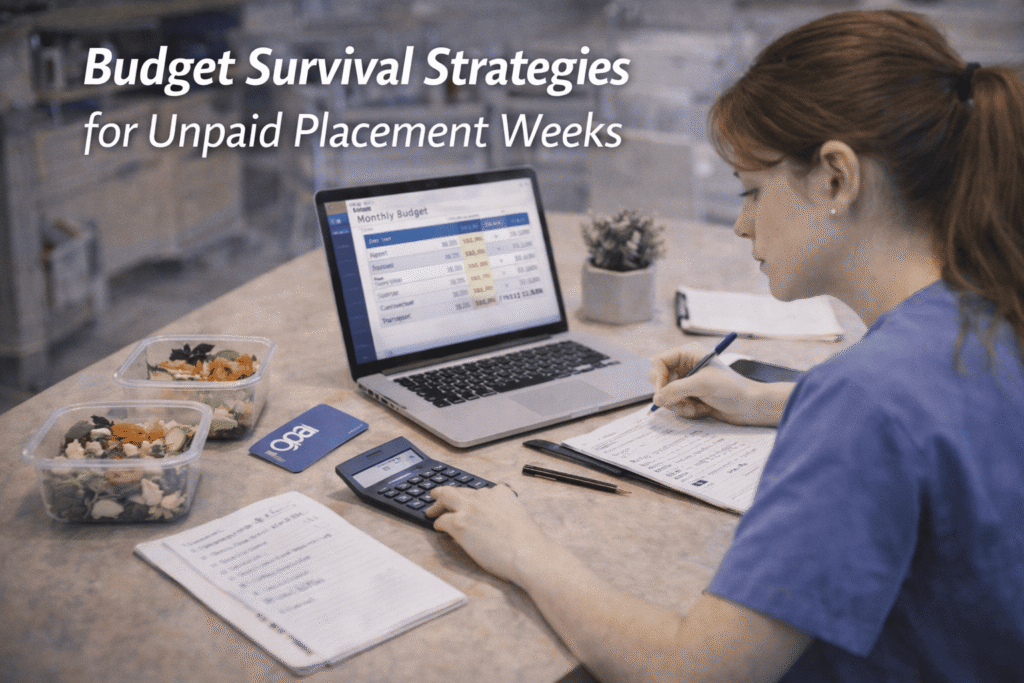
Realistic budgeting is the first step towards surviving unpaid placement weeks. This does not imply excessive sacrifice or flawless budgeting. It entails making sincere plans for lower income and higher expenses.
Only essential costs should be calculated prior to placement. Rent, utilities, food, transportation, phone bills, and any mandatory placement expenses are among them. Spending on non-essential items should be cut momentarily rather than permanently. This way of thinking makes budgeting seem more doable.
One of the best survival techniques is meal planning. Daily costs are greatly decreased by cooking basic meals at home and carrying food to placement. Over the course of several weeks, even modest daily purchases like takeout coffee or snacks can quickly mount up.
Planning for transportation is also crucial. Students might look into carpooling with other students, public transportation discounts, and cost-saving route planning. Asking ahead of time can assist because some hospitals provide inexpensive parking or access to public transportation.
Creating a tiny buffer before placement begins is another crucial tactic. Prior to placement, even a small weekly savings might help lower stress levels. The objective is to lessen anxiety during unpaid periods rather than to save a significant sum of money.
How to Talk to Employers About Placement Periods
Many nursing students are concerned about discussing unpaid placements with their employers. They worry about getting replaced, losing shifts, or coming across as untrustworthy. Clear communication, however, frequently produces better results than quiet.
Speaking with employers as soon as placement dates are established is the best course of action. Employers are more able to realize that placement is a required component of a professional degree.
Flexible scheduling is something that certain employers are open to. Reduced hours prior to placement, additional shifts following placement, or unpaid temporary absence are a few examples of this. Many employers value honesty and preparation, even though not all can.
When talking about placement, it is beneficial to be precise and professional. Students are able to provide the dates, anticipated hours, and duration of the placement. Employers can be reassured by demonstrating a commitment to returning to work following placement.
An employer’s lack of support does not represent the student’s value. During placement times, students may occasionally need to think about short-term financial alternatives or alternate work arrangements.
Managing Emotional Stress During Unpaid Placement Weeks
During unpaid placement weeks, financial strain frequently results in emotional tiredness. Particularly while working long hours without compensation, students may experience feelings of helplessness, anxiety, or resentment. These emotions are normal and legitimate.
Comparing oneself to others can be emotionally taxing. While some students have finances or family assistance, others do not. Stress is frequently increased rather than decreased when situations are compared.
Instead of repressing their emotions, nursing students should express them. Speaking with dependable family members, friends, or classmates helps ease emotional strain. Students feel less alone when they share their experiences.
Self-care doesn’t have to be expensive or time-consuming when on placement. Simple routines like short walks, adequate sleep, and short breaks can protect mental wellness during stressful times.
Support Options Available to Nursing Students in Australia
The support options offered during unpaid placement periods are often unknown to nursing students. Australian governments and universities provide various sorts of support.
Emergency financial aid and student hardship funding are frequently offered by universities. These are intended for students who are temporarily struggling financially, particularly those on unpaid placements. Early application increases the likelihood of receiving assistance.
Additionally, some colleges provide food coupons, help with transportation, or support for short-term housing. These services are frequently student-focused and private.
During placement weeks, qualifying students may benefit from government assistance like Centrelink payments. Even while not every student is eligible, it is nevertheless worthwhile to check, particularly if income declines dramatically.
University international offices can help overseas students by providing guidance, emergency funding, or connections to local resources.
Placement coordinators and student advisors can also help students plan placement schedules, reduce unnecessary costs, or connect them with support services.
Balancing Placement, Study, and Survival Without Burning Out

If unpaid placement weeks are not properly managed, students may become burned out. A significant emotional burden is produced by long shifts and financial strain.
It’s crucial to lessen academic strain wherever possible. Many colleges may provide flexible deadlines or a lighter course load during placement periods because they recognize the responsibilities of placement.
During placement weeks, students should refrain from overworking themselves. Attempting to balance full job hours, placement hours, and study at the same time frequently results in fatigue and subpar output.
Prioritizing one’s health and being aware of one’s limitations are crucial. Maintaining exaggerated productivity is not as crucial as completing placement safely and properly.
Why Quitting Often Feels Like the Only Option (And Why It Isn’t)
Quitting can seem like the only option during unpaid placement weeks. Students may feel stuck due to emotional strain, fatigue, and financial pressure. Though they seem interminable at the moment, these weeks are fleeting.
The majority of nursing students who think about giving up during their placement are ultimately happy that they persisted. Stability gradually returns, revenue resumes, and the placement period comes to a close.
Students are better able to persevere through the most trying times when they realize that this phase is just transitory. Early support can help avoid rash decisions made under pressure.
Building a Long-Term Strategy for Future Placements
While completing one unpaid internship is crucial, preparing for subsequent placements is just as critical. Students can better prepare the next time by thinking back on what worked and what didn’t.
For placement periods, some students progressively accumulate savings. Some change their work schedules earlier or look for grants and scholarships intended for medical students.
In the later years of the degree, creating a placement survival plan lessens anxiety and uncertainty.
Final Thoughts: You Are Not Weak for Struggling
One of the most difficult aspects of Australian nursing education is unpaid placements. You are not failing or inept if you are struggling at this time. It indicates that you are a human within a rigorous system.
Many nursing students manage unpaid placement weeks without giving up on their degrees with preparation, support, and communication. Asking for assistance is a professional ability that will benefit you throughout your nursing career, not a sign of weakness.
People Also Ask
1. Why are nursing placements unpaid in Australia?
They are considered part of professional training rather than employment.
2. Can I work during unpaid nursing placement weeks?
Some students can, but hours are often limited due to placement demands.
3. What financial help is available during placement?
Universities, Centrelink, and hardship funds may offer support.
4. Should I tell my employer about my placement early?
Yes, early communication improves flexibility and understanding.
5. Is it normal to want to quit during unpaid placement weeks?
Yes, many students feel this way, but support can help you continue.
Useful Documents for every Nursing Student
CV Section Template for Nursing students
AHPRA – NMBA Registration Document Checklist (International Students-Graduates)
Clinical Placement Reflection Template (NMBA-aligned)
Cover Letter Template for Nursing Students
Disclaimer: “I researched this information on the internet; please use it as a guide and also reach out to a professional for assistance and advice.This information is not medical advice, so seek your medical professional’s assistance.”