


Summary
It might be difficult to get a nursing job in Australia, particularly for foreign students, recent graduates, or nurses making the move from academic to professional practice. Nursing positions in Australia are dispersed across several platforms, including hospital employment portals, government postings, and professional networks, despite the misconception held by many students that applying on a single website is sufficient. While some positions are filled covertly through contacts, recommendations, and clinical placement links, others are publicly posted. Your job search can be greatly impacted by knowing where to seek, how to apply, and how networking functions in the Australian healthcare system. In order to help nursing students and graduates locate legitimate employment prospects around Australia, this page explains everything in clear English.
Numerous nursing employment are available in Australia, including those in aged care, hospital wards, community nursing, disability care, clinical support, and transition-to-practice programs. Not every city has an equal number of these roles. Certain places have speedier recruitment and greater job demand, particularly rural and regional areas. Knowing where to look and how to successfully show yourself are crucial. Your chances of being employed increase significantly when you comprehend how the Australian employment market operates.
1. Understanding the Nursing Job Market in Australia (Before You Apply)
It is useful to comprehend how the Australian nursing employment market operates before investigating job platforms. Due to population expansion, aging populations, and rising demands for managing chronic illnesses, the healthcare sector is one of the fastest-growing in the nation. This indicates that the requirement for Enrolled Nurses (ENs), Registered Nurses (RNs), Assistant in Nursing (AIN) personnel, and Graduate Nurses is constant. But in big cities like Sydney, Melbourne, and Brisbane, competition is fierce, particularly for graduate programs in hospitals. Many students don’t get hired because they lack skills, but rather because they only apply to large hospitals and overlook alternative opportunities.
Australia’s public and private healthcare systems are robust. While private hospitals post job openings on their own employment portals, state government websites are frequently used to market public positions. Numerous nursing roles are also available from aged care facilities, disability services, and NDIS providers, particularly for students undergoing their first clinical experience. These companies are great for recent grads beginning their careers because they frequently employ rapidly due to high demand.
Clinical placements are another significant aspect of the job market. Students engage with nurses, teachers, and managers throughout their assignments, and these individuals may subsequently suggest them for positions. Due to time constraints, recruiting managers frequently choose students they have already met through placements. Because of this, networking is essential to the job search process.
2. Best Platforms to Find Nursing Jobs in Australia (Where Students Actually Get Hired)
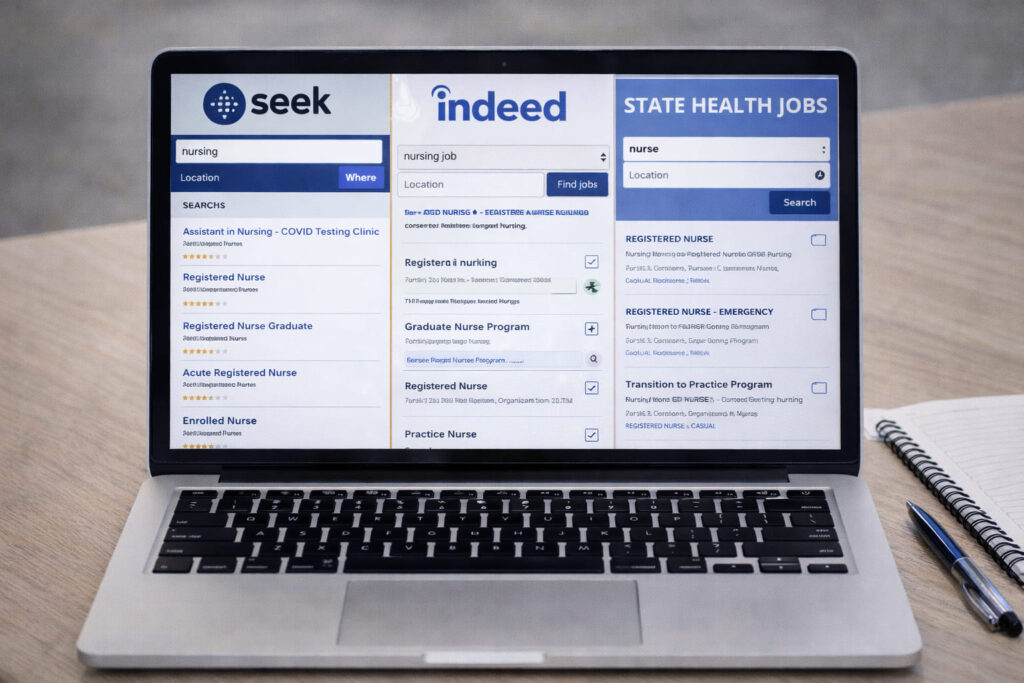
Typically, people only look at one or two websites when looking for nursing employment online. However, in Australia, several nursing jobs are listed on various platforms. Certain platforms are excellent for positions in hospitals, elderly care facilities, graduate programs, and local prospects.
SEEK is one of Australia’s largest employment boards. Job opportunities are posted here by the majority of large hospitals and elderly care facilities. Finding nursing jobs that fit your talents is made easier by the platform’s ability to filter options based on job type, experience level, and region. Because firms frequently recruit novices, many international students use this platform to find their first AIN or support worker position.
Indeed is another well-known website. It is a fantastic place to look at a variety of nursing jobs because it gathers job postings from many websites. Indeed is a great resource if you want to view public, private, elder care, and community employment in one location. Due to its greater reach, this platform is also used by many employers in rural and regional areas.
Every state government has an official job portal for public hospitals. For instance, nursing positions are posted on the websites of NSW Health, Queensland Health, WA Health, SA Health, and other state health agencies. These positions frequently involve contract, temporary, and permanent roles. They are particularly helpful if you wish to apply for transition programs or have hospital experience.
Health Workforce Queensland, Rural Health West, and other rural recruitment agencies are further significant sites. Due to increased demand, rural hospitals can hire more quickly and frequently offer stronger support for recent graduates. Because there is less competition in rural locations than in large cities, many international students land their first RN jobs there.
Jobs are also advertised on the websites of aged care companies such as Bupa, Regis, Opal, and Estia. These positions are ideal for obtaining clinical experience, particularly if you are awaiting hospital chances. Platforms such as NDIS, Hireup, and Mable also offer community and disability nursing positions.
The most crucial thing to keep in mind is that you shouldn’t rely solely on one website. You should set up job alerts and create accounts on several platforms. This saves time and ensures you do not miss new opportunities.
3. How Networking Helps You Find Hidden Nursing Jobs (Australian Style)

One of the most effective strategies for locating nursing positions in Australia is networking. Numerous posts in hospitals, clinical support, and graduate programs are filled internally or through recommendations. This implies that since someone already knows someone who is qualified for the position, the job may never be offered online. Students that comprehend networking have a significant advantage.
The greatest networking opportunity you will ever have is through clinical assignments. Every nurse, teacher, supervisor, and ward manager you encounter could serve as a reference for a future position. They will remember you if you exhibit professionalism, a good outlook, and a high capacity for learning. Placement educators are frequently asked by hospitals to suggest students for positions, particularly in times of urgent hiring. This is why your behaviour on placement impacts your job opportunities.
LinkedIn is another important networking tool. While Australian recruiters and nursing unit administrators frequently use LinkedIn, many students do not. You can join groups, follow hospitals, communicate with nurses, and share postings that demonstrate your interest in healthcare. Your chances of being discovered rise when a recruiter sees your name more than once.
It’s also beneficial to attend career events at the university. Hospitals frequently visit campuses to offer information about new job opportunities, scholarships, and graduate programs. During recruitment season, these representatives might recall your name when you speak with them.
Maintaining contact with your peers is another aspect of networking. Facebook groups, WhatsApp forums for nurses, and group chats are how many students learn about career opportunities. Your buddies might recommend you if they get hired.
Being courteous, considerate, and self-assured are essential for networking in Australia. Direct contact is preferred by Australians. You can introduce yourself and send a brief professional message to a nursing unit manager if you would like assistance or information. The majority of healthcare professionals are amiable and eager to assist pupils.
4. How to Make Your Nursing Job Applications More Successful (What Employers Want)

Finding job opportunities is just half the process; creating a compelling application is the other half. Australian employers want nursing resumes and cover letters to follow a certain structure. Your CV should be easy to read, professional, and unambiguous. Your clinical placements, essential skills, credentials, and any prior healthcare experience should all be highlighted. Resumes that are generic and lack placement examples are frequently turned down.
Your cover letter is just as crucial. Sending the identical cover letter to every hospital is a common mistake made by students. Employers, however, prefer to see customized letters outlining your qualifications, experience, and potential contributions to the company. You can demonstrate that you have done your homework by bringing up the hospital’s ideals or care standards.
Having the appropriate paperwork available is another crucial component of your application. Certain workplaces demand CPR certifications, immunization records, police checks, and checks for working with minors. It saves time and strengthens your application to have these materials ready before you apply.
Additionally, international students should be explicit about the terms of their visas. Many firms hire temporary graduate visa holders for RN positions and student visa holders for AIN positions. Employers will have more faith in you if you are transparent about your visa condition.
Lastly, submitting applications ahead of time improves your chances of success. Once a sufficient number of applications are received, many nursing job postings close early. You can apply within the first 24 to 48 hours by setting up job notifications.
5. Tips to Build a Successful Nursing Career Through Smart Job Searching
It could take some time to find your first nursing position in Australia, but you can develop a solid career with a well-thought-out plan. Starting employment early, even while studying, is one of the best strategies. Jobs as an AIN or support worker give you local references, experience, and self-assurance. Additionally, these positions give you a better understanding of the Australian healthcare system, which will facilitate your move into RN roles.
Applying to regional locations is another helpful tactic. While many students primarily concentrate on large cities, rural hospitals frequently hire recent graduates more quickly and provide good learning experiences. You can return to the city if you’d like after earning one or two years of experience.
Maintaining current professional growth is also crucial. Your résumé will be stronger if you have completed short courses in dementia care, pharmaceutical safety, infection control, or manual handling. Employers value nurses who are committed to their education.
Lastly, always follow up on applications or interviews. A brief, courteous email expressing gratitude for the recruiter’s time demonstrates professionalism and helps them remember you. These modest behaviors create a powerful impression that might make you stand out from the competition.
People Also Ask
1. Where do most nurses find jobs in Australia?
Most nurses use SEEK, Indeed, state health portals, aged-care websites, and LinkedIn networking.
2. Is it hard to get a nursing job in Australia as a new graduate?
Competition is high in major cities, but regional jobs and aged-care roles hire more quickly.
3. Do international students get nursing jobs easily in Australia?
Yes, especially in aged care, disability support, and rural hospitals where demand is stronger.
4. What is the best way to network as a nursing student?
Build strong relationships during placements, stay active on LinkedIn, and attend university career fairs.
5. What type of nursing job is best for beginners?
AIN roles, aged-care positions, and community support roles are ideal for gaining experience.
Useful Documents for every Nursing Student
CV Section Template for Nursing students
AHPRA – NMBA Registration Document Checklist (International Students-Graduates)
Clinical Placement Reflection Template (NMBA-aligned)
Cover Letter Template for Nursing Students
Disclaimer: “I researched this information on the internet; please use it as a guide and also reach out to a professional for assistance and advice.This information is not medical advice, so seek your medical professional’s assistance.”