
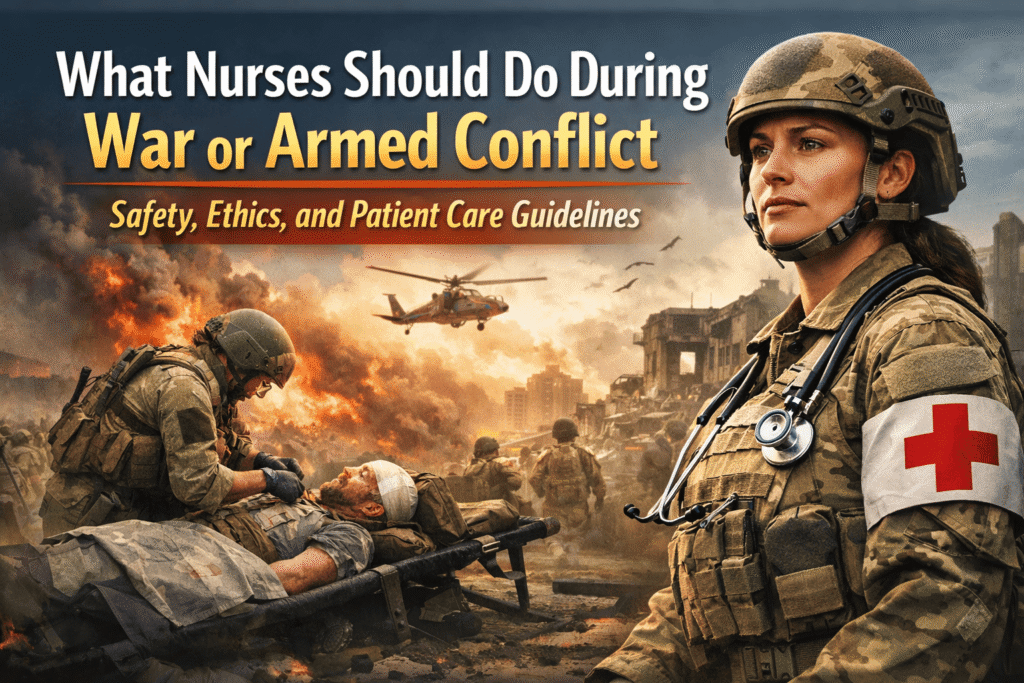

The preservation of life and the reduction of suffering are key aspects of a nurse’s job. However, the environment in which a nurse works shifts from a controlled clinical setting to a high-risk, unpredictable zone of crisis when a nation or region enters a state of armed conflict or war. The move to wartime nursing necessitates a drastic change of perspective for nursing students and healthcare professionals. With limited resources, sporadic electricity, and an overwhelming number of trauma patients, you are no longer merely a clinician but also a frontline responder.
Triage and life-saving measures are frequently the “standard of care” in these dire circumstances. Understanding international humanitarian law, safety procedures, and the moral dilemma of making life-or-death choices in combat are all crucial for navigating the complexity of war. This article offers a thorough guidance on how nurses can preserve their own safety, uphold their professional integrity, and give patients the best care possible under the turmoil of armed warfare.
Personal Safety and the “Safe Zone” Protocol
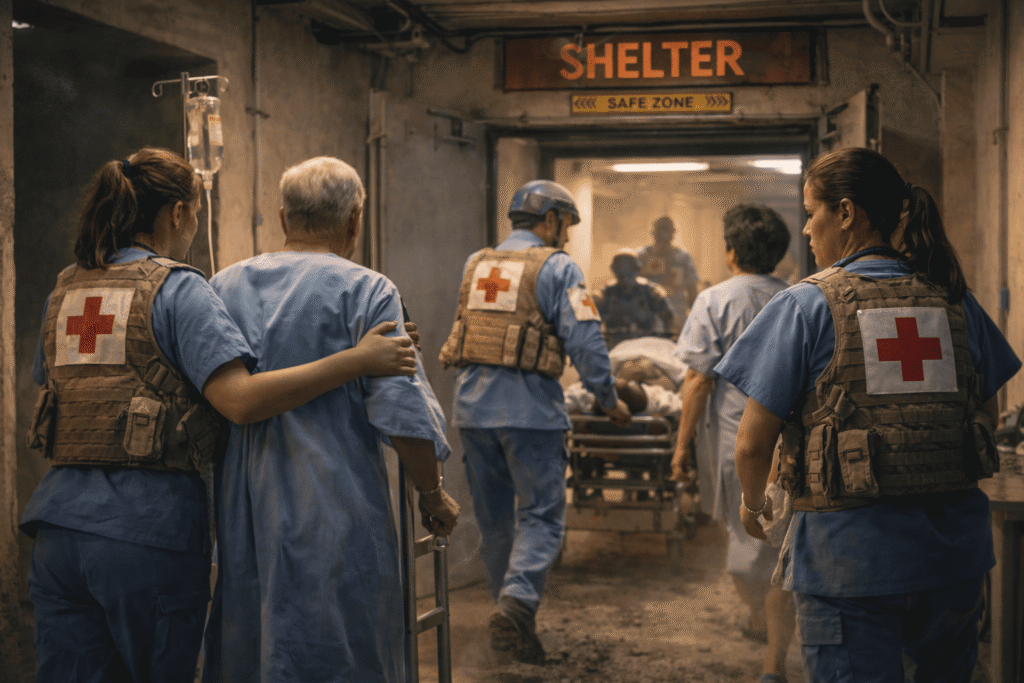
If a nurse becomes a casualty in a battle zone, they are unable to assist others. The first and most crucial rule is personal safety. Understanding International Humanitarian Law (IHL), particularly the Geneva Conventions, which mandate that hospitals, ambulances, and medical personnel be shielded from harm, is the first step in this process. However, these regulations are frequently broken in contemporary conflict. “Situational Awareness” training is required for nurses, who must continuously monitor their surroundings for dangers like shelling, snipers, or structure collapses.
A vest or armband bearing a recognized medical symbol, such as the Red Cross or Red Crescent, should be worn by nurses at all times. “Hardened Spaces” areas away from windows and outside walls where patients can be transferred during active bombardment should be marked inside the hospital. Additionally, psychological safety is essential to one’s own wellbeing. Long-term trauma may result from the “Moral Injury” brought on by seeing crimes. To sustain the mental toughness required to continue working in a war zone, nurses must engage in “Peer Support,” check in with colleagues, and use quick “Defusing Sessions” following high-stress situations.
Mass Casualty Triage and Resource Allocation
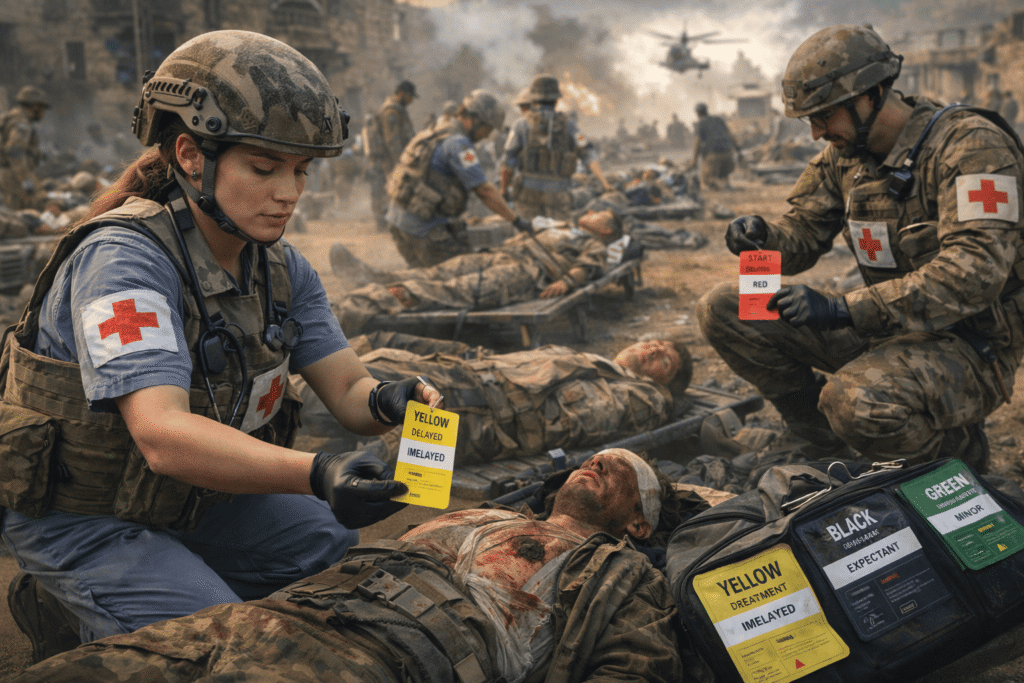
When a battle breaks out, there are typically more injured individuals than there are medical personnel, beds, oxygen, and bandages. Nurses are required to use Mass Casualty Triage in this setting. In contrast to regular emergency care triage, which prioritizes treating the “sickest,” wartime triage aims to do the “greatest good for the greatest number.” This change in therapeutic reasoning is challenging but essential.
The START (Simple Triage and Rapid Treatment) approach is frequently used by nurses. Green (minor injuries), Yellow (delayed but serious), Red (immediate life-threat), and Black (expectant/deceased) are the colors used to tag patients. A nurse may have to make the painful choice to “Black Tag” a patient in a war zone who would be salvageable in a regular hospital but cannot be rescued due to the current shortage of resources. Effective triage keeps the operating room from “clogging” and guarantees that patients with the best chance of survival receive life-saving resources like blood products and antibiotics. The characteristic of a skilled wartime nurse is mastering this ability.
Tactical Clinical Care: Trauma and Infection Control
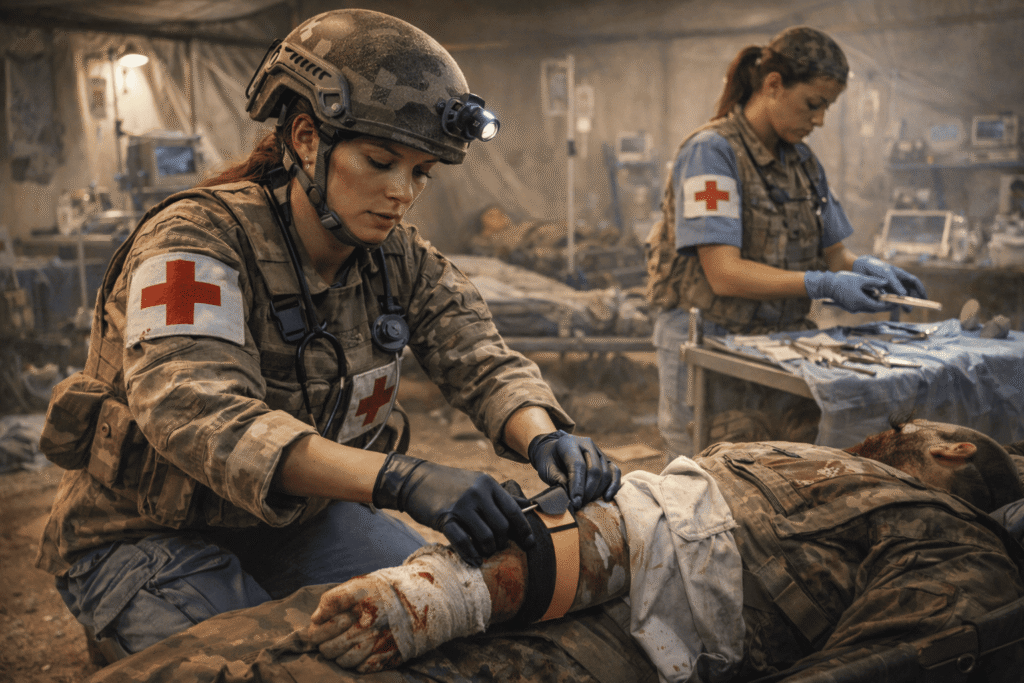
Clinical care in a war zone is often “Tactical,” meaning it must be fast and effective. Nurses must be experts in Hemorrhage Control, as uncontrolled bleeding is the leading cause of preventable death in conflict. This includes the rapid application of tourniquets, pressure dressings, and hemostatic agents. Because surgical suites may be overfilled, nurses are often required to perform “Advanced Scope” tasks, such as needle chest decompressions for tension pneumothorax or stabilizing complex blast injuries before a surgeon is available.
Another major challenge is Infection Control. In war, wounds are often “dirty,” contaminated with soil, metal fragments, and chemicals. With limited clean water and sterile supplies, the risk of sepsis and gangrene is extremely high. Nurses must prioritize aggressive wound debridement and the judicial use of broad-spectrum antibiotics. Even in a crisis, simple hand hygiene and the cleaning of reusable instruments with whatever means available (such as high-heat sterilization) can prevent a secondary “outbreak” of infection that could kill more patients than the initial injuries. Nurses act as the “Shield of Hygiene” in a chaotic environment.
Ethical Dilemmas and Neutrality in Conflict
Nurses are bound by the ICN Code of Ethics, which mandates that care be provided based on need alone, without discrimination. In an armed conflict, this means you may find yourself treating a “friend” in one bed and an “enemy combatant” in the next. This is one of the hardest parts of wartime nursing. Maintaining Medical Neutrality is essential. A nurse must treat all wounded individuals as patients first, regardless of their political or military affiliation.
Ethical dilemmas also arise when resources run out. If you have one ventilator and two patients who need it, how do you choose? Nurses must rely on established “Crisis Standards of Care” protocols to make these decisions, rather than personal bias. Furthermore, nurses have a duty to document “Human Rights Violations” if they see evidence of torture or illegal weapons (like chemical agents), provided it is safe to do so. Protecting the dignity of the deceased and ensuring they are identified and handled with respect is also a key ethical responsibility that falls on the nursing staff during the aftermath of a battle.
Continuity of Care for Vulnerable Populations
While blast injuries and gunshot wounds take the headlines, the “Silent Victims” of war are patients with chronic illnesses. In a conflict, the supply chains for insulin, heart medication, and dialysis are often broken. Nurses must help manage the Continuity of Care for the elderly, pregnant women, and children who are displaced by the fighting. Without their routine care, a patient with diabetes can enter a life-threatening coma just as quickly as a patient with a physical injury.
Nurses often lead “Mobile Clinics” or “Field Hospitals” in refugee camps. In these settings, the focus shifts to maternal-child health and the prevention of communicable diseases like cholera or measles, which spread rapidly in crowded, unsanitary conditions. Nurses must also be prepared to provide Psychological First Aid to children and families who have lost their homes and loved ones. By bridging the gap between emergency trauma care and long-term community health, nurses ensure that the most vulnerable members of society are not forgotten during the darkness of war.
People Also Ask (FAQ)
Q: Are nurses considered “combatants” if they work in a military hospital?
No. Under the Geneva Conventions, medical personnel are “non-combatants.” As long as they are exclusively engaged in medical duties and do not commit “acts harmful to the enemy” (outside of self-defense), they must be respected and protected by all sides of the conflict.
Q: What is “Moral Injury” in wartime nursing?
Moral injury occurs when a nurse is forced to take actions (or witness actions) that go against their deep moral beliefs—such as having to leave a patient behind during an evacuation or being unable to provide pain relief due to lack of supplies. It is a form of deep psychological distress that requires specialized support.
Q: Can a nurse carry a weapon for protection in a war zone?
According to international law, medical personnel may carry light individual weapons for self-defense or the defense of their patients. However, using a weapon for offensive purposes or participating in the fighting causes the nurse to lose their “protected status” under the Geneva Conventions.
Q: How can nursing students prepare for crisis management?
Students can take courses in Advanced Trauma Life Support (ATLS), join “Disaster Response” simulations, and study the basics of Triage. Understanding the legal protections of the Red Cross and Red Crescent is also essential for anyone planning to work in humanitarian aid.
Q: What happens if a hospital is targeted during a war?
A: Targeting a hospital is a War Crime. If a facility comes under threat, the head nurse and administrative staff must activate an “Evacuation Plan,” moving the most stable patients first and creating “Shelter-in-Place” zones for those too unstable to be moved. Documentation of the attack is vital for future legal accountability.
Useful Documents for every Nursing Student
CV Section Template for Nursing students
AHPRA – NMBA Registration Document Checklist (International Students-Graduates)
Clinical Placement Reflection Template (NMBA-aligned)
Cover Letter Template for Nursing Students
Disclaimer: “I researched this information on the internet; please use it as a guide and also reach out to a professional for assistance and advice.This information is not medical advice, so seek your medical professional’s assistance.”