


Summary
One of the most popular options for overseas students is to study nursing in Australia since the degree offers great career opportunities, good training, and a clear path to becoming a Registered Nurse (RN). However, it is crucial for students to comprehend the true cost of studying nursing in Australia, including tuition fees, living expenses, supplementary charges, placement-related expenditures, and unforeseen expenses, before selecting an institution or submitting an application for admission.
Many students assume that the whole cost is the tuition price that is published on the university’s website. However, clinical placements, lab sessions, uniforms, medical examinations, insurance, and other unstated costs that students frequently learn about later are all part of Australian nursing programs. To avoid confusion and financial stress, students need a complete, honest, and simple explanation of all expected costs.
Overview of Nursing Tuition Fees in Australia (2026)
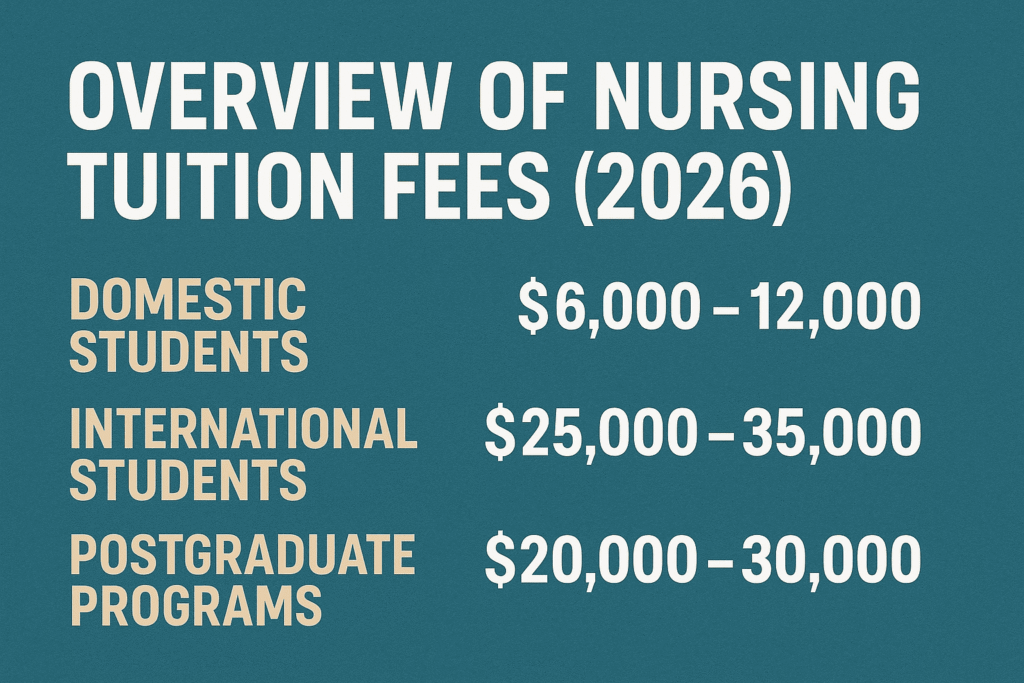
In Australia, all states and territories offer the three-year undergraduate Bachelor of Nursing curriculum. Although the curriculum is the same across the nation, tuition costs vary according on demand, geography, university rating, and the resources needed for nursing labs and simulation facilities.
The average annual tuition cost for overseas students in 2026 is between AUD $32,000 and $46,000. Universities in distant or rural areas typically offer less expensive programs than those in large cities like Sydney and Melbourne. This discrepancy results from regional institutions offering lower tuition to draw in overseas students, whereas metropolitan universities have higher operating expenses.
The reputation of the university is another element that influences the price. Fees are typically higher at well-known universities with significant student demand. To attract more international students, smaller colleges or regional campuses might provide special scholarships or reduced tuition.
Due to inflation, most institutions raise their fees by a small amount each year, so prices in 2026 might be 3–6% higher than they were in prior years. When figuring out the total cost of a three-year education, students must take this into account.
State-Wise Breakdown of Nursing Tuition Fees (2026)
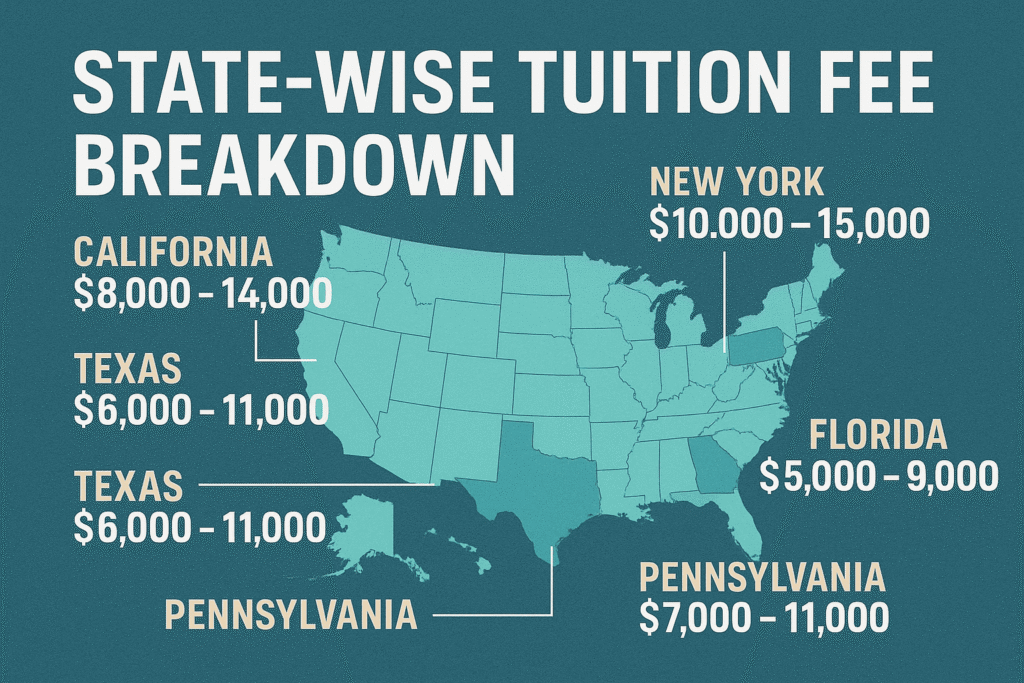
The average cost of a Bachelor of Nursing program varies by state in Australia. Students can select a university that best suits their financial situation and professional objectives by being aware of these distinctions.
New South Wales (NSW)
NSW is home to some of Australia’s most popular universities. Tuition is usually on the higher side.
Average 2026 Fees: AUD $38,000 – $46,000 per year
Living expenses are particularly considerable because Sydney is one of the most costly cities for international students. Students who choose NSW should budget for increased daily costs as well as greater tuition.
Victoria (VIC)
Victoria also offers several top nursing universities, especially in Melbourne and surrounding areas.
- Average 2026 Fees: AUD $36,000 – $45,000 per year
Victoria has strong hospital networks and excellent placement opportunities, but tuition fees are similar to NSW due to high demand.
Queensland (QLD)
Queensland is more affordable compared to NSW and VIC and attracts many international nursing students.
- Average 2026 Fees: AUD $33,000 – $41,000 per year
Brisbane, Gold Coast, and regional cities offer lower living costs, making Queensland a popular choice.
Western Australia (WA)
WA offers competitive fees and large healthcare systems in Perth and surrounding regions.
- Average 2026 Fees: AUD $34,000 – $42,000 per year
Perth has lower rent and transport costs compared to Sydney or Melbourne, making it financially attractive.
South Australia (SA)
SA is known for affordable university tuition and cheaper living expenses.
- Average 2026 Fees: AUD $32,000 – $40,000 per year
Adelaide offers strong nursing programs at lower costs, making it ideal for budget-conscious students.
Tasmania (TAS)
Tasmania offers a smaller number of nursing programs but is known for personalised education and affordable costs.
- Average 2026 Fees: AUD $34,000 – $39,000 per year
The island environment also appeals to students looking for a peaceful study experience.
Northern Territory (NT)
NT has limited universities but strong healthcare needs, especially in rural communities.
- Average 2026 Fees: AUD $32,000 – $38,000 per year
Students also gain unique experience working with remote and Indigenous communities during placements.
Australian Capital Territory (ACT)
The ACT offers high-quality universities at moderate costs.
- Average 2026 Fees: AUD $35,000 – $42,000 per year
Canberra is quieter and more affordable than Sydney, but still offers strong healthcare networks.
Hidden Costs Nursing Students Usually Do Not Expect
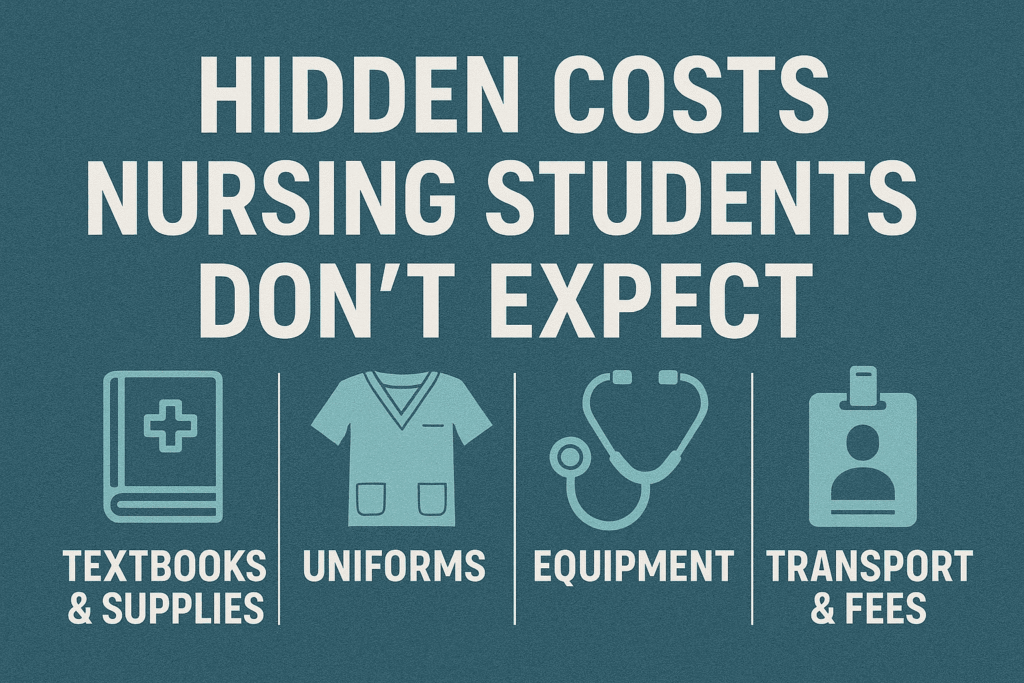
The overall cost of studying nursing in Australia includes more than just tuition. Students frequently learn about the numerous additional costs associated with nursing schools after enrolling.
Clinical placement charges are among the largest hidden expenses. Hospitals and assisted living facilities may not always be close to campus, so students must commute there. Long travel lengths, parking costs, and transportation might raise monthly expenses. Students may have to temporarily relocate to a different suburb or regional area as part of some placements, which would increase expenses.
Equipment and clothing are another hidden expense. Scrubs, closed shoes, a stethoscope, name badges, and even a second-hand watch are required purchases for nursing students. These are necessary objects that need to be replaced if they become worn out or damaged.
Additionally, medical examinations and immunizations, such as Hepatitis B, MMR, Varicella, Influenza, and TB screening, must be paid for by students. The cost of these medical procedures varies based on where students receive them.
Students also require textbooks, stationery, printing, health insurance (OSHC), and technology costs like laptops or study software. Even while each expense can seem insignificant, they build up over the course of the year and, if improperly managed, can have an effect on a student’s budget.
Living Costs, Accommodation & How They Affect the Total Budget
Every Australian city has a very different cost of living. Compared to students in Adelaide, Hobart, or Brisbane, individuals studying in Sydney or Melbourne must budget for higher costs. Depending on their location, international students are expected to pay between AUD $25,000 and $32,000 annually for living expenses in 2026.
The biggest living expense is typically housing. University accommodation, private rentals, communal apartments, and homestays are all choices available to students. Students should look into reasonably priced neighborhoods close to their colleges because larger cities have higher rentals.
The overall cost also includes personal expenses, food, transportation, internet, and health insurance. Some of these costs can be covered by students who work part-time (up to 48 hours per fortnight during study times), but they must carefully balance work and study.
Because students spend more on travel, eating out, and occasionally short-term housing, placement periods may result in higher living expenses. Budgeting is therefore crucial to preventing financial strain during these training times.
Scholarships, Fee Reductions & How To Save Money as an International Nursing Student

Many students are unaware that international students can apply for scholarships offered by Australian universities. These scholarships lower tuition costs and contribute to the affordability of nursing education.
Based on academic achievement or early application, the majority of scholarships offer tuition discounts of 10% to 30%. Larger reductions are occasionally offered by regional universities in an effort to draw in foreign students. Scholarship deadlines may close months before the start of the course, so students should always check them.
Selecting regional schools, which frequently offer lower tuition and living expenses, is another method to save money. Future skilled migration can also benefit from regional research.
Using student discounts, preparing meals at home, living in shared housing, and working part-time in the elderly care or disability support sectors—which offer flexible hours perfect for nursing students—are further ways for students to cut costs.
Students can minimize unforeseen financial strain by creating a clear budget for each semester that accounts for living expenses, tuition, textbooks, and placement fees.
People Also Ask
1. How much does a Bachelor of Nursing cost in Australia in 2026?
Most universities charge between AUD $32,000 and $46,000 per year, depending on the state and institution.
2. Which state is the cheapest for nursing studies?
South Australia and Northern Territory usually offer the lowest tuition fees for nursing.
3. What hidden costs do nursing students face?
Uniforms, vaccination checks, placement travel, textbooks, equipment, and health insurance.
4. Can international nursing students get scholarships?
Yes, most universities offer 10–30% tuition fee scholarships for eligible students.
5. Are regional universities cheaper for nursing?
Yes, regional universities often have lower fees and lower living expenses.
6. Do nursing programs charge extra for clinical placements?
The placement itself is free, but students pay for travel, uniforms, medical checks, and equipment.
Useful Documents for every Nursing Student
CV Section Template for Nursing students
AHPRA – NMBA Registration Document Checklist (International Students-Graduates)
Clinical Placement Reflection Template (NMBA-aligned)
Cover Letter Template for Nursing Students
Disclaimer: “I researched this information on the internet; please use it as a guide and also reach out to a professional for assistance and advice.This information is not medical advice, so seek your medical professional’s assistance.”