
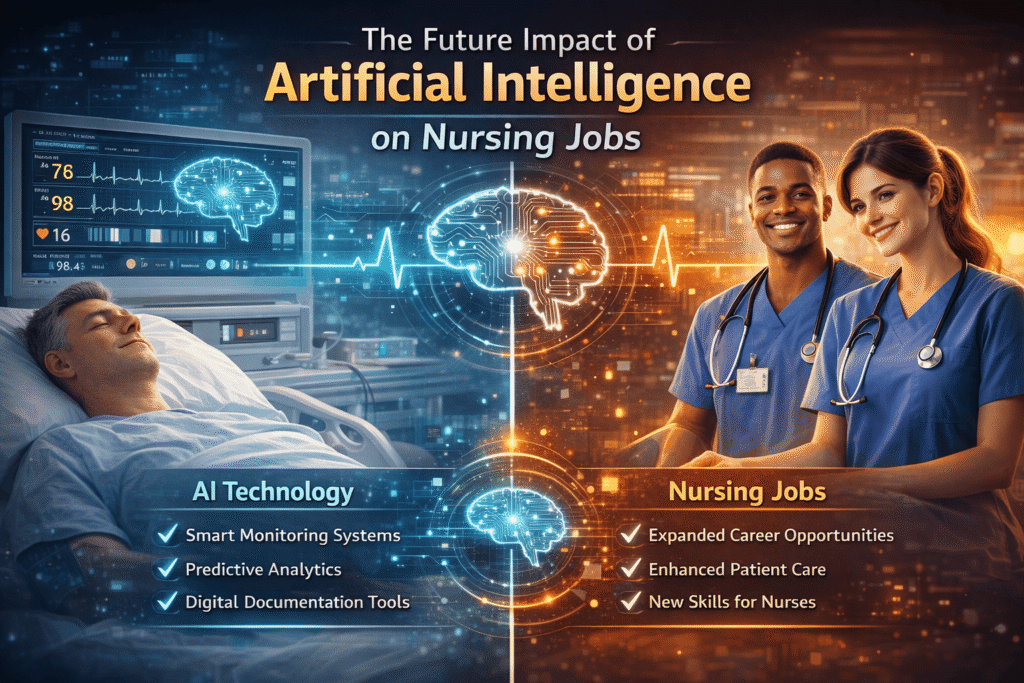

Healthcare is one of the sectors where artificial intelligence (AI) is being applied at the fastest rate. AI is revolutionizing many other industries. New technologies including digital documentation tools, predictive analytics, smart patient monitoring systems, and decision-support software are specifically influencing nursing jobs. This shift can be both thrilling and concerning for nursing students and those just starting their careers.
Many pupils pose significant queries such as: Will AI result in fewer nursing jobs? Will nurses require new competencies? Will bedside care be replaced by technology? These are legitimate worries. In actuality, artificial intelligence (AI) will alter nursing occupations, how nurses operate, and the skills that employers will require in the future, but it won’t eliminate the need for nurses.
This article provides a clear and practical explanation of how artificial intelligence will affect nursing careers in the future. It focuses on how artificial intelligence (AI) will change nursing professions, what opportunities it will provide, what obstacles nurses may encounter, and how students can get ready for the workforce of the future. Even if you are still studying, it is easy to understand because everything is stated in plain English.
Understanding Artificial Intelligence in Nursing Jobs
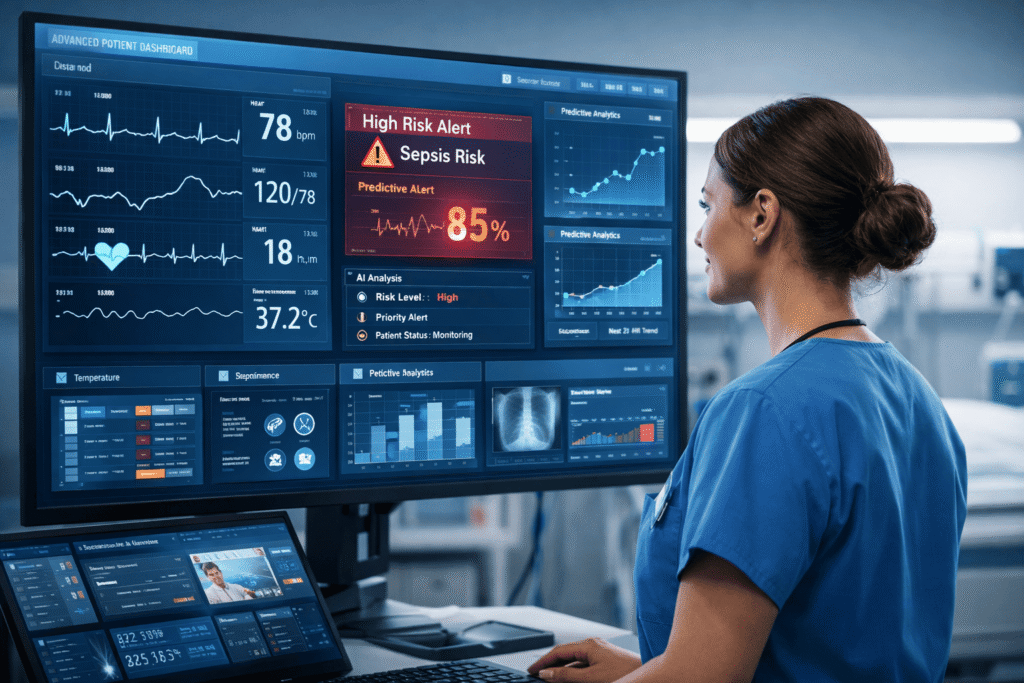
Computer programs that help nurses by analyzing data, identifying trends, and assisting with clinical activities are referred to as artificial intelligence in nursing occupations. These systems are not autonomous. Rather, they are intended to assist nurses in making quicker and safer decisions.
AI is frequently utilized in nursing occupations for:
• Real-time vital sign monitoring
• Forecasting the decline of a patient
• Assisting with care planning
• Less work related to documentation
• Why Improving team communication in healthcare
AI systems are able to deliver alarms or recommendations by learning from vast volumes of patient data. Nurses are still in charge of patient assessment, decision-making, and care delivery, though.
It’s critical to comprehend this position since it demonstrates that AI is a tool to help nursing, not a substitute for it.
How AI Will Change Nursing Job Roles

The future impact of AI on nursing jobs will not be about removing nurses, but about changing how nurses work and what tasks they focus on.
Shift from Manual Tasks to Clinical Thinking
In the future, many repetitive and time-consuming tasks will be handled by AI systems. This includes:
- Automatic vital sign recording
- Basic documentation support
- Routine reminders and alerts
As a result, nursing jobs will shift more toward clinical thinking, patient communication, and complex decision-making. Nurses will spend less time on paperwork and more time providing direct patient care.
Increased Focus on Patient-Centred Care
Because AI reduces administrative burden, nurses will have more time to:
- Educate patients
- Provide emotional support
- Build trust and rapport
- Address cultural and individual needs
This means nursing jobs may become more patient-focused rather than task-focused, which improves care quality and job satisfaction.
New Technology-Integrated Nursing Roles
AI will also create new nursing roles that combine clinical skills with technology knowledge. These roles may include:
- Clinical informatics nurses
- Digital health coordinators
- AI system trainers and supervisors
- Telehealth nursing specialists
These roles expand career options rather than limiting them.
Will AI Reduce or Replace Nursing Jobs?
One of the biggest fears among students is that AI will replace nurses. However, evidence and current healthcare practice show that this is very unlikely.
Why Nurses Cannot Be Replaced by AI
Nursing involves skills that AI cannot replicate, such as:
- Empathy and compassion
- Ethical decision-making
- Complex human judgment
- Physical care and emotional support
- Advocacy for patients
AI does not understand emotions, values, or human experiences. It cannot comfort a patient, support a family during crisis, or make moral decisions. These are core parts of nursing jobs.
Growing Demand for Nurses
In many countries, including Australia, the demand for nurses is increasing due to:
- Aging populations
- Chronic disease management
- Expanded healthcare services
AI supports nurses but does not reduce the need for them. In fact, technology often increases demand for skilled nurses who can use it safely.
New Skills Nurses Will Need in the AI Era

While AI will not replace nursing jobs, it will change the skills nurses are expected to have.
Technology Literacy
Future nurses will need to feel comfortable using:
- Digital health systems
- Monitoring devices
- AI-based alerts and dashboards
This does not mean nurses must become programmers, but they must understand how systems work and how to interpret information correctly.
Critical Thinking and Decision-Making
AI provides data, but nurses must decide what action to take. Strong critical thinking will become even more important because nurses must:
- Assess AI recommendations
- Identify errors or false alerts
- Combine technology data with patient assessment
Ethical Awareness
AI raises ethical questions related to:
- Patient privacy
- Data use
- Bias in algorithms
Nurses must continue to protect patient rights and practice ethically.
Impact of AI on Different Nursing Job Settings
AI will affect nursing jobs differently depending on the work environment.
Hospital Nursing Jobs
In hospitals, AI will support early warning systems, patient flow management, and clinical decision-making. Nurses will need to manage alerts and prioritise care effectively.
Aged-Care Nursing Jobs
In aged care, AI will assist with fall detection, medication reminders, and monitoring chronic conditions. Nurses will focus more on quality of life and holistic care.
Community and Home Nursing Jobs
AI will expand remote monitoring and telehealth services. Nurses will manage patients from a distance while maintaining safety and communication.
Mental Health Nursing Jobs
AI may support symptom tracking and early intervention, but human interaction will remain central to mental health care.
Challenges AI Creates for Nursing Jobs
Although AI brings opportunities, it also creates challenges that nurses must be prepared for.
Increased Responsibility and Accountability
Even when AI is involved, nurses remain legally responsible for patient care. This means nurses must:
- Double-check AI recommendations
- Document accurately
- Escalate concerns appropriately
Risk of Over-Reliance on Technology
There is a risk that nurses may trust AI too much. Over-reliance can reduce clinical judgment if nurses stop thinking critically.
Workplace Stress and Training Gaps
Learning new systems can increase stress, especially if training is limited. Employers must support nurses with proper education and resources.
How Nursing Students Can Prepare for Future Nursing Jobs
Students who prepare early will adapt more easily to AI-integrated nursing jobs.
Students can prepare by:
- Learning digital documentation systems
- Observing AI tools during placement
- Asking questions about technology use
- Developing strong assessment skills
- Understanding ethical responsibilities
Being open to learning is the most important skill.
Opportunities Created by AI for Nursing Careers
AI does not only change existing nursing jobs—it also creates new career opportunities.
Nurses may work in:
- Digital health leadership
- Clinical education
- Policy development
- Research and innovation
These roles allow nurses to influence how AI is used safely in healthcare.
The Human Role in the Future of Nursing Jobs
Even in a highly technological healthcare system, the heart of nursing remains human care. AI cannot replace:
- Compassion
- Advocacy
- Cultural sensitivity
- Emotional support
Future nursing jobs will combine technology skills with human values, making nursing both more advanced and more meaningful.
Conclusion: What the Future Really Looks Like for Nursing Jobs
The future impact of artificial intelligence on nursing jobs is not about replacement—it is about transformation. AI will change how nurses work, what skills are required, and how care is delivered. However, it will also strengthen nursing roles by reducing workload, improving safety, and creating new career paths.
For nursing students, the future is promising. Nurses who adapt, learn, and maintain strong professional values will continue to be essential to healthcare systems.
People Also Ask
Will AI take over nursing jobs?
No. AI supports nurses but cannot replace human care and judgment.
What nursing jobs will grow with AI?
Roles in digital health, informatics, telehealth, and education.
Do nursing students need to learn AI skills?
Yes. Basic understanding of AI tools will be essential.
Is AI good or bad for nursing careers?
It is mostly positive when used safely and ethically.
How can nurses prepare for AI in healthcare?
By learning technology, improving critical thinking, and staying adaptable.
Useful Documents for every Nursing Student
CV Section Template for Nursing students
AHPRA – NMBA Registration Document Checklist (International Students-Graduates)
Clinical Placement Reflection Template (NMBA-aligned)
Cover Letter Template for Nursing Students
Disclaimer: “I researched this information on the internet; please use it as a guide and also reach out to a professional for assistance and advice.This information is not medical advice, so seek your medical professional’s assistance.”