


The Art and Science of Beauty The Australian aesthetic medicine industry is experiencing a profound and exciting transformation. Gone are the days when cosmetic procedures were the exclusive domain of plastic surgeons and dermatologists operating from sterile, intimidating surgical suites. A new era has dawned, characterized by accessibility, holistic wellness, and a client-centric approach. At the forefront of this revolution is a powerful and trusted professional: the registered nurse.
Nurse-led aesthetic clinics are rapidly becoming the preferred destination for Australians seeking non-surgical cosmetic enhancements. This model leverages the unique skill set of nurses—their clinical expertise, innate empathy, meticulous attention to safety, and unparalleled patient communication skills—to create a service that is both medically sound and deeply personal. For entrepreneurial nurses, this represents a golden opportunity to merge clinical practice with business ownership, building a fulfilling and financially rewarding career on their own terms.
The Art and Science of Beauty However, transforming this vision into a successful, reputable, and legally compliant clinic is a complex undertaking. It requires more than just injecting skill; it demands business acumen, strategic planning, and a deep understanding of a highly competitive market. This definitive guide will walk you through every critical step of starting a nurse-led aesthetic clinic in Australia, from conceptualisation and legal compliance to marketing strategies and building a lasting legacy in the world of aesthetic medicine.
The Australian Landscape: Why a Nurse-Led Model is Perfect for Now
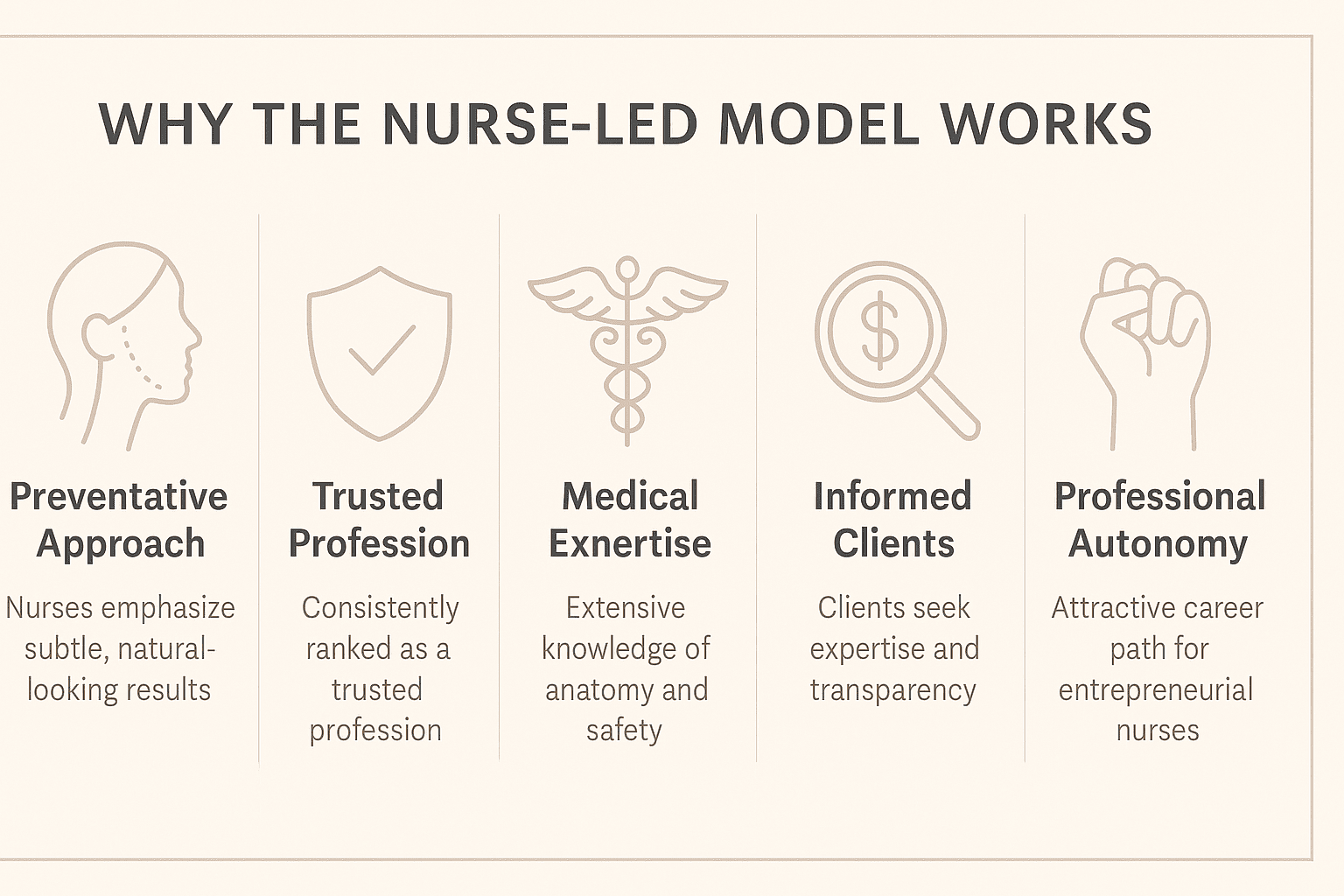
The surge in popularity of nurse-led clinics is not accidental. It is a response to several converging cultural, economic, and professional trends.
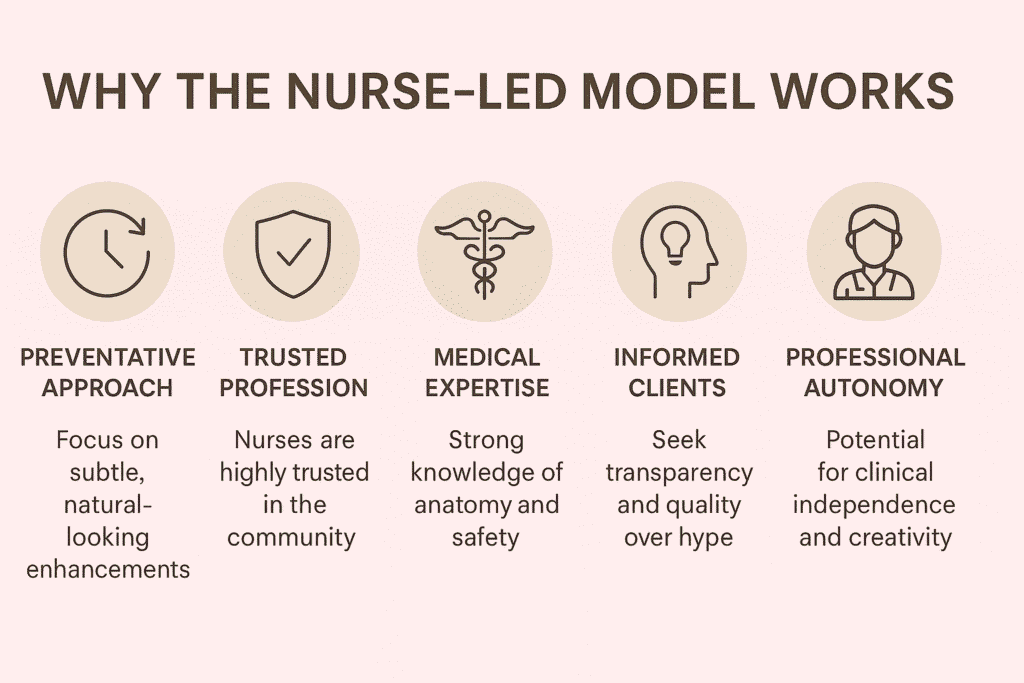
1. The Shift Towards “Preventative” and “Maintenance” Aesthetics: Consumers are increasingly moving away from the idea of drastic, surgical transformations. Instead, they seek subtle, natural-looking enhancements that help them age gracefully and maintain their best features. This philosophy of “tweakment” and preventative care aligns perfectly with the nursing model of holistic, long-term patient management.
2. The Trust Factor: For over two decades, the Roy Morgan Research polls have consistently ranked nurses as the most trusted profession in Australia. This reservoir of trust is an invaluable business asset. Clients walking into a nurse-led clinic often feel a greater sense of psychological safety, believing they are in the hands of a ethical, patient-focused caregiver rather than a sales-driven technician.
3. Medical Legitimacy and Safety: The aesthetic industry is still plagued by unscrupulous operators. Nurses bring rigorous medical training, a deep understanding of anatomy, physiology, and pharmacology, and a fundamental duty of care. This allows them to not only perform procedures safely but also to identify contraindications, manage complications, and make ethical judgments about patient suitability.
4. The Rise of “Conscious Consumerism”: Modern clients are highly informed. They research procedures, ingredients, and practitioners extensively online. They value expertise, transparency, and quality over hard-sell tactics. A qualified nurse inherently embodies these values, appealing directly to this discerning demographic.
5. Professional Autonomy for Nurses: For many highly skilled nurses, traditional hospital roles can lead to burnout, shift-work fatigue, and limited career progression. Aesthetic medicine offers a path to clinical autonomy, creative expression, financial independence, and the ability to build a practice aligned with personal values.
The Foundation: Legal, Regulatory, and Insurance Imperatives
This is the most critical phase of your startup journey. Cutting corners here can lead to catastrophic consequences, including patient harm, litigation, and loss of your nursing registration.
1. AHPRA Registration and Scope of Practice:
- Unwavering Foundation: You must hold current, general registration as a Registered Nurse (RN) with the Australian Health Practitioner Regulation Agency (AHPRA). This is non-negotiable.
- The Scope of Practice Minefield: This is the single most important legal concept. Your scope of practice is defined by your qualifications, education, and experience. You can only perform procedures for which you are adequately trained and competent.
- The “Who” and “What”: The Nursing and Midwifery Board of Australia (NMBA) does not provide a specific list of approved aesthetic procedures for nurses. Instead, it is your professional responsibility to justify that any procedure you perform is within your individual scope. This is determined by:
- Education: Have you completed a certified, comprehensive training course for each specific procedure (e.g., Botulinum Toxin, dermal fillers, laser therapies)?
- Supervision: Are you working under an appropriate structured arrangement as defined by the NMBA? While some nurses operate independently, many work under the supervision of a doctor. The level of supervision (proximate, remote, etc.) must be clearly defined in a formal agreement. The supervising doctor must also have their own expertise in aesthetic medicine.
- Document Everything: Maintain a portfolio of your certificates, logs of procedures performed, and evidence of ongoing education to demonstrate your competence if ever questioned by AHPRA.
- The Art and Science of Beauty: A Comprehensive Guide to Launching a Nurse-Led Aesthetic Clinic in Australia
- The “Who” and “What”: The Nursing and Midwifery Board of Australia (NMBA) does not provide a specific list of approved aesthetic procedures for nurses. Instead, it is your professional responsibility to justify that any procedure you perform is within your individual scope. This is determined by:
2. Insurance: Your Financial Safety Net
- Professional Indemnity Insurance (PII): This is mandatory by law. Your policy must specifically cover aesthetic medicine procedures. Do not assume a standard nursing policy will suffice. Disclose every procedure you intend to perform to your insurer.
- Public Liability Insurance: Protects you and your business if a client (or member of the public) is injured on your premises.
- Product Liability Insurance: Covers you if a product you use (e.g., a specific brand of filler) causes harm to a client.
3. Business Structure and Registration
- Choose Your Structure: Consult with an accountant to decide the best structure for your business:
- Sole Trader: Simple but offers no asset protection. Your personal assets (house, car) are at risk if you are sued.
- Company (Pty Ltd): More complex to set up but provides a legal separation between you and the business, protecting your personal assets. This is highly recommended.
- Register Your Business: Register your business name with the Australian Securities & Investments Commission (ASIC). Apply for an Australian Business Number (ABN) and register for GST if you expect your annual turnover to be $75,000 or more.
4. Licensing for Premises and Equipment
- Local Council Approval: Your clinic must comply with local council regulations for a medical/health premises. This may involve specific zoning, parking, and signage requirements.
- Radiation License: If you use any Class 3B or 4 lasers or Intense Pulsed Light (IPL) systems, you must hold a radiation license from your state or territory’s health authority (e.g., NSW EPA, VIC DHHS). Your equipment must also be registered.
5. Consent and Documentation
- Informed Consent: This is a process, not just a form. You must ensure the client fully understands the procedure, its risks, benefits, alternatives, and potential outcomes. Use clear, non-medical language and allow a cooling-off period.
- Medical History: Conduct a thorough medical history and assessment for every client at every visit. Contraindications can change over time.
- Clinical Photography: Standardised pre- and post-procedure photos are a critical part of clinical records, for assessing outcomes and for medico-legal protection.
Crafting Your Business Plan: The Blueprint for Success

A robust business plan is your roadmap. It forces you to think strategically and proves to yourself (and any potential investors) that you have a viable concept.
1. Executive Summary: A one-page overview of your entire business plan.
2. Company Description: Your clinic’s name, mission statement, vision, and core values (e.g., “To provide safe, natural-looking aesthetic enhancements in a caring, ethical environment”).
3. Market Analysis:
- Target Market: Who is your ideal client? (e.g., “Professional women aged 35-55 in the inner-city suburbs seeking preventative treatments”). Be specific.
- Competitor Analysis: Who are your direct competitors? Analyse their services, pricing, online presence, and client reviews. Identify a gap you can fill.
- SWOT Analysis: Analyse your internal Strengths and Weaknesses, and external Opportunities and Threats.
4. Services and Pricing: - Service Menu: What will you offer? Start with a focused menu you can master (e.g., anti-wrinkle injections, lip filler, medical facials). Plan for future expansion (e.g., laser, skin needling).
- Pricing Strategy: Research competitor pricing. Will you compete on price, or will you position yourself as a premium service based on your expertise? Ensure your prices cover your cost of goods, overheads, and desired profit margin.
5. Marketing and Sales Strategy: How will you attract clients? (Detailed in Part 5).
6. Management and Operations: - Clinic Location: Will you start from a home clinic (check council regulations!), rent a room in a medical practice, or lease a retail space?
- Suppliers: Establish accounts with reputable product suppliers (e.g., Allergan, Galderma, Merz).
- Equipment: Source your core equipment (treatment couch, laser/IPL if applicable, clinical trolleys).
7. Financial Projections: - Startup Costs: A detailed list of every expense to launch (legal fees, fit-out, deposit on lease, initial product stock, equipment, marketing materials, insurance).
- Operating Costs: Monthly expenses (rent, utilities, insurance, product costs, marketing, accounting).
- Revenue Projections: Realistic forecasts for your first 12-24 months of income. When do you expect to break even?
The Clinical and Client Experience: Where Your Nursing Skills Shine

Your clinic’s environment and the experience you provide are your key differentiators.
1. The Consultation is Everything: This is where you separate yourself from the competition. A nurse-led consultation should be a holistic health assessment.
* Listen: Understand the client’s motivations and expectations. Why do they want this procedure now?
* Educate: Explain the science behind the treatment, the products, and the process. Use anatomical diagrams.
* Manage Expectations: Be honest about what can and cannot be achieved. Never over-promise.
* Advise Ethically: Have the courage to say “no” or “not yet” if a client is not suitable or has unrealistic expectations.
2. Clinic Ambiance: Create a space that feels clinical-clean but also warm, welcoming, and luxurious. It should feel like a premium medical spa, not a sterile hospital room or a cheap beauty salon.
3. The Follow-Up: Your nursing duty of care doesn’t end when the client walks out the door. Implement a robust follow-up system—a phone call or message 24-48 hours post-procedure to check on them. This builds incredible loyalty and trust.
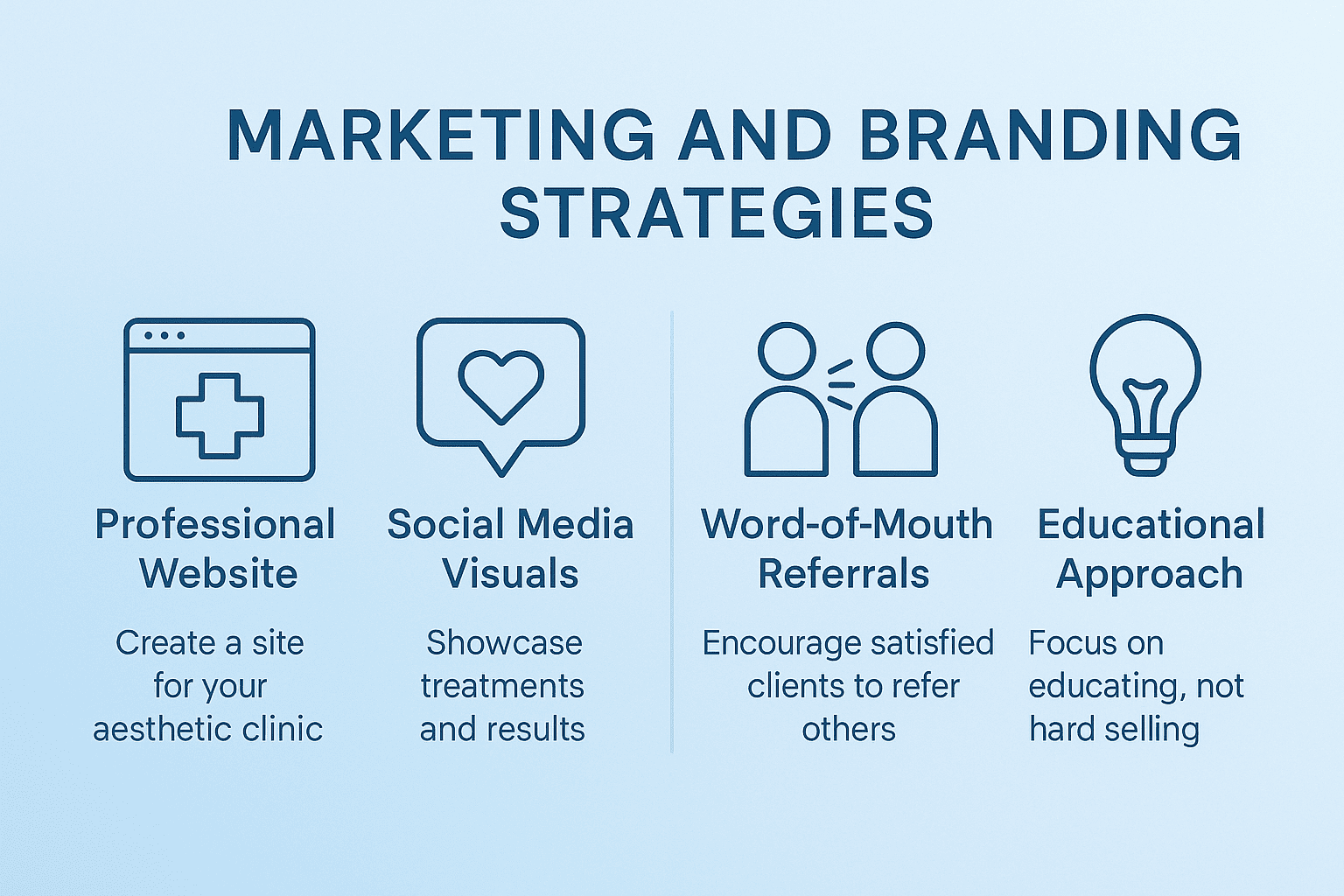
Marketing Your Clinic: Building a Brand, Not Just a Business
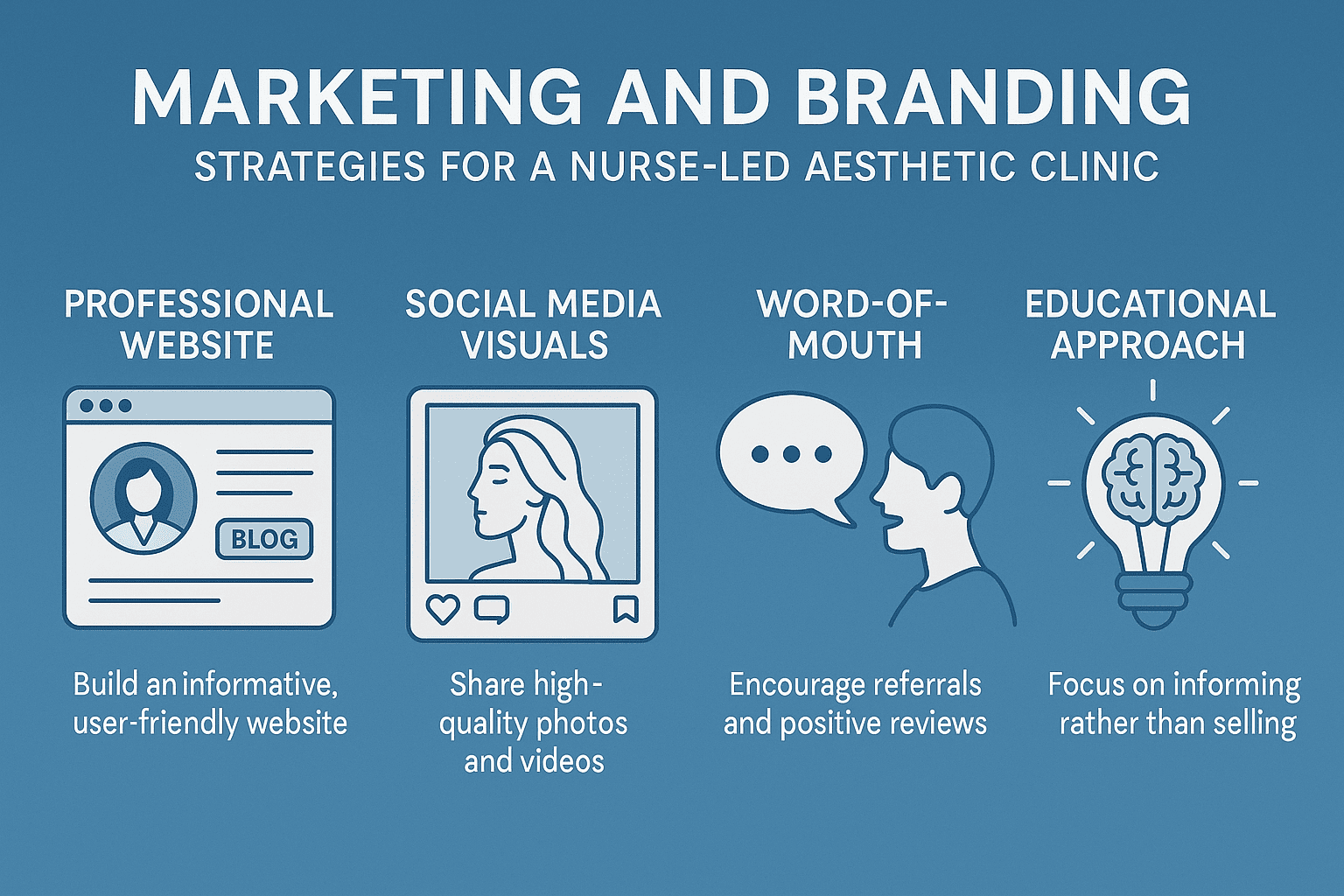
1. Digital Presence is Key:
- Professional Website: Your website is your digital clinic. It must be professional, easy to navigate, and clearly communicate your values, credentials, and services. Include a blog to demonstrate your expertise (e.g., “The Nurse’s Guide to Hyaluronic Acid Fillers”).
- Instagram and Facebook: Aesthetics is a visual industry. Instagram is your most powerful tool. Share high-quality before-and-after photos (with explicit consent), educational videos, and behind-the-scenes glimpses of your practice. Engage with your audience authentically. The Art and Science of Beauty: A Comprehensive Guide to Launching a Nurse-Led Aesthetic Clinic in Australia
2. Build Relationships, Not Just a Client List:
- Word-of-Mouth: Exceptional results and patient care are your best marketing. Encourage happy clients to tell their friends and leave reviews.
- Professional Networking: Build relationships with local GPs, dermatologists, hairdressers, and beauticians who can refer clients to you.
3. Avoid the “Hard Sell”: Your marketing should reflect your nursing ethics. Educate and inform rather than pressuring or offering constant discounts, which can devalue your expertise.
The Journey Ahead: Challenges and the Path to Growth
Challenges: Be prepared for high startup costs, intense competition, the emotional weight of managing client expectations, and the constant need for ongoing education in a fast-evolving field.
Growth: As you establish yourself, consider expanding your service offerings, hiring another nurse, opening a second location, or developing your own branded product line. Always let your core values of safety, ethics, and exceptional care guide your growth.
Disclaimer:
“I researched this information on the internet; please use it as a guide and also reach out to a professional for assistance and advice.
This information is not medical advice, so seek your medical professional’s assistance.”