


Table of Contents
The start of Ramadan is a period of dual commitment for healthcare workers, including nurses, physicians, midwives, and nursing students. In addition to being a time for fasting and introspection, the hospital’s high-stress atmosphere does not alter throughout this time. Even when not fasting, standing for 12 hours can be physically taxing, clinical shifts are lengthy, and patient demands are urgent. Maintaining a healthy lifestyle during this month is not only a personal objective but also a need for the workplace. A healthcare professional is better able to deliver the safe, considerate care that their patients depend on when they are well-fed, hydrated, and slept.
A “holistic” approach to wellness is necessary for a professional who fasts. This entails examining your health from three perspectives: the physical (what you eat and drink), the emotional (how you sleep and handle stress), and the spiritual (how you find serenity at work). You can manage the stress of an emergency room, get through the “3:00 PM slump” on the ward, and still have the energy to participate in the nightly prayers with your family if you treat your body like a high-performance instrument. This essay offers a thorough guidance to maintaining good health, mental clarity, and spiritual fulfillment during the holy month.
The Science of “Strategic Refueling” at Suhoor
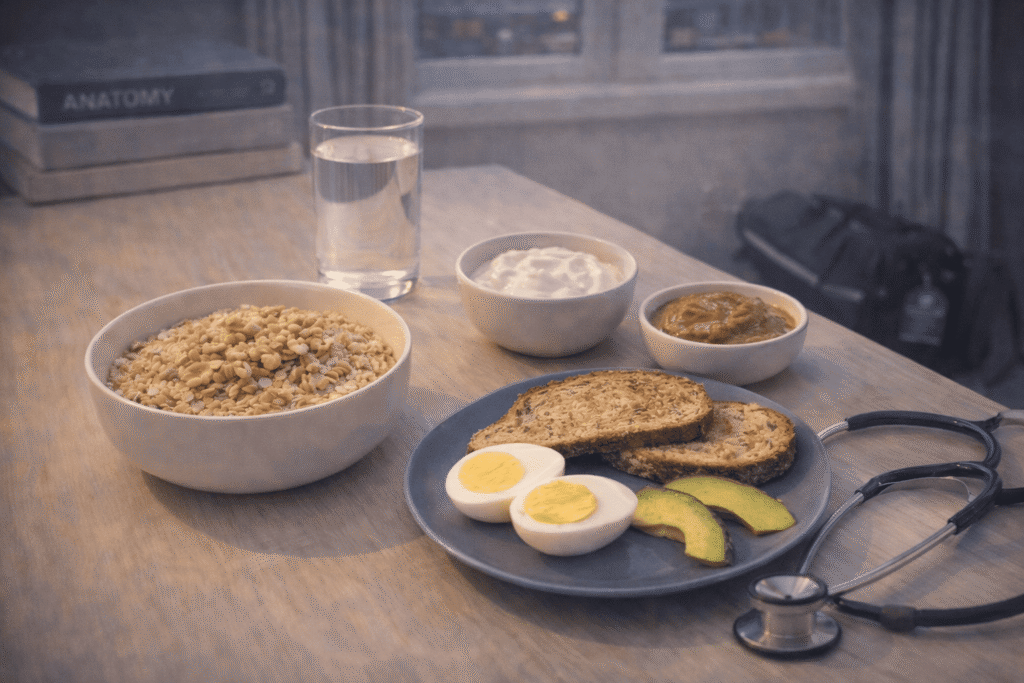
Hours before the sun rises, the cornerstone of a good Ramadan shift is laid. Suhoor, or the pre-dawn meal, is the most crucial “clinical intervention” for a healthcare practitioner. Your body requires a constant supply of glucose to energize your muscles and brain because you will be physically busy for 12 to 14 hours. Many students make the mistake of consuming white bread or high-sugar cereals first thing in the morning. These give you a brief energy boost, but they also trigger a fast insulin surge and a “sugar crash” that can leave you feeling unsteady, agitated, and disoriented by noon a condition known as hypoglycemia.
You need to concentrate on Low-Glycemic Index (GI) foods in order to sustain a “steady-state” energy level. The body breaks down these nutrients slowly, producing energy over several hours. Quinoa, whole-grain rye, and steel-cut oats are examples of complex carbs that should be a part of a “Wellness Suhoor.” These can be combined with healthy fats like avocado or almond butter and high-quality proteins like eggs, Greek yogurt, or beans to create a “metabolic anchor.” This combo helps you feel full and cognitively alert during your morning rounds by slowing down digestion even more. Steer clear of too much salt during Suhoor because it will deplete your cells of water and make you feel extremely thirsty as the day goes on in the dry hospital air.
Advanced Hydration and Electrolyte Management
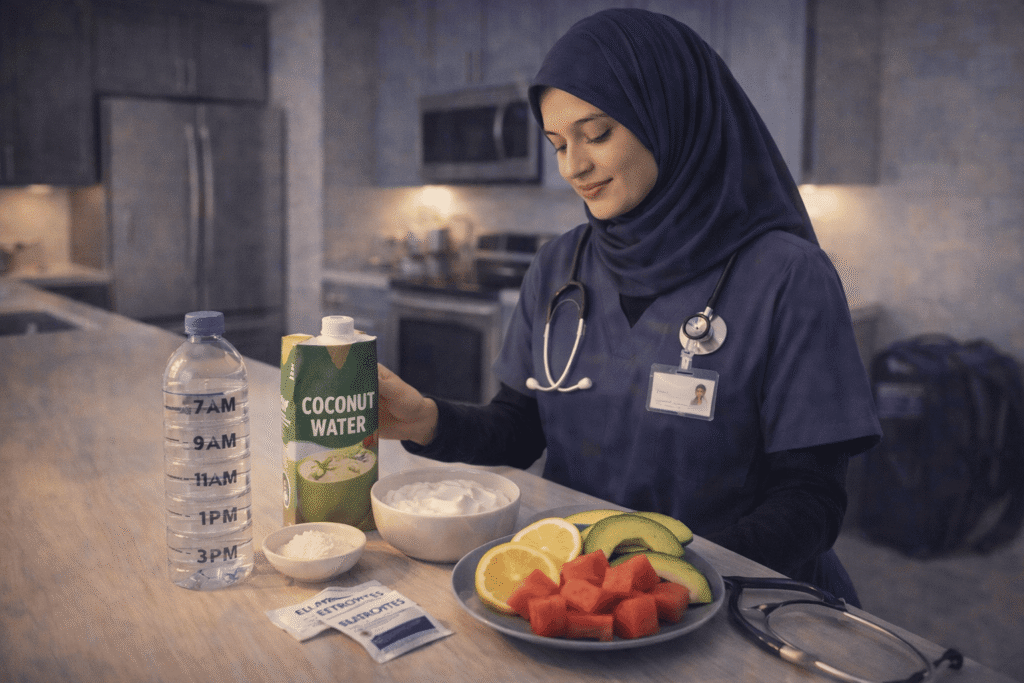
The greatest danger to a fasting nurse or doctor’s health is dehydration. Hospitals are climate-controlled spaces with extremely low humidity, which causes your skin and breath to lose moisture more quickly. A 20% decline in cognitive function can result from even slight dehydration, which can impair memory and the accuracy of medicine dosage calculations. You must become a “Tactical Hydrator” during your non-fasting hours as you are prohibited from drinking throughout your shift. It is a popular misconception that drinking two liters of water at Suhoor will keep you hydrated; in reality, the body can only absorb a small quantity at a time, and the kidneys will simply drain out the remaining water.
Electrolytes are the key to sustained hydration. Potassium, magnesium, and sodium are examples of minerals that function as “water magnets” to assist your cells hold onto fluid. During Iftar, break your fast with water and a pinch of sea salt, or even better, coconut water, rather than opting for sugary sodas. Coconut water is nature’s “IV bag,” full of electrolytes that facilitate rapid brain rehydration. Instead of consuming a lot of water at once during the night, try to drink 250 milliliters every hour. Additionally, include “liquid-rich” foods like soups, watermelons, and cucumbers in your meals. During the lengthy daytime hours of your shift, these foods provide a “time-release” hydration effect by gradually releasing their water content during digestion.
Sleep Hygiene: Protecting Your Cognitive Battery

In the medical field, sleep loss is the “silent enemy” of wellbeing. Sleep fragmentation can result from the Ramadan schedule, which includes working early shifts, staying up for evening prayers (Taraweeh), and waking for Suhoor. Lack of sleep is problematic for a clinician because it mirrors the brain damage caused by drinking. Sleep needs to be treated like a “medical prescription” in order to balance your wellness. This entails safeguarding your REM (Rapid Eye Movement) sleep, which is the phase in which complex problem-solving and emotional regulation occur.
Try to “bank” your sleep if you work a day shift by going to bed right after your nightly prayers and staying up until the very last minute before Suhoor. A 20-minute “Power Nap” has been scientifically shown to reset your alertness levels without the grogginess of a protracted sleep if you have a gap in the afternoon. The hormone that aids in falling asleep, melatonin, is suppressed by “blue light” from your phone, so avoid it at least half an hour before bed. Use earplugs and blackout curtains if you are on night duty to guarantee a restful and deep sleep throughout the day. You can make sure you have the “mental bandwidth” to handle challenging patients and stressful clinical decisions by making sleep a priority.
Mental Resilience and “Micro-Mindfulness”
The healthcare industry is emotionally draining. “Compassion Fatigue,” particularly when physically exhausted from fasting, is a common problem for nurses and midwives. “Micro-Mindfulness” brief, 60-second mental pauses that you can take while washing your hands or moving between patient rooms is essential to maintaining your mental wellness. The stress hormone cortisol is lowered by these pauses. Your body uses up its stored energy far more quickly when cortisol levels are high, which accelerates fatigue.
Try the “Square Breathing” method, which involves inhaling for four seconds, holding it for four, exhaling for four, and holding it for four. Your neurological system is reset by this easy action, which takes you out of “fight or flight” mode. Additionally, engage in “Self-Compassion.” Recognize that your increased irritability is a bodily reaction to the fast. Asking your team for a five-minute “breather” is perfectly acceptable. Communication is the foundation of a healthy and culturally aware workplace. By controlling your mental stress, you may avoid burnout and make sure you can continue to be the supportive, caring person that your patients require in their most vulnerable times.
Spiritual Integration: Reframing Work as Worship
The idea of Niyyah (intention) is among the best wellness advice for Muslim medical professionals. When their work schedule keeps them from going to the mosque or breaking fast with their families, many nurses and students experience feelings of loss or shame. This “spiritual stress” may have a detrimental effect on your general health. Rethinking your therapeutic practice as a kind of Ibadah (constant worship) is the answer. Saving lives and tending to the ill are two of the most highly praised acts in Islamic history.
Your entire 12-hour shift becomes a 12-hour prayer if you begin your shift with an intention, such as “I am working today to serve my community and please my Creator”. Every assessment of a patient’s vital signs, every prescription given, and every consoling statement spoken is an act of commitment. A strong “internal energy” that food and drink cannot offer is provided by this change in viewpoint. It takes away the guilt and replaces it with a deep sense of purpose. Your resilience rises, your stress levels decrease, and your general sense of wellness grows when you believe that your work has spiritual significance. The room of your patient becomes your “prayer mat,” and your stethoscope becomes a religious instrument.
People Also Ask (FAQ)
Q: Is it safe for a nursing student to fast during their first clinical placement?
It can be safe, but planning is necessary. At night, students should drink plenty of water and concentrate on eating a high-protein Suhoor. It’s crucial to let your clinical teacher know that you’re fasting so they can help you if you need a quick break or feel lightheaded. The top goal is always safety.
Q: How can I prevent bad breath (halitosis) while fasting on the ward?
A dry mouth (xerostomia) is a common cause of bad breath. At Suhoor, use a tongue scraper and give your teeth a good brushing. You can maintain your mouth clean and presentable for your patients during your shift by using a “miswak” or a small bit of water to rinse it without swallowing.
Q: What should I do if I feel faint during a sterile procedure?
You have to take a quick step back if you feel weak, lightheaded, or unsteady. Let your surgeon or lead nurse know. Avoid taking a chance on a fall or a sterility breach. There is a definite “medical necessity” guideline in Islam, which states that you should break your fast with a short glucose source and make up the next day if your health or a patient’s safety is in danger.
Q: Can I drink “Sugar-Free” energy drinks at Suhoor?
Generally speaking, it is preferable to stay away from them. Caffeine, a diuretic, is present in significant concentrations in even sugar-free energy beverages. You may get a “caffeine headache” and jitters throughout your shift as a result of losing water through urination more quickly. Drink just milk, water, or herbal teas.
Q: How do I manage my Iftar if I am in the middle of a handover?
Carry a “Fast-Break Kit” (two dates and a tiny bottle of water) in your pocket. In 30 seconds, you can break your fast without interfering with the handover. You can have a full supper in the break room after the handover is finished and your patients are secure.
Useful Documents for every Nursing Student
CV Section Template for Nursing students
AHPRA – NMBA Registration Document Checklist (International Students-Graduates)
Clinical Placement Reflection Template (NMBA-aligned)
Cover Letter Template for Nursing Students
Disclaimer: “I researched this information on the internet; please use it as a guide and also reach out to a professional for assistance and advice.This information is not medical advice, so seek your medical professional’s assistance.”