

Table of Contents
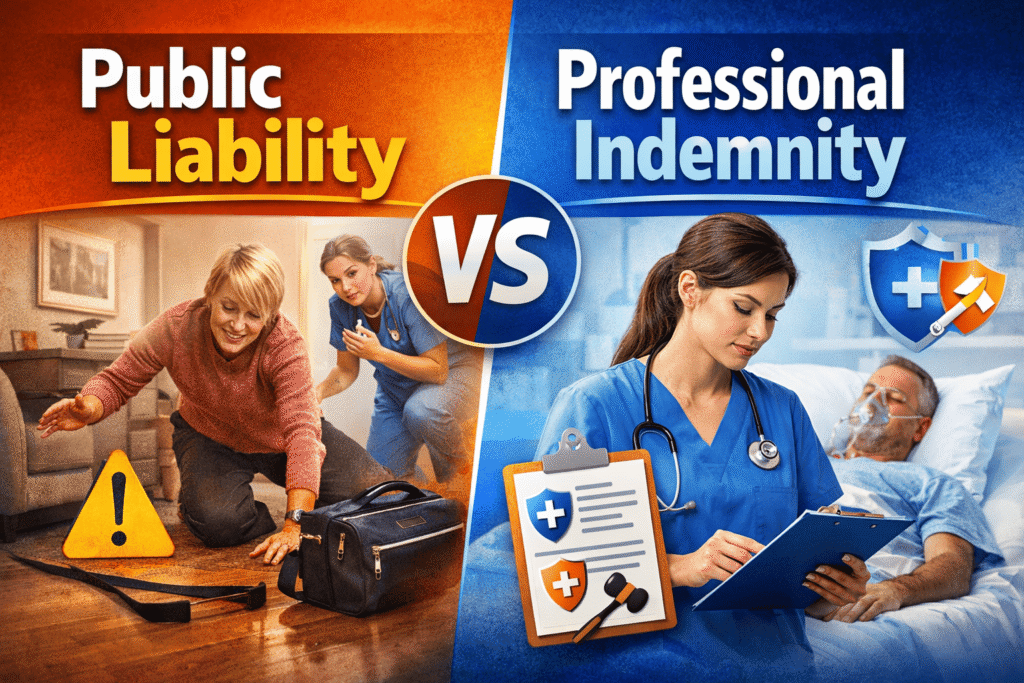
For nursing students and healthcare professionals, entering the clinical world involves more than just mastering anatomy and medication dosages. It also requires a clear understanding of the legal safety nets that protect your career. In the healthcare industry, two terms are frequently discussed: Public Liability and Professional Indemnity. While they may sound like the same thing, they cover very different types of risks. Understanding the difference is not just about passing an exam; it is a mandatory requirement for registration with boards like the Nursing and Midwifery Board of Australia (NMBA) or similar global regulatory bodies.
As a nurse, you are a professional providing high-stakes care, but you are also an individual operating in a physical space. Whether you are working in a large hospital, a small community clinic, or as a self-employed NDIS provider, you face risks every day. One mistake in a clinical procedure could lead to a professional claim, while a loose cord on the floor could lead to a public liability claim. This article breaks down these two essential insurance types into simple English to help you ensure you are fully protected throughout your nursing journey.
Professional Indemnity: Protecting Your Clinical Expertise
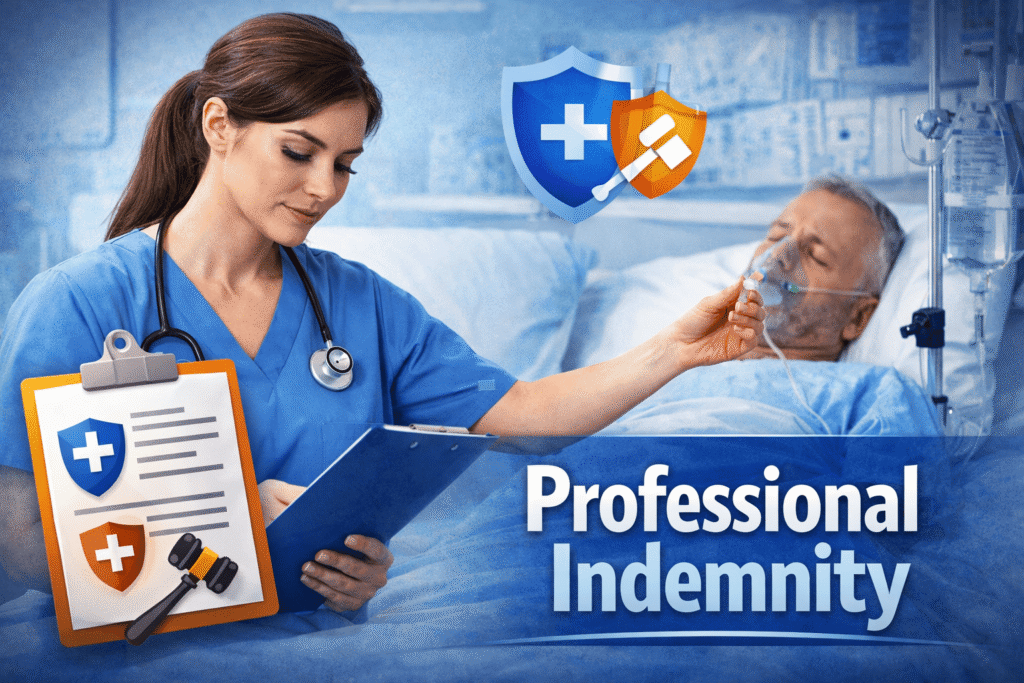
Professional Indemnity (PI) insurance is the most critical form of cover for a nurse’s “brain” and “actions.” This insurance is specifically designed to protect you if a patient claims that you provided substandard care, made a clinical error, or failed in your professional “duty of care.” In the nursing world, this usually relates to your specialized skills such as administering the wrong medication dose, failing to notice a deteriorating patient, or giving incorrect health advice. If a patient suffers an injury or a health setback because of your professional work, Professional Indemnity is what steps in to cover the legal costs and any compensation.
For most nurses, Professional Indemnity is a mandatory requirement for registration. Regulatory bodies like AHPRA require you to have this cover to ensure that if a mistake happens, the patient can be compensated and the nurse can afford a legal defense. PI insurance doesn’t just cover lawsuits; it also often covers the costs of legal representation if you are called to a Coroner’s Inquest or an AHPRA Disciplinary Hearing. It essentially protects your “license to practice” and your professional reputation. Without it, one mistake could lead to a massive debt that could follow you for the rest of your life.
Public Liability: Protecting the Physical Environment
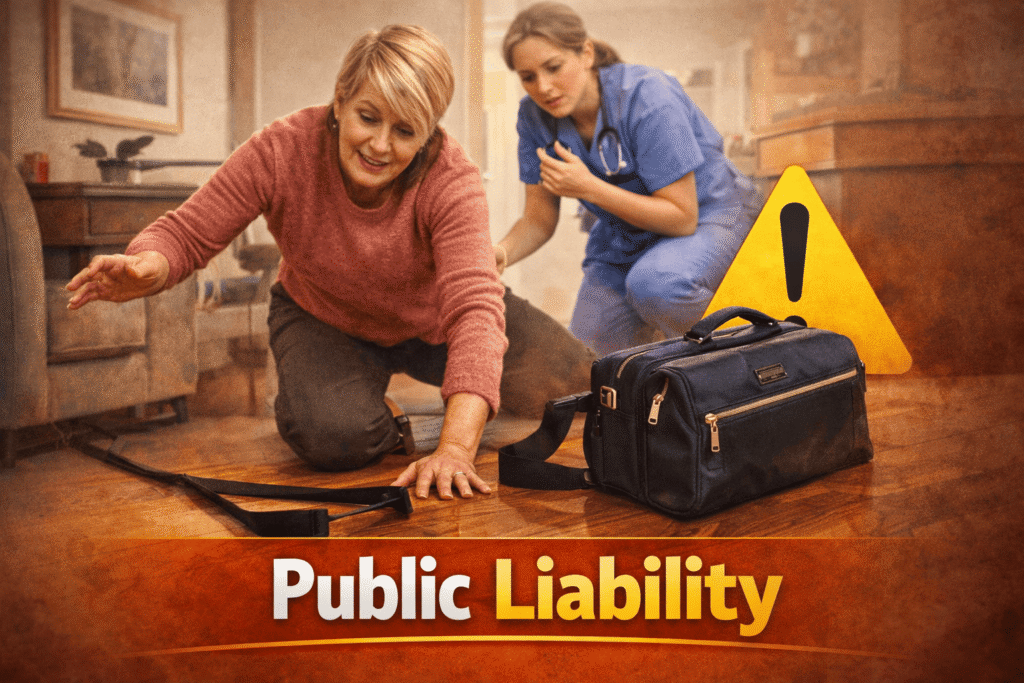
While Professional Indemnity is about what you do as a nurse, Public Liability (PL) is about where you are and the physical safety of the people around you. Public Liability insurance protects you against claims of personal injury or property damage caused by “accidents” that are not related to your clinical nursing skills. Think of this as “slip and trip” insurance. For example, if you are a home-care nurse and you leave your heavy medical bag in a hallway where a family member trips and breaks their wrist, that is a Public Liability issue. It wasn’t your “nursing advice” that caused the harm; it was a physical hazard in the environment.
Public Liability is especially important for nurses who are self-employed or run their own clinics. If a patient visits your private practice and a heavy shelf falls on them, or if you accidentally spill water on a patient’s expensive laptop while performing a home visit, Public Liability covers those costs. Most hospitals and large clinics have their own massive Public Liability policies that cover everyone on the premises. However, if you are a contractor or a “sole trader” providing NDIS services, many organizations will refuse to hire you unless you can show proof of at least $10 million to $20 million in Public Liability cover. It protects your “business assets” from the costs of everyday accidents.
Key Differences: Clinical Error vs. General Accident
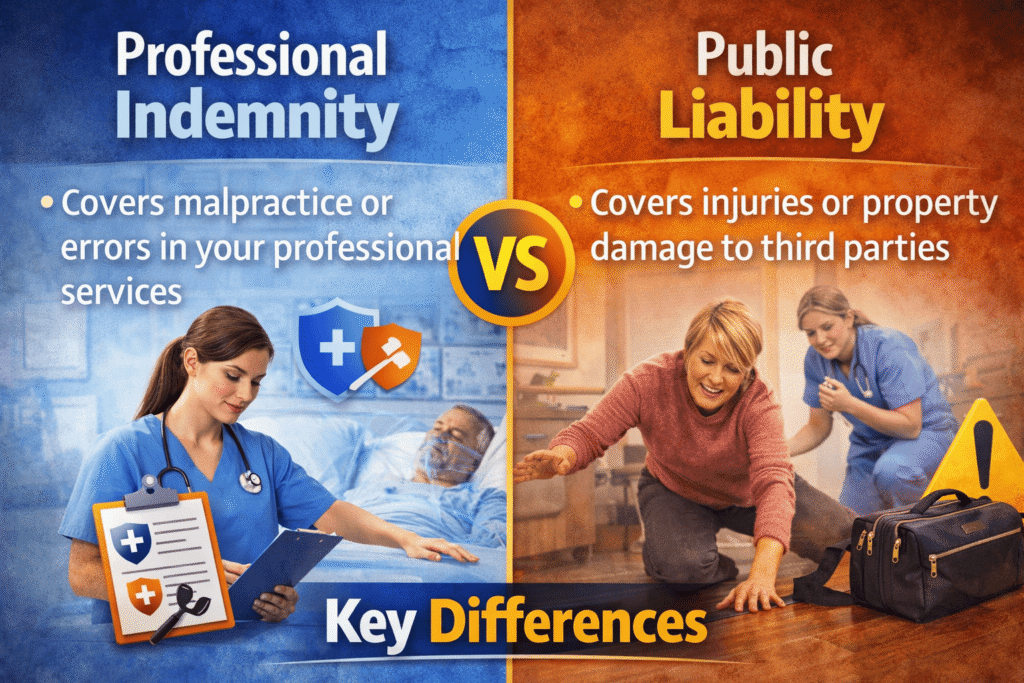
The easiest way to remember the difference between these two is to ask: “Was the injury caused by my medical knowledge or by a physical accident?” If a patient develops an infection because you didn’t follow sterile technique during a dressing change, that is a Professional Indemnity issue because it relates to your clinical training. If the same patient falls because you mopped the floor and didn’t put up a “wet floor” sign, that is a Public Liability issue because it relates to general safety, not specific medical expertise.
Another major difference is who the insurance protects. Professional Indemnity is almost always about the relationship between the Nurse and the Patient. It focuses on the “Professional-to-Client” interaction. Public Liability is much broader; it protects the Nurse and the Public. This includes patients, but also their family members, delivery drivers, or anyone else who might be in the area where you are working. For a self-employed nurse, having only one of these is like wearing a helmet but no shoes you are protected in one area but completely exposed in another.
Why Employer Insurance Might Not Be Enough
Many student nurses believe they don’t need to worry about insurance because their hospital or employer “covers everything.” While it is true that large employers have insurance, there are “gaps” that can leave a nurse vulnerable. Employer insurance is designed to protect the hospital’s interests first. If a patient sues both you and the hospital, and the hospital decides that you acted outside of their policies, they might “withdraw” their support, leaving you to find your own lawyer.
Furthermore, employer insurance usually only covers Civil Claims (money lawsuits). It rarely covers Criminal Defense or Board Inquiries. If a patient makes a complaint to the nursing board about your “conduct” or “ethics,” the hospital’s insurance will likely not pay for a lawyer to help you defend your registration. This is why many nurses choose to join a union (like the ANMF) or buy a private policy. A private policy follows you wherever you go even if you are working a “side job” or volunteering and ensures that you have an independent legal team whose only job is to protect you, not the hospital’s bottom line.
Risk Management: How to Avoid Insurance Claims
The best way to deal with insurance claims is to never have one in the first place. Risk Management is the practice of identifying potential hazards before they cause harm. To avoid Professional Indemnity claims, the “gold standard” is Document, Document, Document. In the legal world, if it isn’t written down, it didn’t happen. Accurate, timely, and objective clinical notes are your best defense if a patient ever questions your care. Always work within your “Scope of Practice”—never perform a task you aren’t trained or authorized to do, no matter how busy the ward is.
To avoid Public Liability claims, you must maintain a “Safe Environment.” This means keeping walkways clear of medical equipment, ensuring that all electrical cords are taped down or tucked away, and quickly cleaning up spills. For home-care nurses, it means doing a quick “safety sweep” of the patient’s room when you arrive. By combining clinical excellence (to prevent PI claims) with environmental safety (to prevent PL claims), you create a “Culture of Safety” that protects your patients and ensures that your insurance remains a “just in case” safety net rather than a frequently used tool.
People Also Ask (FAQ)
Q: Do nursing students need their own insurance?
Usually, students are covered by their University’s insurance during official clinical placements. However, if you are working as an Assistant in Nursing (AIN) or doing any paid healthcare work outside of your course, you should check if that employer provides cover or if you need your own.
Q: Is Professional Indemnity insurance tax-deductible?
Yes. In many countries, including Australia, the cost of professional insurance or union fees (which include insurance) is considered a work-related expense and can be claimed as a deduction on your tax return.
Q: Does Public Liability cover me if I am working from home?
Standard home insurance usually excludes business activities. If you are running a nursing consultancy or telehealth business from home, you need a specific Public Liability policy for your business to be protected if a client or delivery person is injured at your house.
Q: Can I get one policy that covers both?
Yes. Many insurers offer “Healthcare Professional Packages” that combine Professional Indemnity and Public Liability into one monthly payment. This is often the most cost-effective way for self-employed nurses to stay fully protected.
Q: Does insurance cover me if I make an intentional mistake?
No. Insurance is designed for “accidents” and “unintentional errors.” It does not cover “wilful misconduct,” criminal acts, or situations where you intentionally harm a patient or break the law.
Useful Documents for every Nursing Student
CV Section Template for Nursing students
AHPRA – NMBA Registration Document Checklist (International Students-Graduates)
Clinical Placement Reflection Template (NMBA-aligned)
Cover Letter Template for Nursing Students
Disclaimer: “I researched this information on the internet; please use it as a guide and also reach out to a professional for assistance and advice.This information is not medical advice, so seek your medical professional’s assistance.”