

Summary
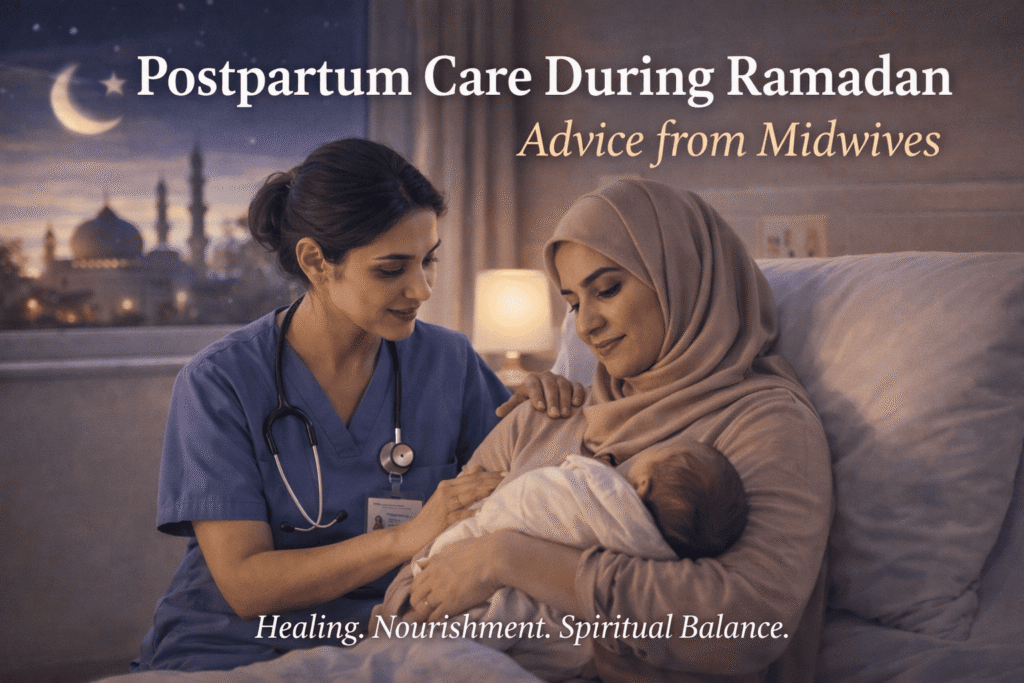
Often called the “fourth trimester,” the postpartum period is a period of significant healing, transformation, and adjustment for both the mother and her newborn. There are special spiritual and physical demands when this time of year falls during the holy month of Ramadan. Many new Muslim mothers have a strong desire to observe the nighttime prayers and fasts that characterize this holy month. However, the postpartum body is in a state of vigorous recuperation, according to professional midwives. Regardless of whether a mother gave birth naturally or by a cesarean section, her body is constantly repairing damaged tissue, controlling hormones, and, frequently, producing milk that will maintain her child’s life.
Midwives are essential in helping moms strike this delicate balance. The safety and welfare of the mother-infant pair are always the top priorities. Women in the postpartum phase (the state of nifas) are customarily excused from fasting in Islam in order to give their bodies the time and energy they need to heal. With an emphasis on physical recuperation, nutritional replenishment, and the emotional shift of becoming a new parent during a month of collective worship, this article offers comprehensive guidance from midwives on how to manage postpartum care throughout Ramadan.
Prioritizing Physical Recovery and Tissue Healing
For physical healing, the first several weeks following childbirth are crucial. The body of a mother has experienced a significant physiological event. She might have ripped or bruised if she gave birth vaginally, which would need a lot of protein and vitamin C to heal. She is recuperating from significant abdominal surgery, which requires even more energy and nutrients, if she had a C-section. Fasting in the early postpartum period can seriously impede this healing process, according to midwives. The body may prioritize fundamental metabolic processes over tissue repair when fasting, which could result in prolonged recovery durations or a higher risk of infection.
In addition, dehydration increases the risk of blood clots (thromboembolism) and UTIs in postpartum women. Hydration is the “liquid gold” of postpartum recuperation because it maintains the blood flowing smoothly and cleanses the bladder and kidneys. Midwives warn that even if a mother feels “strong,” her blood volume is returning to normal and her internal organs are still moving back to their pre-pregnancy places. In order to fill the physical “gap” caused by delivery, the mother’s body needs a constant supply of glucose and water, which she provides by eating and drinking regularly throughout the day. Mothers are frequently urged by midwives to see this time of eating and drinking as a medical need that makes them stronger for their unborn children in the long run.
The Science of Lactation and Nutritional Demand

The body’s nutritional needs are at an all-time high for nursing mothers, surpassing those of pregnant women. The act of producing breast milk is “expensive” for the body, needing a large increase in water and an additional 500 to 700 calories each day. In order to preserve the quality of the milk, midwives frequently explain that breast milk is filtered from the mother’s blood; if a woman is underweight or dehydrated due to fasting, her body will begin to draw nutrients from her own stores (such as calcium from her bones). The mother may experience physical exhaustion, lightheadedness, and a sense of depletion as a result.
In the early months of nursing, when the supply-and-demand relationship is still developing, midwives typically advise against fasting, although some moms of older infants find they can do so without experiencing a decrease in milk production. The biggest adversary of milk volume is dehydration. Midwives advise a “high-density” approach to the non-fasting hours if a mother chooses to fast later in her postpartum journey. This includes consuming electrolyte-rich beverages and “galactagogues” (foods that promote the production of milk), such as fenugreek, flaxseeds, and oats. The midwife’s main recommendation, though, is still to break the fast if the infant exhibits signs of hunger or if the mother feels dizzy. During this time, the mother’s main act of “Ibadah” (worship) is taking care of the baby.
Managing Postpartum Hormones and Mental Health

The “baby blues” and postpartum depression are significant issues that may be made worse by the usual adjustments made during Ramadan. Massive hormonal changes occur during the postpartum period; levels of progesterone and estrogen fall precipitously after delivery, which can impact mood, anxiety, and sleep. Blood sugar levels naturally change after fasting, and “low blood sugar” is a known cause of irritability and emotional instability. Midwives are especially worried that a suffering mother may experience a mental health crisis as a result of the sleep deprivation that occurs during Ramadan, which is brought on by rising up for Suhoor and remaining up for Taraweeh.
The foundation of postpartum mental health is sleep. If new mothers are feeling overburdened, midwives encourage them to prioritize rest above additional nightly prayers. Even if a mother is not fasting, she should nevertheless make an effort to stick to a regular eating schedule in order to maintain a steady mood. For a new mother, Ramadan can be both a time of community and a double-edged sword. Family support is great, but it can be draining to feel pressured to host “Iftar” or go to big events. Midwives advise moms to establish clear limits so they can spend time with their child in a calm, stress-free setting. Just as crucial as safeguarding your bodily health is safeguarding your mental tranquility.
Strategic Nutrition: The “Midwife’s Plate” for Postpartum
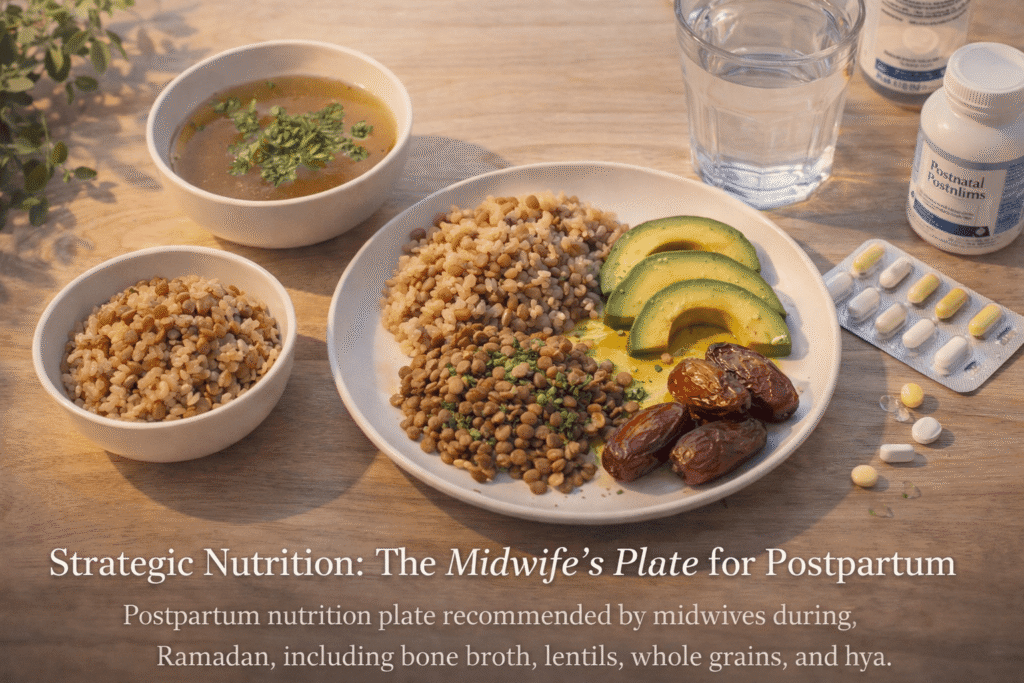
A mother’s food plan needs to be quite precise if she decides to fast while in the later postpartum phase. A diet high in “warm, grounding foods” is advised by midwives because these meals are thought to promote postpartum recuperation. Vegetable soups or bone broth should be served first at Iftar to supply minerals and water right away. Lean proteins, such as lamb, chicken, or lentils, which supply the amino acids required for muscle and tissue repair, should come next.
The emphasis at Suhoor should be on “hydration-locking” foods and sustained energy. A bowl of porridge with fruit, nuts, and seeds on top is what midwives recommend. In order to avoid the “afternoon crash” that can make taking care of a crying infant seem impossible, the fiber in the oats makes sure that energy is released gradually over several hours. Healthy fats, such avocado or extra virgin olive oil, are also essential for the growth of the infant if the mother is nursing and for the mother’s brain. Additionally, because iron and vitamin D are frequently depleted during pregnancy and childbirth, midwives advise moms to take their postpartum vitamins at night.
Navigating the Spiritual Transition Without Fasting
During Ramadan, one of the most challenging aspects of postpartum life is experiencing “spiritual exclusion.” Women in the postpartum phase may feel cut off from the “vibe” of the holy month as they are not fasting and frequently are unable to offer formal prayers (Salah) because of physical bleeding. Essential “soul care” is given by midwives, who remind mothers that their present condition is precious. A woman nursing her infant is in a constant state of prayer; in Islamic tradition, the person who provides for another is highly rewarded.
Mothers are encouraged to identify “micro-spiritual” moments by midwives. This could involve performing “Dhikir” (remembrance) while rocking the infant to sleep, making “Dua” (supplication) during late-night diaper changes, or listening to an audiobook of the Quran while nursing. In and of itself, becoming a mother is a spiritual journey that calls for sacrifice, patience, and intense love—all of which are fundamental aspects of Ramadan. Mothers can have a sense of calm and community during the month by redefining their position, even if this year’s “worship” differs from last year’s. The most faithful thing you can do is to treat your body with compassion and sustenance because it is a temple that recently welcomed a new soul into the world.
People Also Ask (FAQ)
Q: When is it safe to start fasting after giving birth?
Most midwives and doctors recommend waiting at least 6 to 8 weeks until your postpartum check-up. This allows your initial healing to complete and your milk supply to stabilize. If you had a C-section or a complicated birth, you may need to wait much longer. Always consult your midwife before starting.
Q: Can I fast if I am only “partially” breastfeeding?
If your baby is already eating solid foods or taking some formula, the risk to the baby’s nutrition is lower. However, the risk of dehydration for you remains the same. Midwives suggest trying to fast for a “trial day” and monitoring how you feel and how your baby reacts before committing to the whole month.
Q: What are the best drinks for hydration besides water?
Midwives often recommend coconut water, which is high in electrolytes, or traditional drinks like “Nabeez” (water in which dates have been soaked). Avoiding high-sugar juices and sodas is best, as these can cause energy crashes and don’t provide deep hydration.
Q: I feel very guilty for not fasting. How do I cope?
Remember that the exemption for postpartum women is a gift and a mercy. Forcing yourself to fast when your body isn’t ready can lead to illness, which then makes it harder for you to care for your baby. Your “fast” this year is the sacrifice of your time and body for your child.
Q: Will fasting make me lose my “baby weight” faster?
Midwives strongly advise against using Ramadan as a weight-loss tool in the postpartum period. Rapid weight loss can release toxins stored in fat into your bloodstream and breast milk, and it can leave you too weak to handle the demands of motherhood. Focus on healing first; weight loss will happen naturally over time with a balanced diet.
Useful Documents for every Nursing Student
CV Section Template for Nursing students
AHPRA – NMBA Registration Document Checklist (International Students-Graduates)
Clinical Placement Reflection Template (NMBA-aligned)
Cover Letter Template for Nursing Students
Disclaimer: “I researched this information on the internet; please use it as a guide and also reach out to a professional for assistance and advice.This information is not medical advice, so seek your medical professional’s assistance.”