


For new students who are unfamiliar with the fast pace, clinical demands, and demanding course load, studying nursing in Australia can be both thrilling and overwhelming. Nursing is not like other degrees, as many students soon discover. It necessitates regular study, effective time management, and the capacity to manage theory, skill labs, and clinical rotations. But with the appropriate study habits, any student may succeed – even if they feel worried or hesitant in the beginning.
The greatest study advice for nursing students in Australia are provided in this guide, which is presented in plain English so that all students can comprehend and use it. These tactics are based on what Australian nursing students find effective for maintaining organization, raising their grades, and improving time management effectively. Using these tips early in your degree will make your life easier and help you stay confident throughout university and placements.
Understand the Australian Nursing Curriculum and Plan Your Semester Early

Understanding how the educational system operates is one of the most crucial study strategies for Australian nursing students. A organized curriculum comprising theory classes, tutorials, clinical laboratories, and placements is followed by Australian universities. Since the assessment schedule is typically available starting in the first week of the semester, preparing ahead of time can help you feel less stressed later.
In Australia, the majority of nursing courses involve a combination of tests, essays, quizzes, and group projects. Many students make the error of putting off checking their tests for too long, which has led to anxiety during the past several weeks. A better strategy is to take a seat in Week 1, read the assessment descriptions, open your subject outlines, and make a digital calendar or planner with all of the deadlines.
You may divide your responsibilities and avoid studying at the last minute when you know exactly what’s coming up. You can determine how much time you need for readings, assignments, and revision by making a plan. Additionally, you have more space to handle your personal life, part-time employment, and family obligations without feeling overburdened. For students who are new to the Australian educational system in particular, early planning lays the groundwork for a successful semester.
Build Smart and Consistent Study Habits for Better Learning

For nursing students, having good study habits is crucial because the burden can quickly become too much to handle if you don’t stay up. Because nursing is a hands-on career, you need to comprehend the material rather than just memorize it. Instead of cramming the night before an exam, students frequently realize that fundamentals like anatomy, pharmacology, and pathophysiology require constant review.
The “study in small sessions” approach is one successful strategy. Divide your study time into manageable chunks, such as 45 minutes of concentrated study followed by a 10-minute break, rather than attempting to study for four or five hours all at once. This keeps you from burning out and improves the way your brain processes information. To help them stay focused, a lot of Australian nursing students utilize applications like Pomodoro timers, Notion, and Forest.
Examining lecture notes within a day of class is another beneficial practice. This facilitates the transmission of knowledge when it is still new into long-term memory. If you have any questions, put them in writing and ask your lecturer or teacher at the following tutorial. These little actions help you maintain organization and avoid knowledge gaps, which may have an impact on how well you perform later in the degree.
Make the Most of University Support Systems and Online Resources

Numerous support services tailored to nursing students are offered by Australian universities, however many students do not take use of them because they are unaware of their existence. Academic skills centers, writing assistance, library workshops, and online learning platforms such as Canvas, Moodle, or Blackboard are available to all students. You can discover how to properly reference, enhance your writing, and comprehend your projects with the aid of these resources.
Academic advisors at the majority of colleges can assist you with workload management and degree planning. To help students get ready for tests, nursing instructors and tutors frequently offer case-study talks, practice sessions, and revision sessions. Particularly for challenging areas like pharmacology or physiology, attending these seminars can greatly increase your comprehension.
Additionally, internet resources are quite beneficial. For assignments and placements, trustworthy information can be found on websites such as ANMF (Australian Nursing & Midwifery Federation), NSW Health, and Australian clinical guidelines.In addition to strengthening your academic work, using official and reliable sources enables you to acquire accurate knowledge that you will utilize in practical nursing practice.
Studying is made easier and you feel more supported throughout your degree when you make good use of university resources. Many accomplished nursing students claim that seeking assistance early on significantly improved their performance and self-assurance.
Develop Strong Time-Management Skills for Balancing Study and Life

One of the most significant issues facing Australian nursing students is time management, particularly for those juggling part-time employment, family obligations, and social lives. Clinical placements might require long weekly hours, and nursing degrees come with heavy workloads. Without adequate preparation, pupils become anxious and lag behind.
Making a weekly schedule is a smart move. Set aside time for classes, study sessions, relaxation, physical activity, and personal pursuits. This helps you avoid wasting time and offers you a clear picture of how your week will go. Because digital planners and apps like Google Calendar provide deadline and study session reminders, many students use them.
Setting priorities for tasks is also crucial. For instance, if you have a quiz in three days and an assignment due in two weeks, concentrate on the quiz first and work on the assignment gradually. Aiming to learn everything at once will only cause confusion and subpar outcomes.
Time management becomes even more crucial during a clinical placement. Planning ahead helps you stay on track because you might need to study after lengthy shifts. During exam periods, some students cook, use less social media, or work fewer hours. Effective time management not only boosts academic achievement but also lowers anxiety and enhances mental health.
Use Smart Revision Techniques to Prepare for Exams and Practical Assessments
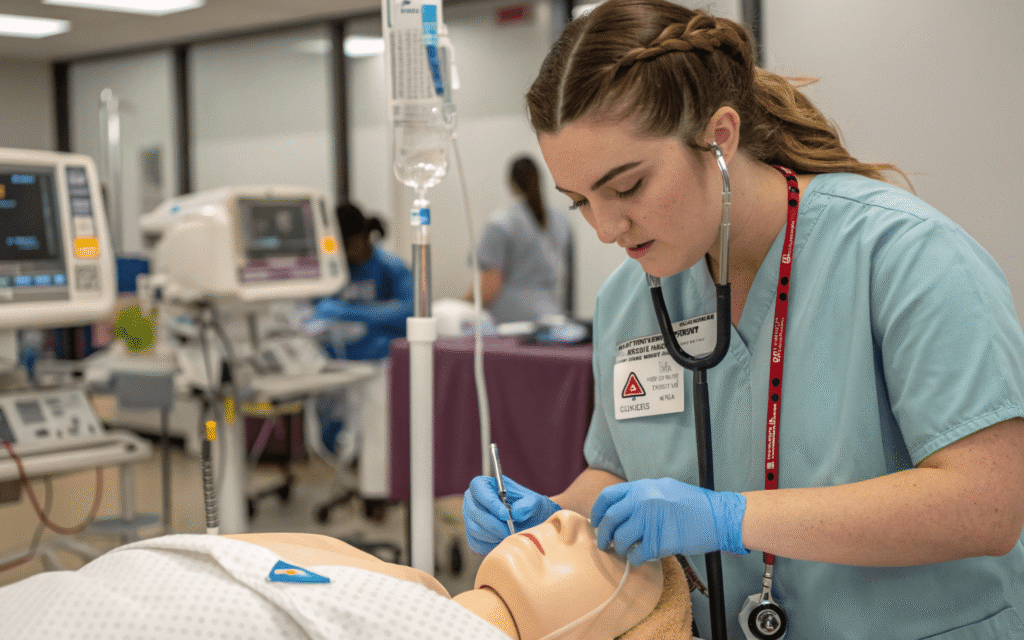
In Australia, comprehension rather than memorization is frequently tested in nursing exams. This implies that you must be able to apply ideas in practical settings, such as deciphering symptoms, recognizing hazards, or comprehending the effects of medications. You can do well on theoretical tests and practical assessments by employing efficient revision strategies.
One of the most effective study techniques is active recollection. Make question cards, write responses, or explain ideas aloud to test yourself instead of reading your notes several times. This makes it easier for your brain to retain crucial knowledge.
Additionally, group study sessions can be quite beneficial, particularly when getting ready for practical tests. You have a deeper understanding of a subject when you describe it to someone else. You can practice skills including clinical reasoning, infection control methods, patient communication, and manual blood pressure in labs.
Practicing with previous exam papers or sample questions from your university is another useful idea. These assist you in comprehending the structure of the test and pinpointing areas that require further study. By using these strategies, you can study more effectively and feel more confident before tests.
Stay Motivated, Healthy, and Mentally Balanced During Your Degree

Many students feel pressure during coursework, tests, or placements because nursing may be a difficult field. Long-term success depends on maintaining your motivation and taking care of your health. Your focus and energy can be greatly increased by adopting simple habits like eating a good diet, getting enough sleep, and taking regular pauses.
Developing friendships and conversing with peers can also help lower stress. Having a solid support system makes your experience more pleasurable because nursing degrees promote teamwork. In order to stay in touch, exchange study advice, and talk about difficulties, many students also join nursing groups or university communities.
Additionally, it’s critical to treat yourself with kindness. Every assessment will not be flawless, and feeling overburdened at times is common. What matters is staying consistent, asking for help when needed, and believing that you can improve with effort. Nursing is a rewarding career, and every challenge you overcome as a student makes you stronger for the future.
Final Thoughts
Although studying nursing in Australia can be difficult, you can achieve and have fun if you have the correct habits and support. These study strategies for Australian nursing students, which include time management, clever revision, utilizing university resources, and maintaining organization, can keep you prepared and self-assured throughout your degree.
Disclaimer: “I researched this information on the internet; please use it as a guide and also reach out to a professional for assistance and advice.This information is not medical advice, so seek your medical professional’s assistance.”